

Short Call (2)

Outcome 1: Profit
With a short call position, you are committing to a bearish stock sentiment, believing that the stock will decrease in value and decline in price. The profit potential is limited to the net premium collected. Let’s now assume we are correct in our sentiment and the stock price declines.
To calculate our profit on the position when we sold our contracts, we use the following formula:
Profit = Net Premium Collected
Example
Stock XYZ is trading at $50 and you sell 10 XYZ Jan 50 calls for $1.45.
A week later, stock XYZ is trading lower at $48.
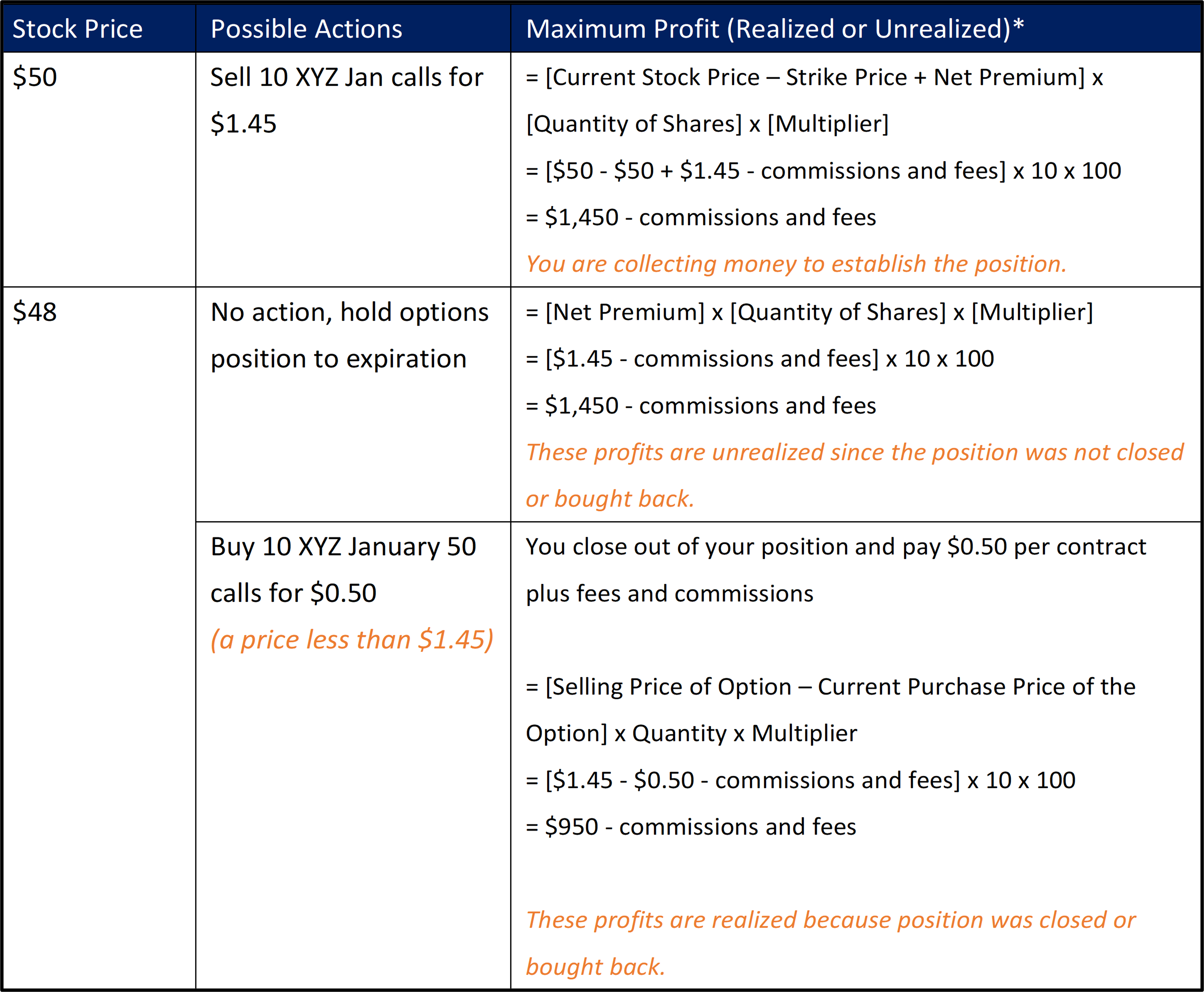
*Unrealized profits are those that potentially exist; realized profits occur when you close out or trade out of the position.
Our maximum profit is limited to the net premium collected.
Outcome 2: Loss
With a short call position, you have collected money (net premium) to establish your options position. The trade-off is unlimited loss exposure to upside moves in the stock price. Remember, there is no limit to how high a stock price can trade or be valued at.
Max Loss = Unlimited
Example
Stock XYZ is trading at $50 and you sell 10 XYZ Jan 50 calls for $1.45.
At expiration, stock XYZ is trading higher at $64.
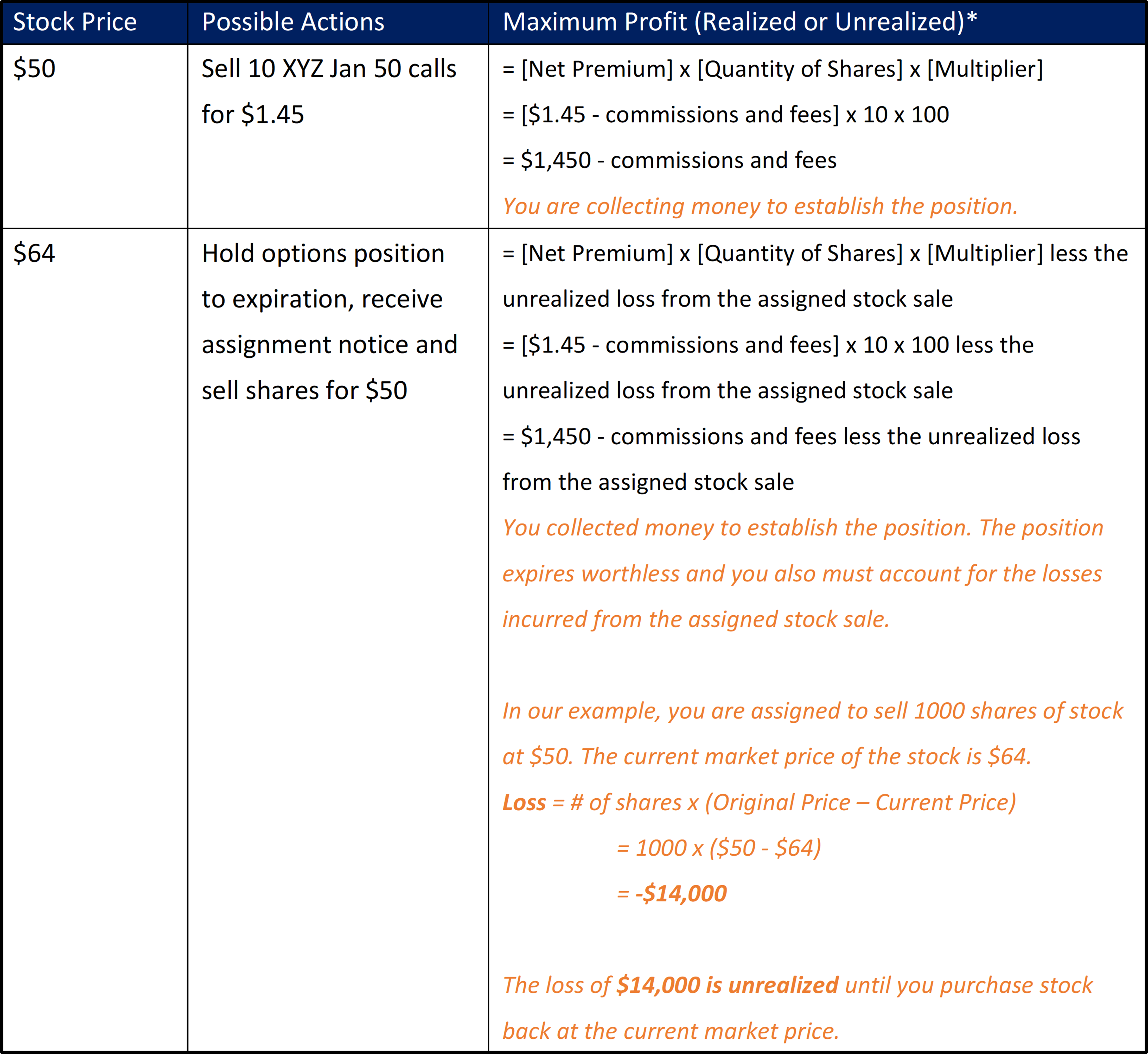
*Unrealized profits are those that potentially exist; realized profits occur when you close out or trade out of the position.
Our maximum loss is unlimited.
Outcome 3: Breakeven
The breakeven price for a short call strategy occurs when the stock is trading at a price equal to the strike price plus the net premium collected.
In our example, the breakeven stock price equals $51.45 ($50 + $1.45 = $51.45, not including fees and commissions).
-Powered by The Options Institute
Disclaimer: Cboe and Webull are separate and unaffiliated companies. This content is provided by Cboe and does not reflect the official policy or position of Webull. This content is for educational purposes only and is not investment advice or a recommendation or solicitation to buy or sell securities.

All Comments