

Introduction to Index and ETFs in Australia

What is an ETF?
An Exchange-Traded Fund (ETF) is fund with a basket of securities that trade like individual stocks on an exchange. They are passively managed, tracking indices that reflect stock performance compared to active management in a traditional fund.
Wait, but what is an index?
Before we look at domestic ETFs in detail, it's important to understand exactly what a share market index is. A share market index is a measure of the performance of a group of stocks.
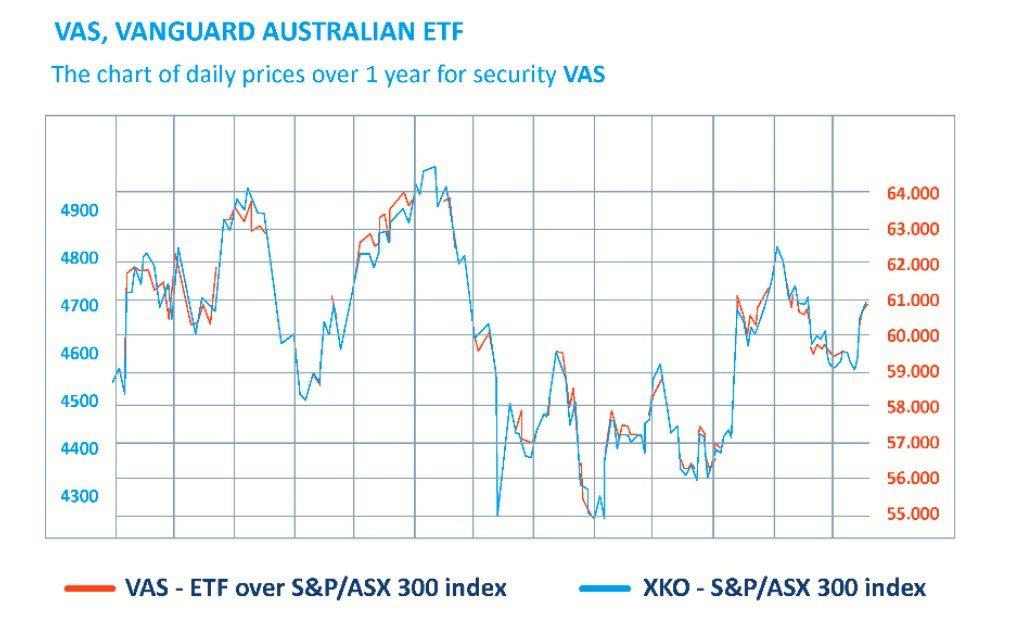
Some indices measure the performance of the broad Australian share market, for example the S&P/ASX 200 index, which measures the performance of the top 200 stocks (by size) on ASX.
Australian broad based index ETFs track indices including:
- S&P/ASX 50 index
- S&P/ASX 200 index
- S&P/ASX 300 index
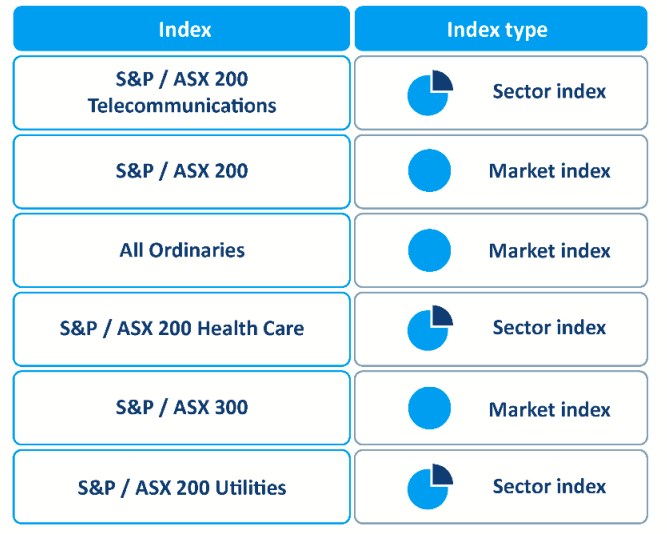
Other indices measure the performance of a sector of the market, for example the S&P/ASX 200 Energy index and the S&P/ASX 200 Financials index.
What makes the level of an index change?
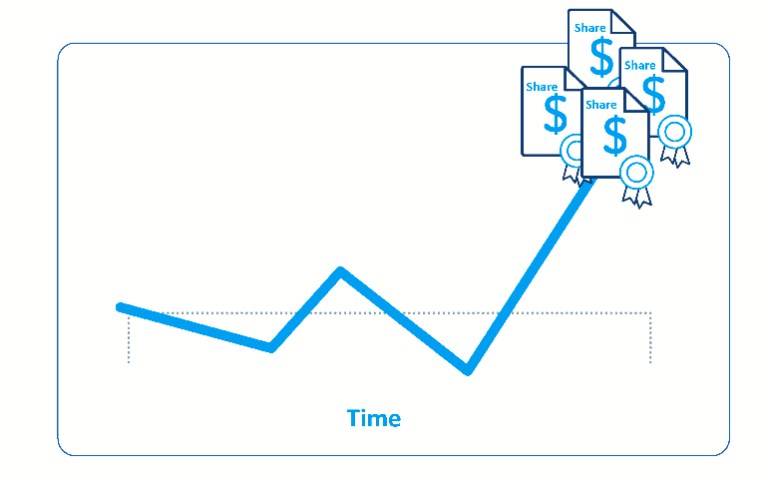
The index level changes as prices of the shares in the index change.
Over a given period, not all stocks move in the same direction, or by the same amount. The index measures the net effect of price movements of the stocks in the index.
You can refer to movements in an index to gauge how the market, or market sector, has performed over time.
Relative influence
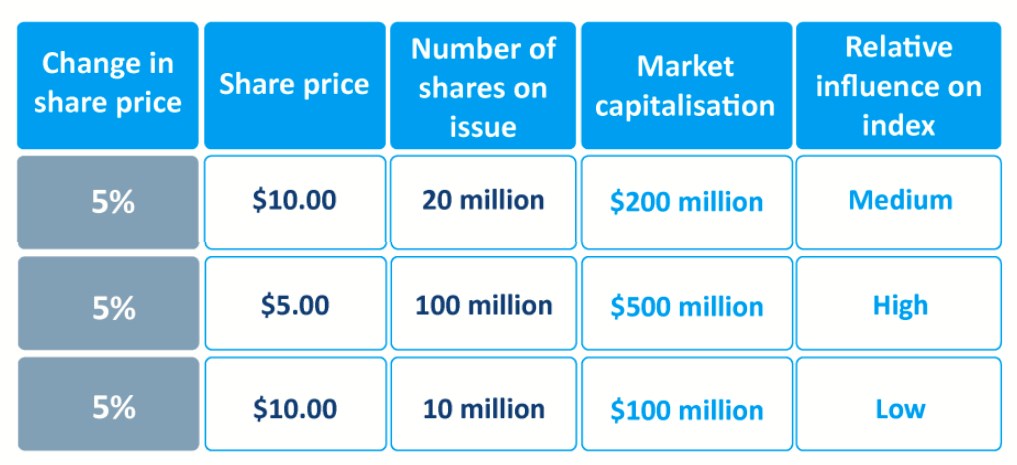
Most Australian indices are capitalisation-weighted.
In simple terms, a company's market capitalisation depends not just on its share price, but also on the number of shares on issue.
The larger the company, the greater its weighting in the index, and the greater the impact changes in its share price will have on the value of the index.
For example, a 2% movement in the share price of BHP Billiton, the largest company on ASX, will have a greater effect on the S&P/ASX 200 index than a 2% movement in the price of the stock ranked 150th.
Accumulation indices
Two versions of S&P/ASX indices are calculated.
The price return index is a measure of performance that takes into account only the prices of the shares in the index.
The total return (accumulation) index takes into account both the price of shares and the dividends paid by those shares. It assumes that all dividends are reinvested.
Typically Australian ETFs track accumulation indices. When you invest in an ETF over an accumulation index you receive the benefits of those dividends paid by the companies in that index.

All Comments