


- In mid-May 2026, Glacier Bancorp was caught up in a broader pullback after April CPI came in at 3.8%, pushing the 10-year Treasury yield to 4.43% and reinforcing expectations that interest rates may stay higher for longer.
- The reaction highlights a key tension for regional banks: while rate volatility can support certain fee and trading activities, prolonged higher yields intensify deposit competition as savers shift quickly into better-paying products, pressuring funding costs and net interest margins.
- We’ll now examine how the prospect of prolonged higher rates, and rising deposit competition, could reshape Glacier Bancorp’s investment narrative.
We've uncovered the 12 dividend fortresses yielding 5%+ that don't just survive market storms, but thrive in them.
Glacier Bancorp Investment Narrative Recap
To own Glacier Bancorp, you need to believe in the long term growth of its Mountain West and Pacific Northwest footprint and its ability to translate migration, deposit growth and acquisitions into better margins. The recent CPI surprise and move in Treasury yields matter mainly for funding costs and deposit competition, but they do not appear to alter the most immediate catalyst, which is the bank’s ability to sustain recent net interest income momentum while keeping credit quality and expenses under control.
The April inflation print landed just weeks after Glacier reported Q1 2026 results, where net interest income reached US$268.68 million and net income was US$82.14 million. That performance frames how higher for longer rates could cut both ways: stronger earning asset yields support revenue, but intensifying deposit repricing and Glacier’s reliance on commercial real estate lending leave little room for complacency if credit costs begin to rise from here.
Yet behind the headline rate moves, investors should also be aware that...
Read the full narrative on Glacier Bancorp (it's free!)
Glacier Bancorp's narrative projects $1.8 billion revenue and $719.1 million earnings by 2029.
Uncover how Glacier Bancorp's forecasts yield a $56.50 fair value, a 21% upside to its current price.
Exploring Other Perspectives
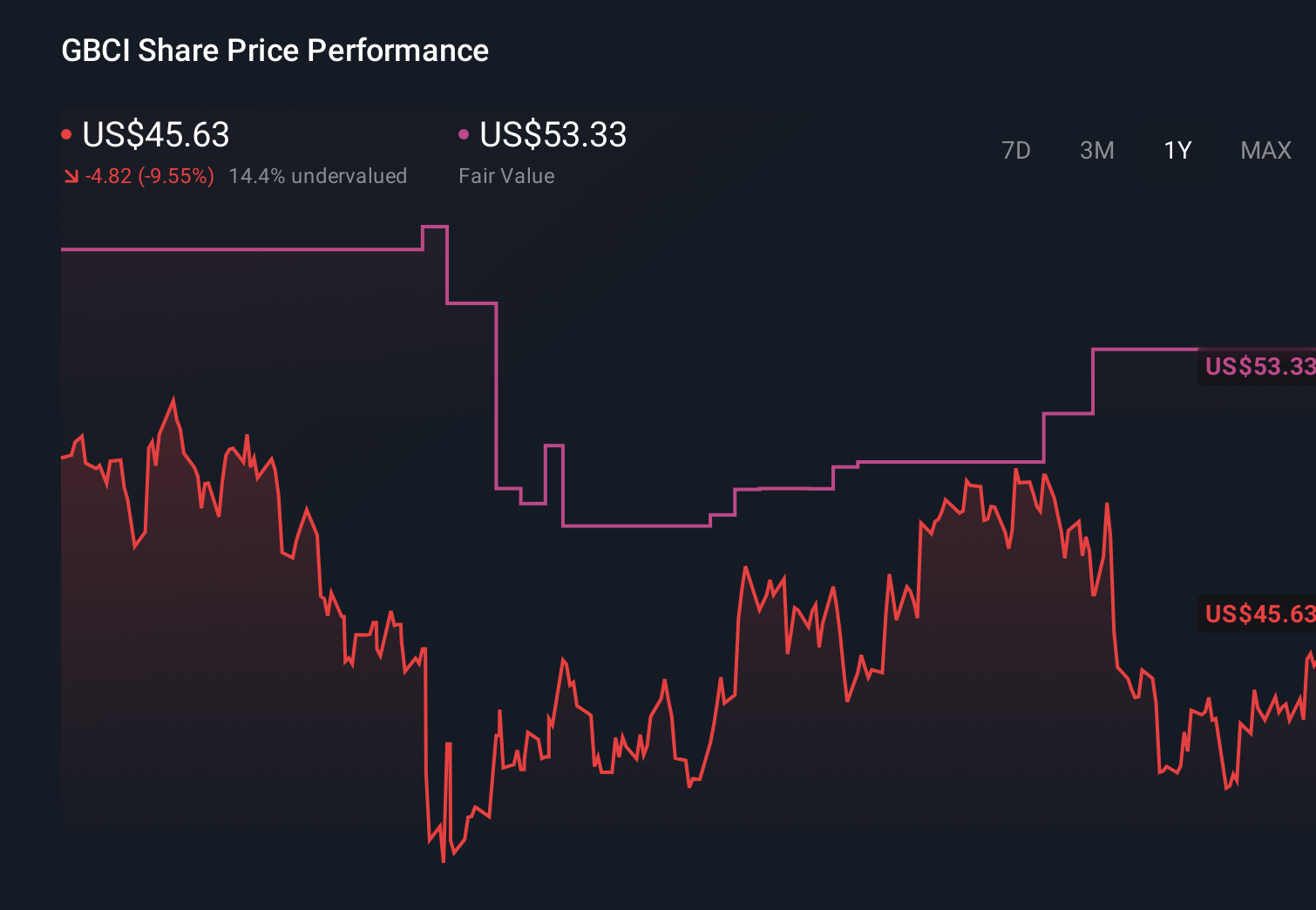
Two fair value estimates from the Simply Wall St Community span a very wide range, from US$56.50 to US$77,698.30, showing just how far apart individual views can be. When you weigh those against concerns about deposit competition and margin pressure in a higher rate setting, it becomes even more important to compare several perspectives before deciding how Glacier Bancorp might fit into your portfolio.
Explore 2 other fair value estimates on Glacier Bancorp - why the stock might be a potential multi-bagger!
Reach Your Own Conclusion
Disagree with existing narratives? Extraordinary investment returns rarely come from following the herd, so go with your instincts.
- A great starting point for your Glacier Bancorp research is our analysis highlighting 4 key rewards and 1 important warning sign that could impact your investment decision.
- Our free Glacier Bancorp research report provides a comprehensive fundamental analysis summarized in a single visual - the Snowflake - making it easy to evaluate Glacier Bancorp's overall financial health at a glance.
Want Some Alternatives?
Every day counts. These free picks are already gaining attention. See them before the crowd does:
- The best AI stocks today may lie beyond giants like Nvidia and Microsoft. Find the next big opportunity with these 15 smaller AI-focused companies with strong growth potential through early-stage innovation in machine learning, automation, and data intelligence that could fund your retirement.
- Capitalize on the AI infrastructure supercycle with our selection of the 43 best 'picks and shovels' of the AI gold rush converting record-breaking demand into massive cash flow.
- Invest in the nuclear renaissance through our list of 88 elite nuclear energy infrastructure plays powering the global AI revolution.
This article by Simply Wall St is general in nature. We provide commentary based on historical data and analyst forecasts only using an unbiased methodology and our articles are not intended to be financial advice. It does not constitute a recommendation to buy or sell any stock, and does not take account of your objectives, or your financial situation. We aim to bring you long-term focused analysis driven by fundamental data. Note that our analysis may not factor in the latest price-sensitive company announcements or qualitative material. Simply Wall St has no position in any stocks mentioned.
Have feedback on this article? Concerned about the content? Get in touch with us directly. Alternatively, email editorial-team@simplywallst.com