


- Highwoods Properties, Inc. was recently removed from the Russell 1000, Russell Midcap and related value indexes, while being added to the Russell 2000, Russell 2000 Value and Russell 2000 Defensive indexes.
- This reclassification shifts Highwoods into a smaller-cap, value-defensive peer group, which can alter index fund ownership patterns and liquidity profiles.
- We’ll now examine how Highwoods’ move from the Russell 1000 to the Russell 2000 may influence its existing investment narrative.
The future of work is here. Discover the 29 top robotics and automation stocks leading the charge in AI-driven automation and industrial transformation.
Highwoods Properties Investment Narrative Recap
To own Highwoods, you need to believe its Sunbelt office portfolio can keep converting signed leases and limited new supply into steady occupancy and NOI, despite recent earnings pressure and higher interest costs. The shift from the Russell 1000 into the smaller cap, value defensive Russell 2000 group mainly affects how index funds hold the stock and, by itself, does not materially change the near term leasing and balance sheet execution risks.
The recent authorization for up to US$250,000,000 of share repurchases sits alongside Highwoods’ recast of a US$150,000,000 unsecured term loan and ongoing common dividends of US$0.50 per quarter. Together, these actions frame how management is approaching capital allocation at a time when index reclassification may alter trading liquidity, and when leasing progress and debt servicing remain key catalysts for the story.
Yet, while the index shift may appear technical, the real information investors should be aware of is how weaker interest coverage could interact with...
Read the full narrative on Highwoods Properties (it's free!)
Highwoods Properties' narrative projects $921.8 million revenue and $91.9 million earnings by 2029.
Uncover how Highwoods Properties' forecasts yield a $26.22 fair value, a 12% downside to its current price.
Exploring Other Perspectives
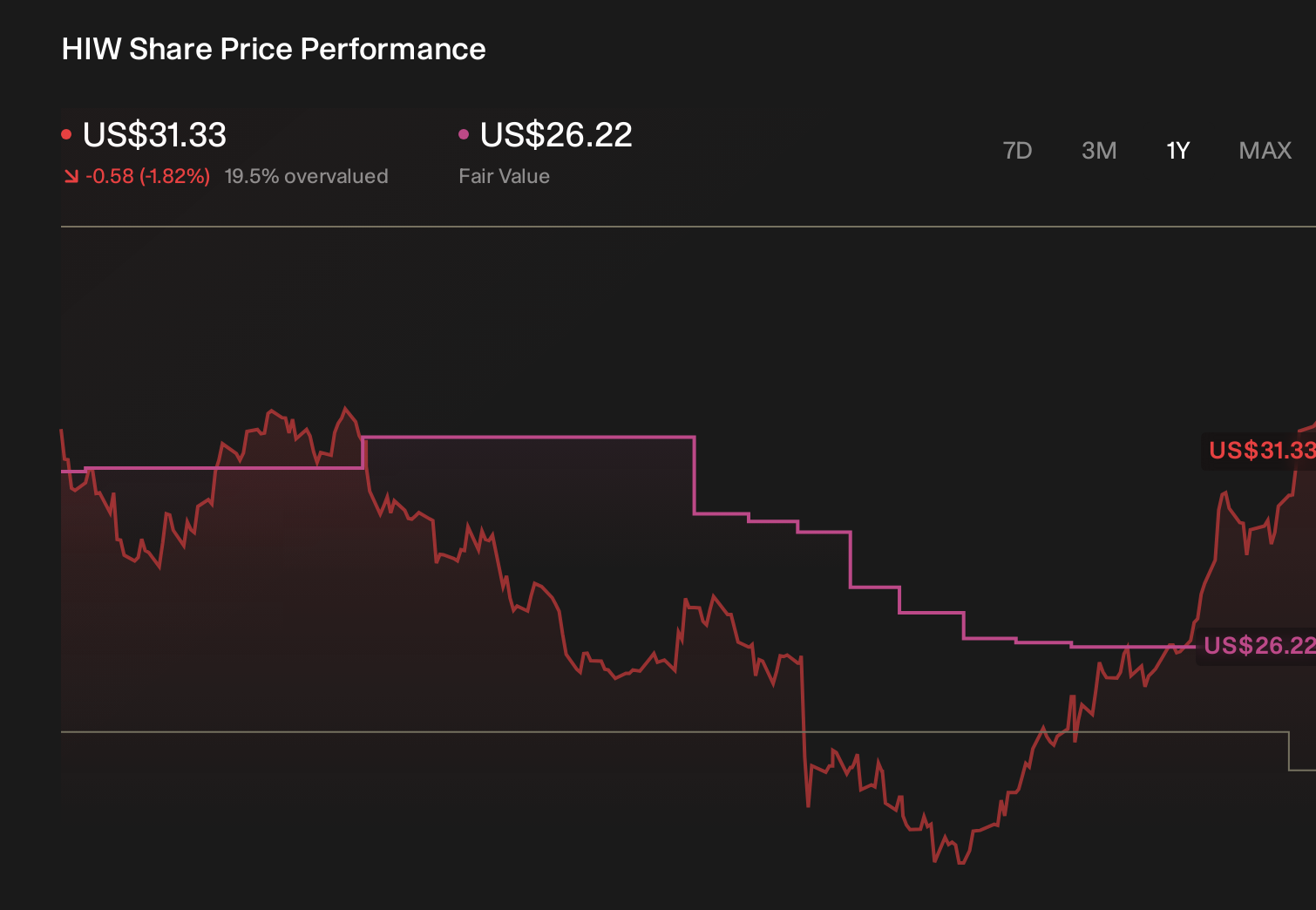
By contrast, the most pessimistic analysts were already assuming earnings drop to about US$96.8 million by 2029, so this index move may cause you to reassess how much slower leasing or higher costs could alter that view.
Explore 3 other fair value estimates on Highwoods Properties - why the stock might be worth 20% less than the current price!
The Verdict Is Yours
Don't just follow the ticker - dig into the data and build a conviction that's truly your own.
- A great starting point for your Highwoods Properties research is our analysis highlighting 2 key rewards and 4 important warning signs that could impact your investment decision.
- Our free Highwoods Properties research report provides a comprehensive fundamental analysis summarized in a single visual - the Snowflake - making it easy to evaluate Highwoods Properties' overall financial health at a glance.
Ready To Venture Into Other Investment Styles?
The market won't wait. These fast-moving stocks are hot now. Grab the list before they run:
- Find 44 companies with promising cash flow potential yet trading below their fair value.
- Capitalize on the AI infrastructure supercycle with our selection of the 51 best 'picks and shovels' of the AI gold rush converting record-breaking demand into massive cash flow.
- Uncover the next big thing with 21 elite penny stocks that balance risk and reward.
This article by Simply Wall St is general in nature. We provide commentary based on historical data and analyst forecasts only using an unbiased methodology and our articles are not intended to be financial advice. It does not constitute a recommendation to buy or sell any stock, and does not take account of your objectives, or your financial situation. We aim to bring you long-term focused analysis driven by fundamental data. Note that our analysis may not factor in the latest price-sensitive company announcements or qualitative material. Simply Wall St has no position in any stocks mentioned.
Have feedback on this article? Concerned about the content? Get in touch with us directly. Alternatively, email editorial-team@simplywallst.com