


- On 27 June 2026, Maplebear Inc. (Instacart, NasdaqGS:CART) was added to multiple Russell growth benchmarks, including the Russell 1000 Growth, 3000 Growth, 3000E Growth, 2500 Growth, Small Cap Comp Growth, and Midcap Growth indices.
- This broad index inclusion places Maplebear more directly on the radar of institutional and index-tracking investors, potentially increasing trading activity and ownership by passive funds.
- We’ll now examine how Maplebear’s broad Russell growth index inclusion could influence its existing investment narrative and future risk‑reward balance.
Explore 26 top quantum computing companies leading the revolution in next-gen technology and shaping the future with breakthroughs in quantum algorithms, superconducting qubits, and cutting-edge research.
Maplebear Investment Narrative Recap
To own Maplebear, you need to believe Instacart can keep turning digital grocery adoption, retailer integrations and retail media into resilient profits, despite rising labor and competitive pressures. The broad Russell growth index additions may support near term trading liquidity, but they do not change the core near term catalyst around execution on higher margin advertising and enterprise products, nor do they reduce the key risk from potential regulatory and labor cost shifts in its gig worker model.
The most relevant recent development here is Maplebear’s continued share repurchases, with about 21.3% of shares retired under its 2024 buyback program as of Q1 2026. Index inclusion now introduces more passive ownership on top of a shrinking free float, which could sharpen the market’s reaction to any surprises in future earnings reports as investors reassess the balance between buybacks, growth investment and exposure to regulatory or margin pressures.
Yet behind the index inclusion, investors should also be aware that...
Read the full narrative on Maplebear (it's free!)
Maplebear's narrative projects $5.0 billion revenue and $825.4 million earnings by 2029. This requires 9.2% yearly revenue growth and an earnings increase of about $349 million from $476.0 million today.
Uncover how Maplebear's forecasts yield a $50.19 fair value, a 6% upside to its current price.
Exploring Other Perspectives
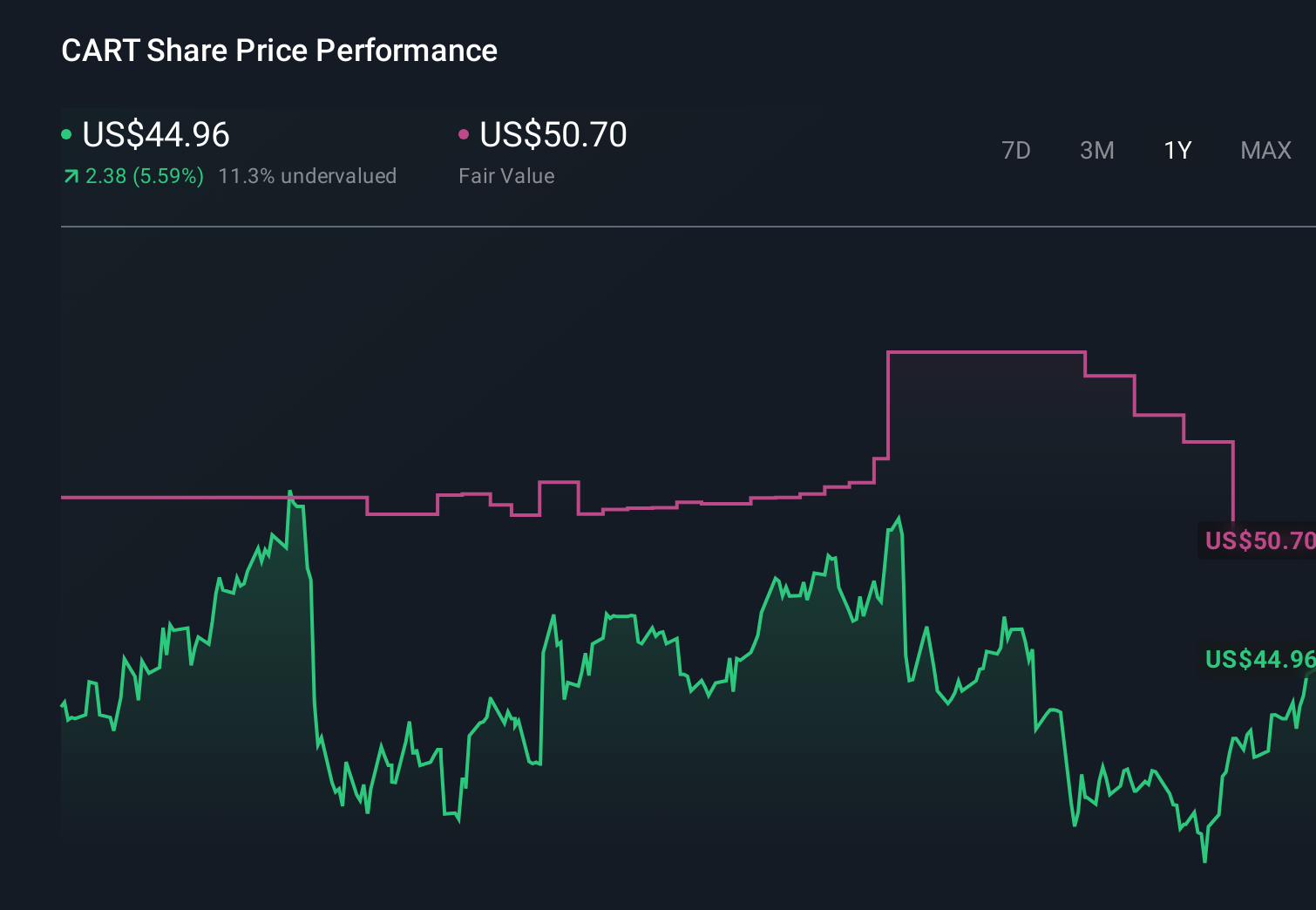
Some of the most optimistic analysts were already assuming Maplebear could reach about US$5.0 billion in revenue and US$1.0 billion in earnings by 2028, so this new index inclusion might either reinforce or challenge that far more upbeat view compared with the more cautious consensus.
Explore 2 other fair value estimates on Maplebear - why the stock might be worth over 2x more than the current price!
Form Your Own Verdict
Disagree with existing narratives? Extraordinary investment returns rarely come from following the herd, so go with your instincts.
- A great starting point for your Maplebear research is our analysis highlighting 3 key rewards and 1 important warning sign that could impact your investment decision.
- Our free Maplebear research report provides a comprehensive fundamental analysis summarized in a single visual - the Snowflake - making it easy to evaluate Maplebear's overall financial health at a glance.
No Opportunity In Maplebear?
The market won't wait. These fast-moving stocks are hot now. Grab the list before they run:
- Invest in the nuclear renaissance through our list of 89 elite nuclear energy infrastructure plays powering the global AI revolution.
- Find 42 companies with promising cash flow potential yet trading below their fair value.
- Capitalize on the AI infrastructure supercycle with our selection of the 52 best 'picks and shovels' of the AI gold rush converting record-breaking demand into massive cash flow.
This article by Simply Wall St is general in nature. We provide commentary based on historical data and analyst forecasts only using an unbiased methodology and our articles are not intended to be financial advice. It does not constitute a recommendation to buy or sell any stock, and does not take account of your objectives, or your financial situation. We aim to bring you long-term focused analysis driven by fundamental data. Note that our analysis may not factor in the latest price-sensitive company announcements or qualitative material. Simply Wall St has no position in any stocks mentioned.
Have feedback on this article? Concerned about the content? Get in touch with us directly. Alternatively, email editorial-team@simplywallst.com