


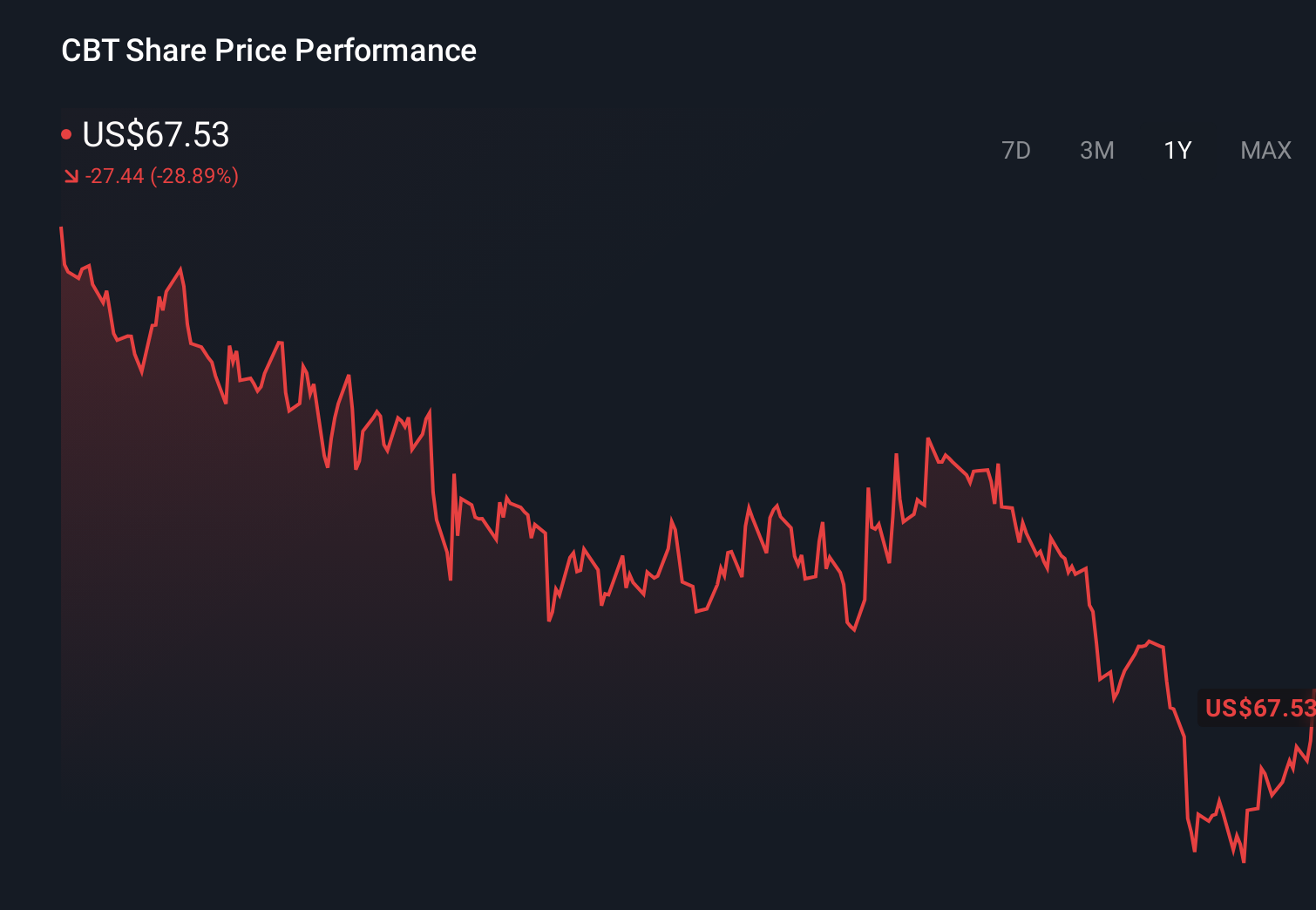
- On 27 June 2026, Cabot Corporation (NYSE: CBT) was removed from several Russell growth and small-cap benchmarks, including the Russell 2000 Growth Index, marking a broad reclassification of its index representation.
- This shift may alter how quantitatively driven and index-tracking investors view and trade Cabot, potentially changing the mix and behavior of its shareholder base.
- Next, we’ll examine how Cabot’s removal from multiple Russell growth benchmarks affects its existing investment narrative around battery materials and buybacks.
AI is about to change healthcare. These 40 stocks are working on everything from early diagnostics to drug discovery. The best part - they are all under $10b in market cap - there's still time to get in early.
Cabot Investment Narrative Recap
To own Cabot today, you need to believe in its specialty materials platform, especially higher margin battery materials and disciplined capital returns through buybacks and dividends. The recent removal from several Russell growth and small cap indices primarily affects index-linked flows and does not directly change those operating drivers, though it could add some share price volatility around the short term catalyst of execution in Battery Materials and the key risk of pressure on core Reinforcement Materials earnings.
The most relevant recent announcement here is Cabot’s ongoing share repurchase activity, with about US$48 million spent in the March quarter and nearly 29% of shares bought back since the program began. Against a backdrop of index removal, this commitment to returning capital can influence how active investors weigh near term earnings trends, capital allocation, and any future shifts in the shareholder base as passive ownership potentially declines.
Yet, if Reinforcement Materials pricing pressure deepens at the same time index trackers exit, investors should be aware that...
Read the full narrative on Cabot (it's free!)
Cabot's narrative projects $4.0 billion revenue and $479.7 million earnings by 2029. This requires 3.5% yearly revenue growth and about a $198.7 million earnings increase from $281.0 million today.
Uncover how Cabot's forecasts yield a $88.50 fair value, in line with its current price.
Exploring Other Perspectives
Some of the most optimistic analysts were expecting Cabot to reach about US$4.0 billion in revenue and nearly US$499 million in earnings, which is a much rosier view than the baseline narrative and could be challenged if index removal magnifies concerns around reinforcing carbons pricing pressure.
Explore 4 other fair value estimates on Cabot - why the stock might be worth as much as $88.82!
Decide For Yourself
Don't just follow the ticker - dig into the data and build a conviction that's truly your own.
- A great starting point for your Cabot research is our analysis highlighting 4 key rewards and 1 important warning sign that could impact your investment decision.
- Our free Cabot research report provides a comprehensive fundamental analysis summarized in a single visual - the Snowflake - making it easy to evaluate Cabot's overall financial health at a glance.
Seeking Other Investments?
Markets shift fast. These stocks won't stay hidden for long. Get the list while it matters:
- Find 43 companies with promising cash flow potential yet trading below their fair value.
- The best AI stocks today may lie beyond giants like Nvidia and Microsoft. Find the next big opportunity with these 16 smaller AI-focused companies with strong growth potential through early-stage innovation in machine learning, automation, and data intelligence that could fund your retirement.
- Uncover the next big thing with 20 elite penny stocks that balance risk and reward.
This article by Simply Wall St is general in nature. We provide commentary based on historical data and analyst forecasts only using an unbiased methodology and our articles are not intended to be financial advice. It does not constitute a recommendation to buy or sell any stock, and does not take account of your objectives, or your financial situation. We aim to bring you long-term focused analysis driven by fundamental data. Note that our analysis may not factor in the latest price-sensitive company announcements or qualitative material. Simply Wall St has no position in any stocks mentioned.
Have feedback on this article? Concerned about the content? Get in touch with us directly. Alternatively, email editorial-team@simplywallst.com