


Key Points
Smugglers have been using various methods to bring Nvidia chips into restricted markets such as China.
Without ongoing technical and engineering support, the smuggled chips have a relatively short lifespan that makes them unusable.
One of Nvidia's main focuses is remaining in the good graces of the current U.S. administration.
Nvidia (NASDAQ: NVDA) has solidified its position as one of the most important companies in the tech world, as the undisputed leader in artificial intelligence (AI)-related hardware. The company started as a graphics card maker for video games, but its graphics processing units (GPUs) and other advanced AI chips have since become the hardware foundation for the current AI boom.
Unfortunately, there has been a $2.5 billion chip-smuggling scheme on the black market, and Nvidia CEO Jensen Huang isn't a fan of what's happening. During Nvidia's shareholder meeting, Huang took a strong stance on the scheme, calling it a "dead end."
Missed Nvidia in 2009? This Rare Signal Is Flashing Again. In 2009, a "Double Down" signal flashed for a little-known chipmaker called Nvidia. For the first time in years, that same "Total Conviction" signal is flashing for a company 1/100th the size of Nvidia. Continue »
This scheme involves smuggling Nvidia chips into markets like China -- where Nvidia has strict import restrictions and controls -- using methods that circumvent audits intended to verify legitimacy. Despite the issue, there are larger implications that should be encouraging to Nvidia investors.
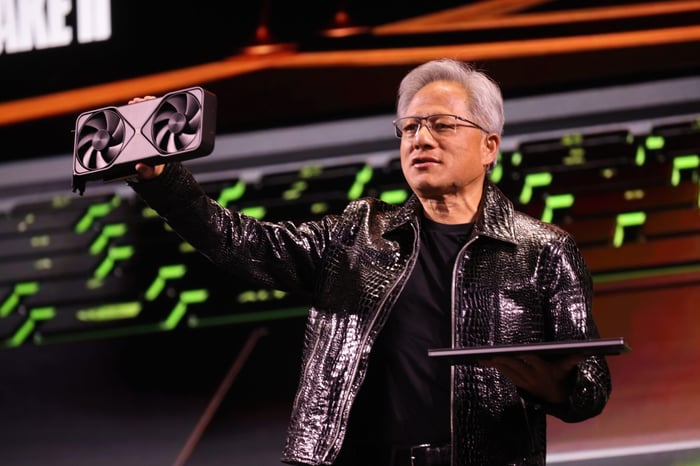
Image source: Nvidia Corporation.
Going nowhere fast
A major point Huang made is that Nvidia's AI chips aren't like a typical video game graphics card, where you buy it once and it works indefinitely. These chips are part of an ecosystem that requires constant updates (both software and hardware maintenance) that aren't available to chips acquired on the black market.
In other words, they may work now, but without software updates, security patches, and Nvidia's engineering support, their lifespans are short and will inevitably become unusable or a liability to the companies using them. That's the basis for his "dead end" comments.
Nvidia wants to stay in Washington's good graces
As it stands, Nvidia has a monopoly on the advanced GPUs needed to train and deploy AI. Companies like Amazon and Alphabet are beginning to make their own in-house chips, but for the most part, Nvidia comfortably dominates the market. It won't last forever, but other companies have lots of ground to make up before catching up to Nvidia.
Arguably its biggest obstacle right now, though, is government restrictions and compliance requirements. The U.S. has already implemented strict export bans on certain chips to China, so Huang's taking this stance is a way to stay in the good graces of the U.S. government and avoid further crackdowns or potential fines. The fewer geopolitical and regulatory worries, the better.
Nvidia is still rolling strong
The black-market chips haven't had much of a negative effect on Nvidia's business. In its most recent quarter (ended April 26), it made $81.6 billion in revenue (up 85% year over year) and $58.3 billion in net income (up 211% year over year).
Nvidia is a well-oiled machine, and this shows just how wide its technological and competitive moat is. That should be encouraging news for investors seeking sustainable growth and who may have had "AI bubble" worries. There's a reason the company was comfortable authorizing an $80 billion share buyback program and increasing its dividend from $0.01 to $0.25.
Stefon Walters has no position in any of the stocks mentioned. The Motley Fool has positions in and recommends Alphabet, Amazon, and Nvidia. The Motley Fool has a disclosure policy.