


Australian consumer sentiment is under pressure, with rising life dissatisfaction, stagnant household incomes and housing stress all pointing to a cautious shopper and tougher conditions for businesses that rely on discretionary spending. For investors, that mix can quickly separate resilient stocks from those more exposed to weak demand and stagflationary pressures. This article breaks down 3 stocks from the Australian Consumer Sentiment Headwinds Company Opportunities screener that appear particularly vulnerable to these trends. It is intended to help you assess where prolonged cost of living strain, subdued confidence and higher operating costs might pose the greatest risks to share prices.
Woolworths Group (ASX:WOW)
Overview: Woolworths Group is a large supermarket and retail group that runs grocery, general merchandise and related businesses across Australia and New Zealand, including its Everyday Rewards and B2B food supply operations.
Operations: Woolworths generates most of its revenue from Australian Food at about A$52.4b, with smaller contributions from Australian B2B (A$5.9b), New Zealand Food (A$7.6b), W Living (A$5.7b) and Other (A$0.3b). This is partly offset by A$1.6b of eliminations and reclassifications.
Market Cap: A$47.9b
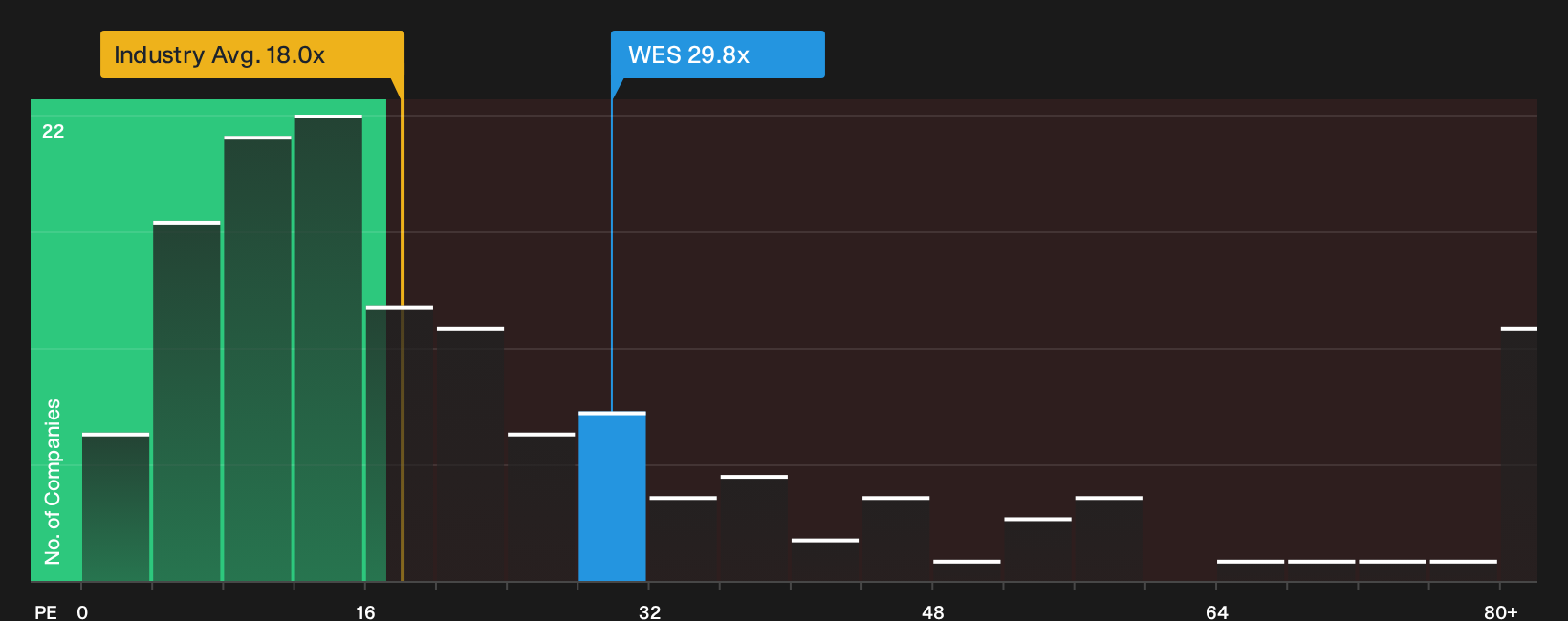
Woolworths Group might look like a safe harbour in a weak consumer backdrop, but the picture is more complicated. Customers are trading down, buying more on promotion and cutting non essential items, which pressures margins at the same time as wage, energy and transport costs rise. New price gouging laws for large grocers, with penalties of up to 10% of turnover, add a layer of regulatory risk to any future price increases. Profit margins sit at just 0.9%, recent results include a large one off loss and the stock trades on a very high P/E multiple while analysts’ consensus target sits below the current share price. For a consumer staple, Woolworths is carrying more earnings, regulatory and valuation risk than many investors might expect.
Woolworths Group’s thin 0.9% profit margin and rich P/E suggest the story might be more fragile than it looks, and the real pressure points may not be obvious from the headline numbers alone. Start with the 2 key rewards and 3 important warning signs (1 is major!)

Wesfarmers (ASX:WES)
Overview: Wesfarmers is a diversified group best known for owning retailers like Bunnings, Kmart, Target, Officeworks and Priceline Pharmacy, as well as chemicals, fertilisers, industrial safety and lithium businesses across Australia, New Zealand and select international markets.
Operations: Wesfarmers generates most of its revenue from Bunnings at about A$20.0b, followed by Kmart Group at A$11.6b, Health at A$6.2b, Officeworks at A$3.6b, Wes CEF at A$2.9b, Industrial and Safety at A$1.9b and smaller contributions from Other and segment adjustments.
Market Cap: A$105.4b
Wesfarmers might look like a quality anchor in a tough consumer backdrop, with a high 6.6% net margin and strong 39% ROE, but that quality comes with a rich valuation and some uncomfortable macro sensitivities. Its core retail engines, including Kmart, Target and Bunnings, lean heavily on households whose real incomes are stuck at 2020 levels and increasingly value conscious, just as cost of living pressures, wage inflation and higher operating costs bite into profitability. Debt funded liabilities add another layer of risk if conditions stay weak, while expansion into health and lithium still carries execution and earnings uncertainty. For investors, Wesfarmers is interesting precisely because the mix of premium pricing, slower forecast growth and stagflationary consumer pressures pulls in opposite directions and leaves big questions about how much resilience is already priced in.
Wesfarmers’ premium pricing and consumer exposure could be masking where the real pressure lands first. Before assuming its 6.6% net margin and 39% ROE are bulletproof, read the 2 key rewards and 1 important warning sign
JB Hi-Fi (ASX:JBH)
Overview: JB Hi-Fi is a major Australian and New Zealand retailer of consumer electronics, home appliances and related services, operating JB Hi-Fi stores, The Good Guys and e&s, and selling everything from computers and phones to TVs, whitegoods and installation services through both physical stores and online.
Operations: JB Hi-Fi generates most of its revenue from JB Hi-Fi Australia at about A$7.3b, with additional contributions from The Good Guys at A$2.9b, JB Hi-Fi New Zealand at A$416.3m and e&s at A$277.7m.
Market Cap: A$8.7b
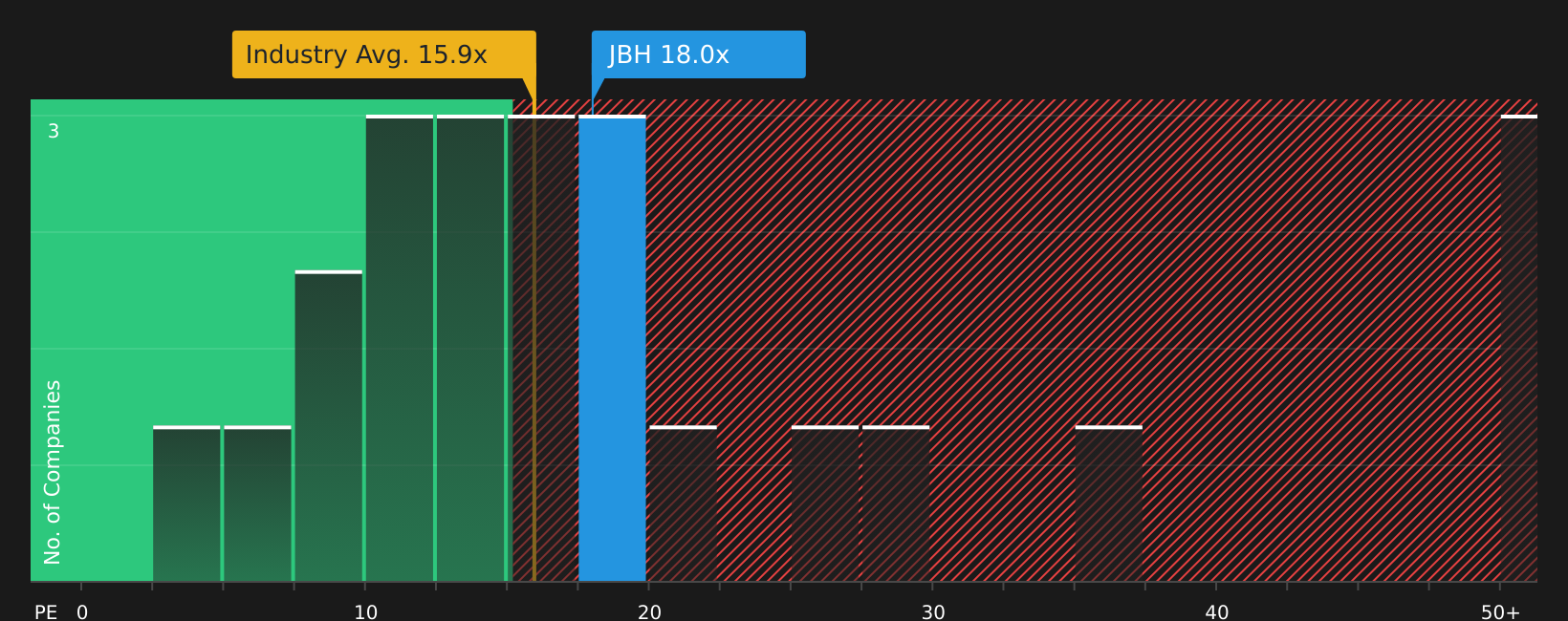
JB Hi-Fi appears to be a high quality retailer, with strong brand recognition, a lean operating model and a reported ROE of around 28%. However, the current backdrop of weak consumer confidence, stagnant disposable incomes and rising living costs affects its discretionary electronics and appliance mix directly. Management commentary points to demand that is heavily reliant on replacement cycles and promotional activity, which can pressure margins as competition from online retailers and other big box chains intensifies. Simply Wall St’s DCF suggests a large valuation cushion, and reported earnings growth over the past year has outpaced the specialty retail industry. At the same time, the company’s slower forecast growth, modest 4.4% margin and exposure to lower income households highlight the potential for weaker performance if conditions remain difficult.
JB Hi-Fi’s lean model and 28% ROE can distract from how exposed its 4.4% margin is to stretched households and heavy discounting, so it is worth reading the 2 key rewards and 1 important warning sign
Take Control of Your Investment Journey
If Woolworths Group or any of these companies are making you feel more cautious, register for FREE with Simply Wall St and add your companies to a Watchlist to monitor the share price against the fair value and track any new developments as they happen. Once you've made your move, manage your holdings with our Portfolio Command Center that filters out the noise to deliver only the most critical, actionable updates. Throughout your journey, our Community allows you to filter the best ideas from thousands of investor perspectives. By uncovering hidden catalysts and risks early, you'll accelerate your decision-making and stay one step ahead of the market.
Seeking Alternatives Before The Crowd Moves
Fresh ideas do not stay under the radar for long. As momentum builds and prices start flying, latecomers get caught chasing. Scan these potential breakouts now and consider them before the crowd.
- Explore potential income workhorses by checking out a curated group of high yield companies screened as 6 dividend fortresses.
- Review potential growth leaders with strong balance sheets by using a focused list of solid balance sheet and fundamentals (20 results) that filters for financial quality first.
- Track early movers in a fast evolving theme by running the 54 AI infrastructure stocks while the trend is still forming and prices have not fully adjusted.
This article by Simply Wall St is general in nature. We provide commentary based on historical data and analyst forecasts only using an unbiased methodology and our articles are not intended to be financial advice. It does not constitute a recommendation to buy or sell any stock, and does not take account of your objectives, or your financial situation. We aim to bring you long-term focused analysis driven by fundamental data. Note that our analysis may not factor in the latest price-sensitive company announcements or qualitative material. Simply Wall St has no position in any stocks mentioned.
Have feedback on this article? Concerned about the content? Get in touch with us directly. Alternatively, email editorial-team@simplywallst.com