


The Zhitong Finance App learned that CICC released a research report saying that the situation between the US and Iran has continued to escalate recently. The Strait of Hormuz has once again come to a standstill after the phased resumption of navigation, and the Brent oil price has rebounded strongly at the bottom. Currently, it is close to 90 US dollars/barrel. The bank believes that the current market may have undergone two core changes: First, global oil inventories have experienced several months of consumption, and buffering capacity has declined sharply. Combined with the release of SPR in OECD countries, the pressure to leave storage may shift further to commercial inventories, and the short-term flexibility of crude oil risk premiums may be higher. Second, demand disruptive pressure from supply shocks has surpassed expectations in the second quarter, and weak demand expectations may limit the length of time oil prices stay high.
CICC's main views are as follows:
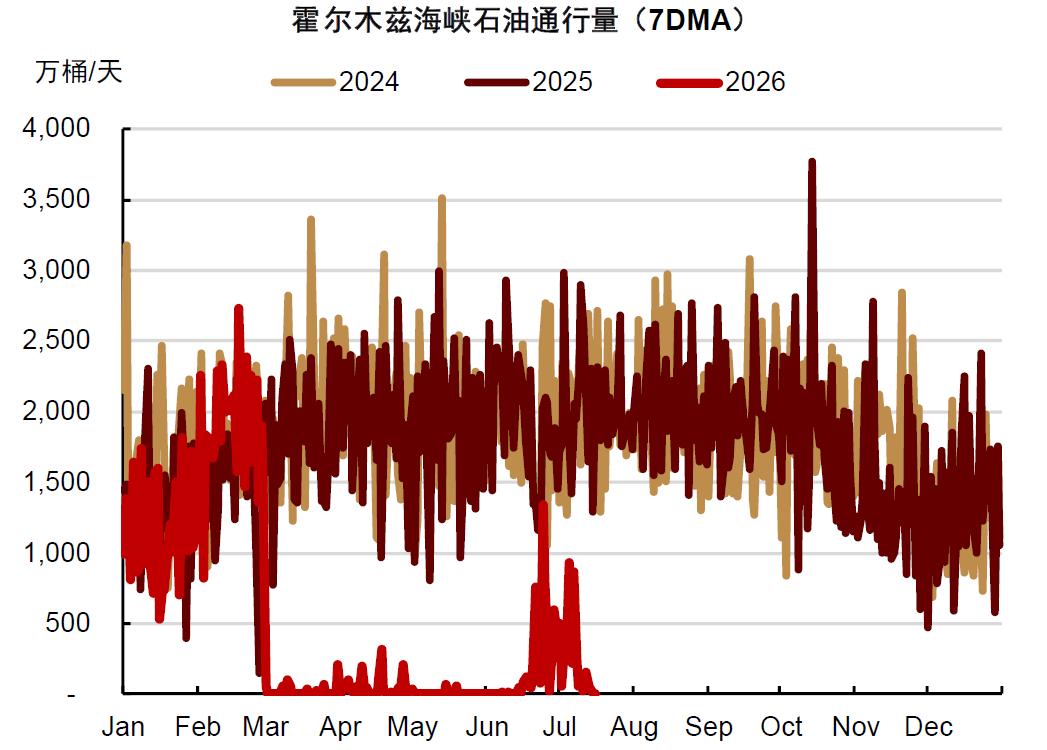
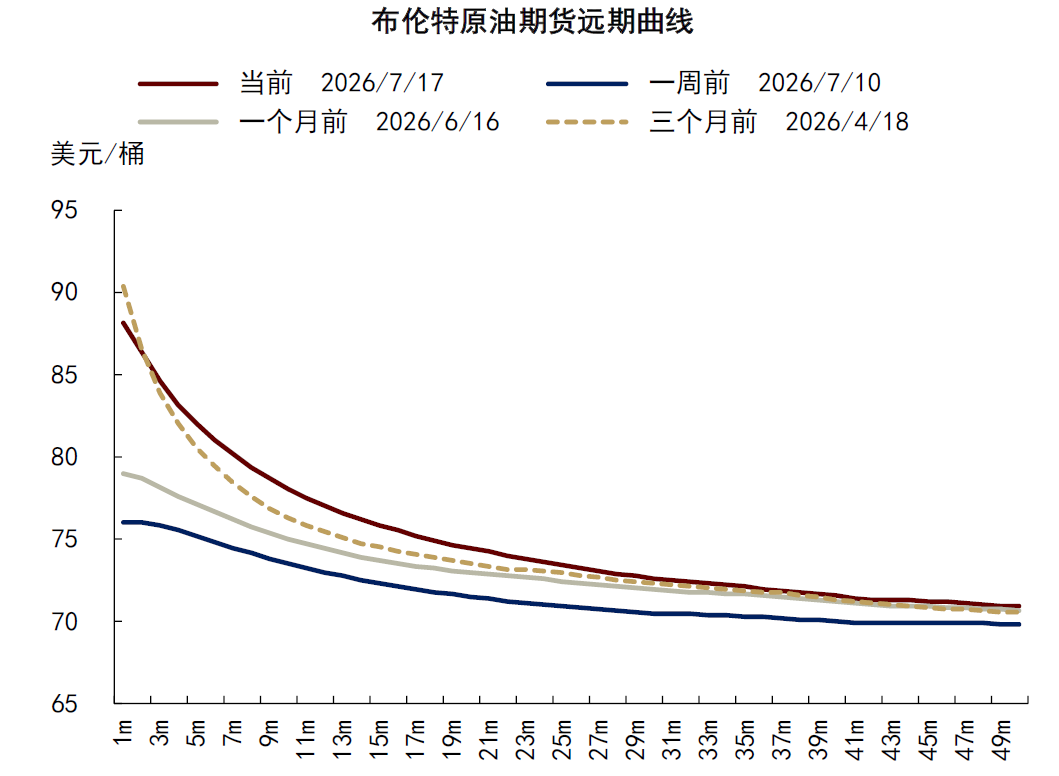
Recently, the situation between the US and Iran has continued to escalate. The Strait of Hormuz has once again come to a standstill after the phased resumption of navigation. Brent oil prices have rebounded strongly at the bottom and are currently close to 90 US dollars/barrel. The bank believes that the current oil market may already be repricing the risk of trade disruptions. As the situation between the US and Iran escalates further over the weekend, if the strait continues to be interrupted, the market may need to further assess extreme inventory risks.
Compared with the initial shutdown at the beginning of the US-Iran conflict at the end of February, the bank believes that the current market may have undergone two core changes: First, global oil stocks have experienced several months of consumption, and buffering capacity has declined drastically. Combined with the release of SPR in OECD countries, the pressure to leave storage may shift further to commercial inventories, and the short-term flexibility of crude oil risk premiums may be higher. Second, demand disruptive pressure from supply shocks has surpassed expectations in the second quarter, and weak demand expectations may limit the length of time oil prices stay high.
In terms of price prediction, the bank suggests that short-term oil prices will increase the risk of rising oil prices, and maintain its judgment on the 3Q26 Brent oil price center of 90 US dollars/barrel. On the supply side, crude oil production in the Gulf region is still in the early stages of recovery. Supply of refined oil products and LNG is recovering more slowly. Trade has been blocked or the return process of oil and gas in the Middle East has been delayed once again. After the straits are closed again, the pressure to stock up in the Gulf may be lower than before. Furthermore, the recent situation between Russia and Ukraine has been repeated. Russia further increased the ban on the export of refined oil products after the refinery was damaged. The trip suggested that it may increase the risk of mismatch in the market for refined oil products such as diesel in the Eurasian region.
Chart 1: The Strait of Hormuz may have been closed again
Source: Bloomberg News, CICC Research Division
Chart 2: Brent oil price rebounds
Source: Bloomberg News, CICC Research Division
The weakening of the inventory buffer may amplify the short-term elasticity of oil prices under trade disruptions
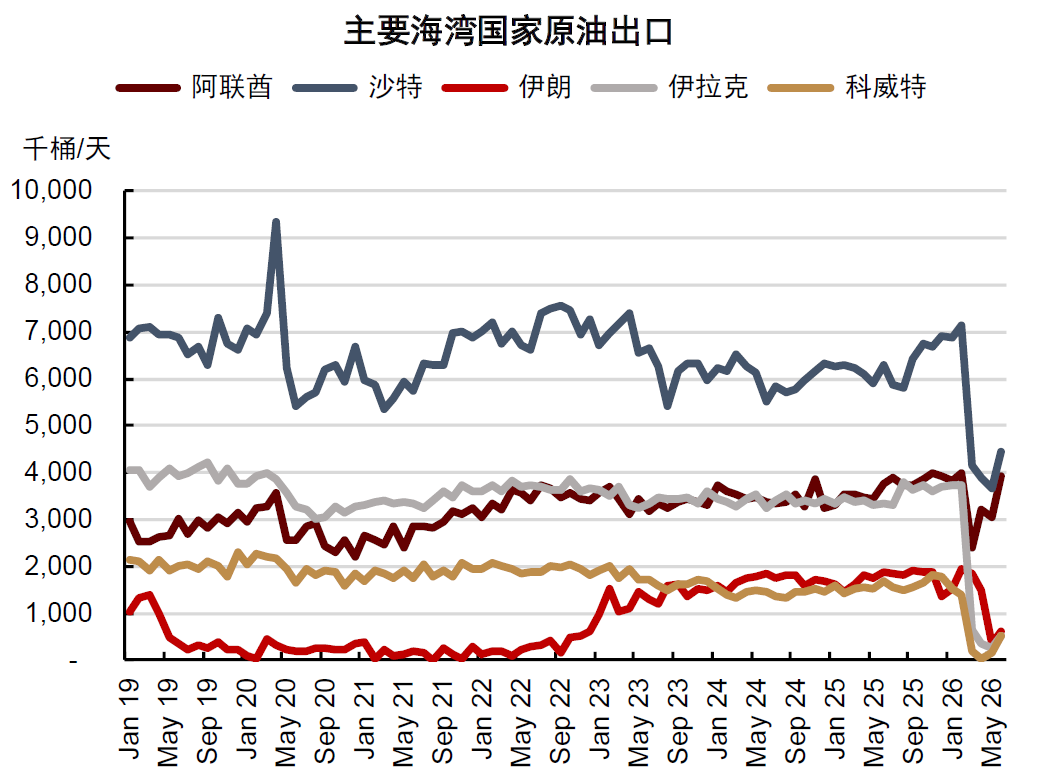
Looking back at the previous period, the Strait of Hormuz was interrupted for several months after the US-Iran conflict, and traffic gradually resumed in June. From finalizing the preliminary draft framework for a cease-fire in late May, to the formal signing of a cease-fire memorandum of understanding on June 17, the US-Iran conflict was downgraded for several months. Then the US lifted the naval blockade against Iraq, Iran resumed navigation in the Strait of Hormuz, and the rapid restoration of trade flow once helped to ease regional geopolitical tension drastically. According to the IEA, oil exports from the Gulf region increased by about 6.5 million b/d in June compared to the previous month, to 16.1 million b/d, and returned to about 65% of normal levels. Among them, crude oil exports increased by about 5.5 million b/d month-on-month, adding up the previous pipeline transit volume of Saudi Arabia and the UAE. Total crude oil exports from the Gulf region reached 13.2 million b/day, returning to 70% of the normal level; exports of refined oil products increased by about 1 million b/day to 2.9 million b/day, close to 50% of the normal level. With Iran's attack on merchant ships in early July and the full-scale escalation of the military conflict between the US and Iran in the past two weeks, transportation in the Strait of Hormuz may have come to a standstill again; the latest shipping data shows that even considering the passage of black ships, the volume of oil tankers in the Strait of Hormuz this week may be less than 10% of the normal level.
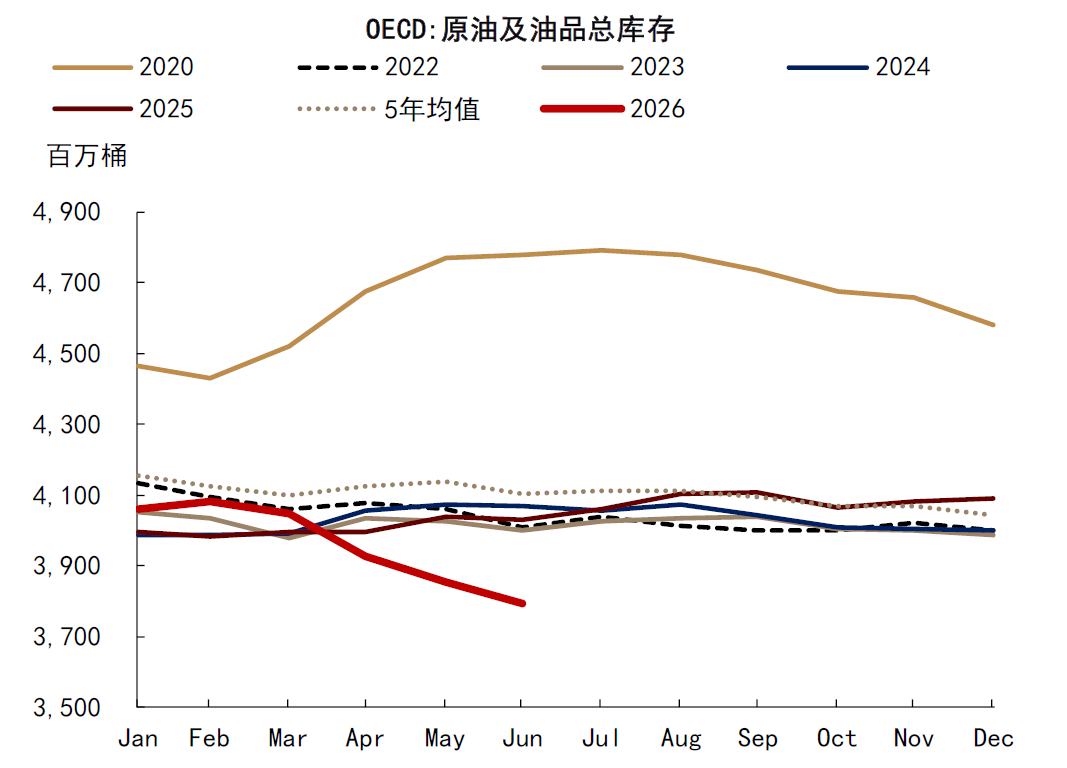
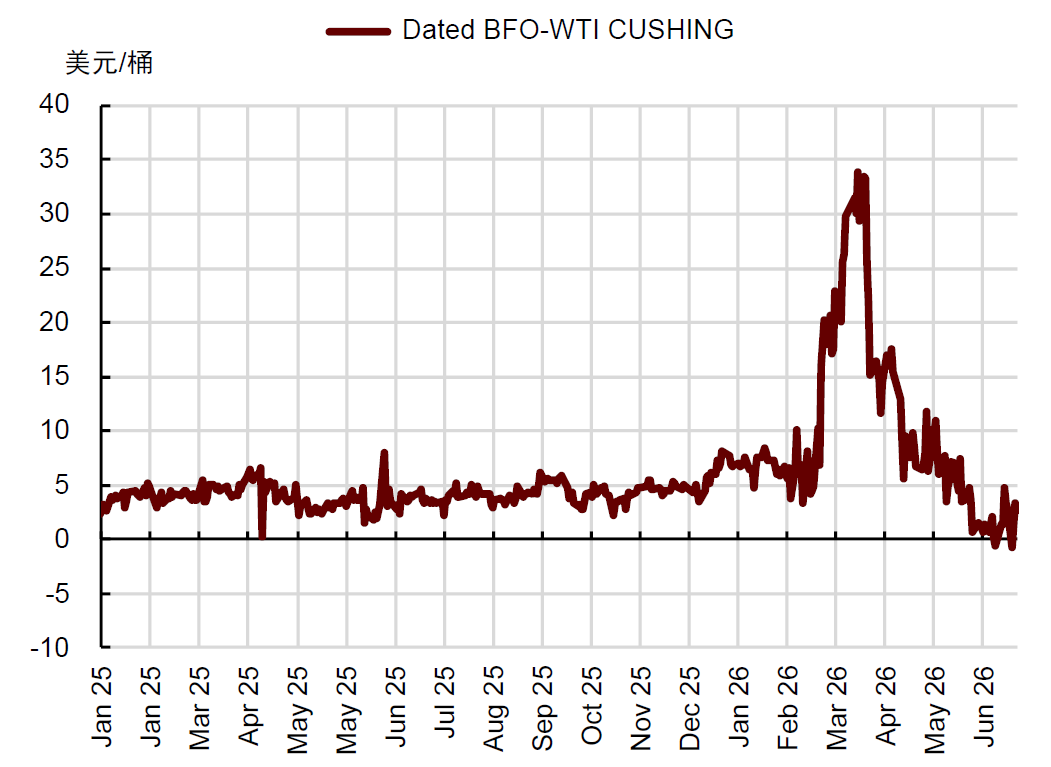
Compared with the first shutdown of the Strait of Hormuz at the end of February at the beginning of the US-Iran conflict, the bank believes that the biggest change in the current oil market may be a decrease in the buffer capacity of global oil stocks. On the one hand, onshore oil stocks have now fallen to historic lows after months of exhaustion. By the end of the second quarter, the deviation of OECD oil stocks from the 5-year average had dropped sharply from -1% at the end of February to -8%, in line with expectations in the bank's medium-term outlook. During this period, the total consumption of OECD oil stocks was nearly 300 million barrels, of which SPR jointly released 200 million barrels, sharing more pressure on commercial inventories. By region, US oil inventories have consumed a total of 160 million barrels and undertook more than half of the task of being removed from storage, but concerns about inventories have recently begun to show; since June, as crude oil inventories in the Cushing region fell to a historically low level, WTI spot discounts have basically been cleared, and the space for further inventory release may have been limited. On the other hand, there is a decline in the number of cargo buffers in transit in the Middle East. Before the strait was first shut down, goods in transit that had normally left the port in the early stages secured a buffer period of about 1 month, and the onshore storage challenge officially arrived in April; however, before the current shutdown of the strait, oil exports from the Gulf region fell below the February level of 8-9 million b/d in June, and the pressure to reduce volume at the port may have appeared more quickly. The short-term strait was closed again, and the bank suggested a lower inventory buffer or provided greater elasticity to crude oil premiums. Looking ahead, the OECD SPR release plan may be nearing its end in 3Q26. If passage through the strait continues to be blocked, the trip will suggest pressure to remove global onshore oil from storage or further shift to commercial stocks and the Eurasian region.
Chart 3: OECD oil stocks have been consumed over several months
Source: IEA, CICC Research Division
Chart 4: The decline in US inventories led to a narrowing of WTI discounts
Source: Bloomberg News, CICC Research Division
Demand disruptions have arrived, and negative feedback pressure may limit the time that oil prices stay high
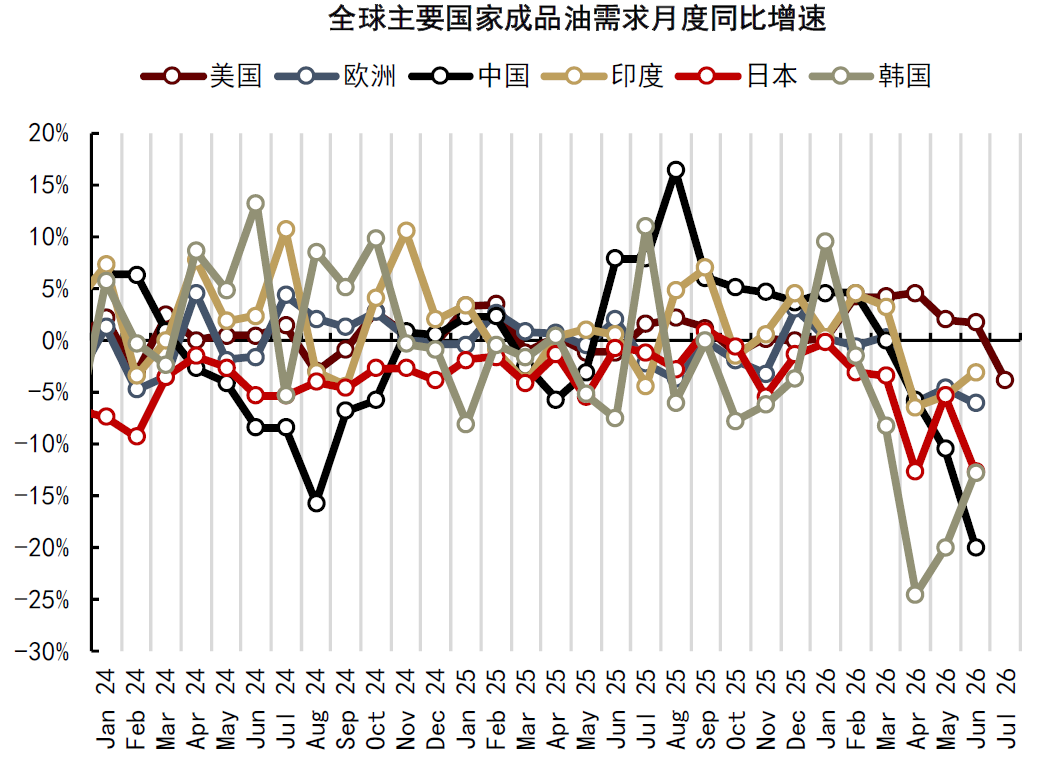
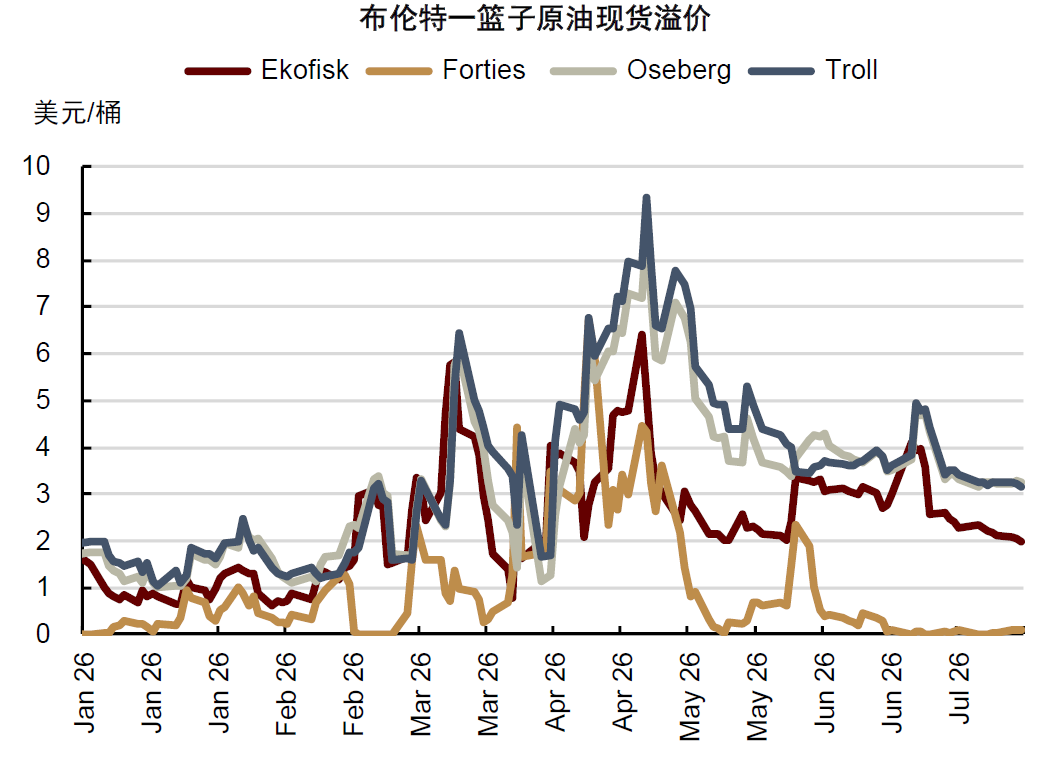
Compared with the market focusing on supply shocks and ignoring demand elasticity in the early stages of the conflict, the damage to global oil demand exceeded market expectations in the second quarter, and the impact on the balance between supply and demand may be difficult to ignore. According to the IEA, global oil demand fell by nearly 4 million b/d in 2Q26. Among them, since April, oil consumption in major regions other than the US has all entered a year-on-year contraction range. By region, the OECD European oil demand fell by about 5.6% year on year in 2Q26, while oil demand from Japan, South Korea, and China in the Asian region all fell by 10-20% year on year. US oil demand recorded a year-on-year increase of about 2.7% in 2Q26, but it also showed fatigue since July and initially entered a year-on-year contraction range. The bank suggests that short-term oil prices will rise or further deepen negative demand feedback. Weak demand expectations may limit the time for oil prices to stay high; after the recent re-closure of the strait, the crude oil spot premium remained low, or initially confirmed demand fatigue. Based on the above analysis, the bank suggests that short-term oil prices will increase the risk of rising oil prices, and maintain its judgment on the 3Q26 Brent oil price center of 90 US dollars/barrel.
Chart 5: The damage to global oil demand in 2Q26 exceeded expectations
Source: IEA, CICC Research Division
Chart 6: Crude oil spot premiums have remained restrained recently
Source: Bloomberg News, CICC Research Division
The resumption of crude oil production in the Middle East has been delayed, and the Russian-Ukrainian situation has increased the risk of mismatch in the diesel market
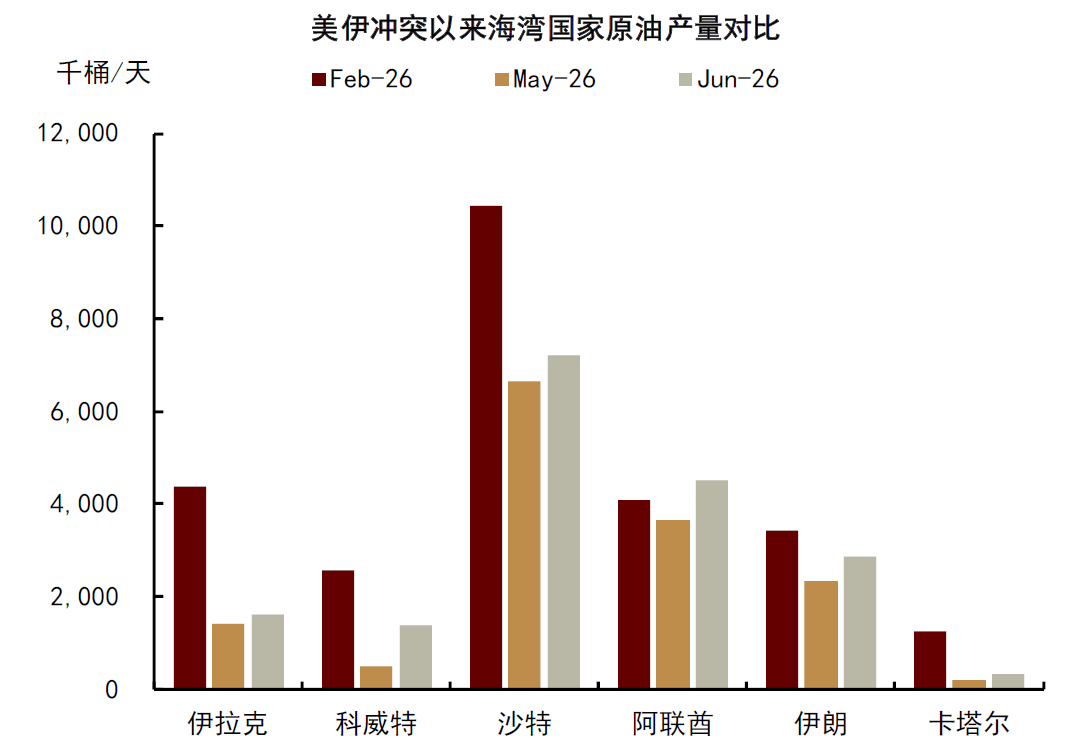
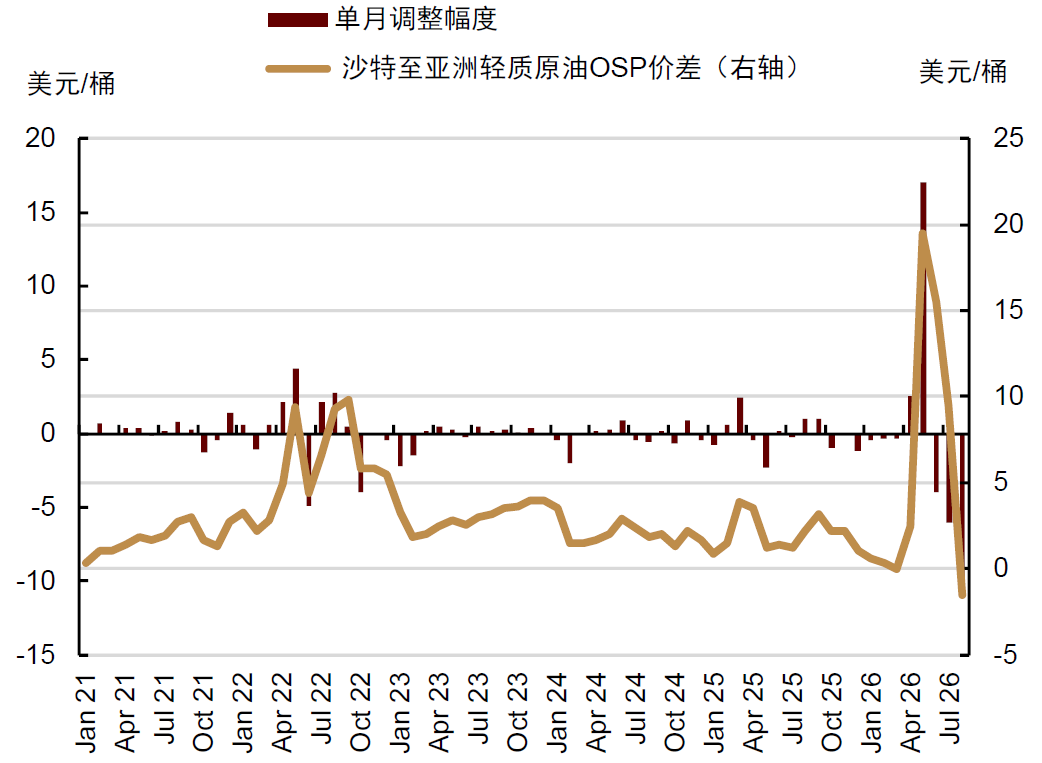
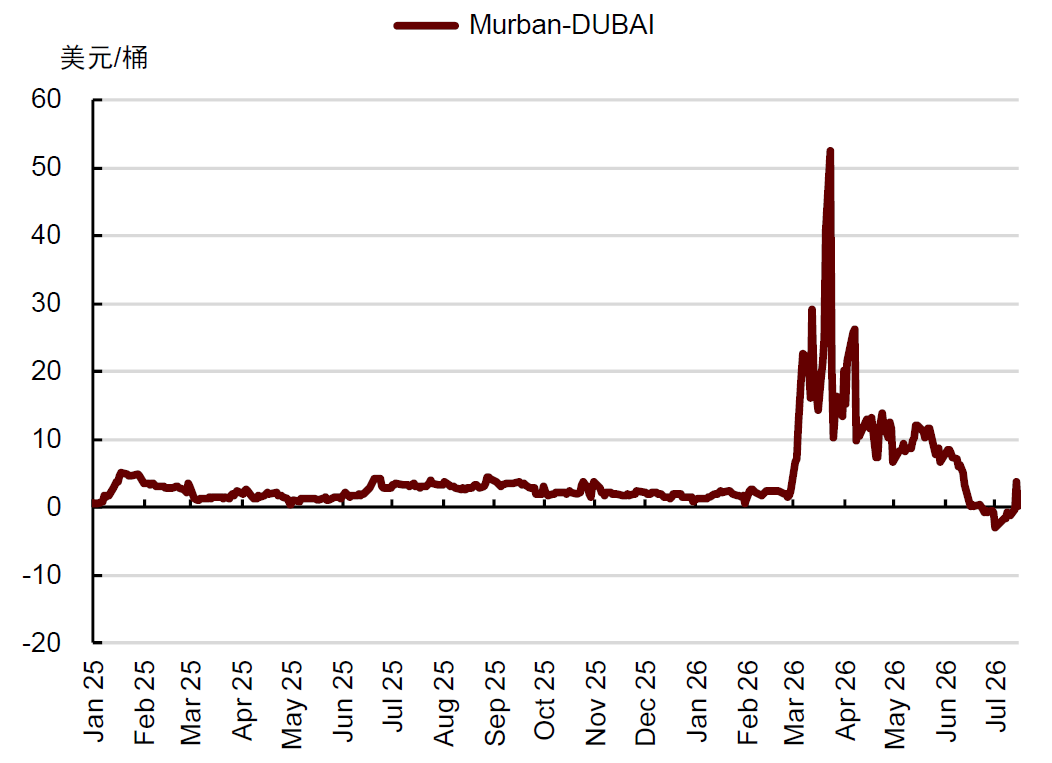
On the supply side, recent geopolitical upgrades may delay the process of resuming oil and gas production in the Middle East. Along with the resumption of trade, crude oil production in the six Gulf countries increased by about 3.13 million b/d in June. Among them, the UAE and Kuwait resumed production faster than expected, with production increasing by 870,000 b/d, respectively. UAE crude oil production has returned to pre-conflict levels; Saudi Arabia, Iraq, and Qatar have resumed production at a relatively steady pace, with production increasing by 55, 22, and 110,000 b/d, respectively; Iran's crude oil production increased by about 510,000 b/d. The damage rate of total crude oil production in the Gulf region fell to 32% from 45% in May. In terms of total volume, crude oil production in the Gulf region responded faster than expected in June, compounding the sharp reduction in July-August OSP by Saudi Arabia, Kuwait, and Iraq, which may reflect the strong demand of oil producers to restore market share in the short term. The short-term geography has been upgraded again, and the return to oil and gas supply in the Gulf may be delayed again. The recent return of the Murban crude oil spot premium may also initially confirm that trade has been blocked again; compared with the initial closure of the strait, the current pressure to stock up in the Gulf may be even lower. Structurally, crude oil trade in the Middle East recovered significantly faster than refined oil products and LNG in the early stages. The flow of Qatar LNG liquefaction units monitored by the bank was still sluggish, or confirmed that refinery production capacity and liquefaction units that were damaged a lot in the early stages may require longer repair time. Recently, refined oil products and Eurasian LNG prices have also shown greater elasticity.
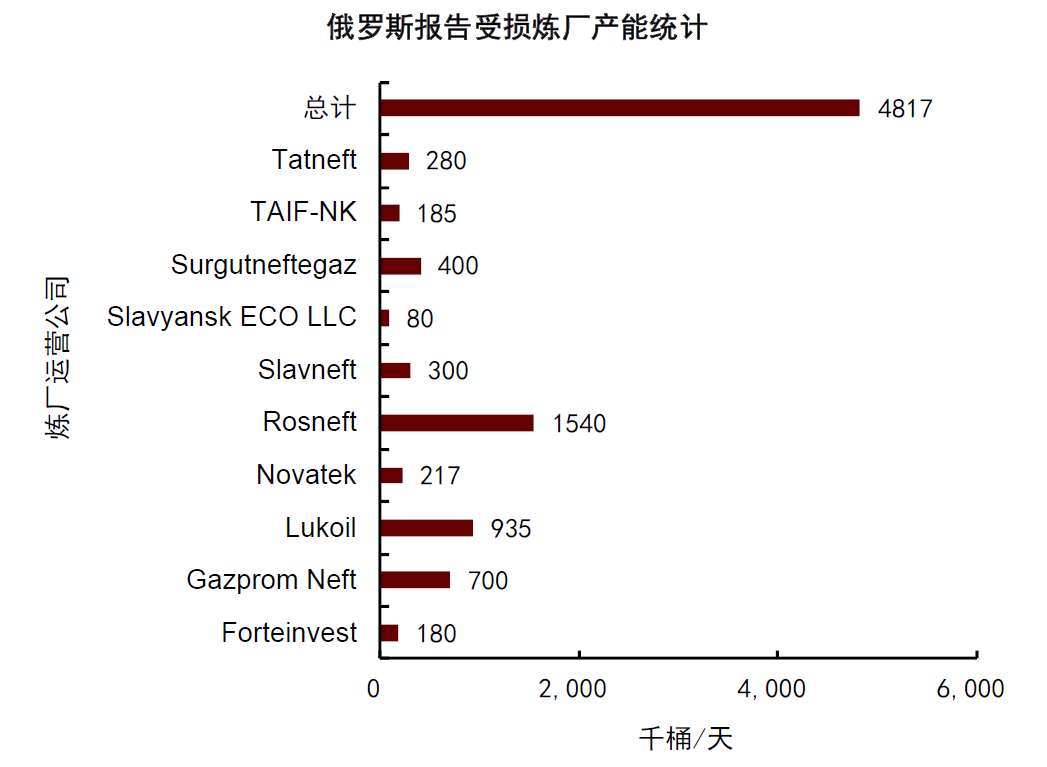
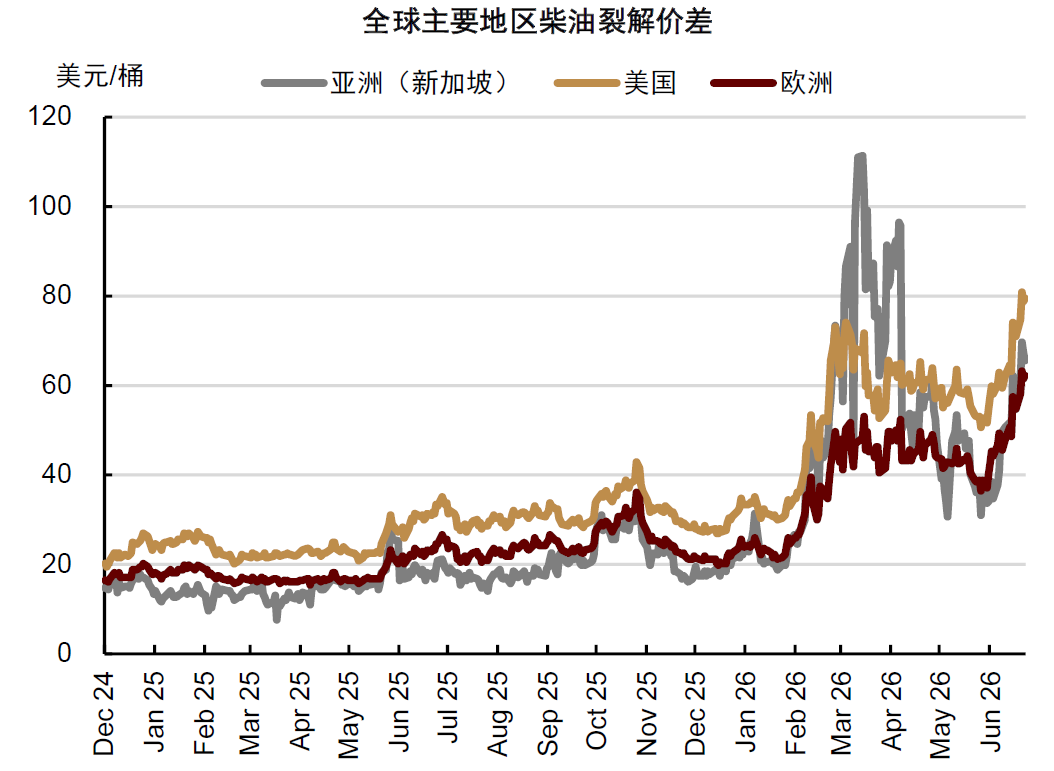
The situation in Russia and Ukraine has also been repeated, and Russian refineries have been damaged or the pressure on the refined oil market mismatch has intensified. In 2025, Russian refined oil exports are about 2.6 million barrels/day, accounting for about 10% of the total global trade in refined oil products. The categories are mainly diesel and fuel oil, and gasoline accounts for a relatively low share. Since the second quarter, the Russian-Ukrainian geographical conflict has hit Russian refinery production capacity hard. In June, Russian crude oil processing volume fell to 3.8 million b/d, and refined oil exports fell to 1.9 million b/d, all with year-on-year declines of about 30%. According to IEA statistics, the current production capacity of Russian refineries is about 4.82 million b/day due to geographical influence, accounting for more than 70%, and the supply of refined oil products in the region may be under further tightening pressure. After Russia has already implemented a phased export ban on gasoline, aviation kerosene, and diesel, the bank believes that it may need to switch to importing some refined oil products to meet domestic consumption in the future. This may further deepen the mismatch between supply and demand in the global market for medium to heavy sulfur-containing refined oil products such as diesel and fuel oil, bringing greater upward risks to the price and cracking price differences of refined oil products in Europe and Asia.
Chart 7: Initial recovery of crude oil exports from major Gulf countries
Source: Bloomberg News, CICC Research Division
Chart 8: The initial response of crude oil production in the Gulf region was fast
Source: Bloomberg News, CICC Research Division
Chart 9: Middle Eastern countries cut OSP sharply in July-August in the previous period
Source: Bloomberg News, CICC Research Division
Chart 10: Recent spread performance initially confirms that trade has been blocked again
Source: Bloomberg News, CICC Research Division
Chart 11: Statistics on production capacity of damaged Russian refineries
Source: IEA, CICC Research Department; statistics as of July 10
Chart 12: Russia's export ban exacerbates the risk of mismatch of refined oil products
Source: Bloomberg News, CICC Research Division