


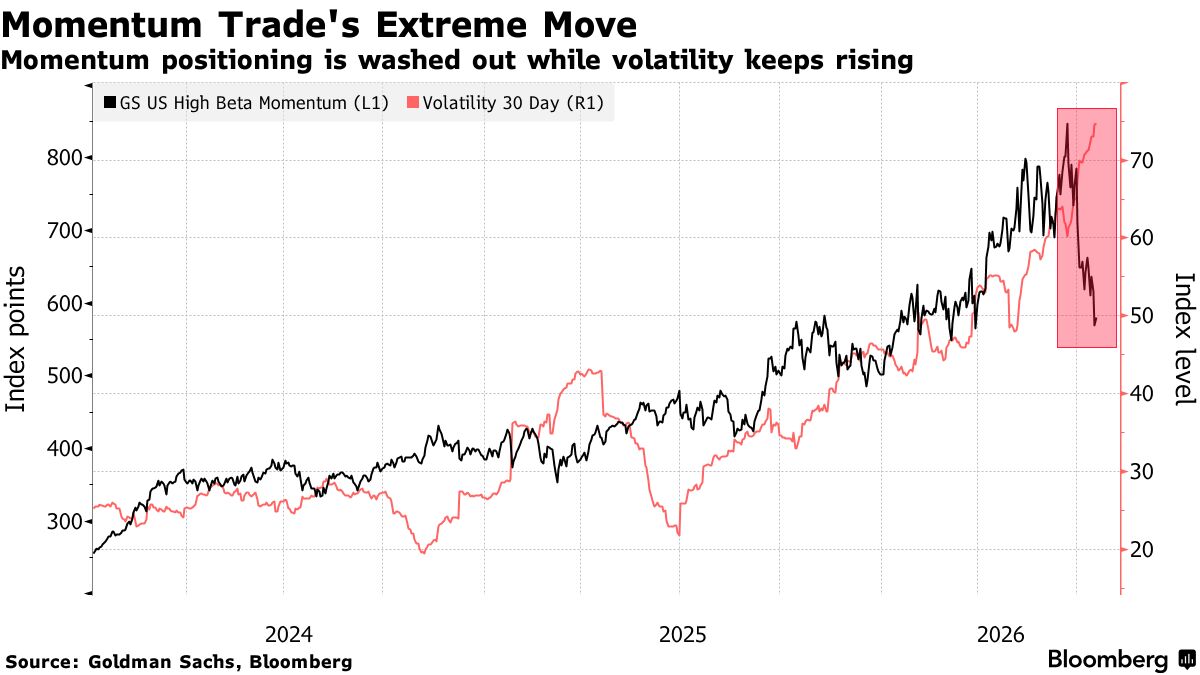
The Zhitong Finance App learned that momentum trading, driven by the rise in the stock market, is losing momentum, while optimistic profit expectations are being seriously scrutinized. Both major signs indicate that the market may experience higher volatility this summer.
Index volatility is gradually rising as investors face increasing risk factors that challenge the overall bullish view. Overcrowded artificial intelligence (AI) related transactions are undergoing a sharp reversal, triggering large-scale capital rotation. Furthermore, although the current market remains calm in response to the rising geopolitical tension, if the situation escalates further, it will put pressure on the currently widely anticipated dovish monetary policy views.
Meanwhile, market demand for risk hedging tools is growing rapidly. The Nations SkewDex Index has risen to its highest level since April — the index measures the cost difference between fictitious put options and accurate flat value options in the most liquid exchange-traded funds (ETFs) in the S&P 500 index to measure market bias — which may drive other indicators of volatility higher.
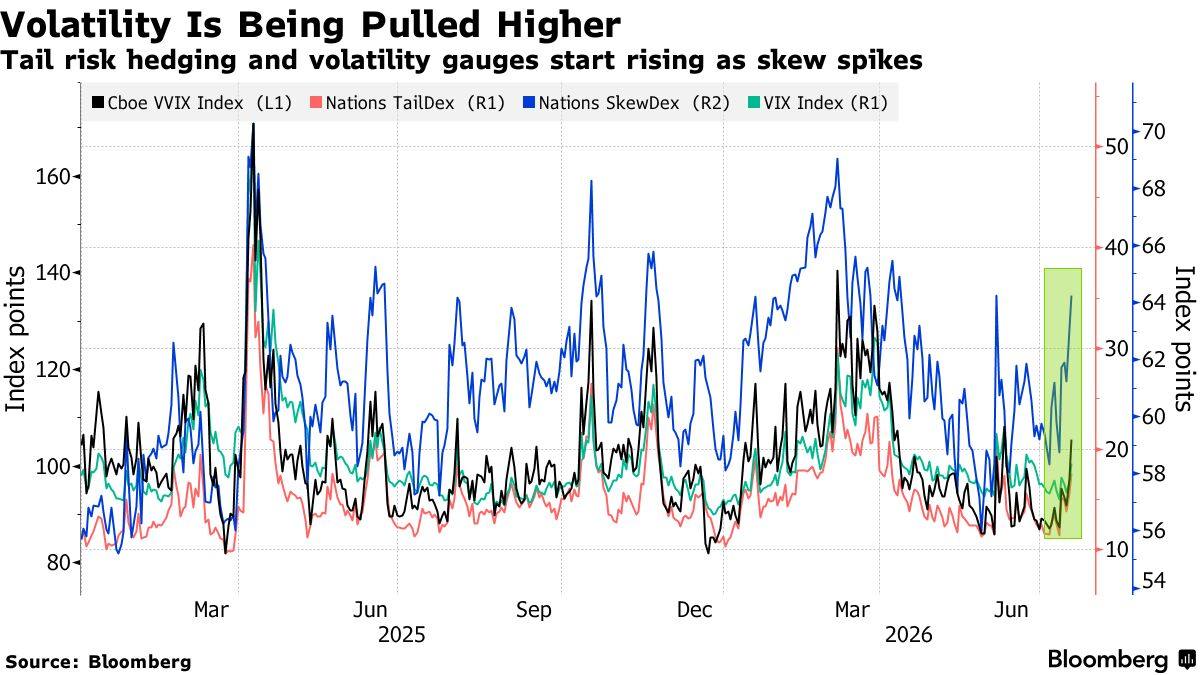
Although the VIX Index, which measures the extent of market panic, is still below 20 and is still far from a worrying level, sharp fluctuations in individual stocks are blurring the overall trend of the market. AI-related stocks, which are the core of momentum trading, are experiencing greater price fluctuations. However, unlike the first half of this year, the market narrative of “rising spot prices and rising volatility” seems to have disappeared. The current market is showing a sharp drop in stock prices, while volatility continues to soar.
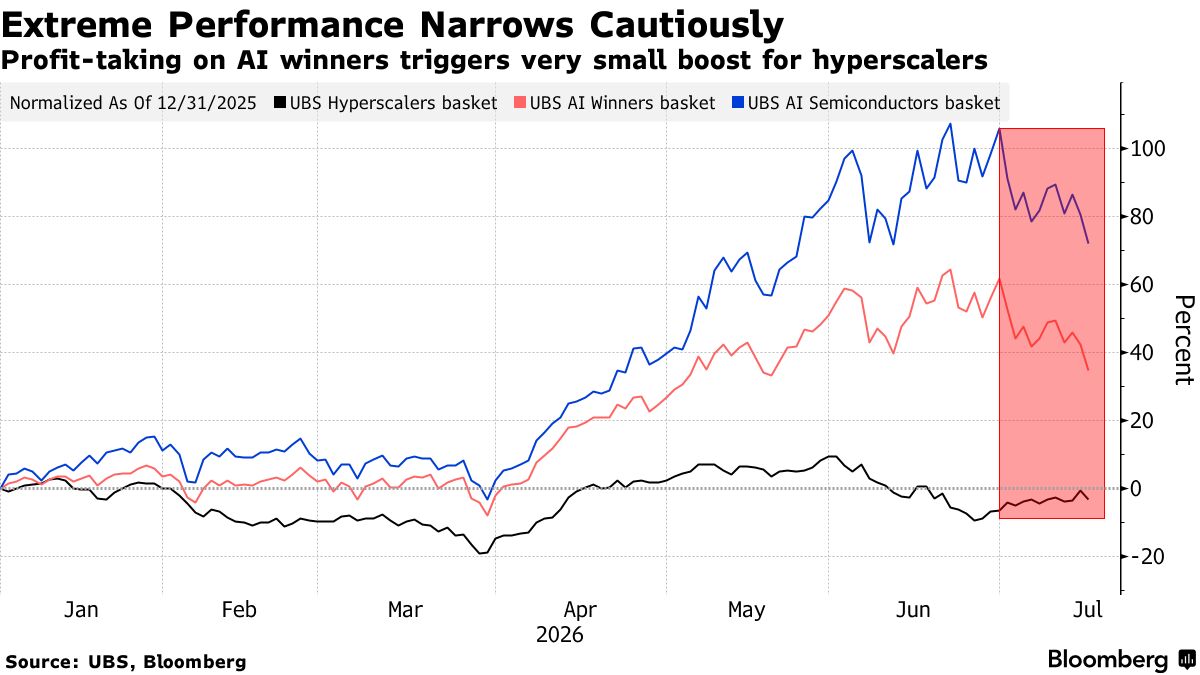
In the technology sector, the earnings season started very well, but this did not ease market tension. In fact, the opposite is true. In the case of ASML.US (ASML.US) and TSM.US (TSM.US), the performance of both companies greatly exceeded market expectations and once again confirmed confidence in future demand. However, as investors previously held too high positions and were too optimistic about these AI winner stocks, the market is showing a typical “cash on arrival” model — even if the company's performance exceeds analysts' expectations and performance guidelines are raised, the stock price is still falling.
Today, AI is causing concern on both sides of the deal: hyperscale cloud computing companies and the “Big Seven” on the one hand, and semiconductor companies on the other. Since this year, the strategy of “shorting software stocks/hyperscale cloud computing companies and going long on semiconductors” has been the mainstream of the market, but this pattern was broken last week — software and semiconductor stocks were sold off at the same time. This indicates that the market is beginning to worry about the AI capital expenditure of hyperscale cloud computing companies and whether the AI market will continue.
As the second quarter earnings season begins, the market's focus is about to fully shift to these hyperscale cloud computing companies. Google (GOOGL.US) will announce earnings on Wednesday, followed by Microsoft (MSFT.US), Meta Platforms (META.US), and Amazon (AMZN.US) next week.
Wolf von Rotberg, stock strategist at J. Safra Sarasin Sustainable Asset Management, said: “Considering the undisputed long-term potential of AI, we don't want to jump to conclusions too soon. However, we would like to point out that the recent changes in the financing structure of hyperscale cloud computing companies occurred precisely at a time when future revenue and profit growth paths were still uncertain. Income uncertainty combined with financial leverage is a combination that causes more volatility.”
Von Rotberg added that these companies need to show clear evidence that AI-related revenue is starting to grow, otherwise they may have to adjust capital expenditure targets to protect shareholder value. He said, “If this happens, the rebalancing of the supply and demand relationship of AI infrastructure components may trigger a partial reversal of the recent price increase trend and lay the foundation for a more balanced, yet more moderate growth rate, construction cycle over the next few years.”
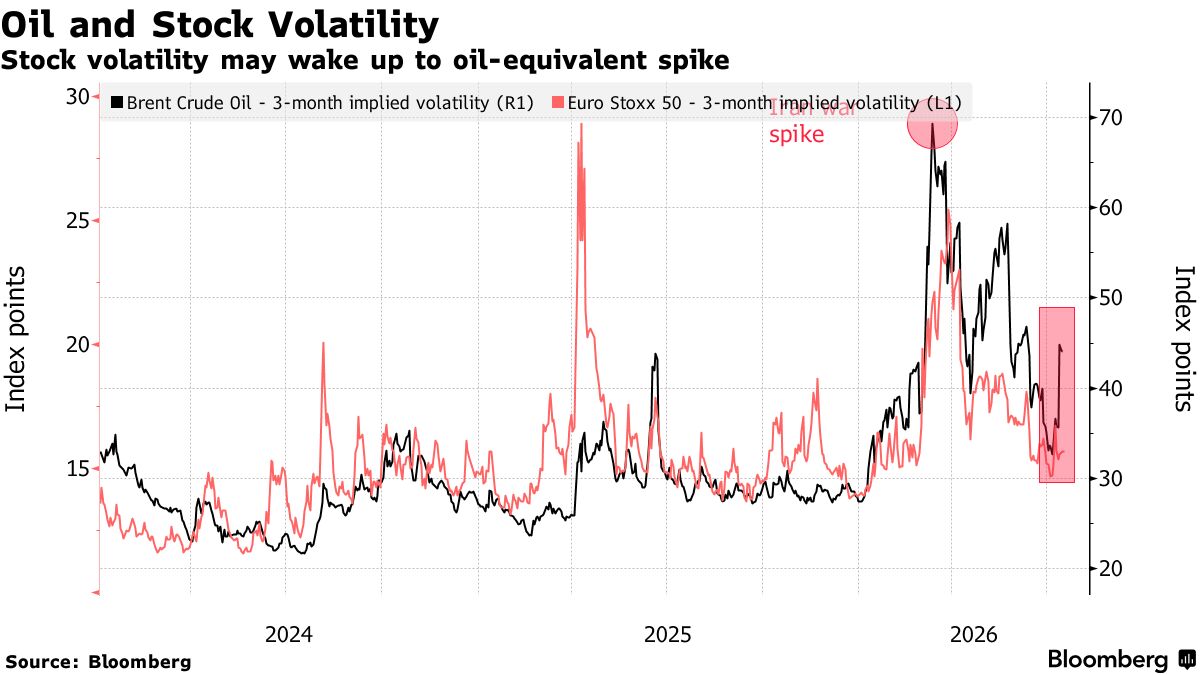
As for the geopolitical side, investors may have reduced the tension in the Middle East to a secondary concern, but the risk that the conflict will escalate again remains. Continued attacks between the US and Iran have recently pushed WTI crude oil prices to break through $80 per barrel again, and overall oil price fluctuations are sending warning signals to all asset classes.
Considering the overall optimism of the market and the high proportion of investors' stock holdings, a fundamental shift in investors' expectations about market prospects is required to truly damage stock market confidence. However, as the typical summer trading off-season rapidly approaches, the market should not ignore tail risks.
The Bank of America strategy team led by Sebastian Raedler said, “Current market pricing leaves little room for disappointment with AI, oil prices, and risk of default.” They believe that the market has underestimated the following risks, including: uncertainty about AI capital spending prospects; asymmetric risk from rising oil prices; remaining potential fragility in the US job market; and the possibility that corporate default risks will continue to rise.