The Zhitong Finance App learned that analysts said that the escalation of tension between the US and Iran is driving up oil prices, which has once again raised concerns about inflation, thereby supporting the Federal Reserve to continue its hawkish tone. Currently, the market believes that September is the key window for the next round of interest rate hikes by the Federal Reserve.
BlackRock estimates that the conflict will increase the overall global inflation rate by about 0.8 percentage points, but the impact will not be the same in every region.
BlackRock pointed out in a report that Europe and some Asian regions are more dependent on energy imports and are therefore more susceptible to overall global inflation.
OCBC analysts also shared this view, saying, “Given that labor market data shows that the economy is stabilizing rather than deteriorating, the new energy shock will make the Federal Reserve pay more attention to the risk of rising inflation.”
Yung-yu Ma, chief investment strategist at PNC Asset Management, said that although the increase in profit margins of US small to medium capitalization companies is a positive development trend, “it is uncertain whether these trends can withstand several quarters of rising oil prices and continued inflationary pressure. ”
Ma believes that the Federal Reserve's hawkish stance “will continue” until “inflationary pressures in the energy market, oil market, and other sectors ease, and these pressures have returned to an upward trajectory.”
“We must consider building a balanced portfolio to spread some of the risk,” he said.
Federal Reserve officials intensively “hawk” September became a key interest rate hike window
Against the backdrop of the turbulent situation in the Middle East, several Federal Reserve officials expressed stronger concerns about rising prices last week.
In 2026, FOMC voting committee and Dallas Federal Reserve Chairman Lori Logan became the first US Federal Reserve official to call for interest rate hikes, saying that inflation does not seem to continue to return to the Fed's 2% target level. Kansas City Federal Reserve Chairman Jeff Schmid also said that since the risk of inflation is likely to increase further in the next few months, inflation is his biggest concern right now. Although the US inflation data for June was better than market expectations, Schmid warned that it was too early to determine that inflation would start a downward trend.
Federal Reserve Vice Chairman Philip Jefferson also said that if inflation does not cool down quickly, the Federal Reserve should consider raising interest rates, but at the same time, he said that the current monetary policy situation is good.
Notably, while testifying in Congress last week, the new Federal Reserve Chairman Kevin Walsh said that policymakers have “zero tolerance” for high inflation and promised to restore price stability, but he did not clearly state that he would support interest rate hikes.
The Federal Reserve will hold its next monetary policy meeting from July 28 to 29. Federal Reserve officials have entered a regular period of silence this week, and the market will lack new policy signals during this period.
Although some officials are concerned about high inflation and suggest that interest rate hikes may be necessary, the market is now generally betting that the Federal Reserve will keep interest rates unchanged at the July meeting.
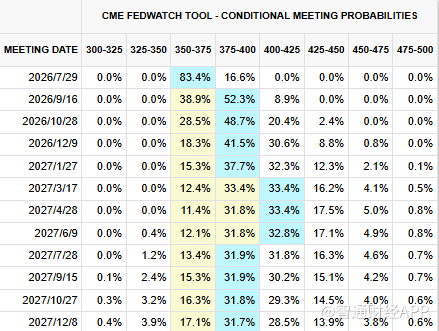
According to the Chicago Mercantile Exchange (CME) “Federal Reserve Watch” tool, traders currently believe that the probability that the Fed will keep interest rates unchanged in July reached 83%, and the market generally postponed the window for the next rate hike until September or October. Among them, the probability that the Federal Reserve will raise interest rates by 25 basis points in September is over 50%.