


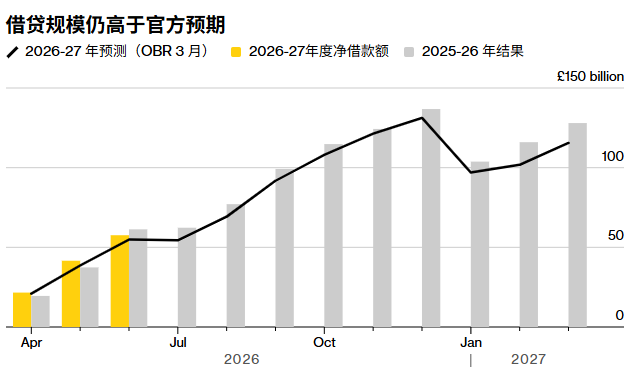
The Zhitong Finance App learned that on July 21, data released by the UK Office for National Statistics (ONS) showed that in the first three months of the 2026/27 fiscal year (April to June), the UK public sector's net borrowing reached 57.6 billion pounds (about 77.5 billion US dollars), which is 2.7 billion pounds higher than the UK Budget Responsibility Office (OBR) forecast in March. Although the monthly deficit in June fell sharply by one-third year on year to £16 billion, better than economists' expectations of £17.8 billion, the cumulative deficit for the first fiscal quarter still exceeded official expectations, sounding a wake-up call for the new Chancellor of the Exchequer.
On Monday, British politics welcomed its seventh prime minister in ten years. On July 20, Andy Burnham (Andy Burnham) officially succeeded Keir Starmer (Keir Starmer) at 10 Downing Street, and immediately announced that former Secretary of Defense John Healey (John Healey) had an upset as Secretary of the Exchequer. However, Burnham's statement on “using all flexibility within fiscal rules” on his first day in office immediately touched the most sensitive nerves in the market — the 10-year British Treasury yield jumped 9 basis points to 5.04% on the same day, and the 30-year yield rose to a two-month high of 5.75%. The next day, as market sentiment calmed slightly, the 10-year Treasury yield fell slightly by 1 basis point to 5.02%.
“Flexibility” statement: market tension and Burnham's appeasement
The trigger for market tension was Burnham's statement to reporters on the afternoon of July 20. When asked if it's possible to finance larger infrastructure investments by borrowing more, Burnham said, “I said we would abide by the fiscal rules — I mean the existing ones — and obviously use any flexibility in them.”
He immediately tried to appease the market: “It's not about putting the UK economy at risk. I've never done this in any position before... I've always taken a very careful approach”. He also promised that “it will explain how the funds will be raised and that it will be clearly stated in the budget”.
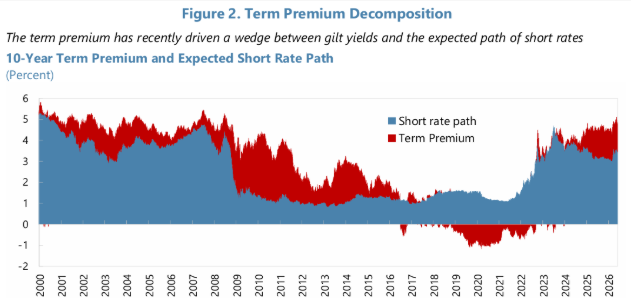
However, these statements failed to prevent the bond market from reacting immediately. The 10-year Treasury yield rose 9 basis points to 5.04% on the same day, and the 30-year yield rose 9 basis points to 5.75%. GBP/USD fell 0.27% to $1.3416. Mizuho multi-asset strategist Evelyne Gomez-Liechtenstein pointed out: “The market is highly sensitive to any specific statement involving fiscal rules.” The shadow of the collapse of the bond market caused by Liz Truss's unfunded tax cut budget in 2022 is still overshadowed, and investors are on high alert for any signs that fiscal discipline may be relaxed.
Burnham also hinted at the possibility of raising the income tax rate to 50% for the highest earners while raising the tax exemption threshold — these policy signals further fueled market concerns about fiscal easing.
Healy's “Hot Potato”: From Defense Funding Seeker to Financial Approver
Healy's appointment itself was dramatic. Just six weeks ago, he resigned as Secretary of Defense because he was dissatisfied with the Stammer administration's refusal to promise to raise defense spending to 3% of GDP by 2035. Today, he has gone from being a “supporter” of defense funding to an “approver” — a reversal of his status, making military spending the most watched variable in his fiscal policy.
Immediately after taking office, Healy stated: “Financial control is the primary responsibility of any finance minister, and it is also my duty. Fiscal credibility is the foundation for economic stability and national security”. At the same time, he promised to “work in harmony with Burnham and reserve buffer space to deal with uncertainty while complying with fiscal rules.”
The challenge, however, is three-dimensional. In addition to pressure on defense spending, Healy is also facing multiple spending demands, such as welfare reforms, tax cuts on energy bills, and expansion of “control” over utilities. Martin Beck, chief economist at WPI Strategy, warned: “Political pressure will use any improvements in borrowing data to fund new commitments, while fiscal pressure is to preserve these improvements as a buffer against higher debt interest and future economic shocks.”
Two “lucky breakthroughs”: Why hasn't the market crashed yet?
Despite the tight bond market, the UK did not repeat the 2022 national debt crash caused by Liz Truss (Liz Truss)'s lack of funds to support tax cuts. Analysts believe Burnham enjoyed at least two key “lucky breakthroughs.”
First, the financial legacy left by former Finance Minister Reeves. Reeves strictly complied with fiscal rules during his tenure, and sales of British treasury bonds have dropped sharply by £58 billion to around £246 billion this year. James Smith of ING pointed out that this scale should be sufficient to cover most of the tax and expenditure adjustments Burnham has hinted at so far. The UK is currently “a rare example of an economy actually experiencing fiscal austerity” — a result of the continuing freeze on the tax threshold.
Second, an optimistic signal from the International Monetary Fund (IMF). In the “World Economic Outlook” released in July, the IMF raised the UK's 2026 economic growth forecast from 0.8% to 1.0%, making the UK the third-fastest growing economy in the G7, after the US (2.3%) and Canada (1.1%). The IMF's 2027 economic growth forecast for the UK remains unchanged at 1.3%. This modest increase suggests that Burnham's takeover economy may not be as bad as previously feared.
Furthermore, the Resolution Foundation suggests that the government can increase borrowing by expanding the functions of public financial institutions such as national wealth funds — additional loans from these institutions are not included in the government's own debt rules, providing Burnham with potential financial manipulation space.
Interest on debt plummeted to a “pressure relief valve” in June, but structural pressure has not been resolved
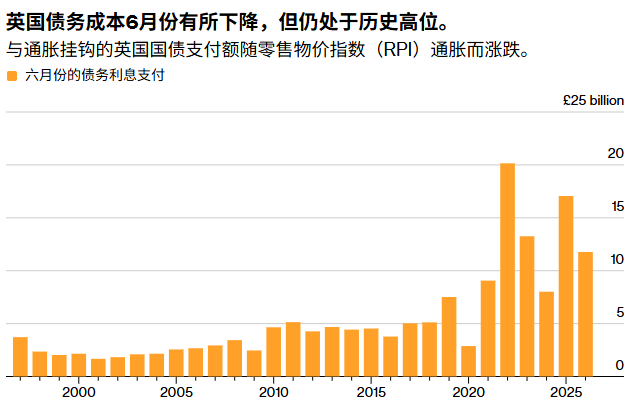
The main driver of the sharp decline in the deficit in June was a significant drop in interest spending on debt. The central government's debt interest payments for the month were £11.8 billion, down 31% year on year (about £5.3 billion), mainly due to slowing inflation, which reduced the cost of interest on treasury bonds linked to the retail price index. However, this is still the fourth highest interest expense level in June history.
There are also positive signs on the tax side. The ONS indicated that there was a strong increase in tax revenue in June, particularly income tax and VAT. These improvements were partially offset by sharp increases in welfare spending. Martin Beck, chief economist at WPI Strategy, commented, “The June loan data is certainly a strong shot for the new administration, but it should not be mistaken for a turning point. It just gave the new Chancellor of the Exchequer some respite after a difficult start to the fiscal year.”
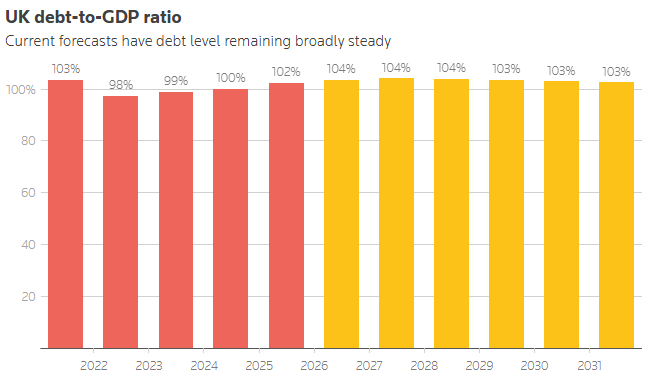
However, the cumulative data reveals an even harsher reality. Although revenue for the first three months was 2.4 billion pounds higher than the OBR forecast, expenses were overspent by 3.6 billion pounds. The fiscal rules set by Healy's takeover by Rachel Reeves (Rachel Reeves) — to balance the regular budget in the 2029-30 fiscal year — still fall short of the standard. From April to June, the public sector current account deficit was £42 billion, down nearly 11% from the same period last year, but still £1.3 billion higher than the OBR forecast. Total loans so far this fiscal year have reached £57.6 billion, down 6% from the same period last year, but still £2.7 billion higher than OBR's forecast. The public sector's net debt accounts for about 100% of GDP, which is only about £10 billion short of the £3 trillion mark.
The Bank of England may suspend interest rate hikes
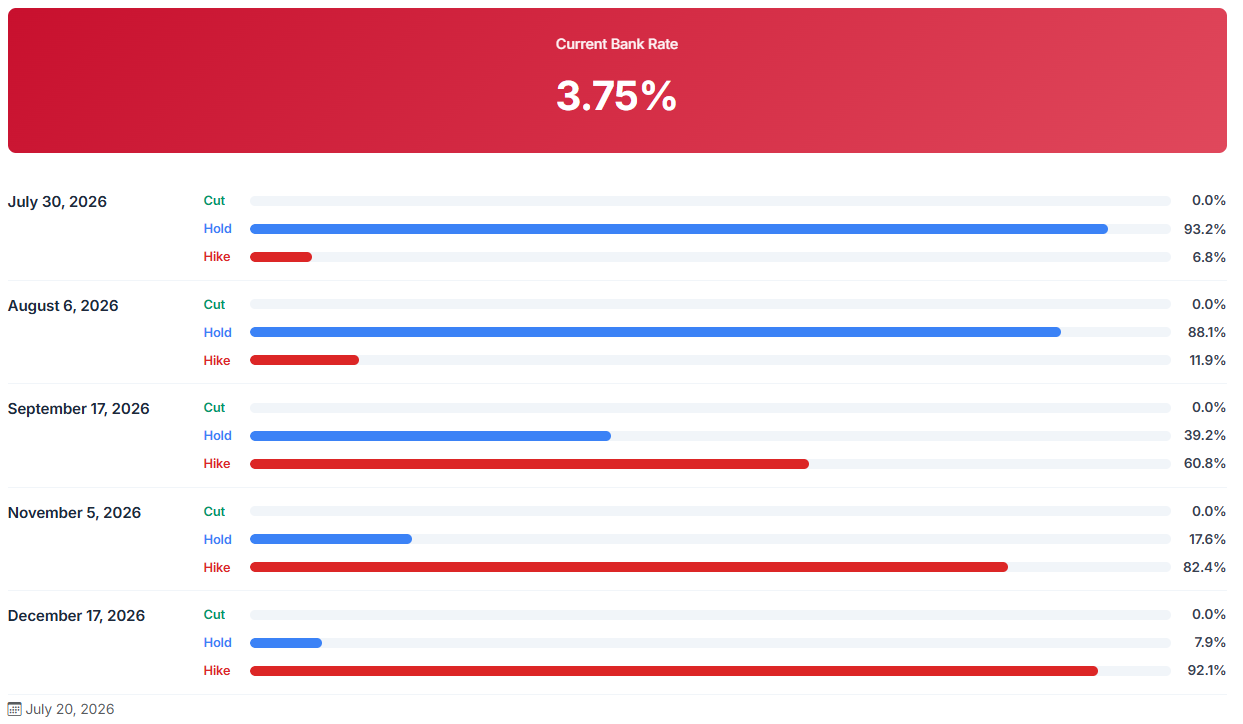
As inflationary pressure eases, including the lowering of the energy price ceiling in September, the possibility that the Bank of England will keep interest rates unchanged at the July 30 interest rate meeting has increased. According to previously released data, the UK inflation rate unexpectedly remained stable in May, indicating that even before the US and Iran reached a peace agreement to push energy prices down sharply, price pressure was less than feared. The consumer price index (CPI) rose 2.8% year over year, the same increase as in April and lower than the 3% expected by economists.
The private sector wage growth rate fell to its lowest level since 2020, according to data released on Tuesday. The UK Office for National Statistics said that in the three months up to May, salary growth, excluding bonuses, remained at 3.4% year on year. Private sector wages, which the Bank of England is most concerned about, increased 2.9% year-on-year in the three months ending May, the slowest growth rate since October 2020.
The market currently generally expects the Bank of England to keep interest rates unchanged next week. Currently, traders believe that the probability that the Bank of England will raise interest rates by 25 basis points is only 14%. However, as tension between the US and Iran has once again escalated, investors still expect the Bank of England to raise interest rates before the end of the year.
Political Risk: The Shadow of the Reform Party and the Countdown to the General Election
In addition to the fiscal variables that the market is concerned about, political risks cannot be ignored. When Burnham took office, the right-wing British Reform Party (Reform UK), although still leading the polls, its advantage was narrowing.
According to Opinium's latest poll for “The Observer,” the Reform Party's approval rating has fallen back to 23%, only 1 percentage point ahead of the Labor Party. Surveillance's poll also showed that the two parties were equal at 24%. This is the first time in over a year that the Labor Party has joined the Reform Party. Reform Party leader Nigel Farage (Nigel Farage) was being investigated by Parliament due to an undeclared donation of £5 million, and his approval rating was being dragged down.
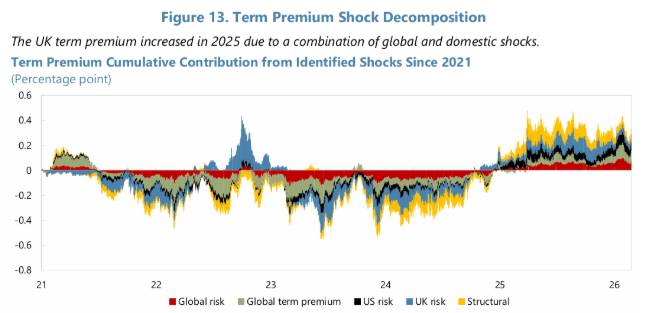
However, the Reform Party is still a variable that cannot be ignored. For most investors, the Reform Party government will be a difficult variable to predict — it's hard for many not to compare it to the 2022 Tras' disastrous budget. The IMF warned in its July report that the turmoil in the UK treasury bond market in September 2022 “appears to mark a fundamental shift in the way shocks are transmitted to treasury yields,” and market fragility continues to increase.
Burnham's time pressure is just as pressing. Britain's next general election must be held within three years. Analysts pointed out that Burnham's large-scale reforms “have little time to bear fruit economically.” If welfare spending is forced to be drastically cut, it is more likely to trigger a revolt within the Labor Party.
epilogue
Burnham's first day was a carefully choreographed balancing act. He must not only use his “flexibility” statement to appease the expectations of the left wing within the party for fiscal expansion, but also use the promise of a “prudent approach” to calm the bond market's anxiety about fiscal discipline. Healy's appointment — a former Secretary of Defense who resigned as finance minister due to demands for increased military spending — was the most dramatic part of this balancing act.
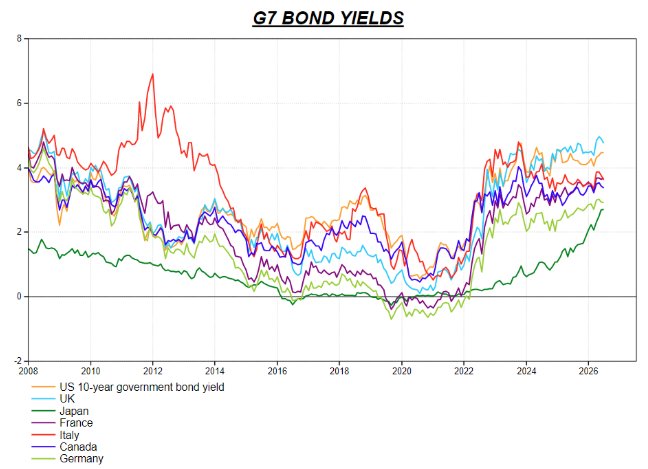
The cost of borrowing in the UK is already the highest in the G7. The 10-year Treasury yield hovered around 5% — a level that had not been breached since 2008 until spring 2026. Public debt accounts for 94.9% of GDP, the highest in 60 years.
However, two “lucky breakthroughs” — the fiscal space left by Reeves and the IMF's raised growth expectations — provided Burnham with a brief resurgence. The real test will come in the fall budget: how to deliver on people's livelihood promises, fill the defense spending gap, and boost infrastructure investment without triggering a debt-market crash — all while dealing with the political pressure of the general election that must be held within three years.
As ING's James Smith said, “You can't win an election with a boring budget.” But for Burnham, a “not boring” budget could also lose market confidence. This sword of Damocles will last throughout his term as prime minister.