


The Zhitong Finance App learned that according to the Hong Kong Stock Exchange's disclosure on July 22, Zhendrive Technology (Shanghai) Co., Ltd. (abbreviation: Zhendrive Technology) submitted a listing application to the main board of the Hong Kong Stock Exchange, with CITIC Securities and Cathay Pacific Haitong as co-sponsors. The company submitted its listing to the Hong Kong Stock Exchange on January 2, 2026.
Company profile
According to the prospectus, Zhendrive Technology is a technology-driven supplier of electronic control solutions, mainly aimed at the field of new energy vehicles. As the core subsystem of an electric drive or power supply system, electronic control enables precise control of the motor or power supply by converting electric energy into controllable power output, thereby ensuring efficient and reliable vehicle performance. As of May 31, 2026, the company has won 59 fixed points from 15 OEMs directly or through tier-1 suppliers; the company's solutions have been applied to 92 models, 74 of which have entered the mass production stage.
According to Frost & Sullivan, the company's main solutions are in a leading position in the Chinese market in terms of sales revenue. In 2025, the company's motor controller ranked sixth, the dual motor controller ranked first, the main drive power brick ranked first, and the power module ranked seventh.
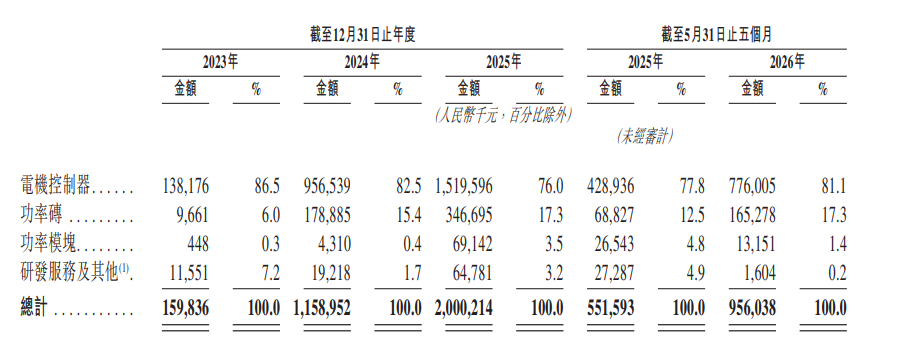
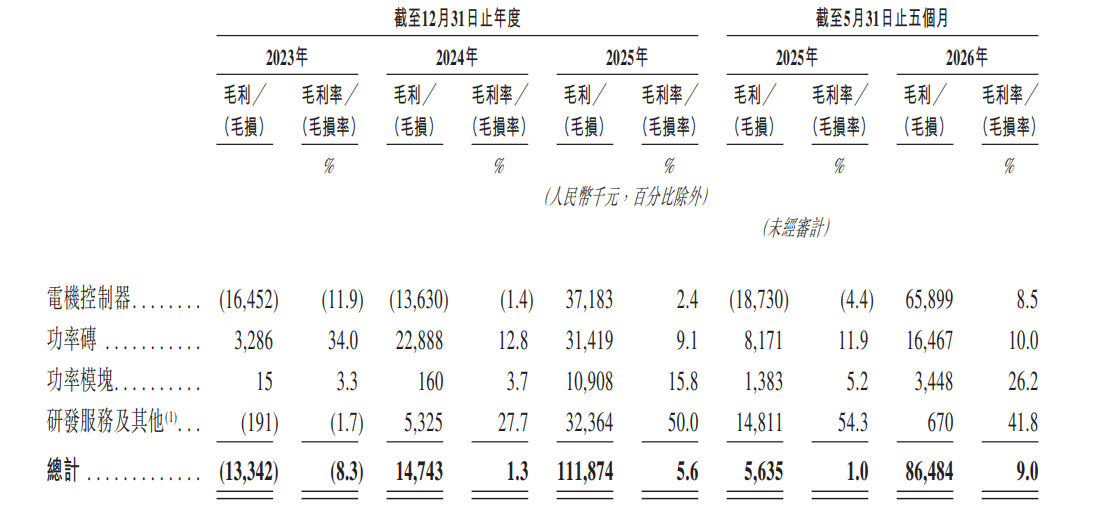
The breakdown of revenue by line of business is as follows:
The company has built a tiered solution portfolio covering power modules, motor controllers and power bricks. Unlike independent power modules or motor controllers provided by traditional suppliers, the company's combination enables customers to select solutions with corresponding system integration according to vehicle design, cost goals and engineering requirements. According to Frost & Sullivan's data, based on foresight and accurate grasp of industry trends, the company was one of the first companies to launch power brick solutions and commercialize them on a large scale. This move established the development direction that later became an iconic path for the industry. The power brick architecture significantly simplifies the electronic control system assembly process, improves platform reusability, and shortens the development cycle.
The company has also expanded the power brick architecture to low-power vehicle controllers in the power domain and chassis domain, including subsystems such as clutch controllers, power supply units (such as OBC and DC-DC), and air conditioning compressor controllers, and has further provided domain controller solutions to integrate the control functions of multiple electronic control units, optimize system coordination, and achieve higher vehicle control efficiency.
In line with the industry's trend towards all-in-one integration and drive-control separation, the company uses native methods for new energy vehicles to provide flexible electronic control solutions aimed at grasping changing market needs. The company's solution portfolio has expanded from traditional power modules and motor controllers to power brick combinations, including main drive power bricks, auxiliary power bricks deployed in the power domain and chassis domain, and integrated domain controllers. All of the company's solutions can be flexibly deployed, configured and integrated into NEV powertrain systems to achieve efficient cross-platform reuse and accelerate customer system development.
With the same core technical foundation, the company has extended the technology to emerging physical AI applications other than automotive applications (such as electric vertical take-off and landing vehicles (“eVTOL”) and physical intelligence), as well as power systems for AI data centers (“AIDC”). In physical AI applications, the company's core motor control technology is a key execution layer component, transforming AI-driven instructions into accurate, reliable, and efficient physical motion.
As of the last practical date, the company is developing products for a wider range of robotic applications, including complete robotic arms and wheeled chassis. In AIDC power systems, the company's power electronics technology supports efficient power conversion and distribution, including through solid state transformers (“SST”), which act as active energy routers for voltage transformation, power conversion, and intelligent power flow management. These initiatives enable the company's solution portfolio to support next-generation aircraft propulsion systems, robotic joint actuators, and AIDC power systems, while expanding long-term potential markets in a broader wave of AI-driven industrial transformation.
Financial data
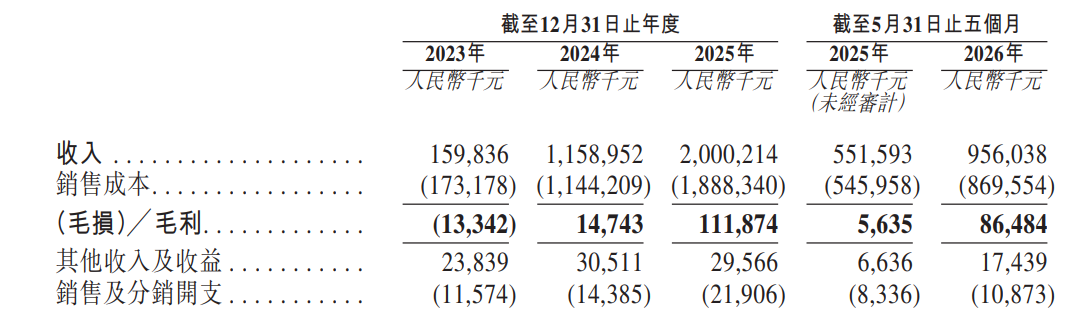
Revenue:
For the five months ending May 31 in 2023, 2024, 2025, and 2026, the company's revenue was approximately RMB 160 million, RMB 1,159 million, RMB 2 billion, RMB 552 million, and RMB 956 million, respectively.
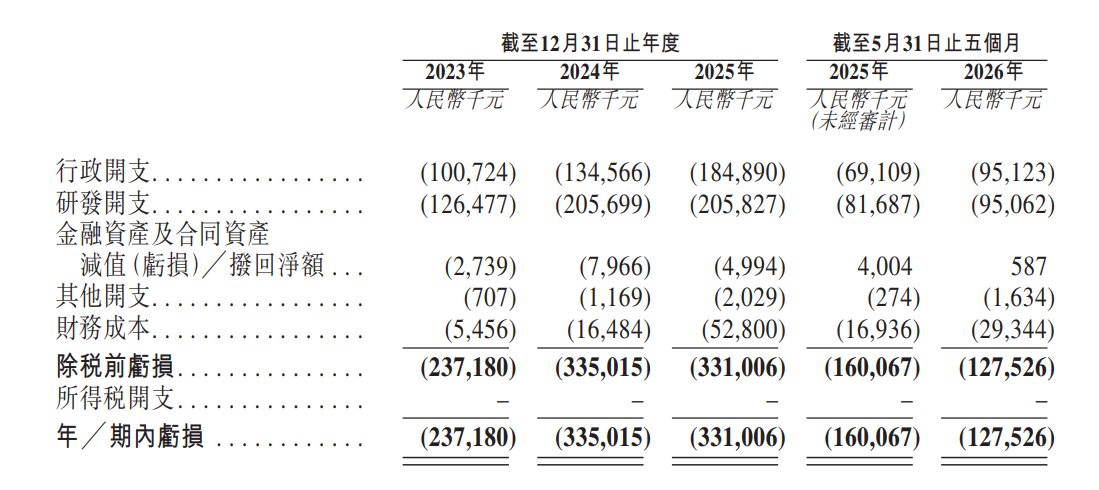
Losses:
For the five months ended May 31 for 2023, 2024, 2025, and 2026, losses were $237 million, $335 million, $331 million, $160 million, and RMB 128 million, respectively.
Gross profit margin:
For the five months ended May 31 in 2023, 2024, 2025, and 2026, the company's gross margins were -8.3%, 1.3%, 5.6%, 1.0%, and 9.0%, respectively.
Industry Overview
The electronic control market is in a stage of rapid expansion. From 2020 to 2025, the global electronic control market size increased from RMB 383.1 billion to RMB 469.9 billion, with a compound annual growth rate of about 4.2%; it is expected to maintain a steady CAGR of about 5.3% from 2026 to 2030, and the market size will reach about RMB 608.4 billion by 2030.
The global motor controller market grew from RMB 114.7 billion in 2020 to RMB 224.9 billion in 2025, with a compound annual growth rate of 14.4%, mainly driven by rapid growth in NEV sales and increasing penetration rate of electrified powertrains. Looking ahead, the motor controller market is expected to maintain steady growth, reaching RMB 316.5 billion by 2030, supported by the continued expansion of the new energy vehicle, eVTOL and embedded intelligent robot markets, with a compound annual growth rate of 7.1%.
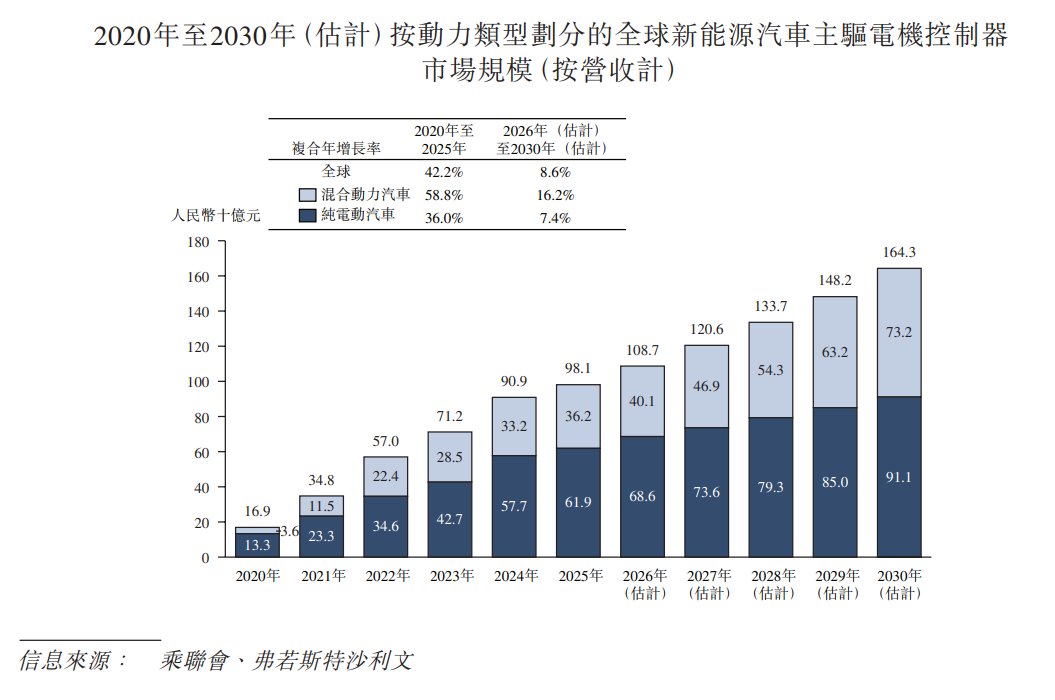
From 2020 to 2025, the market size of the main drive motor controller market for pure electric vehicles will increase from RMB 13.3 billion in 2020 to RMB 61.9 billion in 2025, with a compound annual growth rate of 36.0%; it is expected to maintain a steady increase of about 7.4% compound annual growth rate from 2026 to 2030, and the market size will reach RMB 91.1 billion by 2030. As the penetration rate of hybrid technology in high-end models continues to increase, hybrid main drive motor controllers will become a high revenue growth point for electronic control manufacturers in the future, driving the profitability of the industry to be further enhanced. The market size of the main drive motor controller for hybrid vehicles increased from RMB 3.6 billion in 2020 to RMB 36.2 billion in 2025, with a compound annual growth rate of 58.8%. The expected growth rate is about 16.2% from 2026 to 2030, and the market size will reach RMB 73.2 billion by 2030.
As a highly integrated platform for integrating motor controllers, eVTOL places extremely high demands on the power density, response speed, reliability and lightweight design of the system. The global market size of eVTOL special motor controllers is expected to grow from RMB 10.3 billion in 2025 to RMB 37.2 billion in 2030, with a compound annual growth rate of about 29.3%.
Integrating various core components such as motor drives, electronic control systems and power modules, the electronic control system for intelligent robots is a highly collaborative mechatronic platform. With the rapid evolution of artificial intelligence algorithms, breakthroughs in sensing and execution technology, and the expansion of application scenarios such as industrial automation, the global artificial intelligent robot industry has entered a stage of accelerated development. The global market for automated intelligent robot motor controllers is expected to grow from RMB 5.2 billion in 2025 to RMB 40.7 billion in 2030, with a compound annual growth rate of about 50.9%.
The global power module market continues to grow, driven by demand for new energy vehicles, etc. From 2020 to 2025, the market size grew from RMB 29.4 billion to RMB 77.7 billion, with a compound annual growth rate of about 21.5%. It is expected that from 2026 to 2030, the market will continue to expand at a compound annual growth rate of about 8.5%, and the scale is expected to grow from RMB 86.1 billion in 2026 to RMB 19.2 billion in 2030. Judging from the regional breakdown, the Chinese market has seen the most significant growth. Driven by emerging industries such as new energy vehicles and industrial automation, the size of the Chinese market grew from RMB 8.5 billion to RMB 32.1 billion from 2020 to 2025, with a compound annual growth rate of 30.4%, far higher than the global average. It is expected that from 2026 to 2030, China's power module market will maintain a compound annual growth rate of about 10.9%, and the market size is expected to expand further to RMB 48.5 billion.
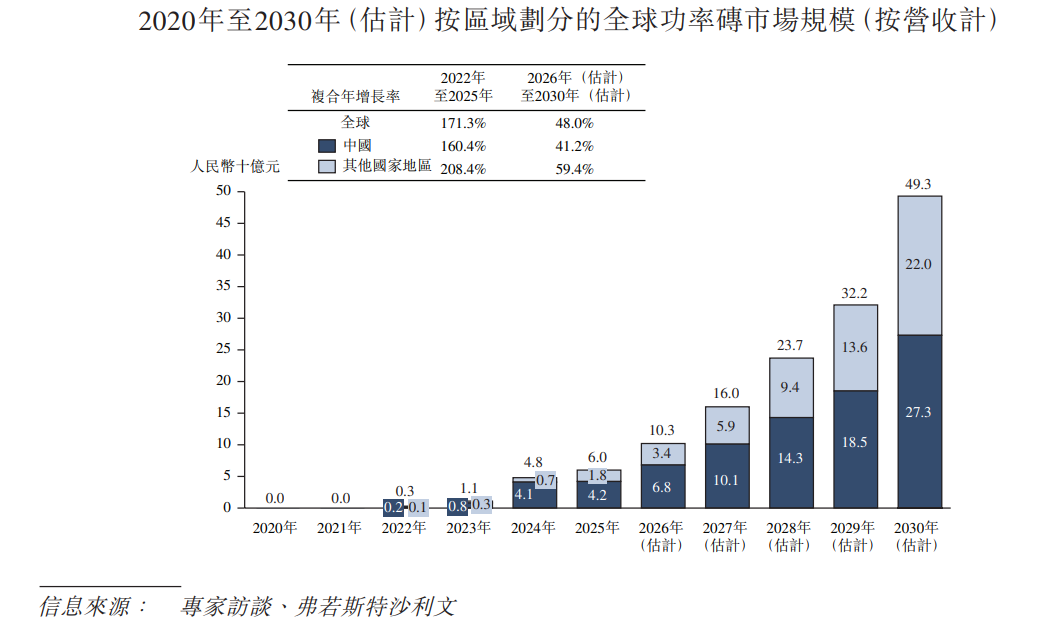
Since the power brick concept was officially proposed in 2021, its market penetration rate for new energy vehicles was only 0.6% in 2022; with the advancement and development of electronic control technology for new energy vehicles and the continuous growth of integrated demand, the share of power brick solutions will further increase to 10.0% in 2025; by 2030, the share of power bricks will increase to 39.7%. The overall global power brick market is about RMB 6 billion in 2025, and is expected to grow to RMB 49.3 billion by 2030, with a compound annual growth rate of 48.0% from 2026 to 2030.
Judging from the regional division, the Chinese market occupies a major position in the growth of the global power brick market. With the perfect layout of the NEV industry chain and the advantages of power semiconductor industry clusters, China is becoming the core driving force for the growth of the global power brick market. Since the official shipment of power brick products in 2022, power brick shipments have continued to increase, and the market size reached RMB 4.2 billion in 2025. Looking ahead to 2026 to 2030, the Chinese market will continue to expand steadily. It is expected to reach RMB 27.3 billion by 2030, with a compound annual growth rate of about 41.2%, continuing to lead the global market growth.
Board Information
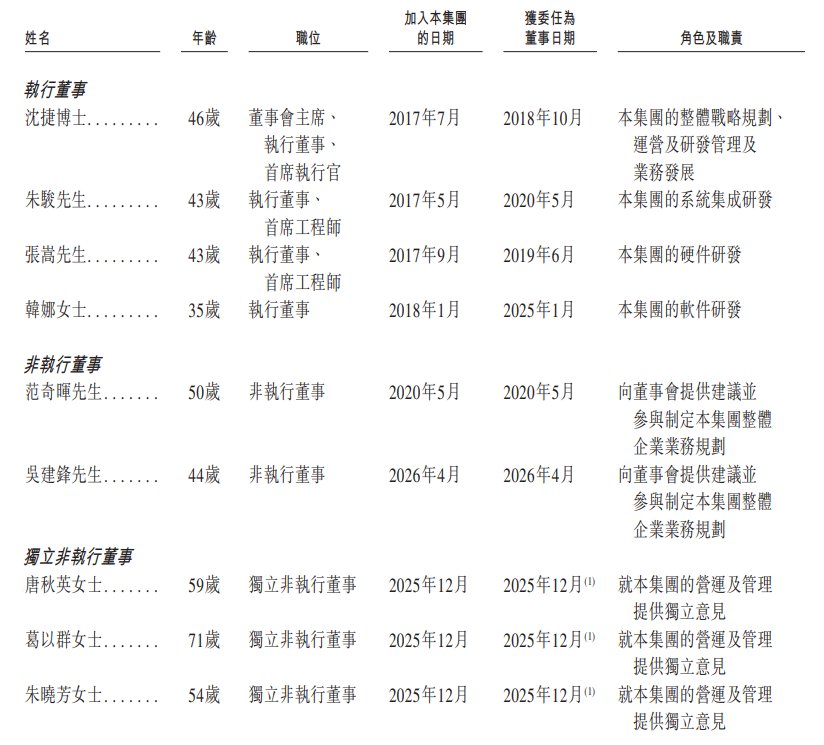
The Board of Directors of the Company consists of nine directors, including four executive directors, two non-executive directors and three independent non-executive directors.
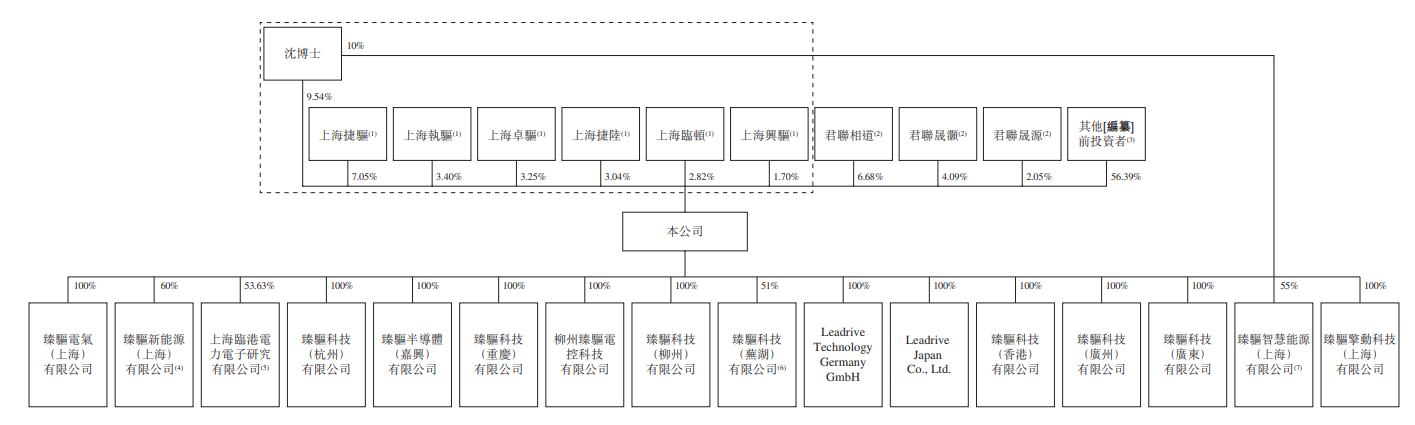
Shareholding structure
Shanghai Jetdrive, Shanghai Driver, Shanghai ZhuoDrive, Shanghai Jielu, Shanghai Linton, and Shanghai Xing Drive are controlled by Dr. Shen as their sole general partner. Junlian Xiangdao, Junlian Shenghao and Junlian Shengyuan are controlled by Junlian Capital through its wholly-owned subsidiary Lhasa Junqi Enterprise Management Co., Ltd. (as their respective sole general partner).
Intermediary team
Co-sponsors: CITIC Securities (Hong Kong) Limited, Haitong International Capital Limited;
Company Legal Advisors: Related to Hong Kong Law and US Law: Gao Weishen Law Firm; Related Chinese Law: Beijing Zhonglun Law Firm; Relevant International Sanctions Law: Morgan, Lewis & Bockius LLP
Co-sponsor's legal adviser: relating to Hong Kong law and US law: Astor Bochin Law Firm; relating to Chinese law: Jingtian Gongcheng Law Firm
Reporting Accountants and Independent Auditors: Ernst & Young
Industry Advisor: Frost & Sullivan (Beijing) Consulting Co., Ltd. Shanghai Branch