


The Hong Kong stock price of the Third Ring Group (06951) seems to have failed to go any further after issuing an impressive pre-announcement of semi-annual results. On July 21, Sanhuan Group announced Yingxi. The announcement shows that the company expects to achieve net profit of 1,794 billion yuan to 2,041 billion yuan in the first half of 2026, an increase of 45%-65% over the previous year; non-net profit deducted from mother is 1,653 billion yuan to 1.92 billion yuan, with a year-on-year increase of 55%-80%.
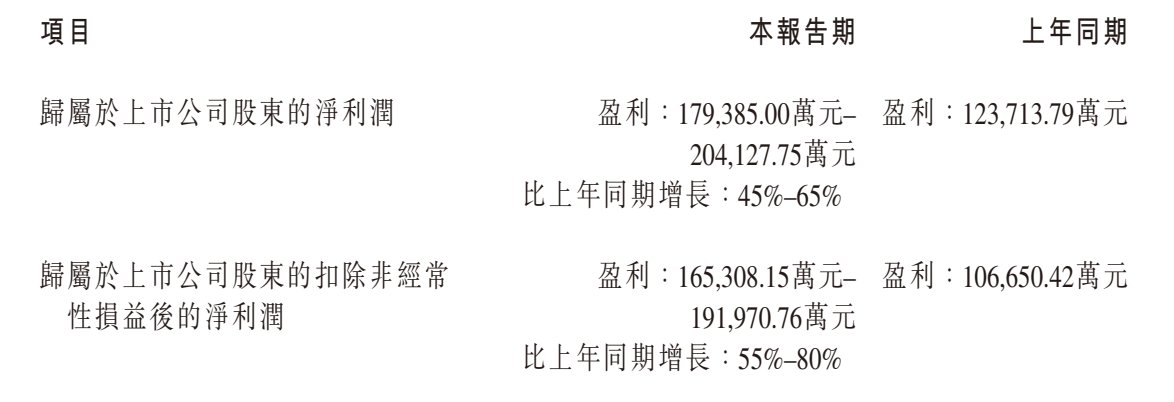
On a quarterly basis, the net profit of Sanhuan Group increased 48% year-on-year to 791 million yuan in the first quarter of this year. This means that Q2's net profit to mother continued to increase by at least 27% on a high base, and historically broke through the 1 billion yuan mark in a single quarter. However, the Sanhuan Group, which has yet to complete its Hong Kong stock listing, did not reap continuous sharp gains; on the other hand, just the day after the Yingxi announcement, Sanhuan Hong Kong stocks and A shares all staged a drama of opening high and moving low. As of the close of trading on July 22, Hong Kong shares of the Third Ring Road closed at HK$98, a decrease of 3.73% on the same day. Comparing the issue price of HK$100.3, the performance of the Sanhuan Group after listing must have been difficult to satisfy investors.
The performance is excellent, but the stock price is showing a weak trend. Behind this anomaly, there is probably a problem that investors in the secondary market cannot avoid: along with Sanhuan Group's A shares experiencing a sharp rise in history during the year, and the company's Hong Kong stocks successfully took advantage of the heat to land on the Hong Kong Stock Exchange, how much of a hard technology company with a large focus on its main business still has poor expectations in the future? At a time when previous stock price increases and current valuations already reflect the current state of industrial sentiment and performance growth to a considerable extent, the uncertainty of the future market trend of the Sanhuan Group may also become higher and higher.
Is performance exceeding expectations difficult to catalyze a further rise in stock prices?
Sanhuan Group, the global leader in vertical integration of electronic ceramics, officially listed in Hong Kong stocks on the 9th of this month, achieving a dual A+H listing. According to public information, Sanhuan Group received a margin loan of HK$111,916 million from brokerage firms, which overbought 155.35 times over the amount raised from the public sale of HK$7157.9 million. Furthermore, the list of cornerstone investors of the current Hong Kong stock listing of the Sanhuan Group is also luxurious, including many well-known domestic and foreign institutions such as Temasek and JPMAMAPL.
The reason why the Sanhuan Group was able to attract a large number of powerful institutions before listing is naturally important to the company's strong fundamentals in an upward boom cycle. Let's first take a look at the 2025 report card previously disclosed by the company. According to the annual report, in 2025, Sanhuan Group achieved operating income of 9.007 billion yuan, an increase of 22.13% over the previous year; net profit to mother was 2,618 billion yuan, an increase of 19.54% over the previous year. The gross margin was 42.14%. Although there was a slight decrease of 0.84 percentage points year-on-year due to changes in product structure and some cost disturbances, the net margin remained high at 29.05%. This annual report can be said to be a strong verification of Sanhuan Group's ability to grow and deliver in MLCC, optical communications, etc.
Entering 2026, the growth of the Sanhuan Group has not slowed down. According to the first quarterly report, the company's Q1 revenue increased 46.25% year-on-year to 2,681 billion yuan, and net profit to mother increased 48.48% year-on-year to 791 million yuan. Compared to the profit growth rate for the whole of 2025, the Q1 growth center moved up by nearly 30 percentage points, which means that the slope between MLCC price increase and optical communication demand volume after entering the new year was steeper than expected by the market.
According to the newly released semi-annual report forecast, the median net profit of Sanhuan Group in the first half of the year was about 1,918 billion yuan, corresponding to the year-on-year growth rate of about 55% in the first half of the year; combined with the 791 million yuan already achieved in Q1, the Q2 profit range fell between 1.03 billion yuan and 1,250 billion yuan, with a month-on-month increase of 27% to 58%. Net profit for a single quarter reached the level of 1 billion dollars, which is undoubtedly a landmark leap for the Sanhuan Group itself. What is intriguing, however, is that the performance exceeding expectations of the Sanhuan Group did not become a powerful catalyst for the company's stock price to rise further; on the contrary, market feedback was very lackluster. Even on the second day of Yingxi, the stock prices of Sanhuan Port and A Shares all experienced a significant correction.
What is the difference in expectations in the long-term narrative after the “bright card” of performance?
According to Sanhuan Group, the main reason for the change in the company's performance in the first half of the year was that it benefited from increased demand in the electronic components and optical communication industry and increased demand for Sanhuan's main business products. Among them, MLCC products benefited from increased customer recognition and increased industry sentiment. Prices of some specifications were restored to their original reasonable value, and both volume and price increased to a large extent. At the same time, due to the acceleration of the global data center construction process, optical device market demand continued to increase. The company's sales of optical communication products such as plugs and sockets increased year-on-year.
From an investment perspective, at the current point of time, the market may be divided over how much unpriced room the above growth logic actually has. Looking at the breakdown, the market had full expectations for MLCC's recovery. In the first half of the year, the MLCC's core assumption of “partial price repair” was repeatedly interpreted; Zhitong Finance believes that what can actually constitute a “difference in expectations” in the future is the company's breakthrough pace of high capacity, vehicle regulations, and server-level products and customer introduction progress. According to previous announcements, the Sanhuan Group plans to “continue to break through and mass-produce ultra-high-capacity and large-size products and deepen customer cooperation with applications such as servers and automotive electronics”. If Sanhuan Group can continue to verify the ability to release high-end products in the future, the profit flexibility of its MLCC business is expected to be further unleashed, and this is probably a variable that is not fully priced in the current market.
In terms of optical communication, demand for traditional plug and socket products fluctuates with the pace of data center construction. In addition to this, new products such as MT ferrules and ceramic encapsulated tubes from Sanhuan Group have previously been introduced to the market and entered the mainstream customer supply chain. The technical barriers and unit added value of these products are higher than traditional products, and the pace of release is expected to directly affect the profit elasticity of the optical communication business.
Finally, the long-term potential of the SOFC business is also worth keeping track of. Although the current dependence on Bloom Energy, a single major overseas customer, is high, and there is uncertainty about international trade policies and the pace of customer production expansion, the SOFC track has the characteristics of long slopes and heavy snow. Once new breakthroughs are made in market applications in the future, this sector may or may be expected to become another pillar of the Sanhuan Group's business, and its long-term space cannot be underestimated.
Despite having strong fundamentals and huge room for imagination, as the global capital market enters a period of intense gaming, Hong Kong stock investors are also expected to become more cautious about hard technology targets. In the author's view, Sanhuan Group's rise and fall after success was not a denial of the company's texture, but rather the market re-calibrated the balance between expected overdraft and actual verification. As to when the Sanhuan Group will be able to break out of a new round of market growth in the future, we can only leave time to give an answer.