


Unprofitable companies can burn through cash quickly, leaving investors exposed if they fail to turn things around. Without a clear path to profitability, these businesses risk running out of capital or relying on dilutive fundraising.
A lack of profits can lead to trouble, but StockStory helps you identify the businesses that stand a chance of making it through. That said, here are three unprofitable companiesthat don’t make the cut and some better opportunities instead.
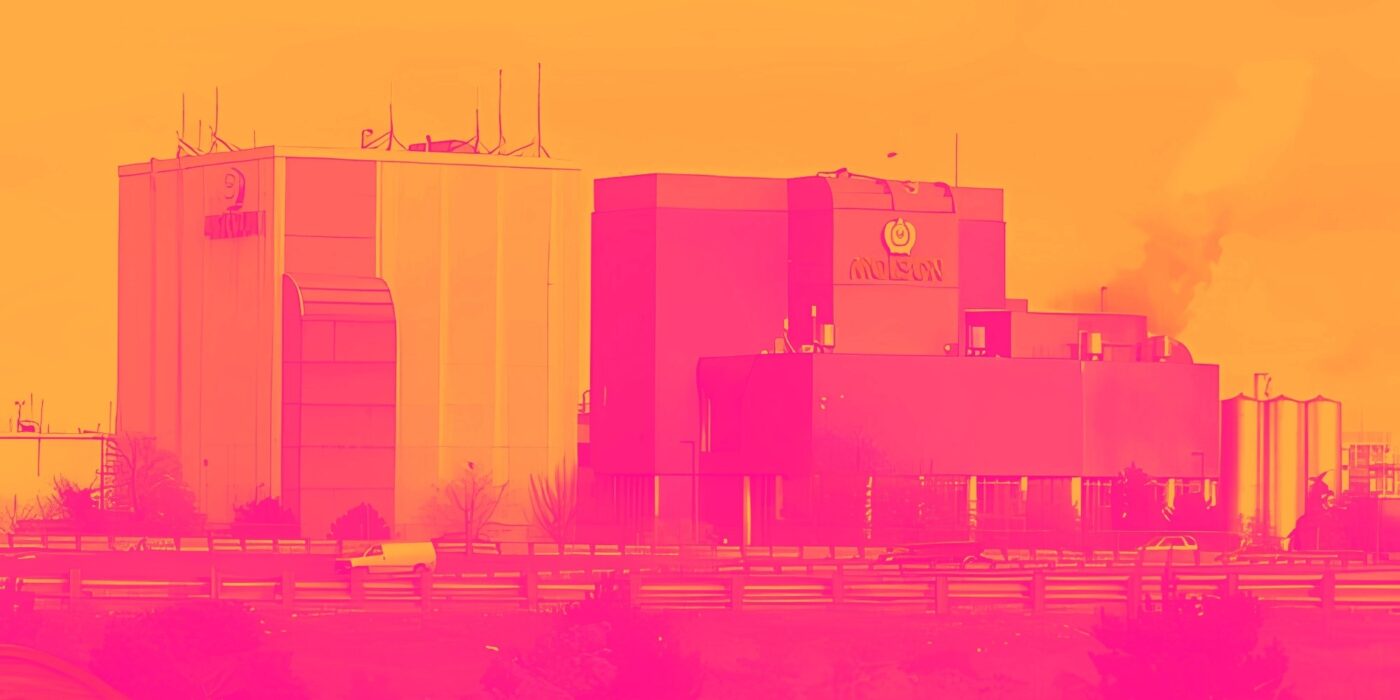
Molson Coors (TAP)
Trailing 12-Month GAAP Operating Margin: -20.2%
Sporting an impressive roster of iconic beer brands, Molson Coors (NYSE:TAP) is a global brewing giant with a rich history dating back more than two centuries.
Why Do We Think TAP Will Underperform?
- Shrinking unit sales over the past two years show it’s struggled to move its products and had to rely on price increases
- Costs have risen faster than its revenue over the last year, causing its operating margin to decline by 34.6 percentage points
- Underwhelming 0.6% return on capital reflects management’s difficulties in finding profitable growth opportunities, and its shrinking returns suggest its past profit sources are losing steam
Molson Coors’s stock price of $39.94 implies a valuation ratio of 8.8x forward P/E. To fully understand why you should be careful with TAP, check out our full research report (it’s free).
Bark (BARK)
Trailing 12-Month GAAP Operating Margin: -10.2%
Making a name for itself with the BarkBox, Bark (NYSE:BARK) specializes in subscription-based, personalized pet products.
Why Are We Out on BARK?
- Flat sales over the last five years suggest it must innovate and find new ways to grow
- Cash-burning tendencies make us wonder if it can sustainably generate shareholder value
- Unfavorable liquidity position could lead to additional equity financing that dilutes shareholders
At $8.77 per share, Bark trades at 12.9x forward EV-to-EBITDA. Read our free research report to see why you should think twice about including BARK in your portfolio.
HA Sustainable Infrastructure Capital (HASI)
Trailing 12-Month GAAP Operating Margin: -9.1%
With a proprietary "CarbonCount" metric that quantifies the environmental impact of each dollar invested, HA Sustainable Infrastructure Capital (NYSE:HASI) is an investment firm that finances and develops climate-positive infrastructure projects across renewable energy, energy efficiency, and ecological restoration.
Why Are We Wary of HASI?
- Performance over the past two years shows its incremental sales were less profitable, as its 9.7% annual earnings per share growth trailed its revenue gains
- ROE of 5.8% reflects management’s challenges in identifying attractive investment opportunities
- 29× net-debt-to-EBITDA ratio shows it’s overleveraged and increases the probability of shareholder dilution if things turn unexpectedly
HA Sustainable Infrastructure Capital is trading at $38.20 per share, or 12.6x forward P/E. To fully understand why you should be careful with HASI, check out our full research report (it’s free).
Stocks We Like More
ONE MORE THING: Top 5 Growth Stocks. The biggest stock winners almost always had one thing in common before they ran. Revenue growing like crazy. Meta. CrowdStrike. Broadcom. Our AI flagged all three. They returned 315%, 314%, and 455%, respectively.
Find out which 5 stocks it’s flagging this month — FREE. Get Our Top 5 Growth Stocks for Free HERE.
Stocks that made our list in 2020 include now familiar names such as Nvidia (+1,460% between June 2020 and June 2025) as well as under-the-radar businesses like the once-micro-cap company Kadant (+214% between June 2020 and June 2025). Find your next big winner with StockStory today.