


Oil prices have just swung lower, with Brent crude pulling back to US$92.12 after briefly moving above US$100, as tensions between the US and Iran cooled and military strikes paused around the Strait of Hormuz. For consumer discretionary stocks, that shift in energy costs can influence everything from shopper confidence to travel budgets. At the same time, shipping routes remain disrupted, so the picture is far from simple. This article walks through 3 US Consumer Discretionary stocks that appear especially exposed to this news and aims to help you decide whether they belong on your watchlist or not.
FIGS (FIGS)
Overview: FIGS is a direct to consumer healthcare apparel company that designs and sells premium scrubs, lab coats, footwear and related accessories for medical professionals through its website, app, B2B offering and a growing retail presence in the US and overseas.
Operations: FIGS generates about US$666.1m in revenue primarily from online retail, with around US$553.0m coming from the United States and US$113.1m from the rest of the world.
Market Cap: US$1.59b
FIGS is a consumer discretionary stock because it sells higher end healthcare apparel that can benefit when lower oil prices ease cost of living pressures and free up spending power for its core customers. The company combines a focused niche in medical wear with brand appeal and a direct to consumer model that has supported earnings growth and higher net margins. At the same time, management is juggling freight and tariff costs, a relatively high P/E multiple and reliance on external funding, which leaves little room for missteps. For investors, the interest lies in how FIGS balances premium pricing, margin pressures and revenue growth versus the wider market over the next few years.
FIGS’ premium scrubs story is about more than branding; it is about whether earnings quality can justify that higher P/E and funding needs as consumer budgets shift. Get the full context in the analysis report for FIGS

DoorDash (DASH)
Overview: DoorDash connects restaurants, retailers and other merchants with consumers through its online marketplaces and delivery network. It also offers subscription programs, advertising services and white label delivery tools that help businesses run their own online ordering and logistics.
Operations: DoorDash generates about US$14.7b in revenue from its online commerce platform, with around US$8.2b from the United States and US$1.4b from international markets.
Market Cap: US$75.3b
DoorDash gives you direct exposure to the shift toward outsourced convenience spending, which could benefit if lower oil prices ease pressure on household budgets and support more frequent ordering. The company is focusing on higher margin areas such as advertising, subscriptions and software tools. It is also integrating AI into search, logistics and customer support to help keep order economics in check. At the same time, a rich valuation, heavy investment needs, regulatory scrutiny of gig work and recent insider selling all raise the bar for execution. If you want to see how those growth drivers, margin ambitions and risks compare in detail, the analysis report for DoorDash lays out the full picture.
DoorDash’s shift toward higher margin subscriptions, ads and software is only half the story; the real question is how that mix, regulation and valuation fit together in the analysis report for DoorDash

Carvana (CVNA)
Overview: Carvana runs an e commerce platform that lets you buy and sell used cars entirely online, handling everything from sourcing and reconditioning vehicles to arranging financing, delivery and post sale support across the US.
Operations: Carvana generates about US$22.5b in revenue from retail gasoline and auto dealer activities, all from the United States.
Market Cap: US$66.7b
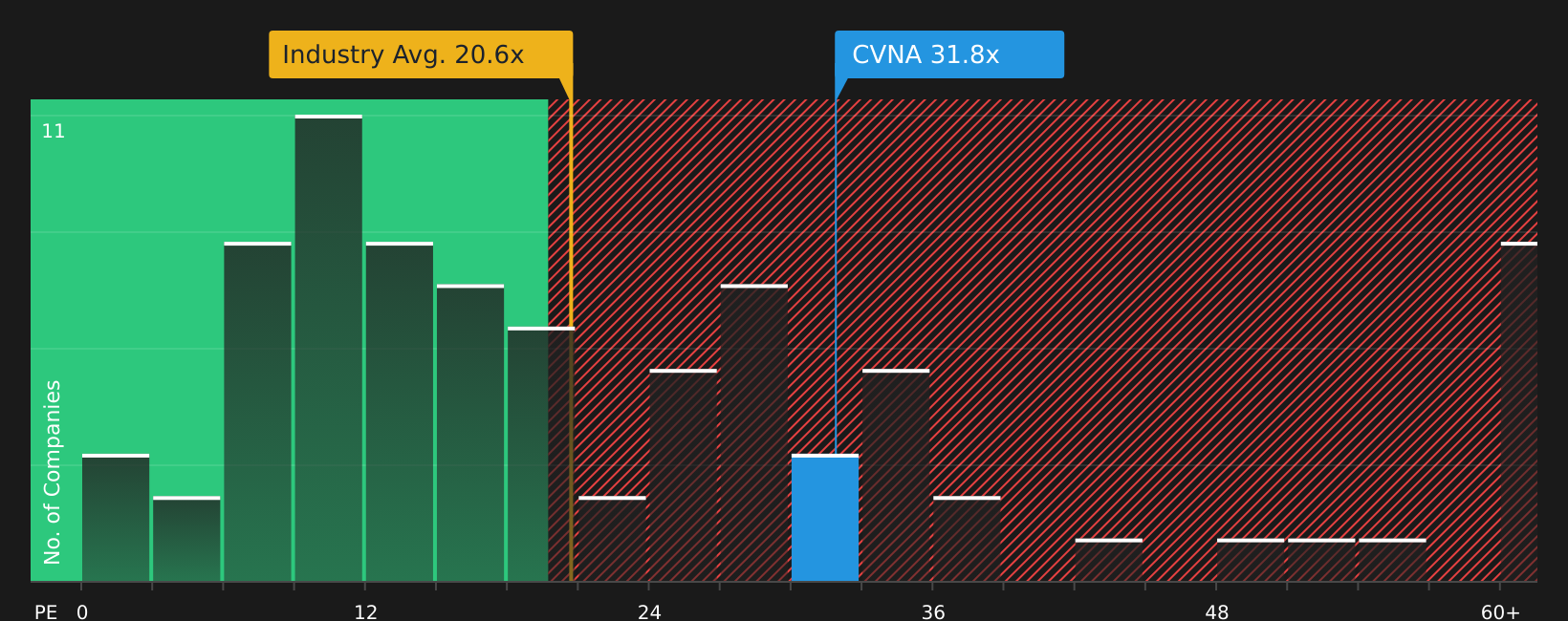
Carvana stands out in the US Consumer Discretionary space because it combines an online used car model with a large logistics and reconditioning footprint that can benefit when fuel and transport costs ease. Earnings growth has been very strong in the last year, margins have improved and the stock trades above some fair value estimates and peers on key valuation metrics. Heavy reliance on external borrowing, recurring one off items and recent insider selling all raise the stakes if growth or profitability wobbles. With that mix of strong execution signals and funding and valuation risk, the real question is whether Carvana’s scale, technology and unit economics are far enough along to justify its current price.
Carvana’s rapid earnings momentum and higher valuation have investors split, yet its online used car model and logistics footprint are changing how cars are bought. See how the analysis report for Carvana could reshape the risk story.
The three stocks covered here are just a starting point, with the wider US Consumer Discretionary theme uncovering 38 more companies with equally compelling stories in the US Consumer Discretionary Stocks screener. Use Simply Wall St to identify and analyze the specific catalysts, financial traits and narratives that matter to you so you can focus on the highest conviction ideas in this part of the market.
Take Control of Your Investment Journey
If Carvana or any of these companies sound like a great opportunity, register for FREE with Simply Wall St and add your companies to a Watchlist to monitor the share price against the fair value the ideal entry point. Once you've made your move, manage your holdings with our Portfolio Command Center that filters out the noise to deliver only the most critical, actionable updates. Throughout your journey, our Community allows you to filter the best ideas from thousands of investor perspectives. By uncovering hidden catalysts and risks early, you'll accelerate your decision-making and stay one step ahead of the market.
Seeking Fresh Alternatives Beyond These Stocks?
New ideas do not stay under the radar for long, and early attention often catches momentum before it is flying. Scan these fresh stock sets while it matters and consider exploring them promptly.
- Target durable income by hunting for cash generating companies in the 9 dividend fortresses that investors may be overlooking while yields stay elevated.
- Spot potential breakout operators by scanning the 84 resilient stocks with low risk scores and focus on businesses with resilience that could help steady a portfolio when volatility picks up.
- Chase early price strength by reviewing the 50 high quality undervalued stocks where quality and valuation meet in a curated pool that others might not be watching yet.
This article by Simply Wall St is general in nature. We provide commentary based on historical data and analyst forecasts only using an unbiased methodology and our articles are not intended to be financial advice. It does not constitute a recommendation to buy or sell any stock, and does not take account of your objectives, or your financial situation. We aim to bring you long-term focused analysis driven by fundamental data. Note that our analysis may not factor in the latest price-sensitive company announcements or qualitative material. Simply Wall St has no position in any stocks mentioned.
Have feedback on this article? Concerned about the content? Get in touch with us directly. Alternatively, email editorial-team@simplywallst.com