


The Zhitong Finance App learned that after a month of severe shocks, the US stock market is at a critical crossroads. On the one hand, data from institutions such as J.P. Morgan Chase shows that the technology sector's multi-month deleveraging process is nearing its end, and net exposure and CTA positions for leveraged ETFs and hedge funds have all dropped significantly from extreme levels. On the other hand, concerns about inflation are heating up again, interest rate paths are full of uncertainty, and doubts about the return on AI capital expenditure have not dissipated.
Macro risk is taking over position clean-up and becoming the core driving force for market pricing. In August, major Wall Street banks such as J.P. Morgan Chase, Goldman Sachs, and Société Générale intensively released strategy reports, outlining a complicated picture of “deleveraging nearing its end, valuations being re-reasonable, but macro risks are still accumulating.”
Deleveraging is nearing its end: the probability of the fiercest sell-off in technology stocks is over
Over the past two months, global technology stocks have experienced a “perfect storm” driven by leveraged liquidations. J.P. Morgan strategist Nikolaos Panigirtzoglou's team pointed out in the latest report that the most intense stage of deleveraging in the tech sector is probably over.
According to the data, the size of leveraged ETFs has dropped from a peak of $50 billion to $17 billion; the net exposure of hedge funds in the technology sector has dropped from 5.0 standard deviations to 1.7 standard deviations; and CTA (commodity trading advisor) positions have fallen back to the 39% mark. In the Korean market, the liquidation operation for leveraged ETFs has basically been completed, and the deleveraging process for hedge funds has been completed by about 90%, and the overall leverage level is falling back to a more reasonable range. J.P. Morgan believes that investors are deleveraging faster than previously anticipated in the technology and semiconductor sector (including storing stocks), and that the space for further deleveraging is already very limited.
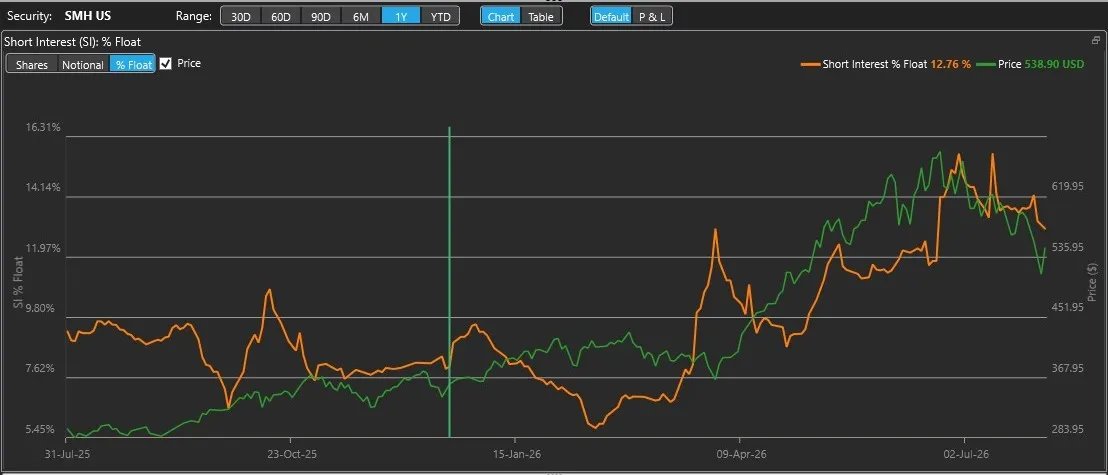
Goldman Sachs data also confirmed this judgment. Global technology exposure experienced the biggest sell-off in more than five years, and the asset management scale of Korean stock leveraged ETFs fell from a June high of US$53 billion to US$15 billion. Fundamental long and short clients' leverage exposure to momentum factors has fallen to the 28th percentile of the past year's range. “The crowded deal went from 'everyone in the car' to quite a few people getting out of the car, or even being forced to get out of the car.”
Hedge fund position monitoring data gave three clear signals: the combined z-value of hedge fund holdings and factor performance in the entire market fell to an extremely low historical range; the five-day reduction in North American hedge funds corresponded to a standard deviation of 3 times, and the continued large-scale sell-off had come to an end. The storage sector is facing a repricing opportunity — the current stock price only implies a one-year boom cycle. If the upward cycle continues until mid-2027, the valuation will return below the historical average.
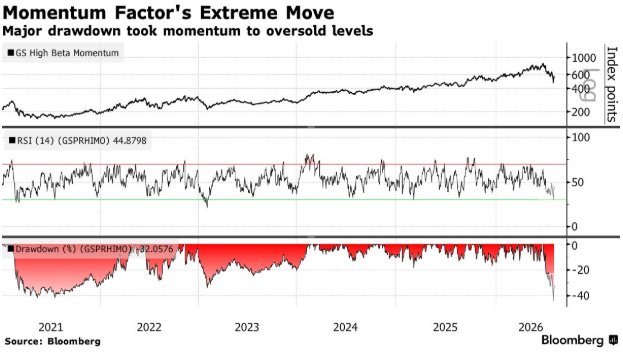
However, the end of deleveraging doesn't mean the market will be smooth sailing. Goldman Sachs's top trading team warned that although the deleveraging process is nearing its end, the risks have not been fully resolved, and multiple key events will still suppress the market. Goldman Sachs's latest “Capital Flow” report indicates that substantial risk reduction has not yet been completed. Due to seasonal fund outflows and insufficient institutional willingness to attack, the rise in US stocks lacked “fuel” in August.
Valuation Resets and Profit Support: S&P 500 Hits 5-Year Strongest Earnings Season
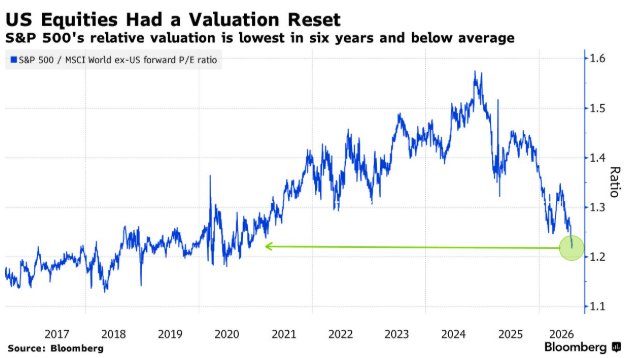
Along with the advance of deleveraging, global stock market valuations have experienced a significant reset. The premium on US stock valuations compared to the rest of the world has shrunk to about 22%, the lowest level in more than six years, and far below the ten-year average of 31%. RBC capital market strategist Lori Calvasina pointed out that valuations in the NASDAQ 100 Index, S&P 500 Index, and even the tech sector are once again beginning to look “reasonable.”
Meanwhile, the second-quarter earnings season, which has just come to an end, handed over a report card that can be called “one of the strongest in history.” According to FactSet data, the profit of S&P 500 constituent companies is expected to achieve a 47.4% year-on-year increase in the current quarter, making it the strongest quarter of earnings growth in the past five years. Goldman Sachs statistics show that 64% of the constituent stocks that have announced results have exceeded Wall Street expectations by at least one standard deviation.
AI infrastructure-related stocks contributed about one-third of the S&P 500 EPS growth in the second quarter. Goldman Sachs estimates that if the unusually huge investment returns of several tech giants are excluded, the overall profit of the S&P 500 increased by about 26% year over year; after inclusion, the overall increase soared to 45%. The profit of the European Stoxx 600 Index constituent stocks jumped 19% year-on-year in the quarter after two years of almost zero growth.
Macro Risks Are Accumulating: The “Sword of Damocles” of Inflation and Interest Rates
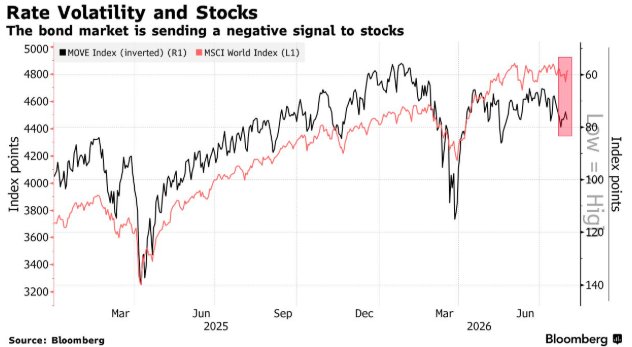
However, the earnings light of the earnings season did not dispel the haze at the macro level. Goldman Sachs derivatives expert Lee Coppersmith warns that as the earnings season comes to an end, the market's attention will turn back to interest rates, inflation, and economic growth. The volatility of US Treasury bonds has begun to accelerate again, and real yields are still close to cyclical highs.
Inflationary pressure remains stubborn. Société Générale strategist Alain Bokobza's team pointed out that the second round of US tariffs, accelerated growth in AI and infrastructure capital expenditure cycles, increased oil price fluctuations, and continued huge fiscal deficits in developed economies all indicate that the market's expectations for inflation are “much lower.” Société Générale expects the core PCE to remain above 3% this year, and suggests allocating TIPS, copper, and gold as inflation hedging tools.
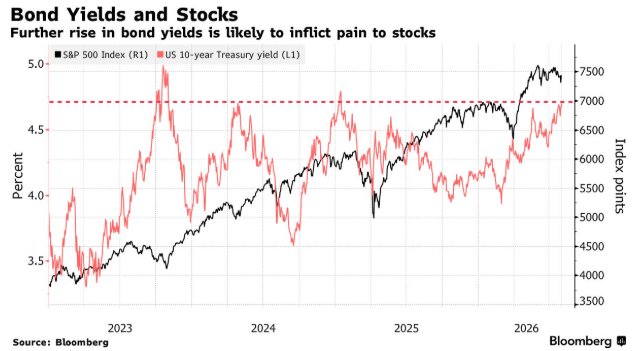
The US bond market is putting a price on this concern. The 10-year US Treasury yield has climbed to around 4.74%, and the 30-year term surpassed 5.27%, hitting a 19-year high. J.P. Morgan has raised its 10-year US Treasury yield forecast to 4.85% and the 30-year target to 5.40%. A steep yield curve is extremely rare in history — the market is casting a vote of no confidence that the Federal Reserve can maintain its 2% inflation target.
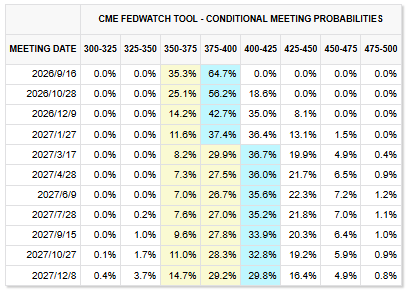
The Federal Reserve's interest rate path is full of uncertainty. The FOMC meeting on July 29 kept interest rates unchanged at 9 to 3, and three hawkish members voted against raising interest rates by 25 basis points. The market's expectations for the September-October rate hike are already very full, about 90% in total. Meanwhile, Goldman Sachs Vice Chairman and former Dallas Federal Reserve Chairman Robert Kaplan recently clearly warned that if the inflation data fails to cool down, the Federal Reserve may restart interest rate hikes as early as the fall, and this is likely not a single action, but a series of tightening 2 to 3 times.
The shift in investment strategy: from “momentum chasing” to “value diversification”
With deleveraging nearing its end, valuation resets completed, and macro risks still accumulating, Wall Street strategists are drawing up a new investment blueprint. J.P. Morgan stressed that the storage sector is facing repricing opportunities. Positions are no longer the main contradiction; fundamentals and valuations will determine the direction.
From market value weighting to equal weight. Weighted indices such as the S&P 500 actually rose 1.3% in July, while the market capitalization-weighted S&P 500 fell 0.1% during the same period. Goldman Sachs pointed out that the weighting of S&P, the low volatility of S&P, and the S&P 500 after excluding AI all hit record highs in the last week of July. This means that the rise in the market is shifting from “leading by a few big bulls” to broader industry participation.
Société Générale recommended going long on weighted indices such as the S&P 500, going long on US anti-inflation bonds, and shorting 10-year US Treasury bonds. The strategist pointed out that the second round of US tariffs, the accelerated growth of AI and infrastructure capital expenditure cycles, increased oil price fluctuations, and the continued high fiscal deficits in developed economies all indicate that the market's current expectations for inflation are much lower. Manish Kabra, strategist at Societe Generale Bank, said that nine industries have now achieved double-digit profit growth, and the small-cap industry's EPS has risen by 30%. He is optimistic about bank stocks and expects a rebound in the second half of 2026; he also recommended stocks related to industry, utilities, and materials, as well as the “return to US production” theme.

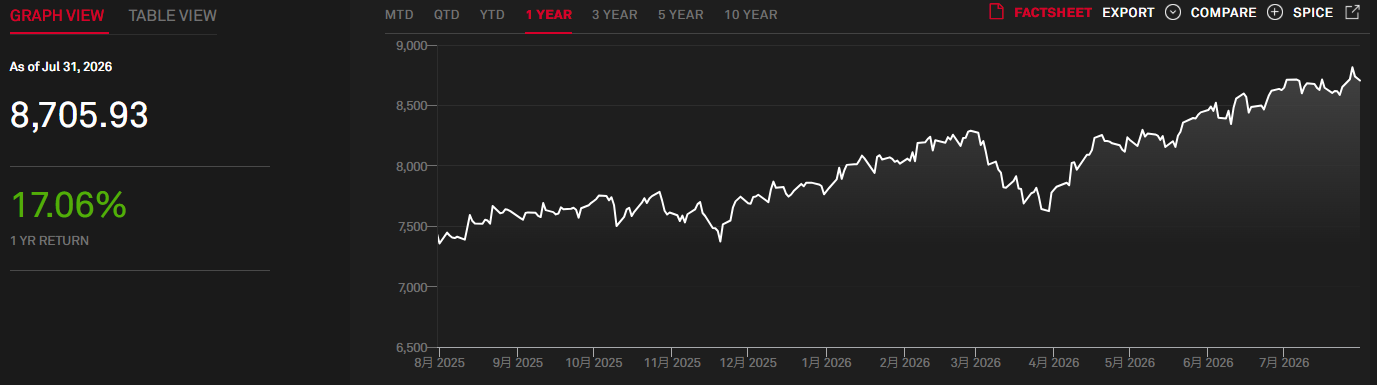
RBC Capital Markets maintained the S&P 500 target price of 8,150 points at the end of the year, believing that stronger economic growth and corporate profits could push the market up another 11.4%. However, strategist Calvasina also warned that in the early days of the change of chairman of the Federal Reserve, the S&P 500 usually fluctuated sharply, and “the trend of the stock market will not be smooth sailing.”
Goldman Sachs maintained the target price of 8,000 points for the S&P 500 index at the end of 2026, implying an upward margin of about 8%. However, Goldman Sachs traders warned that the possibility of a “highly relevant event” is rising as macro-uncertainty continues. Traders are hedging against the overall coordinated fluctuations of the market — so-called “reverse dispersion trading” has been listed by Goldman Sachs as one of the best strategies for dealing with the current market.
Coppersmith pointed out that with the end of the earnings season, market attention will return to interest rates, inflation, and economic growth. “The volatility of US Treasury bonds has begun to accelerate again, and the actual yield is still close to the high level of the cycle. Judging from historical experience, stock volatility usually does not remain structurally narrow in this environment.”
Tony Pasquariello, head of Goldman Sachs's hedge fund business, pointed out that “a heavy hammer smashed through consensus positions” in the past month. The most crowded, easiest, and most easily chased transactions with leverage have been forced to cool down, but the risk has not disappeared.