



Insurance and technology company HCI Group (NYSE:HCI) beat Wall Street’s revenue expectations in Q2 CY2026, with sales up 11.1% year on year to $246.7 million. Its GAAP profit of $5.60 per share was 9.3% above analysts’ consensus estimates.
Is now the time to buy HCI Group? Find out by accessing our full research report, it’s free.
HCI Group (HCI) Q2 CY2026 Highlights:
- Net Premiums Earned: $219 million vs analyst estimates of $216.1 million (9.4% year-on-year growth, 1.4% beat)
- Revenue: $246.7 million vs analyst estimates of $240.6 million (11.1% year-on-year growth, 2.5% beat)
- Pre-tax Profit: $111 million (45% margin)
- EPS (GAAP): $5.60 vs analyst estimates of $5.13 (9.3% beat)
- Book Value per Share: $86.60 vs analyst estimates of $88.18 (47.9% year-on-year growth, 1.8% miss)
- Market Capitalization: $2.31 billion
Management Commentary“HCI Group capped a strong start to the year delivering record second quarter financial results for the first half of 2026,” said HCI Group Chairman and Chief Executive Officer Paresh Patel.
Company Overview
Starting as a Florida "take-out" insurer that assumed policies from the state-backed Citizens Property Insurance Corporation, HCI Group (NYSE:HCI) provides property and casualty insurance, primarily homeowners coverage, while leveraging proprietary technology to improve underwriting and claims processing.
Revenue Growth
Big picture, insurers generate revenue from three key sources. The first is the core business of underwriting policies. The second source is income from investing the “float” (premiums collected upfront not yet paid out as claims) in assets such as fixed-income assets and equities. The third is fees from various sources such as policy administration, annuities, or other value-added services. Luckily, HCI Group’s revenue grew at an incredible 20.8% compounded annual growth rate over the last five years. Its growth surpassed the average insurance company and shows its offerings resonate with customers, a great starting point for our analysis.
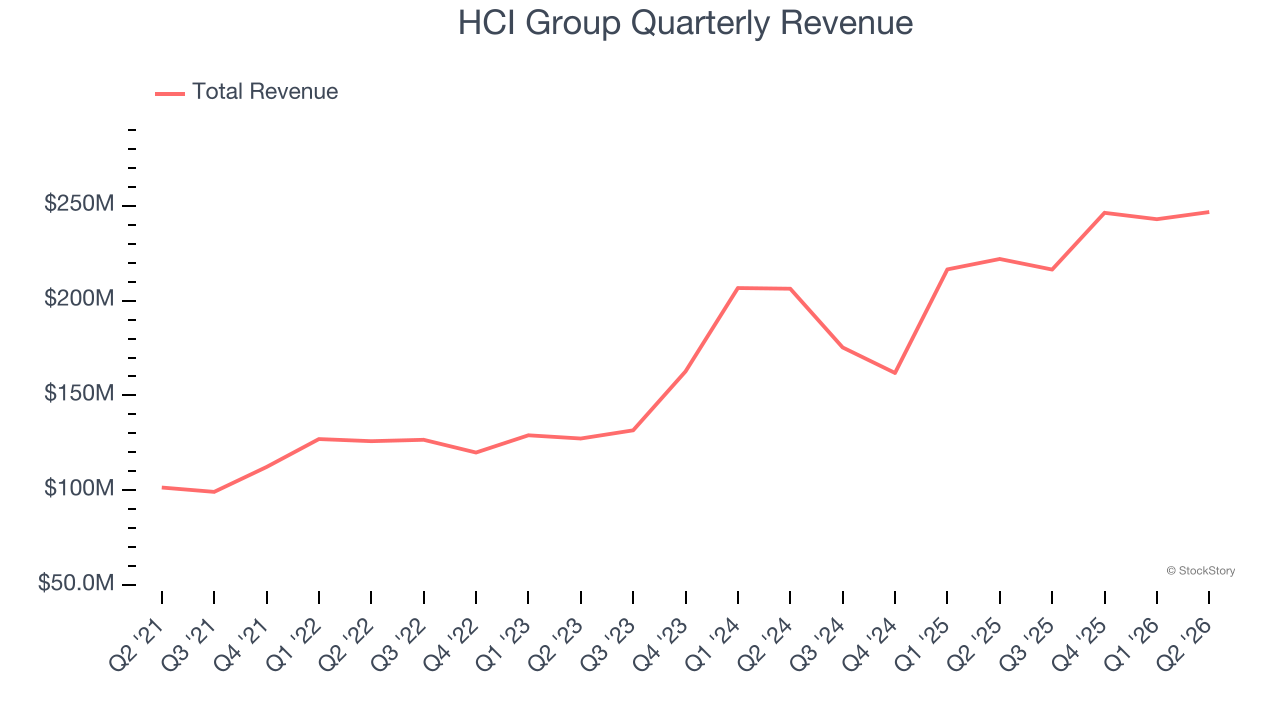
Long-term growth is the most important, but within financials, a half-decade historical view may miss recent interest rate changes and market returns. HCI Group’s annualized revenue growth of 16% over the last two years is below its five-year trend, but we still think the results suggest healthy demand. 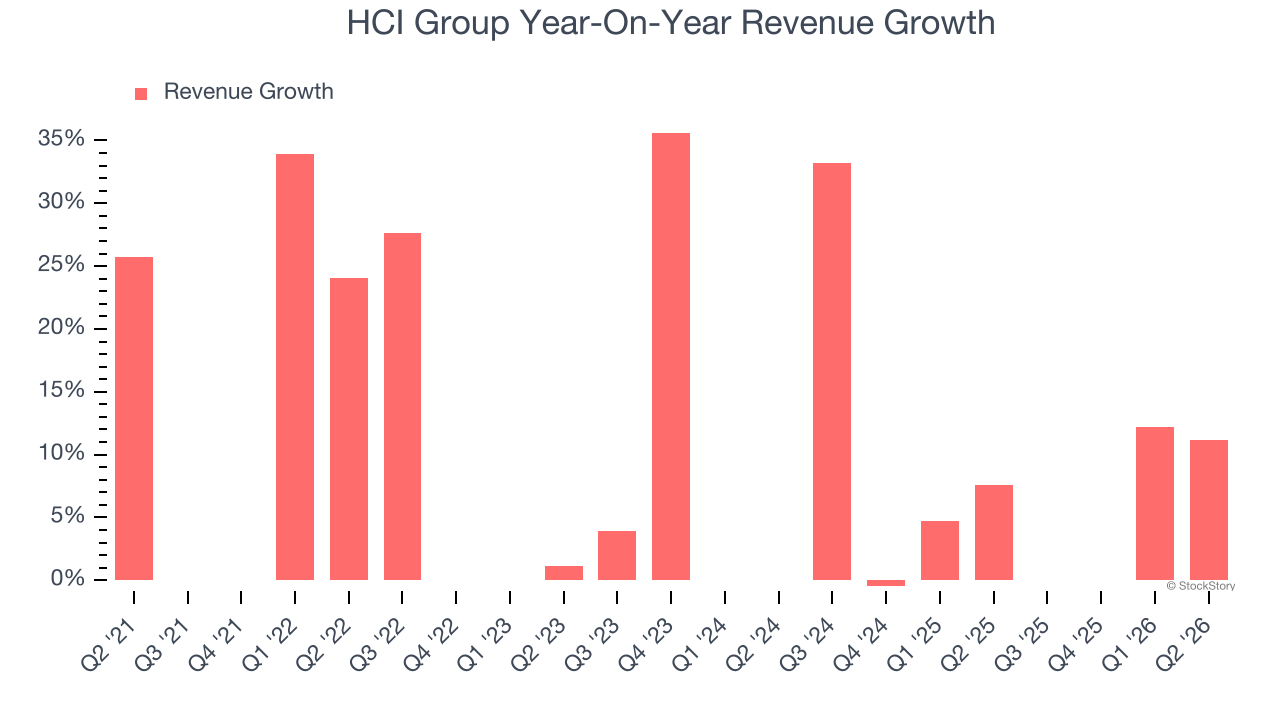 Note: Quarters not shown were determined to be outliers because they were impacted by outsized investment gains/losses that are not indicative of the recurring fundamentals of the business.
This quarter, HCI Group reported year-on-year revenue growth of 11.1%, and its $246.7 million of revenue exceeded Wall Street’s estimates by 2.5%.
Net premiums earned made up 91% of the company’s total revenue during the last five years, meaning HCI Group lives and dies by its underwriting activities because non-insurance operations barely move the needle.
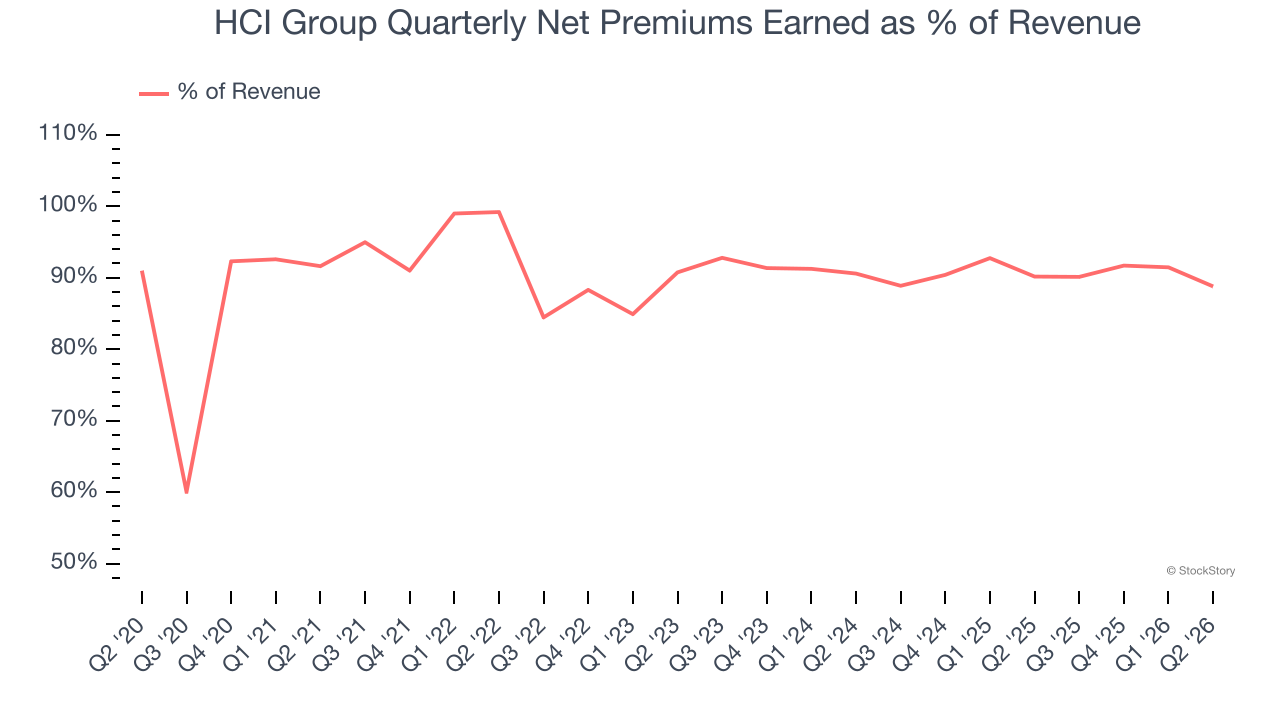
While insurers generate revenue from multiple sources, investors view net premiums earned as the cornerstone — their direct link to core operations stands in sharp contrast to the unpredictability of investment returns and fees.
ALSO WORTH WATCHING: Nvidia’s Quiet Partner. Nvidia’s chips cost a hundred grand. The connectors that make them work cost even more. One company makes them all.
Every AI server needs specialized infrastructure the chip companies don’t make. High-speed cables. Power connectors. Thermal sensors. This 90-year-old company built a monopoly on it. The AI boom just started. This stock is still flying under the radar. Claim The Stock Ticker Here for FREE.
Book Value Per Share (BVPS)
Insurers are balance sheet businesses, collecting premiums upfront and paying out claims over time. Premiums collected but not yet paid out, often referred to as the float, are invested and create an asset base supported by a liability structure. Book value per share (BVPS) captures this dynamic by measuring these assets (investment portfolio, cash, reinsurance recoverables) less liabilities (claim reserves, debt, future policy benefits). BVPS is essentially the residual value for shareholders.
We therefore consider BVPS very important to track for insurers and a metric that sheds light on business quality because it reflects long-term capital growth and is harder to manipulate than more commonly-used metrics like EPS.
HCI Group’s BVPS grew at an incredible 27% annual clip over the last five years. BVPS growth has also accelerated recently, growing by 42.4% annually over the last two years from $42.72 to $86.60 per share.
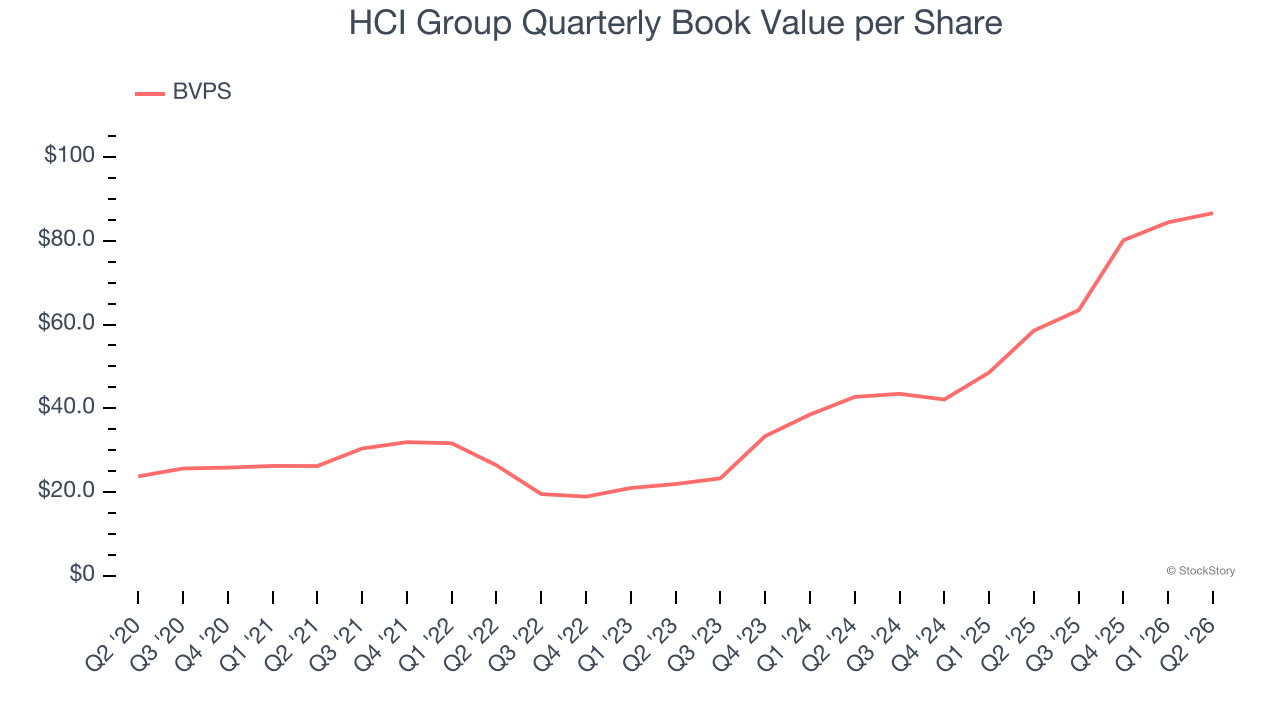
Over the next 12 months, Consensus estimates call for HCI Group’s BVPS to grow by 14.5% to $88.18, top-notch growth rate.
Key Takeaways from HCI Group’s Q2 Results
We enjoyed seeing HCI Group beat analysts’ revenue expectations this quarter. We were also glad its net premiums earned outperformed Wall Street’s estimates. On the other hand, its book value per share missed. Overall, this print had some key positives. The stock remained flat at $180.67 immediately after reporting.
Should you buy the stock or not? When making that decision, it’s important to consider its valuation, business qualities, as well as what has happened in the latest quarter. We cover that in our actionable full research report which you can read here (it’s free).