


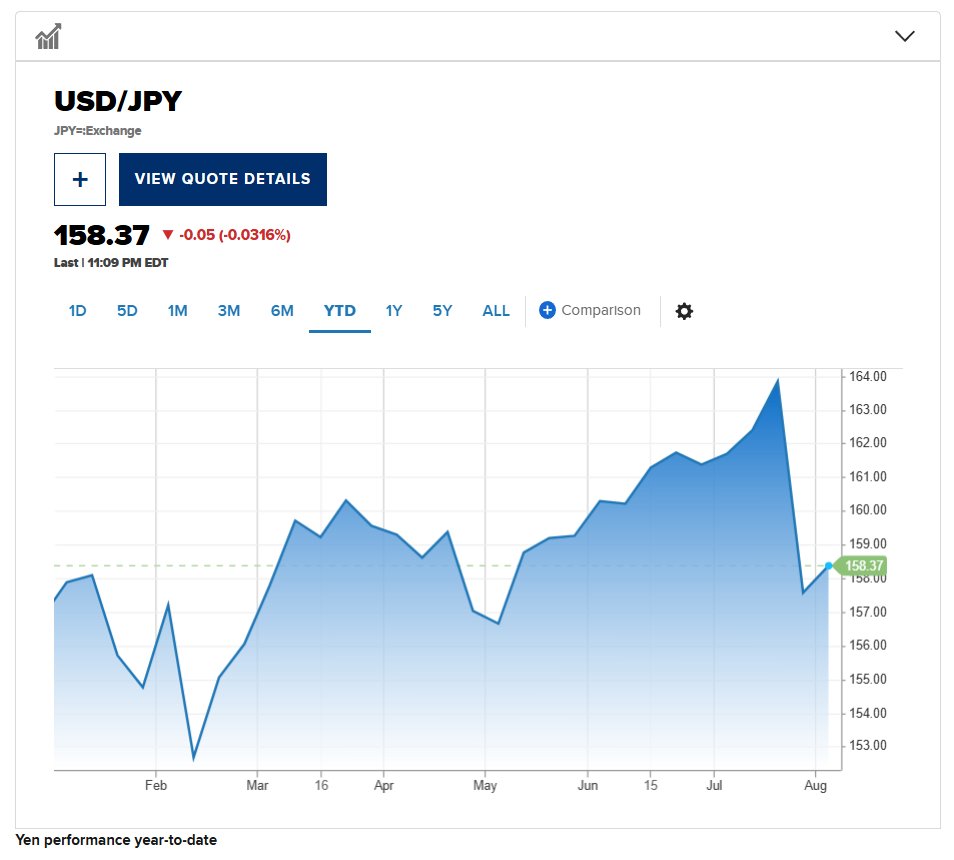
The Zhitong Finance App learned that the unprecedented joint intervention of the US and Japan to support the yen may profoundly affect the future behavior pattern of the market.
Japan has not interfered in the foreign exchange market in the past, but the scale of this operation far exceeds that of the past. More importantly, the operation received public endorsement from the US side; according to reports, the intervention was not carried out directly through the USD/JPY, but was carried out through a cross between EUR/JPY, and was accompanied by clear signals of political support.
Some investors think the move is significant.
“Japan's Ministry of Finance and the US Treasury have successfully weaponized the yen,” said Jesper Koll, expert director of the Monex Group, and pointed out that this is essentially a deterrent to the market. He believes that this intervention has gone beyond traditional foreign exchange management because the two countries are collaborating to use public balance sheets to guide market psychology. He added: “When the two major sovereign countries concentrate their increasingly scarce national resources on the same goal, the market must ignore this signal.”
This joint intervention is the first time since 1998 that the US and Japan have joined forces to buy yen, and it is also the first time that the two countries have carried out such a coordinated intervention since the Group of Seven (G7) took coordinated action to reduce the yen after the 2011 Great East Japan Earthquake.
Political tools
Koll also pointed out that the operation was also unprecedented in terms of political signals. By combining political support with financial firepower, the US and Japan intend to raise the cost of shorting the yen — making the balance sheets of the two sovereign countries stand on the opposite side of the deal at the same time.
Cornell University professor Eswar Prasad believes that this is more of a defensive move, but he also acknowledged that this operation shows that exchange rate policies are increasingly entangled with geopolitics. “Money market intervention is clearly geopolitical,” Prasad said, pointing out that the Trump administration seems to be more inclined to support central banks that are seen as aligned with US priorities.
Some analysts have compared this to America's support for the peso under Argentine President Javier Millet. At the time, Argentina was on the eve of a critical midterm election, and currency turmoil intensified. In September and October 2025, the Trump administration stepped in and provided a support package, using the Treasury's Exchange Rate Stabilization Fund (ESF) to exchange 20 billion US dollars in currency exchanges with the Central Bank of Argentina, while purchasing pesos on the open market.
“Bezent was a key player throughout it. The same Ministry of Finance, the same ESF, the same operation manual — using foreign exchange operations as a foreign policy tool,” said Michael Gayed, chief investment strategist at Tactical Rotation Management. “Support for Argentina is to support an ally.”
Similarly, Quantum Strategy strategist David Roche also said that America's motives are probably not limited to financial stability or the treasury bond market; political considerations may also be an important factor. “Maybe he just wanted to show his ally Sanae Takaichi good.”
The US Treasury did not respond to requests for comment.
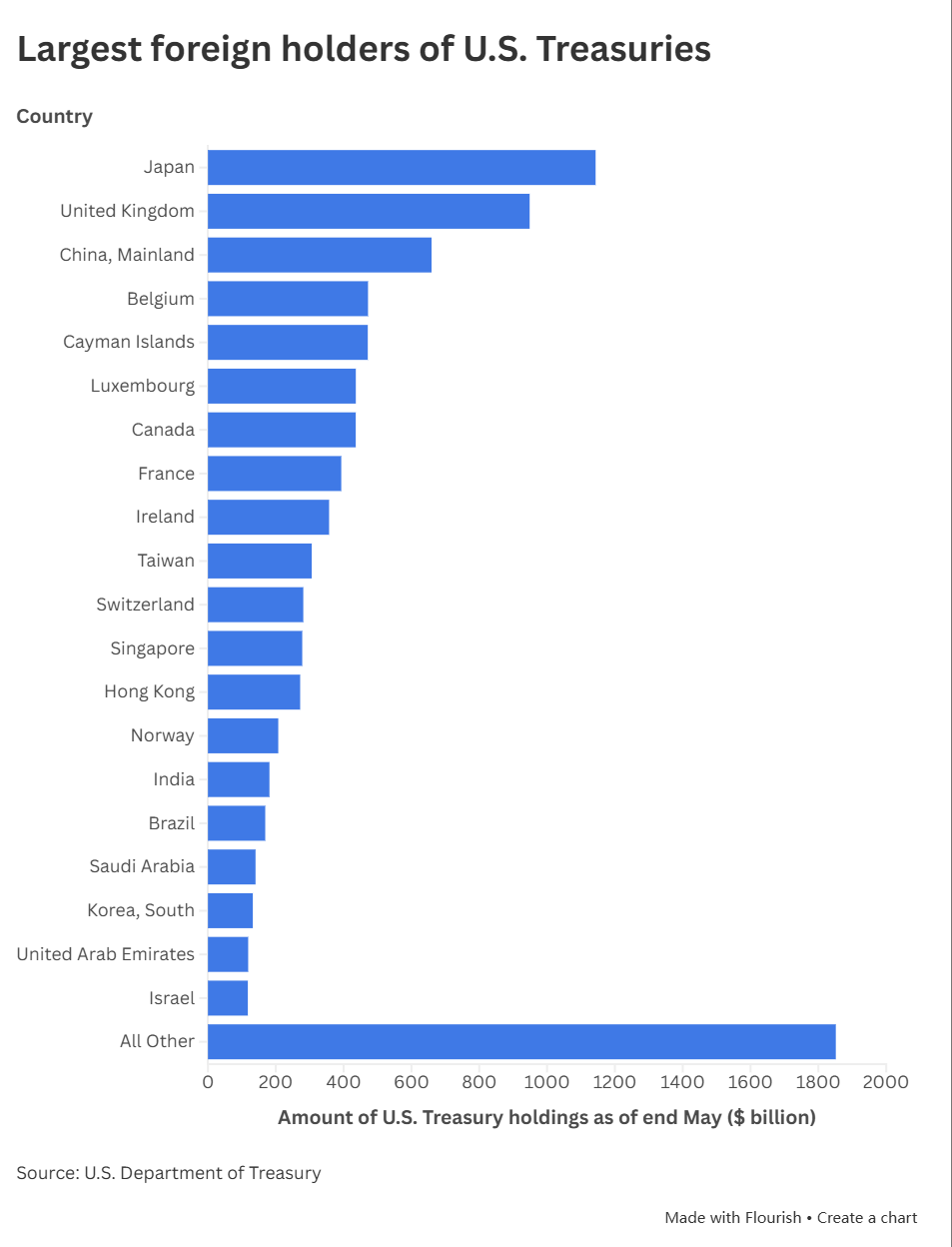
The strategists believe this intervention will change the way investors think about the yen.
“This will particularly change the capital cost logic in arbitrage transactions,” said Billy Leung, investment strategist at Global X ETFS. “If investors now view intervention risk as a real and concerted threat, they are likely to be more cautious about shorting the yen on a large scale and instead look for alternative financing currencies.”
The yen has long been the preferred financing currency for global arbitrage transactions — investors borrow yen with low interest rates and invest in higher-yielding overseas assets.
Leung added that the broader consequence is that “exchange rate policy itself” has once again become a source of market risk after being dormant for a decade. If investors gradually switch to other financing currencies such as the euro, it may reshape the position pattern in major foreign exchange markets.
Masahiko Loo, senior fixed income strategist at State Street Global Investments Management, also believes that this incident means traders must increasingly include geopolitical variables in pricing. “The biggest change is that traders now have a new variable that must be priced — a policy response function, not just macro fundamentals.”