


As RCEP quietly reshapes trade across Asia, supply chains in Southeast Asia are starting to look less like a back office and more like a front row seat to regional growth. For investors, that shift can mean fresh opportunities in companies that keep goods moving and factories running, especially as RCEP use is still far from widespread. This article walks through three stocks exposed to this story and explains why they may deserve a closer look.
The stocks covered below are just a sample of this theme. The full screen surfaces 13 more Southeast Asian supply chain companies that share similarly compelling stories around scale, quality and sector exposure. To see the wider opportunity set in detail, head straight to the Southeast Asian Supply Chain Leaders screener to identify, compare and analyze the highest conviction ideas from this group.
Yangzijiang Shipbuilding (Holdings) (SGX:BS6)
Overview: Yangzijiang Shipbuilding (Holdings) is a China based shipbuilder that designs and constructs commercial vessels such as containerships, bulk carriers, oil tankers and LNG or other gas carriers. The company also offers ship repair, steel structure fabrication, terminal and tank services, plus some property development activities for a global customer base.
Operations: Yangzijiang Shipbuilding (Holdings) generates most of its revenue from its Shipbuilding segment at roughly CN¥31.1b, with smaller contributions from Shipping at about CN¥1.2b and Others at around CN¥0.9b.
Market Cap: SGD16.5b
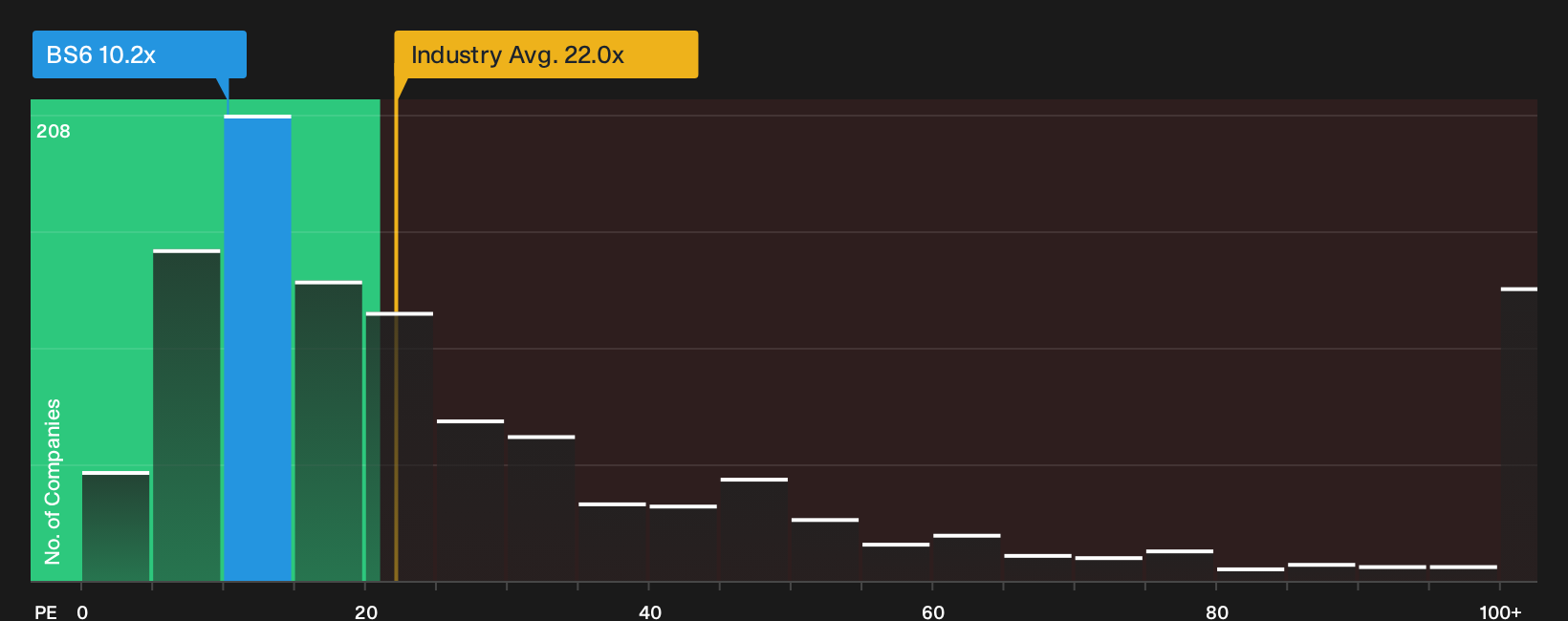
Yangzijiang Shipbuilding (Holdings) stands out in the RCEP supply chain story because it is a core maritime builder that may benefit when regional trade flows are smoother and more predictable under the agreement. The company combines a large order book in containerships and LNG capable vessels with strong profitability and a P/E that is below both regional peers and the wider Asian machinery sector. At the same time, funding is more reliant on external borrowing and free cash flow has not fully covered dividends, so income focused investors may need to watch the cash generation closely. For readers who want exposure to RCEP linked trade activity with real scale at work, this is a stock that some investors may wish to study in more depth.
Yangzijiang Shipbuilding appears to offer a rare combination of scale and a P/E below regional peers. However, the key consideration is the balance between dividends, free cash flow and funding. Start with the Yangzijiang Shipbuilding (Holdings) financial health report
Build your own RCEP supply chain shortlist
Yangzijiang Shipbuilding, together with the two other stocks in this article, all came out of a single Simply Wall St screener. Use our flexible Screener to mix filters across valuation, growth, balance sheet strength, risks and dividends, or start with one of our curated Investing Ideas for a ready made shortlist.
UWC Berhad (KLSE:UWC)
Overview: UWC Berhad is a Penang based precision engineering group that designs, manufactures and assembles high tolerance metal and plastic components, automation solutions and test equipment for global customers in the semiconductor, life science and medical technology industries.
Market Cap: MYR7.4b
UWC Berhad is tightly linked into global electronics and medical equipment supply chains, so it may benefit as RCEP simplifies cross border trade and encourages companies to build more resilient production hubs in Southeast Asia. Recent results show higher revenue and earnings for both Q3 and the first nine months to April 2026, with net margins around 14% and return on equity in the low teens, even though the stock trades on a very high P/E and above some cash flow based estimates of value. The combination of a newer management team, a high proportion of non cash earnings and funding that leans on external borrowing suggests that this is a growth focused company that may warrant closer scrutiny rather than uncritical optimism.
UWC Berhad sits at the crossroads of semiconductor and medical tech demand, yet its very high P/E and newer leadership tell a more complex story. Run through the 2 key rewards and 1 important major warning sign to see what might be hiding under those headline numbers.

Pan-United (SGX:P52)
Overview: Pan-United is a Singapore based building materials and logistics group that supplies cement, aggregates, ready mix concrete and related products, while also providing bulk shipping, raw materials trading and sustainable technology solutions across infrastructure, commercial and industrial projects.
Operations: Pan-United generates the vast majority of its revenue from Concrete and Cement at about SGD889.8 million, with Trading and Others contributing around SGD13.6 million and group eliminations of SGD4.9 million.
Market Cap: SGD1.1b
Pan-United gives exposure to the hard infrastructure behind Southeast Asia’s trade activity, from concrete in ports and airports to logistics and bulk shipping that are linked to regional flows supported by RCEP. As of the latest available information, the company has reported strong earnings growth over several years and profitability has been edging higher. The stock trades at a discount to some estimates of fair value, even with a relatively high P/E and an approved final dividend of SGD0.035 per share for FY2025. However, free cash flow coverage of dividends appears weak and the balance sheet relies on higher risk external borrowing, which makes funding discipline important. For investors who can weigh those trade offs carefully, Pan-United may warrant a closer look beyond the headline multiple.
Pan-United’s earnings momentum and higher profitability are only half the story, especially with the stock trading at a discount to some value estimates. Go through the analysis report for Pan-United to see what that pricing might be hinting at.

Curious About What You Might Be Missing
Fresh ideas do not stay under the radar for long. New themes can gain momentum, prices can move, and attractive entry points can be captured quickly. Explore the next wave of opportunities and review what the market is watching.
- Identify companies with income potential before yields compress by scanning the curated 440 dividend fortresses. It focuses on durable payouts and balance sheets structured to navigate periods of stress.
- Monitor early leaders as AI infrastructure investment develops and review the targeted 56 AI infrastructure stocks for businesses connected to the hardware and power needs of machine learning.
- Follow capital trends in robotics by reviewing the hand picked 37 robotics and automation stocks, which highlights companies involved in automating factories, warehouses, and key industrial processes.
This article by Simply Wall St is general in nature. We provide commentary based on historical data and analyst forecasts only using an unbiased methodology and our articles are not intended to be financial advice. It does not constitute a recommendation to buy or sell any stock, and does not take account of your objectives, or your financial situation. We aim to bring you long-term focused analysis driven by fundamental data. Note that our analysis may not factor in the latest price-sensitive company announcements or qualitative material. Simply Wall St has no position in any stocks mentioned.
Have feedback on this article? Concerned about the content? Get in touch with us directly. Alternatively, email editorial-team@simplywallst.com