


Hong Kong is reworking its tax rules for traders, asset managers, and family offices, and that could reshape where capital and talent choose to work and invest next. Possible tax breaks on carried interest and performance pay are drawing fresh attention to locally listed financial services stocks that are closest to this shift. This article explores three Hong Kong financial and asset management stocks that are closely tied to these reforms and explains why their exposure to the news may be relevant to you.
The stocks covered below are just a starting sample, and the full screen identifies 8 more Hong Kong financial services and asset management companies with equally compelling narratives that are not included in this article. If you want to quickly size up the wider opportunity set, analyze the universe and identify your own highest conviction ideas, head straight to the Financial Services and Asset Management Stocks in Hong Kong screener.
China International Capital (SEHK:3908)
China International Capital is a Beijing headquartered full service investment bank and asset manager that works across investment banking, trading, asset management, private equity, and wealth management for institutional and high net worth clients in China and overseas. The company has a market cap of about HK$160.1b, which puts it among the larger listed financial institutions in Hong Kong.
China International Capital sits right in the path of Hong Kong’s proposed tax reforms, with its investment banking, asset management, and wealth businesses all geared to benefit if more global funds and trading firms route activity through the city. The stock currently trades on a P/E that is slightly below the sector average and is priced well under some fair value estimates, while earnings and revenue forecasts point to solid growth. At the same time, return on equity is still in single digits, funding relies on external sources rather than deposits, and the senior management team is relatively new. For investors who can balance those trade offs, the combination of policy tailwinds, earnings momentum, and valuation could be particularly interesting.
China International Capital’s mix of policy exposure, below sector average P/E and fair value debate can look like a puzzle. Get the full picture in the DCF valuation analysis for China International Capital and see what the headline numbers might be hiding.

Build your own policy tailwind shortlist
China International Capital and the two other Hong Kong financial stocks in this article all surfaced from a single screener, but the real edge comes when you set your own rules. Use our flexible Screener to blend filters for valuation, earnings outlook, balance sheet strength and risks, or tap into ready made themes through our Investing Ideas.
China Zheshang Bank (SEHK:2016)
China Zheshang Bank is a Hangzhou based commercial bank that serves corporate, government and retail customers across Mainland China through lending, deposits, trade finance, wealth management, cards and treasury activities such as money market and derivatives trading. The bank’s reported revenue of about CN¥38.2b currently comes from Mainland China, and it has a Hong Kong presence that links it directly to cross border capital flows. Its Hong Kong listed shares give the group a market cap of roughly HK$86.3b, putting it among the larger regional banks available to Hong Kong investors.
China Zheshang Bank sits at the intersection of Hong Kong’s proposed tax breaks for asset managers and proprietary trading firms. Its wealth and financial services operations are positioned to plug into any growth in client assets and trading activity. The stock trades on a low P/E and well below some fair value estimates. Analysts expect double digit earnings and revenue growth, which together indicate a potentially attractive valuation reset if the bank can deliver. At the same time, recent earnings declined, net profit margins narrowed, and the dividend record has been patchy, so the income story is not straightforward. In addition, governance changes are planned, including the abolition of the Board of Supervisors in 2026. As a result, this is a bank that may appeal to patient investors who are prepared to do extra homework, but it also calls for careful scrutiny before taking a position.
China Zheshang Bank’s low P/E and governance reset could be masking a very different risk reward profile than the headline story suggests. Walk through the full 3 key rewards and 1 important warning sign to see where the thesis could break or surprise.
Bank of East Asia (SEHK:23)
Bank of East Asia is a Hong Kong headquartered bank that offers everything from everyday accounts, cards and mortgages to corporate lending, trade finance, wealth management, private banking and investment services across Hong Kong, Mainland China and other Asian markets. Revenue is concentrated in Hong Kong, with Hong Kong personal banking contributing about HK$6.9b and treasury markets and wealth management adding roughly HK$1.6b and HK$1.3b, while Mainland China operations bring in around HK$3.5b and overseas, Macau and Taiwan operations add about HK$2.3b. The company has a market cap of roughly HK$43.7b.
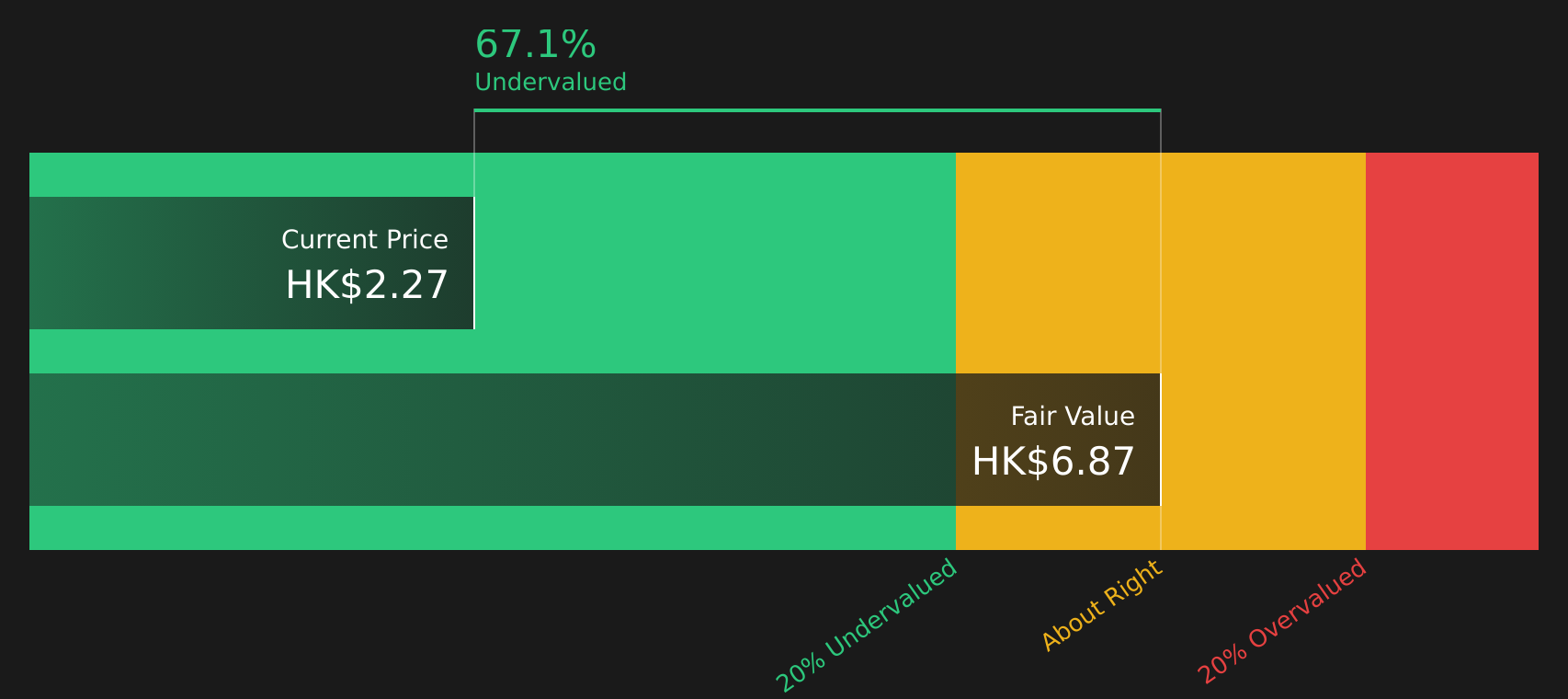
Bank of East Asia sits at the crossroads of Hong Kong’s push to attract more fund managers and trading activity, and investors’ search for banks with genuine earnings momentum. Forecast earnings growth of around 27.5% a year and revenue growth above the broader Hong Kong market stand out, yet current returns on equity are low, bad loans are elevated and loss reserves look thin, so the stock is far from a simple quality story. The P/E multiple is well above local banking peers and margins have compressed, which means expectations are already loaded into the price. For investors who want exposure to a Hong Kong focused bank that could benefit if trading and asset management volumes build, the key question is whether the growth outlook and long history of the franchise are enough to compensate for the credit risk and valuation tension that still hang over Bank of East Asia.
Bank of East Asia’s earnings story and premium P/E may be telling two very different stories. Before you decide which one you trust, walk through the analyst forecasts for Bank of East Asia and see what the market might be missing.

Seeking Alternatives Before The Crowd Moves
Fresh ideas do not stay quiet for long. Once momentum builds, prices can move fast and the cleanest entry points can quickly pass by. Consider these under the radar opportunities while it matters and aim to position early.
- Identify potential income workhorses before yields are compressed by latecomers as investors focus on the 440 dividend fortresses that screen strongly across cash generation and balance sheet strength.
- Look for early momentum in companies building the infrastructure behind AI before valuations move higher by scanning the hand picked 56 AI infrastructure stocks that power the sector.
- Monitor the next phase in electrification and grid upgrades by reviewing a curated 37 power grid technology and infrastructure stocks that could benefit if capital spending accelerates.
This article by Simply Wall St is general in nature. We provide commentary based on historical data and analyst forecasts only using an unbiased methodology and our articles are not intended to be financial advice. It does not constitute a recommendation to buy or sell any stock, and does not take account of your objectives, or your financial situation. We aim to bring you long-term focused analysis driven by fundamental data. Note that our analysis may not factor in the latest price-sensitive company announcements or qualitative material. Simply Wall St has no position in any stocks mentioned.
Have feedback on this article? Concerned about the content? Get in touch with us directly. Alternatively, email editorial-team@simplywallst.com