


Box stock has delivered a 33.9% return over the past five years, yet its valuation checks send mixed signals as the Discounted Cash Flow (DCF) intrinsic value estimate points to a sizeable gap to the current share price while market multiples lean the other way.
- A 33.9% five year return suggests Box has rewarded patient shareholders, so the current price reflects at least some confidence in its long term cash generation.
- Recent commentary around Box's AI security capabilities and enterprise content platform can support expectations for future cash flows, while concerns about AI driven security risks and changing software buying patterns may weigh on how durable those cash flows look.
- Box scores only 2 out of 6 on broader valuation checks, which leans more expensive than clear bargain, even though the DCF suggests the shares trade about 40.3% below intrinsic value and earnings based multiples screen as overvalued.
The issue now is whether investors should view Box as attractively priced based on the intrinsic value estimate or as closer to fully valued given what the broader checks and market multiples are signaling.
Does Box Look Undervalued on Cash Flow?
The Discounted Cash Flow (DCF) model estimates what Box should be worth today based on the cash it is expected to generate for shareholders. For Box, the model uses latest twelve month free cash flow of about $334.7 million and assumes that free cash flow continues growing from this base rather than shrinking.
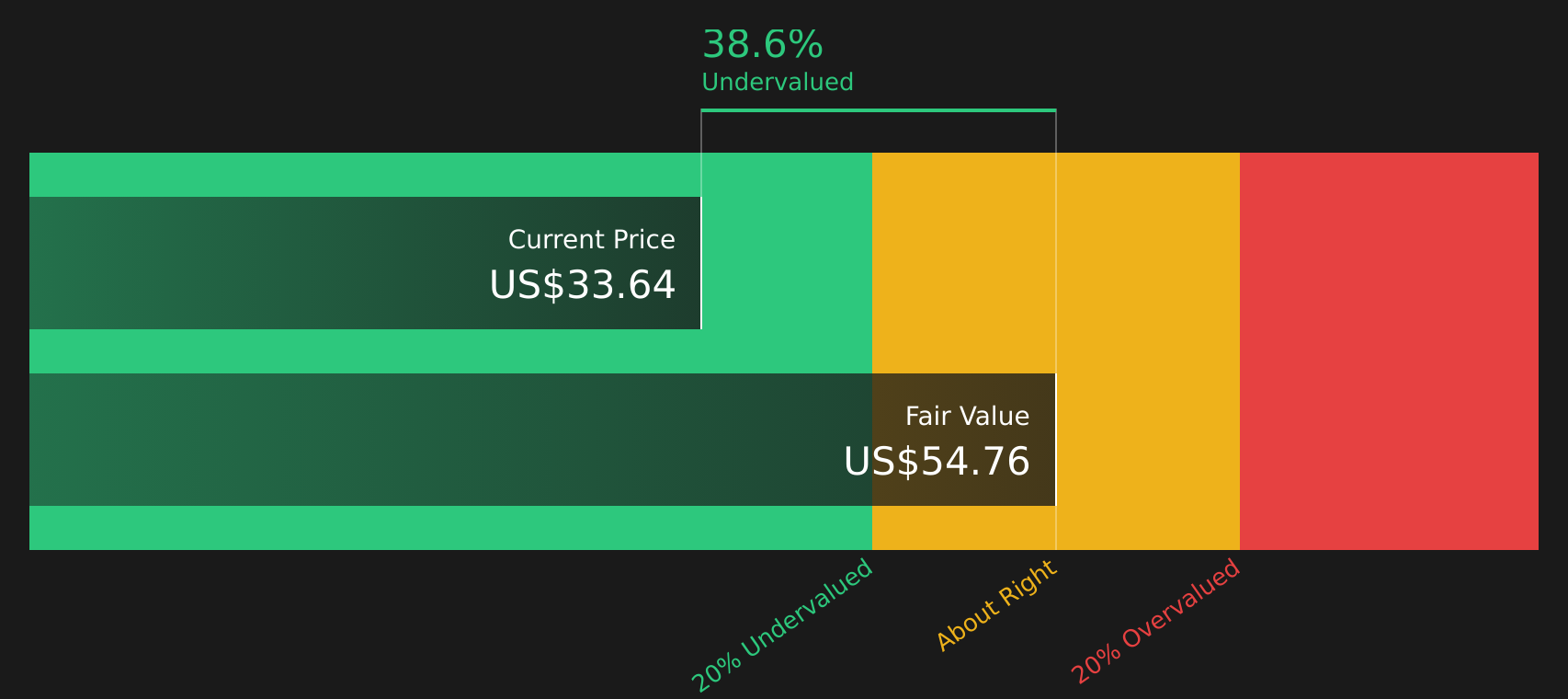
On those assumptions, the Discounted Cash Flow (DCF) output points to an intrinsic value of about $54.97 per share, which is around 40.3% above the current share price. The recent focus on Box as an AI ready content and security platform, including deals like the Quintas Energy partnership, may help explain why some investors view its long term cash generation as more valuable than the current price suggests.
On this cash flow view, Box stock appears undervalued relative to the intrinsic value implied by the Discounted Cash Flow model.
Our Discounted Cash Flow (DCF) analysis suggests Box is undervalued by 40.3%. Track this in your watchlist or portfolio, or discover 49 more high quality undervalued stocks.
Does Box Look Pricey on Earnings?
The P/E ratio is a useful yardstick for Box because investors often look at earnings to judge how much they are paying for each dollar of profit. Box currently trades on a P/E of about 47.6x, which is slightly above the peer average of roughly 45.9x and well ahead of the wider software industry average of about 31.8x. That already places Box toward the higher end of the earnings valuation range for its sector.
The Fair Ratio model suggests a P/E of around 25.4x could be more in line with Box's profile. That is much lower than the current 47.6x, so the stock trades at a sizeable premium to what this framework points to as a more grounded level, even before you compare it with the broader software group. For investors, this indicates that a significant amount of positive expectations around Box's earnings power is already reflected in the price.
On this P/E basis, Box stock appears expensive relative to both tailored and industry benchmarks.

See what the numbers say about this price — find out in our valuation breakdown.
The Box Narrative: What Would Justify Today's Price?
Simply Wall St Narratives pick up where this Box valuation puzzle leaves off. They spell out which growth, margin and earnings paths would need to hold for the stock to be worth materially more or less than today's price, using Box's Community page as the hub. Each narrative links a fair value view to a specific story about Box's potential catalysts and risks so you can watch over time which version appears closer to reality.
One of the top community narratives on Box: 31% overvalued
"With an overdependence on upselling existing enterprise customers and limited net new customer acquisition, Box faces heightened risk of wallet share saturation..."
Read one of the top narratives on Box
Do you think there's more to the story for Box? Head over to our Community to see what others are saying!
The Bottom Line
Box sits in a genuine valuation tug of war. The Discounted Cash Flow (DCF) intrinsic value estimate suggests meaningful upside, while the earnings multiple view flags Box stock as overvalued relative to both tailored and industry benchmarks. Broader valuation checks lean weak, which tempers how much weight many investors may give to the DCF signal on its own. The real dividing line from here is whether Box can turn its AI centric content and security position into durable cash flows that justify both its cash flow based upside and its richer earnings multiple, rather than that discount proving to be a value trap.
This article by Simply Wall St is general in nature. We provide commentary based on historical data and analyst forecasts only using an unbiased methodology and our articles are not intended to be financial advice. It does not constitute a recommendation to buy or sell any stock, and does not take account of your objectives, or your financial situation. We aim to bring you long-term focused analysis driven by fundamental data. Note that our analysis may not factor in the latest price-sensitive company announcements or qualitative material. Simply Wall St has no position in any stocks mentioned.
Have feedback on this article? Concerned about the content? Get in touch with us directly. Alternatively, email editorial-team@simplywallst.com