


Oil price uncertainty surrounding the Middle East has pushed energy security back to the top of the agenda. Investors are again paying close attention to reliable baseload power, and nuclear energy stocks are firmly in that spotlight. This article highlights why nuclear exposure can matter when fuel markets look fragile and walks through 3 nuclear energy stocks from our screener that stand out on fundamentals and business focus.
The 3 nuclear energy stocks below are just a sample of the idea, and the full screen surfaced 32 more companies with equally compelling narratives that are not covered in this article. To go deeper, analyze and identify your own highest conviction setups directly in the Nuclear Energy Stocks screener.
Hitachi (TSE:6501)
Overview: Hitachi is a diversified industrial and technology company that supplies digital systems, nuclear and other green energy solutions, rail and mobility equipment, and a wide range of factory automation and infrastructure services across Japan and global markets. Its portfolio spans IT platforms, power grids, e-mobility, elevators, medical and analytical equipment, and industrial machinery.
Operations: Hitachi generates most of its revenue from Connective Industries at ¥3.35t, Energy at ¥3.46t, and Digital Systems & Services at ¥3.01t, with smaller contributions from Mobility at ¥1.38t and Others at ¥0.53t.
Market Cap: ¥25.4t
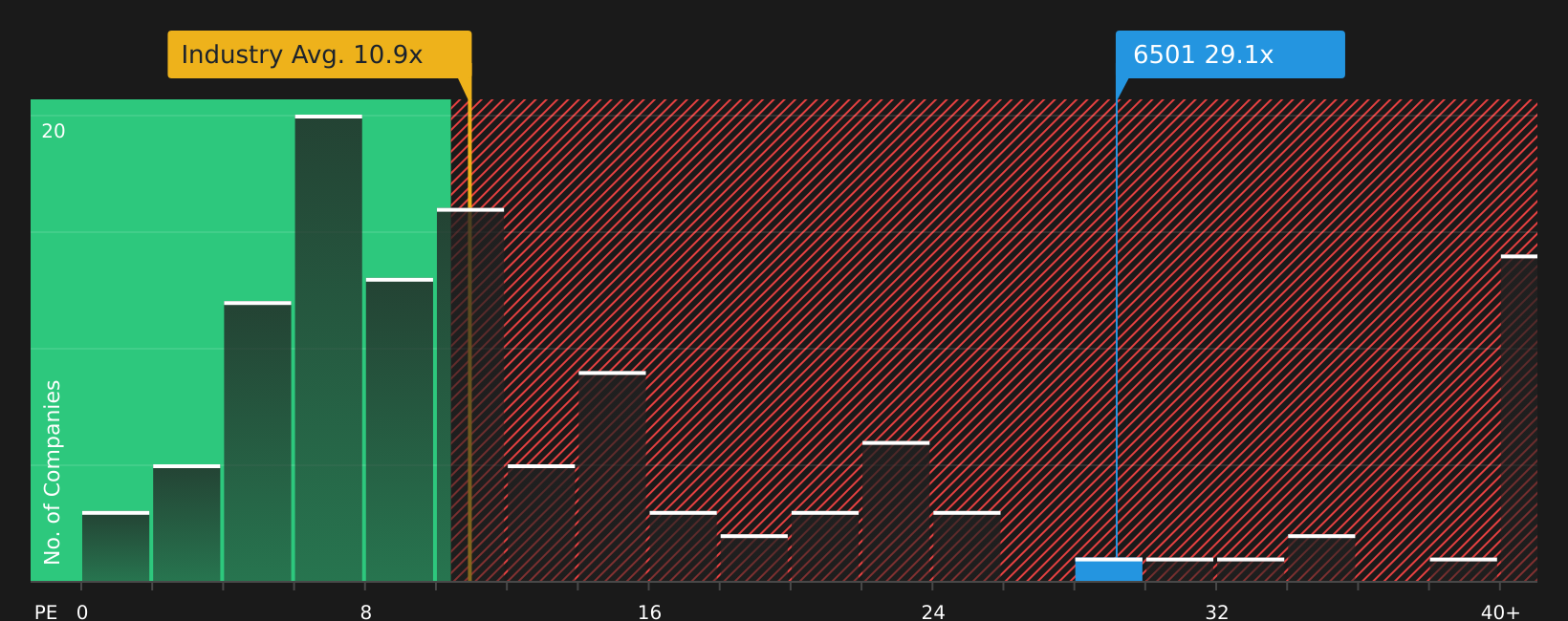
Hitachi provides exposure to critical energy and grid infrastructure, nuclear and renewables, and physical AI through its Lumada platform, supported by what is described as high quality earnings and an experienced leadership team. The company is closely linked to themes such as power grid upgrades, AI driven industrial automation and rail modernization. These themes are illustrated by recent contracts in Toronto rail signaling and its Oklahoma AI enabled “Global Lighthouse” factory. Some analysts describe room for earnings growth and mention price targets that sit above the current share price. However, the P/E is higher than many industrial peers, and funding relies entirely on external borrowings. For nuclear focused investors, the key interest is how its Energy, Mobility and digital units connect to support long term electrification and decarbonization projects.
Hitachi sits at the crossroads of AI, power grids and nuclear, yet its higher P/E and reliance on external funding raise real questions. Put the full picture in context with the analysis report for Hitachi
Build your own nuclear and infrastructure shortlist
Hitachi and the two other nuclear focused stocks in this article all surfaced from our screener, but your best ideas often come from filters tuned to your own style. Use our flexible Screener to mix fundamentals, risks and themes, or lean on the ready made Investing Ideas for curated starting points.
ITOCHU (TSE:8001)
Overview: ITOCHU is a global trading and investment company that links resource, industrial and consumer markets by sourcing, processing and distributing everything from textiles and food to metals, energy, infrastructure and IT services. Through its eight business segments, it connects upstream commodities and downstream consumer brands, including retail, real estate, logistics and financial services.
Operations: ITOCHU generates most of its revenue from Food at ¥5.1t and Energy & Chemicals at ¥3.2t, followed by General Products & Realty at ¥1.6t, Machinery at ¥1.5t, ICT & Financial Business at ¥1.2t, Metals & Minerals at ¥1.3t, Textile at ¥0.7t and The 8th at ¥0.5t.
Market Cap: ¥14.7t
ITOCHU offers exposure to nuclear fuels, battery materials and circular economy themes through a single, diversified trading house that is pushing into higher margin consumer and sustainability businesses. The company is backing projects such as a large waste to energy plant in Morocco and battery material partnerships, while also running a sizeable buyback program and offering a 2.1% dividend yield. At the same time, high debt, reliance on external borrowing and exposure to commodity heavy segments keep earnings sensitive to resource cycles and one off gains. For investors who want nuclear and decarbonization exposure without relying on a pure play utility, a key consideration is whether this shift toward more stable, consumer driven cash flows is far enough along yet.
ITOCHU’s shift toward consumer and sustainability cash flows can look like a quiet reset of its risk profile. Yet the real story sits in how its segments pull together in the analysis report for ITOCHU

Mitsubishi Heavy Industries (TSE:7011)
Overview: Mitsubishi Heavy Industries is a global industrial group that builds and services energy systems, nuclear reactors, carbon capture technology, aircraft and defense equipment, ships, machinery and HVAC solutions for customers across power, infrastructure and aerospace markets.
Operations: Mitsubishi Heavy Industries generates most of its revenue from Energy Systems at ¥2.18t, Aircraft, Defense & Space at ¥1.42t and Plants & Infrastructure Systems at ¥0.87t, with smaller contributions from Others and internal segment adjustments.
Market Cap: ¥13.8t
Mitsubishi Heavy Industries sits at the intersection of clean energy, defense and industrial infrastructure, with a record ¥10.77t order backlog and demand for next generation energy systems such as GTCC, nuclear and carbon capture. Earnings growth, an ROE of about 13.1% and improving margins have drawn analyst attention, and recent partnerships with Nvidia on AI data center power and Entergy on carbon capture show how deeply embedded the company is in long term decarbonization projects. The trade off is a rich P/E multiple, reliance on external borrowing and sensitivity to currency swings and large defense contract timing. For investors who want nuclear exposure tied into both power grids and aerospace, the key question is whether these cash flows are resilient enough to justify that premium.
Rising orders and a rich P/E suggest Mitsubishi Heavy Industries might be pricing in more than the headline story. See how the analyst forecasts for Mitsubishi Heavy Industries lines up with its backlog and where the real tension could sit.

Seeking Fresh Alternatives Before Others Notice
Fresh ideas can move from quiet to crowded fast. Some stocks are building momentum while they are still under the radar for now. Consider researching opportunities before they become widely followed.
- Identify cash rich businesses that have not yet been fully recognized by the market and review the 23 high quality undervalued stocks while it still feels like a quieter area of focus.
- Explore the structural theme of automation by checking companies in the 39 robotics and automation stocks that emphasize current revenue and industrial adoption rather than distant possibilities.
- Monitor potential shifts in infrastructure as electricity demand changes and examine power grid focused stocks in the 36 power grid technology and infrastructure stocks before they attract broader attention.
This article by Simply Wall St is general in nature. We provide commentary based on historical data and analyst forecasts only using an unbiased methodology and our articles are not intended to be financial advice. It does not constitute a recommendation to buy or sell any stock, and does not take account of your objectives, or your financial situation. We aim to bring you long-term focused analysis driven by fundamental data. Note that our analysis may not factor in the latest price-sensitive company announcements or qualitative material. Simply Wall St has no position in any stocks mentioned.
Have feedback on this article? Concerned about the content? Get in touch with us directly. Alternatively, email editorial-team@simplywallst.com