


The Zhitong Finance App learned that CITIC Construction Investment released a research report saying that since 2026, the AI industry investment logic has gradually moved from a competition between model capabilities and capital expenditure to commercialized verification of orders, revenue, and profits. Overseas agent products took the lead in generating revenue growth, and the intensive computing power investment of cloud vendors was still supported by cloud revenue and on-hand orders; the capacity gap between domestic models in coding and agent tasks narrowed rapidly, and inference efficiency, token calls, and product revenue increased simultaneously. Looking ahead to the next one to two quarters, domestic model iteration, agent product upgrades, and flagship model repricing are expected to advance together. It is recommended to continue to focus on computing power services, domestic chips and supernodes, and B-side AI application vendors with scenario, data, and enterprise delivery capabilities.
CITIC Construction Investment's main views are as follows:
Overseas: Revenue is realized at an accelerated pace, and computing power investment has entered the return verification stage
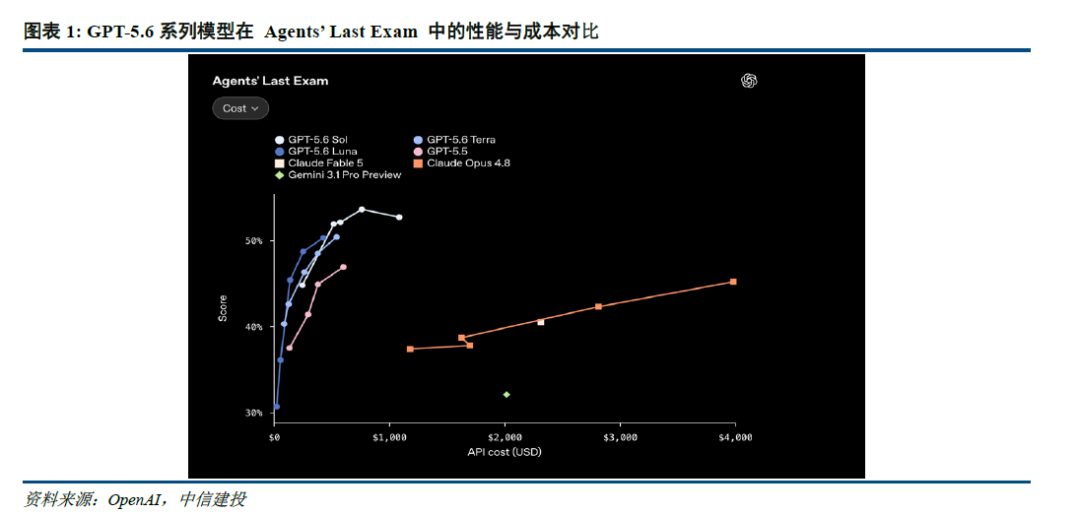
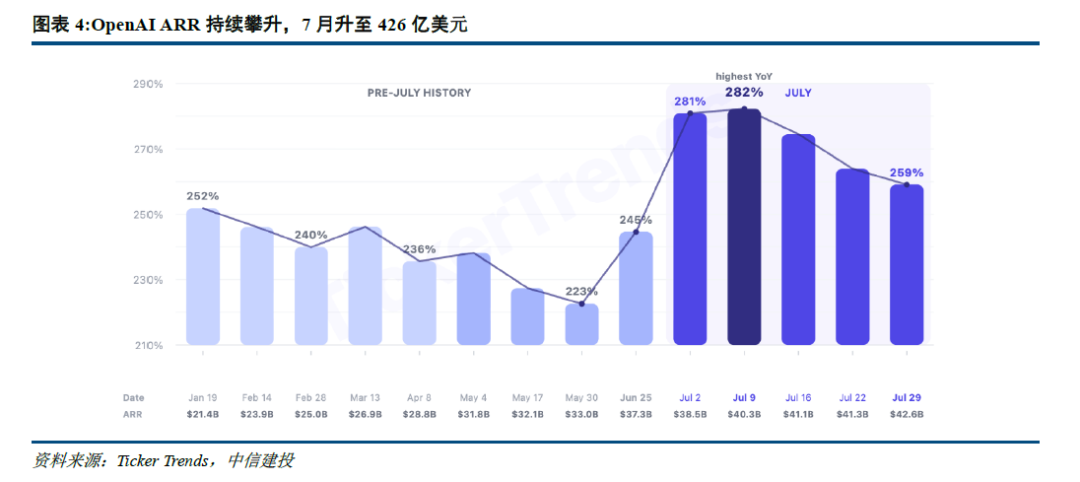
Anthropic Q2 recorded $11.5 billion in revenue; active users of OpenAI Codex and ChatGPT Work surpassed 15 million; paid seats in Microsoft 365 Copilot exceeded 30 million; agents are spreading from programming scenarios to office and enterprise workflows. At the same time, Google Cloud, Azure, and AWS revenue increased by 82%, 43%, and 37%, respectively, and cloud business revenue and contract reserves maintained relatively rapid growth, providing demand support for high-intensity capital expenditure. As CSP free cash flow gradually comes under pressure, the focus of the market will further shift to computing power utilization, order conversion efficiency, and capital recovery cycle.
Domestic: Model capability crosses the threshold of availability, and agents enter the cashing period
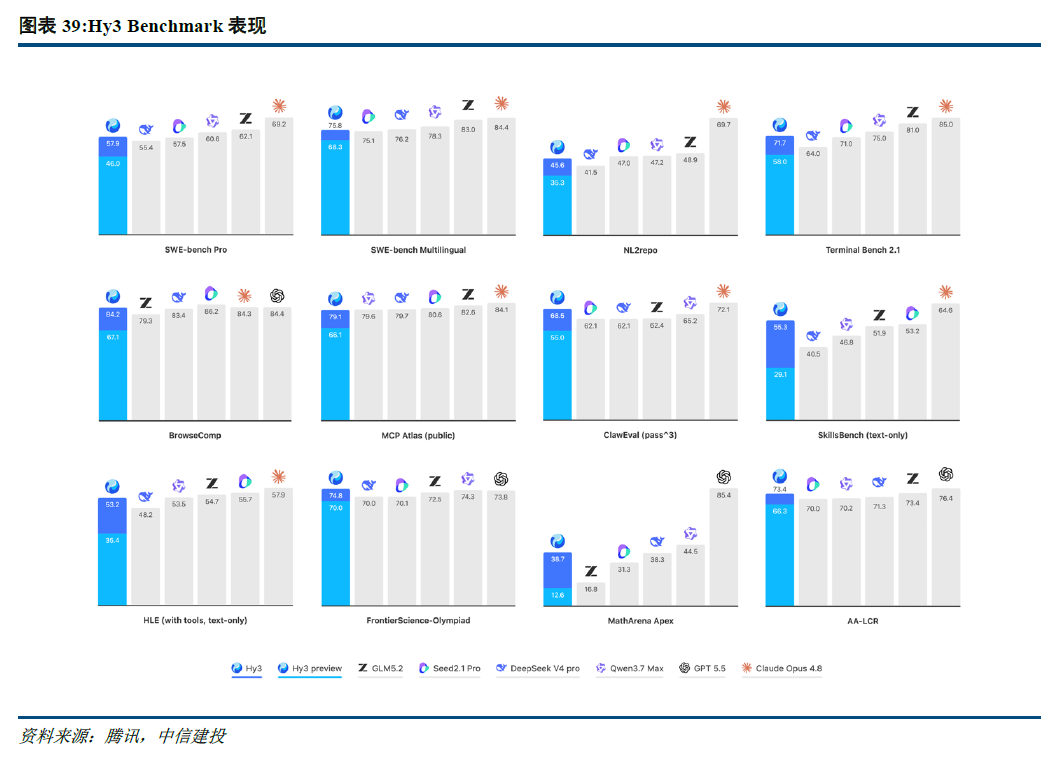
Manufacturers such as Kimi, Smart Spectrum, DeepSeek, and MiniMax continue to improve coding, tool handling, and long-range task capabilities, further narrowing the gap between domestic head models and overseas models. After the release of Kimi K3, ARR recorded the biggest single-day increase in the company's history. WorkBuddy's monthly visits grew rapidly, DeepSeek Harness had more than 117,000 GitHub Stars in three days, and model capabilities began to be more directly converted into product usage and commercial revenue. At the same time, the prices of domestic flagship models are rising one after another, and the industry's low price competition may be coming to an end, and the profitability of model manufacturers is expected to gradually improve.

Market review: The market is shifting from AI-themed trading to commercial verification, and sector differentiation intensifies
Overseas, the IGV index fell by about 10% at the end of July from the beginning of the year due to concerns about agents replacing traditional SaaS. Since then, as cloud infrastructure and performance verification of high-quality software companies have been repaired, the IGV index fell by about 10% from the beginning of the year. Domestically, the Shenwan Computer Index experienced stages of catalytic rise in domestic AI, impact valuation of agents, restoration of application expectations, and release of pressure on mid-report performance, and fell 19.0% in July. Currently, market risk appetite is still limited by performance expectations, but AI companies with real application scenarios, data assets, and commercialization capabilities are relatively dominant.
Monthly Opinions
Capital expenditure is still the leading variable in this AI cycle, and orders support subsequent cash recovery. In the second quarter of 2026, Alphabet's operating cash flow was 39.1 billion US dollars, capital expenditure reached 44.9 billion US dollars, and capital expenditure was 5.8 billion US dollars higher than operating cash flow; Tencent's capital expenditure increased 176% year over year to 52.8 billion yuan. Cash payments for capital expenses also exceeded current operating cash flow. Amazon's capital expenditure over the past 12 months was also higher than operating cash flow, and leading manufacturers are exchanging short-term free cash flow for future computing power supply. However, the current investment has clear demand, and Microsoft's remaining commercial performance obligations have reached 678 billion US dollars, an increase of 84% over the previous year; Amazon has received multi-giwa AI computing power cooperation for many years, and Google Cloud's revenue has increased 82% year over year. Tencent's free cash flow after excluding advance payments for computing power purchases was 37.6 billion yuan, which is significantly higher than the statement's caliber of -13.8 billion yuan. It also indicates that much of the weakening in cash flow comes from pre-investment. The current market is worried about capital expenditure pressure on CSP vendors, but rapidly growing orders and cloud revenue can support subsequent cash inflows. The core contradictions in the current AI cycle should shift from expenditure to computing power utilization, order conversion speed, and capital recovery cycle.
The domestic model converted efficiency into power, and the generation difference of the head model was reduced to a small version. After surpassing GLM in front-end programming and other tasks, Kimi K3 returned to the forefront of the open source model after the GLM-5.3 update, and was close to Claude Opus 4.8 in some code and agent evaluations. The generation gap between domestic and foreign models has been reduced to about a small version. At the same time, domestic models began to increase unit computing power output through sparse activation, attention compression, low-precision training, and inference system optimization: Kimi K3 only activated 16 experts, and training expansion efficiency was increased by about 2.5 times compared to the previous generation; DeepSeek dSpark increased single-user inference speed by 60%-85% under actual business traffic. The Nvidia SANA team increased MiniMax H3 inference speed by 3.95 times in just 4.5 hours without retraining the model, further proving the viability of the open source model to continuously reduce deployment costs using a global ecosystem of hardware and inference frameworks.
With the improvement of domestic model capabilities, the next round of ARR increases may be mainly due to the increase in single-user task density brought by agents. The average daily token call volume of major domestic models has increased from 100 billion in early 2024 to more than 140 trillion yuan in March 2026; as of June, the average daily token call volume of a single douban reached 180 trillion yuan, and the annual revenue of Alibaba's AI-related products exceeded 35.8 billion yuan. After model capabilities reached the level of overseas leaders, code development, office work, and data analysis began to shift from simple question-and-answer to continuous tool calls, and the tokens and computing power consumed in a single task increased markedly. DeepSeek Harness further standardizes context management, tool calling, and task execution frameworks, which is equivalent to opening a Claude Code or Codex-style basic agent framework to domestic developers, which is expected to improve the task success rate and user experience of domestic agent products in the next one to two quarters. The commercialization of the domestic model may replicate the path of overseas agents driving ARR's rapid growth described above.
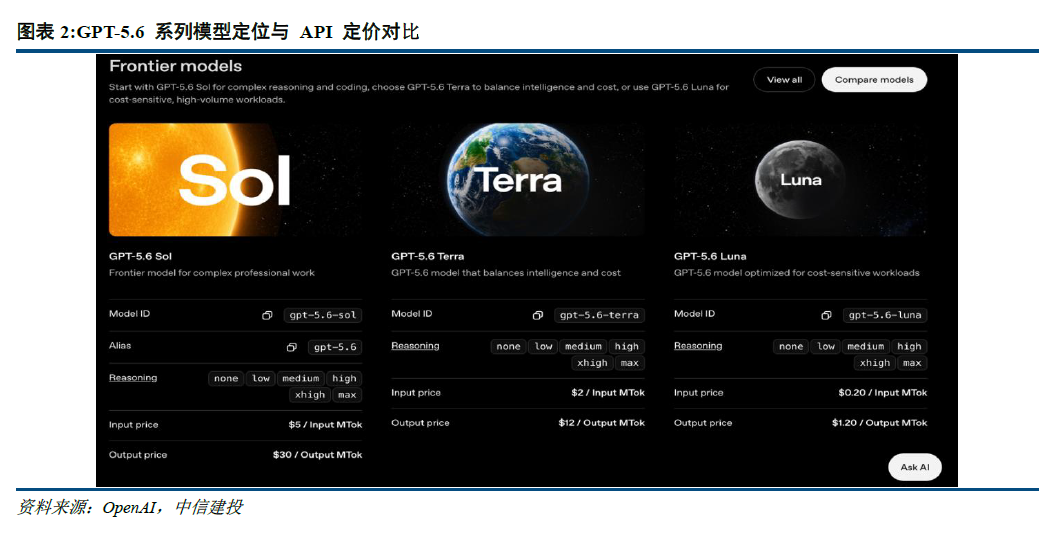
Domestic leading model prices may be coming to an end, and scarce computing power will drive the repricing of flagship models. DeepSeek was previously a pioneer in domestic model price reduction. It reduced the price of V3 to 1 yuan per million tokens for input and 2 yuan; starting August 17, the V4-Pro idle period cache missed input and output prices were raised to 4.5 yuan and 13.5 yuan, further reaching 9 yuan and 27 yuan during peak periods. Previously, Smart Spectrum raised the overall price of the GLM Coding Plan by 30% in February, and the API price was raised by about 10% when GLM-5.1 was released; Kimi K3 reached 20 yuan and 100 yuan for each million token cache missed, which is about 3.1 times and 3.7 times K2.6, respectively. Although there is still a gap between domestic model prices and overseas models. For example, the peak output price of DeepSeek V4-Pro is still only 33%, 26%, and 16% of Gemini 3.1 Pro, GPT-5.4, and Claude Opus 4.8, the upward trend in top smart prices is expected to maintain the cost performance advantage for domestic models while opening up room for upward gross margin.
FDE will not necessarily cause product companies to switch to a project system; the key is whether customer delivery can reverse settle as standard products. Enterprise AI needs to be connected to private data, permission systems, and core business processes. It is necessary for FDE to thoroughly complete requirements disassembly, system deployment, and effect evaluation at an early stage. OpenAI has extended FDE coverage from demand discovery to production launch, while Salesforce plans to recruit 1,000 FDEs, usually with a three-person team to serve a single customer for several months, indicating that enterprise AI implementations still have strong customized delivery attributes, but the efficiency improvements brought about by AI kits have also mitigated cost pressure to a certain extent. Overall, the project-based risks brought about by FDE exist objectively — if each additional customer requires an increase in personnel, and revenue will be re-tied to manpower investment, the gross margin and scale effects of software companies will be weakened; however, the real value of the FDE model is to settle the repeated data connections, permission configurations, evaluation systems, and industry processes in the project into standard modules, causing subsequent deployment cycles and manpower requirements to continue to decline. Therefore, to determine whether an enterprise AI company is moving from product manufacturing to a project system, the focus should be on tracking ARR, average delivery cycle, function reuse rate, and share of subscription revenue after the project is completed. For vendors that can complete the commercialization cycle, FDE will become a source of data and know-how barriers; vendors that cannot reuse delivery results are closer to traditional software outsourcing.
In the next one to two quarters, breakthroughs in domestic models, price increases for flagship models, and agent implementation are expected to advance simultaneously. Looking ahead to the second half of the year, domestic manufacturers still have larger model reserves. Domestic open source models are more feasible than overseas leading models in terms of some code and agent tasks; tight supply of computing power will drive the price and gross margin of top models to gradually rise; and open source execution frameworks such as DeepSeek Harness are expected to lower the agent development threshold and speed up the penetration of model capabilities into corporate offices and production processes.
Risk Alerts
(1) The commercialization of the AI industry falls short of expectations: Currently, the commercialization model for various AI products is still in the exploration stage. If the pace of promotion of various products falls short of expectations, it may adversely affect the performance of related enterprises;
(2) Market competition risk: With their first-mover advantage and strong technology accumulation, overseas AI vendors have an advantage in competition. If domestic AI vendors fall short of expectations, their business conditions may be affected; at the same time, many domestic companies have invested in AI product research and development, and there may be a risk of homogenization competition in the future, which in turn affects the revenue of related enterprises;
(3) Policy risk: The development of AI technology is directly affected by national policies and regulations. As AI penetrates into various fields, the government may further introduce corresponding regulatory policies to regulate its development. If companies fail to adapt and comply with relevant policies in a timely manner, they may face corresponding penalties or even be forced to adjust their business strategies. Furthermore, policy uncertainty may also lead to errors in corporate strategic planning and investment decisions, increasing operational uncertainty;
(4) Geopolitical risk: Under fluctuations in the global geopolitical environment, US export restrictions to China in particular may directly affect domestic companies' acquisition of computing power chips, which in turn affects product development and market competitiveness. At the same time, geopolitical risks may also cause AI products to face obstacles in developing overseas markets, affecting the revenue situation of related companies.