


Xero’s share price has fallen sharply over the past year, yet the stock now shows a split valuation picture. The Discounted Cash Flow (DCF) intrinsic value estimate points to material upside, while earnings based multiples suggest the shares trade on the expensive side.
- Xero is down 49.5% over the past year, which puts recent short term rebounds into the context of a still deep drawdown.
- The recent launch of integrated Melio expense management and payroll tools in the US can support longer term cash flow expectations. However, execution risk in expanding in a competitive US small business software market may weigh on how much investors are willing to pay.
- Xero only passes 2 of 6 valuation checks. This means the broader set of metrics leans expensive rather than pointing to a clear bargain even with a supportive DCF view, according to this score.
For investors, the debate is whether the current price already reflects the cash flow potential that the Discounted Cash Flow (DCF) model suggests, or if the intrinsic value still leaves a meaningful margin of safety.
Find out why Xero's -49.5% return over the last year is lagging behind its peers.
Is Xero a Bargain on Cash Flow?
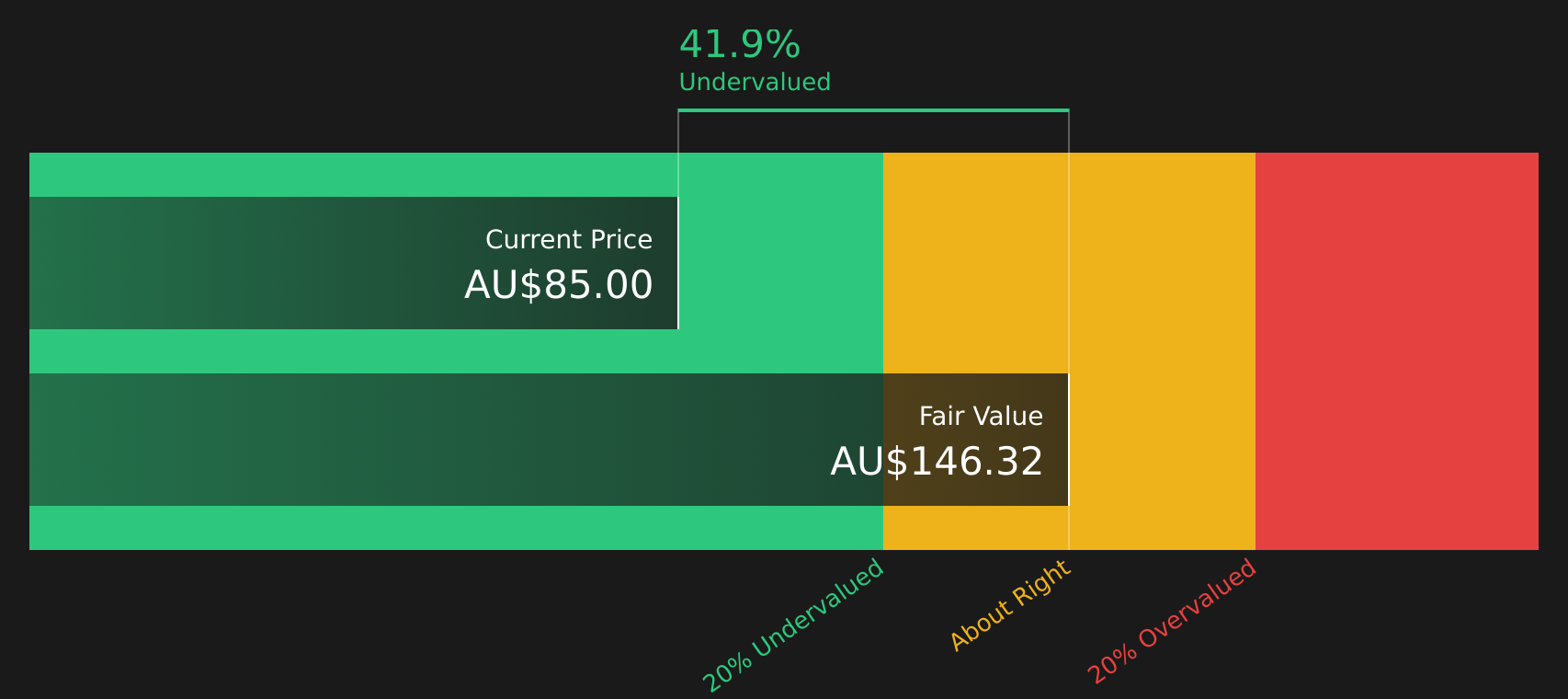
The Discounted Cash Flow (DCF) method estimates what Xero is worth based on the cash it can generate for shareholders. For Xero, the model uses latest twelve month free cash flow of about NZ$521.2 million and assumes cash flows continue to grow from that base rather than shrink.
On these assumptions, the 2 Stage Free Cash Flow to Equity model points to an intrinsic value of roughly A$147 per share, which is about 42.0% above the current share price implied by the model input. The recent launch of Melio expense management and payroll tools in the US is cited in the model as another potential lever for Xero to convert product expansion into future cash generation, while also noting that the market may remain cautious about competitive risks.
On this cash flow view, Xero stock currently screens as undervalued relative to the DCF estimate, based on the model’s specific assumptions and inputs.
Our Discounted Cash Flow (DCF) analysis suggests Xero is undervalued by 42.0%. Track this in your watchlist or portfolio, or discover 15 more high quality undervalued stocks.
Is Xero Getting Expensive on Earnings?
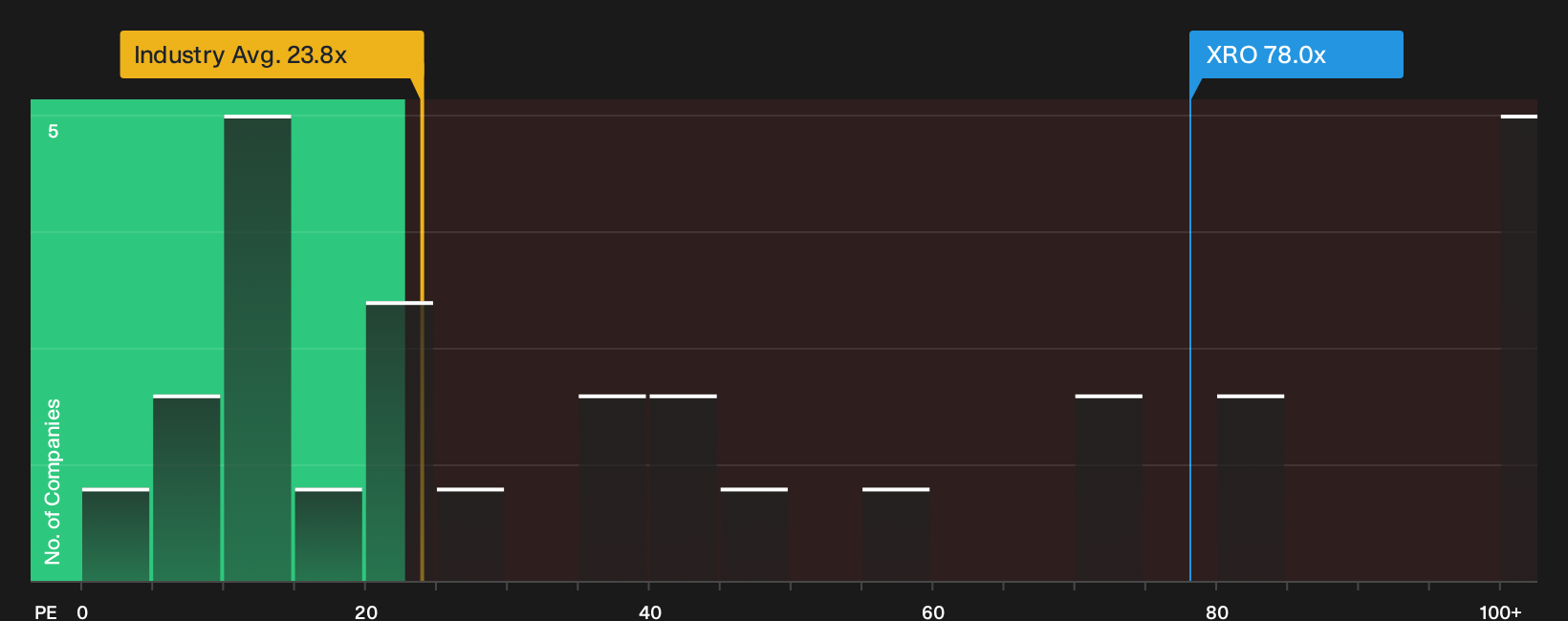
P/E is a useful lens for Xero because the company is profitable and investors often anchor expectations to earnings in mature software businesses. On this measure, Xero trades on a P/E of about 103.9x, which is far above the software industry average of 18.0x and also ahead of the peer group average of about 44.0x.
The fair P/E ratio implied by the valuation model is about 40.5x. This is the multiple that would typically line up with Xero’s size, sector, profitability profile and risk. Comparing this to the current 103.9x suggests the stock carries a sizeable earnings premium even after the share price pullback. The market is asking investors to pay much more per dollar of earnings than both the tailored fair value multiple and the wider software peer set.
On this earnings yardstick, Xero stock appears expensive on a P/E basis because its current multiple is far above the fair ratio and industry benchmarks cited.
See what the numbers say about this price — find out in our valuation breakdown.
The Xero Narrative: What Would Justify Today's Price?
Simply Wall St Narratives for Xero aim to connect this valuation puzzle to the assumptions that might sit behind it. Each Narrative sets out what would need to happen to Xero’s growth, margins and earnings for the stock to be worth materially more or less than today’s price, and ties a fair value to a clear story about catalysts and risks so you can track which version of events appears to be unfolding over time on the Community page.
The community is sharply split on Xero, with one camp focused on AI powered upside and another on rising costs and competitive pressure.
Bull case: 36% undervalued
"Xero has high scalability of its products, with current gross margin of approximately 88%."
Read the full Bull Case to see why Xero could be undervalued
Bear case: 9% overvalued
"Regulatory challenges, cybersecurity risks, and rapid AI advancements threaten Xero's profitability, requiring increased investment in compliance, security, and innovation to stay competitive."
Read the full Bear Case to see why Xero could be overvalued
Do you think there's more to the story for Xero? Head over to our Community to see what others are saying!
The Bottom Line
For Xero, the Discounted Cash Flow (DCF) intrinsic value estimate points to meaningful upside, while the market multiple view flags the stock as overvalued on earnings. That split reflects a cash flow model that is comfortable with long term investment and timing of returns, compared with a market that is already pricing in strong growth through a rich P/E. The broader valuation checks remain weak, which tempers how much weight to place on the DCF signal alone. The key question from here is whether Xero can convert its product expansion into durable cash generation without profit pressure that would leave the current valuation looking full.
This article by Simply Wall St is general in nature. We provide commentary based on historical data and analyst forecasts only using an unbiased methodology and our articles are not intended to be financial advice. It does not constitute a recommendation to buy or sell any stock, and does not take account of your objectives, or your financial situation. We aim to bring you long-term focused analysis driven by fundamental data. Note that our analysis may not factor in the latest price-sensitive company announcements or qualitative material. Simply Wall St has no position in any stocks mentioned.
Have feedback on this article? Concerned about the content? Get in touch with us directly. Alternatively, email editorial-team@simplywallst.com