


The Fed’s latest signals on a “generously ample” balance sheet and a possible tilt from long Treasuries into shorter bills have pushed duration risk back into the spotlight. That shift could reshape which stocks benefit from a steeper yield curve and a more hawkish tone on inflation. This article walks through 3 US life insurers and long duration liability managers exposed to this news so you can judge whether they fit your watchlist today.
The stocks covered below are just a starter sample, and the full screen surfaced 9 more US life insurers and long duration liability managers with equally compelling narratives that are not included in this article. To identify your own highest conviction ideas in this theme, head straight into the US Life Insurers and Long-Duration Liability Managers screener.
Lincoln National (LNC)
Lincoln National is a US life insurer and retirement specialist that fits the long duration liability theme squarely, with life, annuity and workplace benefits businesses that rely on investing policyholder money over many years. Revenue is broadly spread across Group Protection at about US$6.2b, Life Insurance at about US$6.0b, Annuities at about US$5.7b and Retirement Plan Services at about US$1.4b, almost all from US customers. The company has a market cap of roughly US$8.3b.
Investors looking for a way to play a steeper yield curve may find Lincoln National worth attention because its long dated liabilities and investment portfolio are closely tied to movements in medium and long term Treasury yields. The company is working to shift toward more diversified, higher margin products and has been using reinsurance deals to reshape legacy life blocks and free up capital. This ties directly into the theme of managing long duration risk in a higher for longer rate world. At the same time, exposure to older variable annuity guarantees, reliance on external funding and recent insider selling underscore that this is not a simple income stock. The recent decision to resume share repurchases and continue dividends adds another layer for investors to weigh against these risks and the pending CFO transition.
Lincoln National’s shift toward higher margin products and capital light reinsurance raises important questions about what the market may be overlooking in its risk profile. Before adding it to a watchlist, review the 3 key rewards and 3 important warning signs (1 is major!)

Build your own long duration shortlist
Lincoln National and the other two stocks here are just three examples pulled from a single screen, and the real value comes from shaping your own filters. Use our flexible Screener to combine valuation, growth, balance sheet, risk and dividend criteria, or tap into our curated Investing Ideas for ready made starting points.
CNO Financial Group (CNO)
CNO Financial Group focuses on middle income pre retirees and retirees in the US, offering a mix of health insurance, life insurance and annuities that ties it directly to the long duration liability theme and reinvestment spreads on longer term assets. Revenue is concentrated in Health at about US$2.0b, Life at about US$1.1b and Annuities at about US$683 million, supported by additional unallocated investment income streams, all generated in the US. The company has a market cap of roughly US$4.9b.
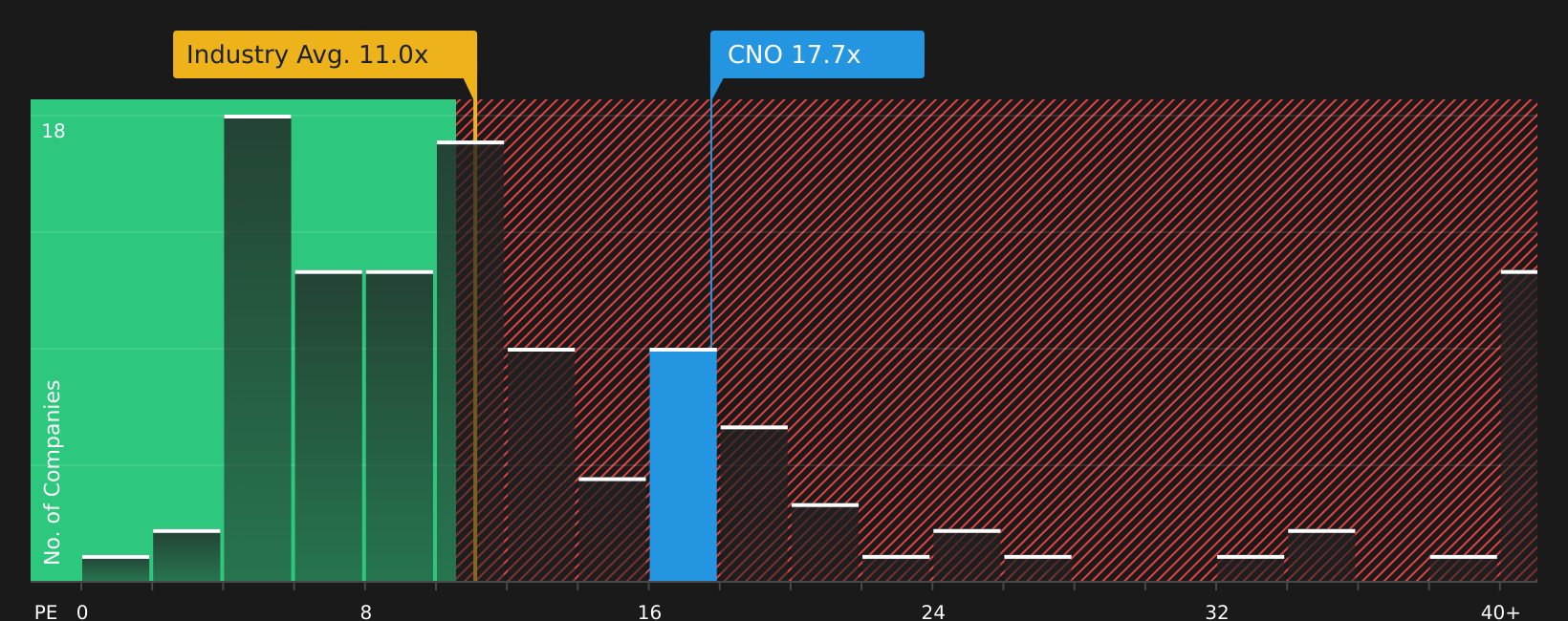
CNO Financial Group provides focused exposure to retirement and long duration products at a time when the Fed’s tilt toward shorter term Treasuries could keep medium and long term yields elevated for longer. That backdrop matters for reinvestment spreads on its annuity and life book. Recent earnings, raised 2026 guidance and 16 consecutive quarters of sales growth highlight how demand for Medicare, supplemental health and retirement income products can interact with that rate environment. The catch is that CNO trades on a richer P/E than many insurers, relies heavily on external funding and has recorded a $101.9 million one off loss along with weaker cash flow coverage of debt, so the balance between risk and potential reward needs careful attention before you decide where it fits in your portfolio.
Momentum in CNO Financial Group’s retirement and health sales is only half the story. See how pricing power, external funding and that US$101.9 million loss fit together in the 3 key rewards and 2 important warning signs (1 is major!)
Globe Life (GL)
Globe Life is a US life and supplemental health insurer whose long duration life policies and investment portfolio tie directly into this screener’s focus on long dated liabilities and investment spreads. It generates about US$3.4b of revenue from Life insurance, US$1.6b from Health, and roughly US$1.2b from Investments, with small contributions from other income items, all from US customers. The company has a market cap of about US$13.2b.
Investors watching how higher long end yields and a steeper curve could reshape life insurers may find Globe Life worth a closer look. The company is focusing on digital underwriting and agent growth to drive more efficient policy sales. Underwriting margins and a long dated investment book, as described on recent calls, tie earnings power to how well it prices and invests these long running liabilities. At the same time, high debt levels, reliance on external funding and regulatory overhangs mean the valuation case and share repurchase plans only tell part of the story investors need to piece together.
Globe Life’s long running policies and investment income could be masking a very different risk reward mix than the headline story suggests. See how the moving pieces line up in the 3 key rewards and 1 important warning sign

Curious To Seek Alternatives Beyond Life Insurers
Fresh stock themes can gain breakout momentum quickly and then slip away as prices start flying. Scan these ideas before the crowd while it matters and get in early.
- Target resilient upside by focusing on companies with stronger balance sheets and fundamentals using the list of solid balance sheet and fundamentals (50 results) so you are not caught holding weaker stories when sentiment drops.
- Ride potential income momentum with high yielding businesses in the 12 dividend fortresses while they remain under the radar for now and before yield hungry investors push attention their way.
- Position ahead of the next infrastructure wave by checking the 39 power grid technology and infrastructure stocks while these picks are still fresh and before grid upgrade spending stories attract wider interest.
This article by Simply Wall St is general in nature. We provide commentary based on historical data and analyst forecasts only using an unbiased methodology and our articles are not intended to be financial advice. It does not constitute a recommendation to buy or sell any stock, and does not take account of your objectives, or your financial situation. We aim to bring you long-term focused analysis driven by fundamental data. Note that our analysis may not factor in the latest price-sensitive company announcements or qualitative material. Simply Wall St has no position in any stocks mentioned.
Have feedback on this article? Concerned about the content? Get in touch with us directly. Alternatively, email editorial-team@simplywallst.com