


Live Nation Entertainment stock has delivered a very strong 114.4% return over the past three years, yet current valuation checks send a mixed message, with the Discounted Cash Flow (DCF) intrinsic value estimate pointing to a roughly fair price while the broader scorecard suggests the shares are not an obvious bargain.
- Over the past three years the stock has returned 114.4%, which puts recent moves into context as investors weigh how much of the growth story is already reflected in the price.
- Expectations that Live Nation Entertainment can keep converting live event demand into solid cash flows may support the valuation, while any pressure on margins or higher capital needs for venues and production could limit upside.
- The company passes only 2 of 6 valuation checks, which leans expensive rather than a clear bargain despite the DCF suggesting the stock is roughly fairly valued.
The issue now is whether Live Nation Entertainment's share price still offers enough value after this multi year run, given what the intrinsic value estimate and the broader checks are signalling.
Is Live Nation Entertainment Fairly Priced on Cash Flow?
The Discounted Cash Flow (DCF) model values Live Nation Entertainment by projecting future cash the business could generate for shareholders and discounting it back to today. In this view, the starting point is last twelve month free cash flow of about $1.70b, which the model treats as growing over time rather than shrinking.
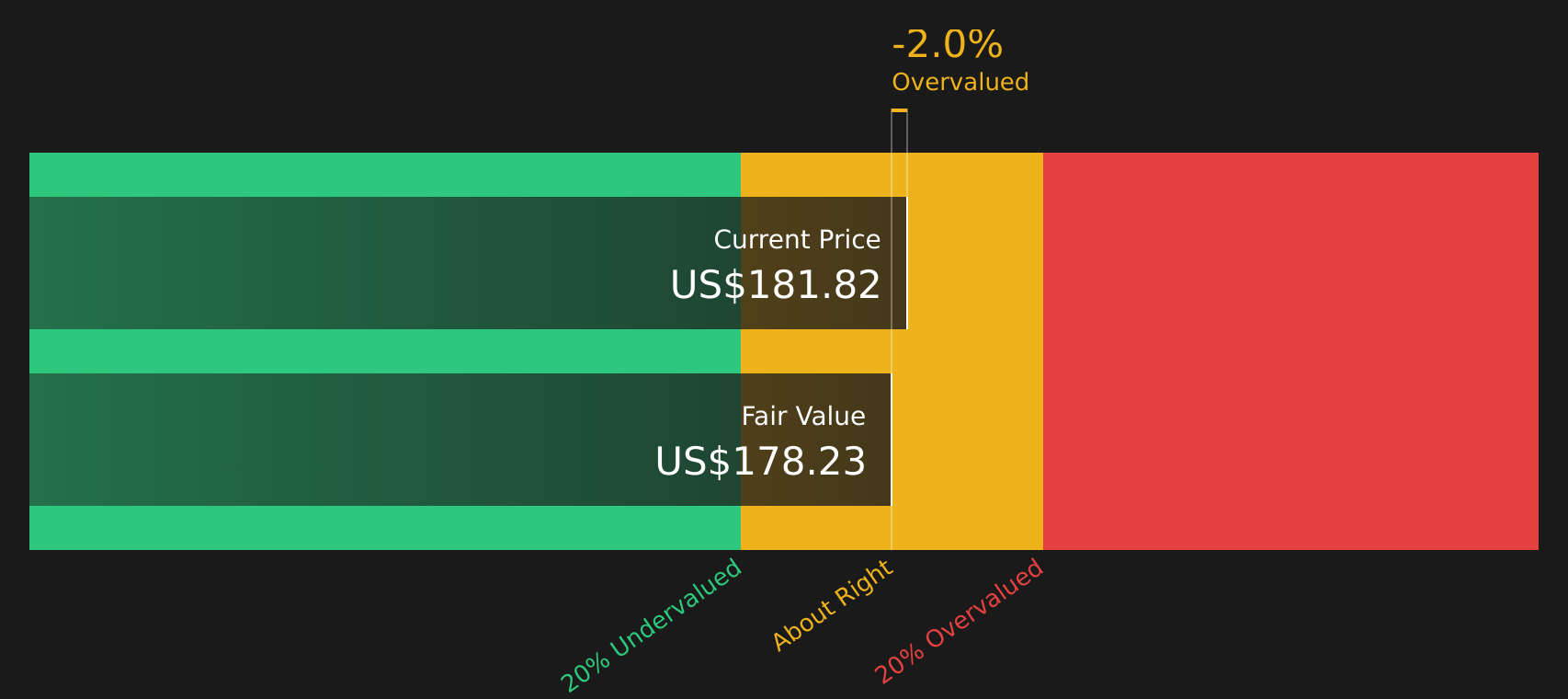
Running these projections through a 2 Stage Free Cash Flow to Equity framework produces an estimated intrinsic value of about $178 per share. That sits very close to the current share price, with the output implying the stock is roughly 2.0% overvalued rather than at a clear discount. For investors, this indicates that the current market price for Live Nation Entertainment already aligns quite closely with what the DCF suggests the cash flows are worth.
On this cash flow based view, Live Nation Entertainment stock appears to be approximately fairly valued at recent prices.
Live Nation Entertainment is fairly valued according to our Discounted Cash Flow (DCF), but this can change at a moment's notice. Track the value in your watchlist or portfolio and be alerted on when to act.
Does Live Nation Entertainment Look Undervalued on Sales?
P/S is a useful lens for Live Nation Entertainment because revenue is a core metric for a large live events and ticketing business where earnings can be more volatile. Right now the stock trades on a P/S of about 1.6x, which is above the Entertainment industry average of roughly 1.2x but below the peer group average of about 3.9x.
The tailored fair P/S ratio for Live Nation Entertainment is estimated at about 2.2x. That is higher than the current 1.6x, which suggests the shares trade at a discount to what this framework indicates could be reasonable given the company’s profile and risks. Based on the P/S metric alone, there appears to be some valuation headroom relative to this fair multiple.
On the P/S yardstick, Live Nation Entertainment stock appears undervalued compared with the fair ratio implied by its fundamentals and risk profile.

See what the numbers say about this price — find out in our valuation breakdown.
The Live Nation Entertainment Narrative: What Would Justify Today's Price?
Simply Wall St Narratives aim to connect Live Nation Entertainment's valuation puzzle with the expectations priced into the stock by clearly outlining the specific growth, margin and earnings paths that would justify higher or lower outcomes from here. Rather than relying on a single multiple or model, each narrative lays out the assumptions that sit behind its fair value view so you can compare them with the company’s actual results over time on the Community page.
You can add your voice to the Simply Wall St community by sharing a Narrative on Live Nation Entertainment that sets out a clear, numbers based view on where its growth, margins and execution go from here. Put your thesis on the record and see how it compares as new results arrive.
Do you think there's more to the story for Live Nation Entertainment? Head over to our Community to see what others are saying!
The Bottom Line
Live Nation Entertainment now screens as roughly fairly valued on a Discounted Cash Flow (DCF) view, while the P/S based fair ratio still flags the stock as undervalued relative to its revenue profile. That split suggests the intrinsic value hinges on cash flow timing and capital needs, whereas the multiple view leans more on what investors are willing to pay for growth. Broader valuation checks remain weak despite the supportive P/S signal. The key question is whether Live Nation Entertainment can sustain cash generation and returns on new investment enough to justify any further re rating from here.
This article by Simply Wall St is general in nature. We provide commentary based on historical data and analyst forecasts only using an unbiased methodology and our articles are not intended to be financial advice. It does not constitute a recommendation to buy or sell any stock, and does not take account of your objectives, or your financial situation. We aim to bring you long-term focused analysis driven by fundamental data. Note that our analysis may not factor in the latest price-sensitive company announcements or qualitative material. Simply Wall St has no position in any stocks mentioned.
Have feedback on this article? Concerned about the content? Get in touch with us directly. Alternatively, email editorial-team@simplywallst.com