


Key Points
Tesla is a tad expensive, but the valuation reflects future potential.
The company is pushing toward unsupervised FSD, robotaxis, Cybercab production, and large-scale Optimus manufacturing.
All these potential businesses could eventually generate higher-margin recurring revenue.
On paper, Tesla (NASDAQ: TSLA) looks extremely expensive right now. The stock trades at roughly 330 times trailing earnings and around 180 times forward earnings, with a PEG ratio of close to 6.9, one of the highest multiples among large caps. That is not cheap by any normal metric, and it explains why people keep asking whether it is time to sell.
Underneath that valuation, Tesla is still a real operating company with tens of billions in revenue each quarter. In the second quarter of 2026, Tesla generated about $28.24 billion in total revenue and $398 million of operating income, although the operating margin dropped to 1.4% as the company pushed hard on new projects and absorbed higher costs. Automotive revenue was about $20.52 billion, up roughly 23% year over year, and the energy business added more than $3.14 billion, growing double digits even as margins in that segment reset lower.
Missed Nvidia in 2009? This Rare Signal Is Flashing Again. In 2009, a "Double Down" signal flashed for a little-known chipmaker called Nvidia. For the first time in years, that same "Total Conviction" signal is flashing for a company 1/100th the size of Nvidia. Continue »
The unique moves Tesla is making this year
What should keep you from selling is what Tesla is doing in 2026. Management is rolling out the most concrete roadmap yet for Full Self-Driving (FSD) and robotaxis, targeting unsupervised FSD on customer vehicles by Q4 2026 and robotaxi operations across roughly a dozen U.S. states by the end of the year. At the same time, Tesla has begun installing first-generation Optimus humanoid robot lines in Fremont, converting the old Model S and Model X line, with a target run rate capacity of up to 1 million robots per year by late 2026 and an eventual 10 million per year in Texas.
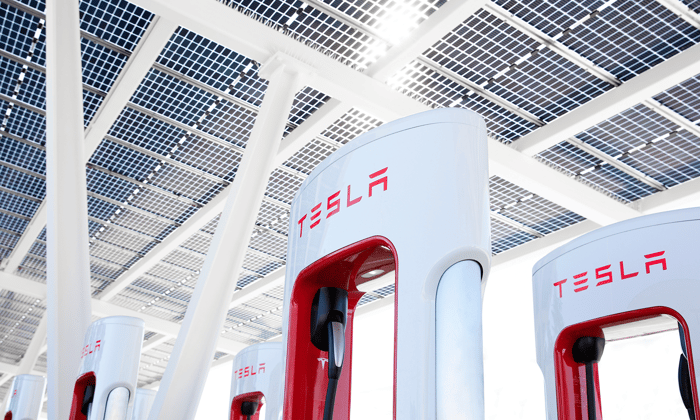
Image source: Tesla.
Robotaxi and software optionality
I see robotaxis as one of the main reasons to keep holding through volatility. Elon Musk and the company are clear that meaningful robotaxi and autonomy revenue is unlikely to be large before 2027, but they are already producing the Cybercab robotaxi and preparing for mass-scale deployments. Tesla also expects that about 4 million existing vehicles will need hardware retrofits to enable unsupervised autonomy, which means a sizable future upgrade cycle on top of regular car sales. If FSD reaches unsupervised capability in multiple markets, Tesla can shift from a one-time hardware sale model to a recurring software and mobility service model with much higher margin potential.
Optimus and the long-term AI pivot
The other thing I'm watching is Optimus. Tesla is targeting tens of thousands of humanoid robots in 2026, with ambitions to scale toward 500,000 units annually by 2027 with an eventual capacity of 1 million units per year at Fremont and up to 10 million per year at Gigafactory Texas. Management has talked about production costs around $20,000 to $25,000 per robot, which, if paired with useful commercial applications, could create an entirely new revenue stream separate from cars. To me, that is genuine optionality that is hard to value precisely but impossible to ignore when deciding whether to hold or sell.
Why Tesla holders should hold into 2027
I am not blind to the risks. Operating margins are low, capital expenditure is guided above $25 billion for 2026, and management itself warns about negative free cash flow while it funds Cybercab, Optimus, and chip projects. Regulatory hurdles for autonomy, supply chain challenges for robots, and potential demand swings for electric vehicles could all be factors.
Even so, when I line up what Tesla is building in 2026 against where the stock could reasonably be in 2027 and beyond, I see a company investing heavily to pivot from being just a carmaker into being an artificial intelligence, robotics, and mobility platform. For investors, that means you should live with a stretched valuation and short-term margin pressure rather than sell now and potentially miss the payoff from robotaxis, FSD, and Optimus if even part of the roadmap becomes real.
Micah Zimmerman has no position in any of the stocks mentioned. The Motley Fool has positions in and recommends Tesla. The Motley Fool has a disclosure policy.