


The Zhitong Finance App learned that Cui Dongshu published an article saying that sales growth in the world car market was not strong from January to July 2026. At the beginning of 2026, China reached 31.4% of the world's automobile market. As policy subsidies promoted the strengthening of commercial vehicles in China, its share rebounded to 32.1% in July, with a cumulative share of 31% in 2026. The low level at the beginning of the year was an abnormal reflection of factors contributing to the contraction of entry-level sales. Passenger cars were weak, commercial vehicles were strong, and exports skyrocketed. As the effects of policy incentives gradually resume and become apparent, it is expected that the Chinese car market will gradually strengthen in the future.
According to World Automobile Organization statistics, global automobile production continues to grow. In July 2026, world car sales reached 8.24 million units, an increase of 5% over the previous year. From January to July 2026, world car sales reached 56.11 million units, an increase of 3% over the previous year.
Among them, Chinese car sales fell 4%, US sales fell 3%, Indian car market sales increased 19%, Thai car market sales increased 14%, Russian sales increased 8%, and Vietnam increased 29%. Emerging markets drive better market performance.
With the exception of Toyota, Hyundai Kia, Suzuki, and Tata, the share of other international brands declined sharply in 2026. Compared to 2019, China's own brands have increased their overall share of the world.
Geely (00175), BYD (002594.SZ), Chery, SAIC, and Changan have strong independent performance. The development of electrification has also led to the gradual decline of some international car companies. In addition to favorable factors in the Indian market such as Suzuki, the share of other international brands has declined significantly across the board.
1. World car sales trend in the current month
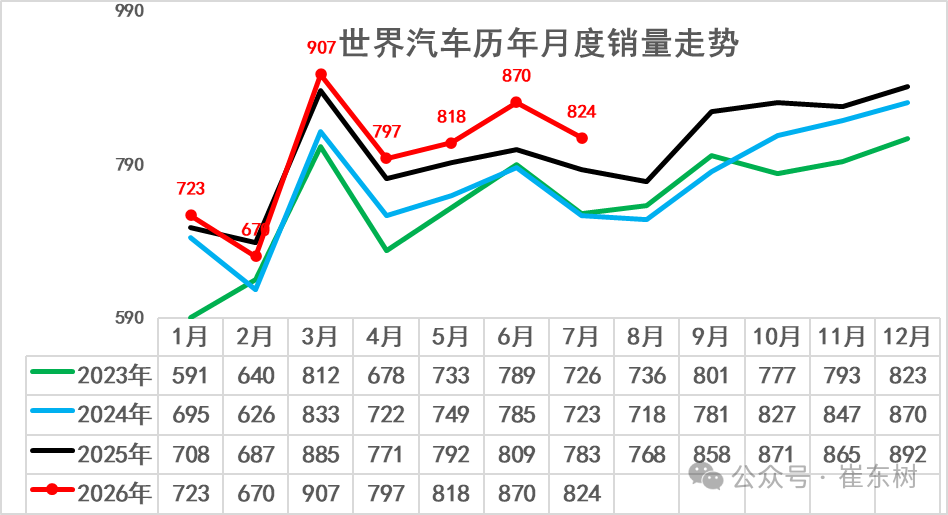
Since 2025, the overall growth of the world car market has been good, and each month has been better than the same period. The world car market fluctuated greatly in 2026. Since the 2026 Chinese New Year was in February, and sales in the Chinese car market were stable before the Chinese New Year, the world grew relatively well in January. However, sales in the Chinese car market declined sharply in February due to Spring Festival factors, and the trend improved markedly in March-July.
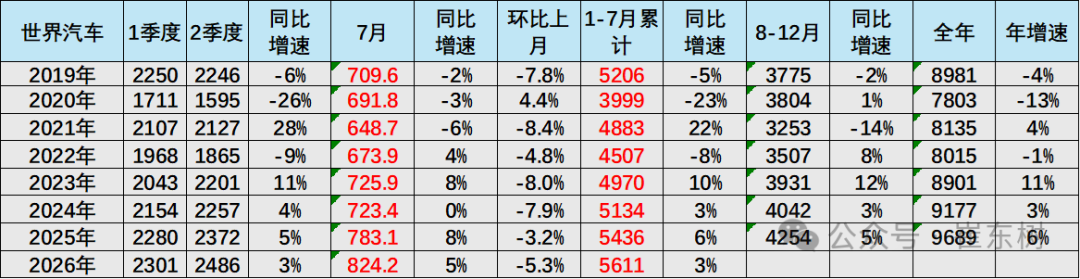
Global automobile sales in 2025 were 96.89 million units, up 6% year on year. World car sales reached 8.24 million units in July 2026, up 5% year on year; from January to July 2026, world car sales reached 56.11 million units, up 3% year on year. With the relatively negative growth of the US and Chinese car markets at the beginning of the year, sales growth in the world car market was weak from January to July 2026.
2. World automobile sales trends over the years
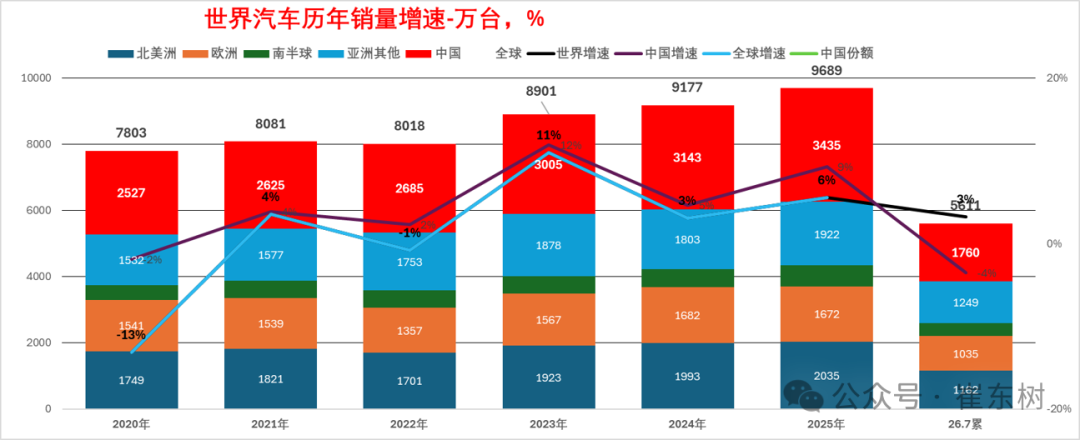
World car sales in the table above are mainly sales in 70 countries. These 70 core countries had around 90 million units in 2019, which can also basically track monthly sales. World data has been slow in recent months due to frequent wars.
There are 100 other countries that can only track annual sales. In recent years, the total sales volume is about 3 million units. Compared with 70 major countries with 80 million units, these smaller countries have a total volume of about 3%, which has little impact.
Looking at the world sales volume represented by major countries, the downward cycle began after 2018 and bottomed out in 2020; it began to pick up in 2021; the 3% world sales growth rate in 2026 performed well. Among them, the 4% decline in the Chinese car market had a big impact. The overall performance of the Chinese auto market this year fell short of expectations, and the growth pressure on the world car market is also increasing.
3. China maintains leading position in sales volume in 2026
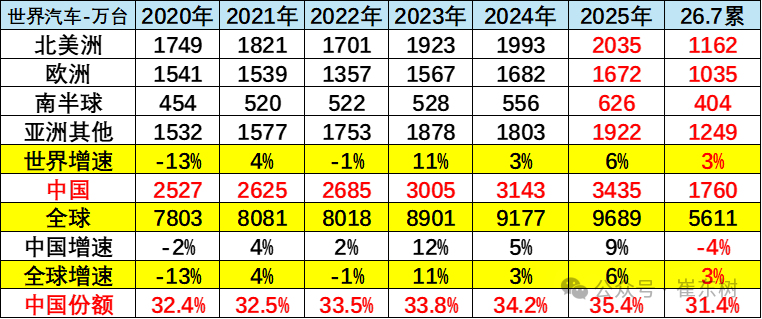
The Chinese automobile market has an enormous influence on the world automobile market. In 2016-2018, Chinese automobiles accounted for about 30% of the world; in 2019, it fell to 29%, but still has an absolute advantage; in 2020-2021, China's share rebounded to 32%; in 2022, China's share rose to 33.5%; in 2023, China's share remained at 33.8%; in 2024, China reached 34.2% of the world's cars; in 2025, China reached 35.4% of the world's share; China's share in January-July 2026 was an abnormal reflection of the slump in entry-level consumption. China's auto market is expected to gradually strengthen starting in the second half of the year as the effects of policy stimulus gradually resume.
4. Developing countries' markets have strengthened significantly
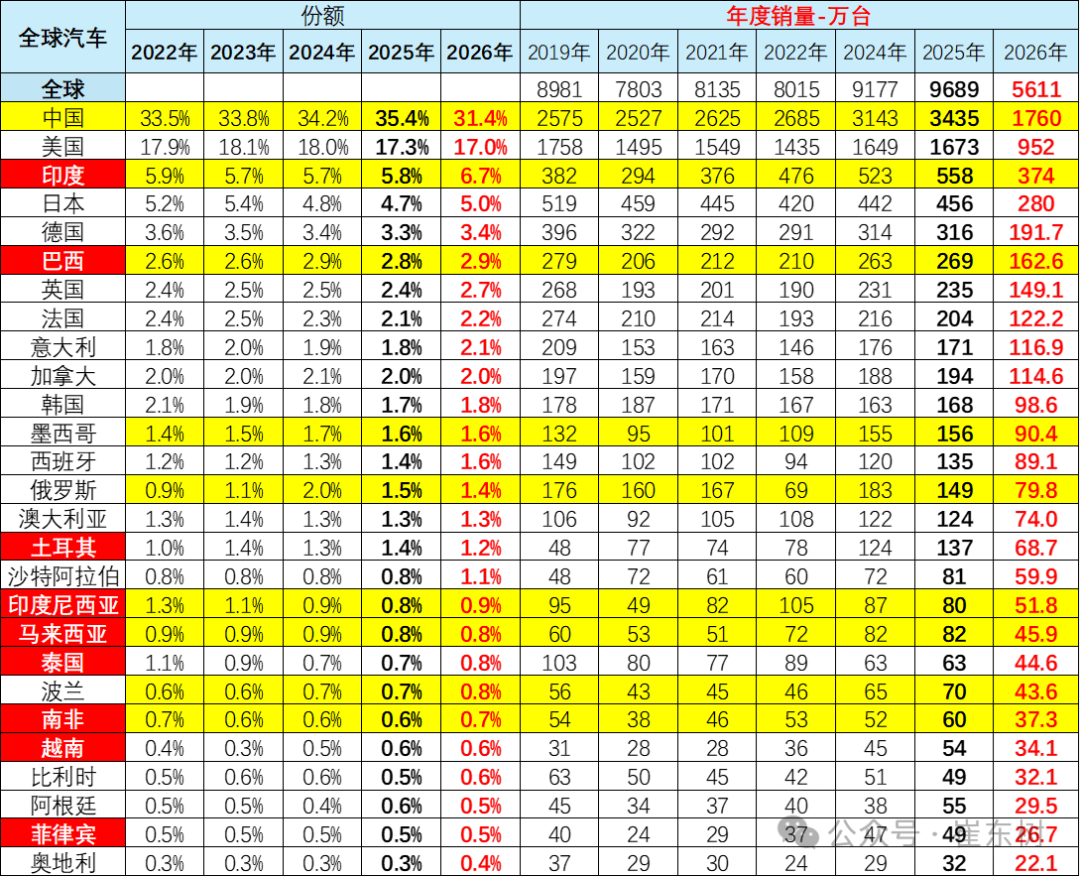
Judging from the sales volume of countries around the world, the current relatively good performance is in developed European and American markets. It is an objective reality that you can only buy a car if you have money, and the cost of a vehicle is lower. The Russian market is gradually recovering in 2023-2024, bringing high sales volume and high profits to Chinese autonomous car companies. The Russian market has declined significantly since 2025, and its share fell to 1.4% in 2026. Emerging markets such as India performed well. Some countries had a relatively high annual share in the first half of the year, forming a divergent trend at the beginning of 2026.
The overall trend of China's auto market has been good in recent years, and its share has continued to rise. Since 2020, China's share in the world has continued to rise, reaching 33.8% by 2023, reaching 34.2% in 2024, 35.4% of the world in 2025, and 31.4% of the world in 2026, down 4 percentage points from 2025.
5. Market trends in countries around the world
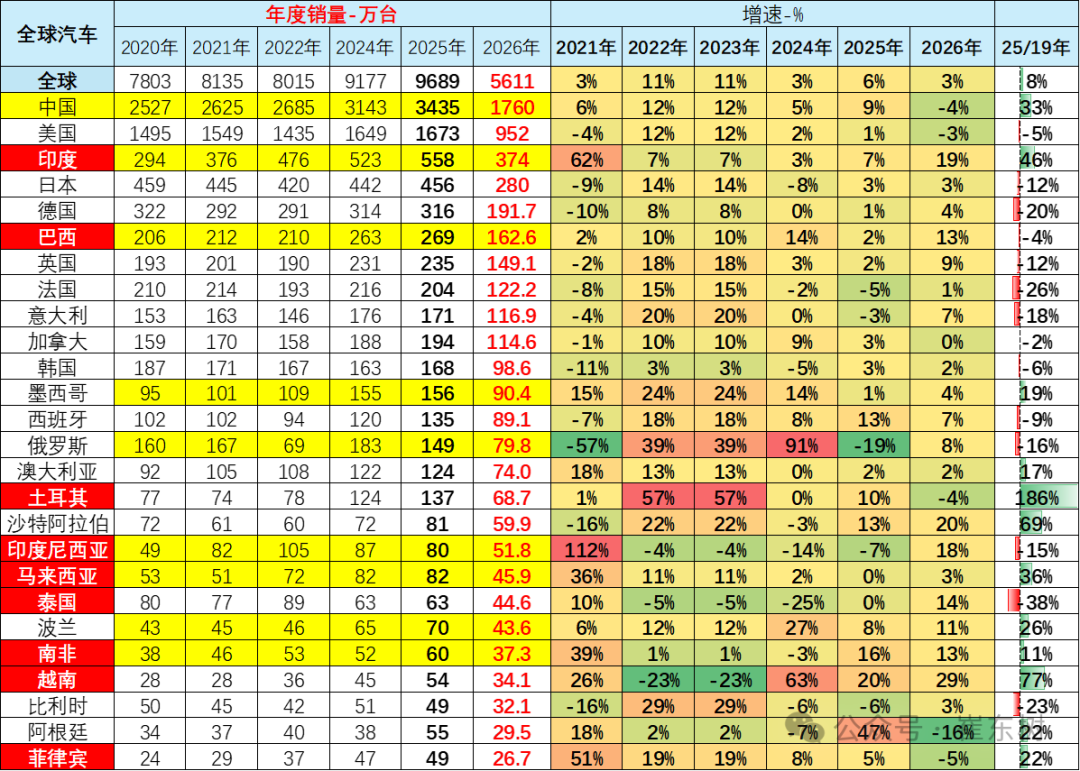
Global automobile sales increased 3% from January to July 2026. Among them, Chinese car sales fell 4%, US sales fell 3%, Indian auto market sales increased 19%, Thai car market sales increased 14%, Russian market sales increased 8%, and Vietnam increased 29%. Emerging markets drive better market performance.
6. Trends in China's global market share
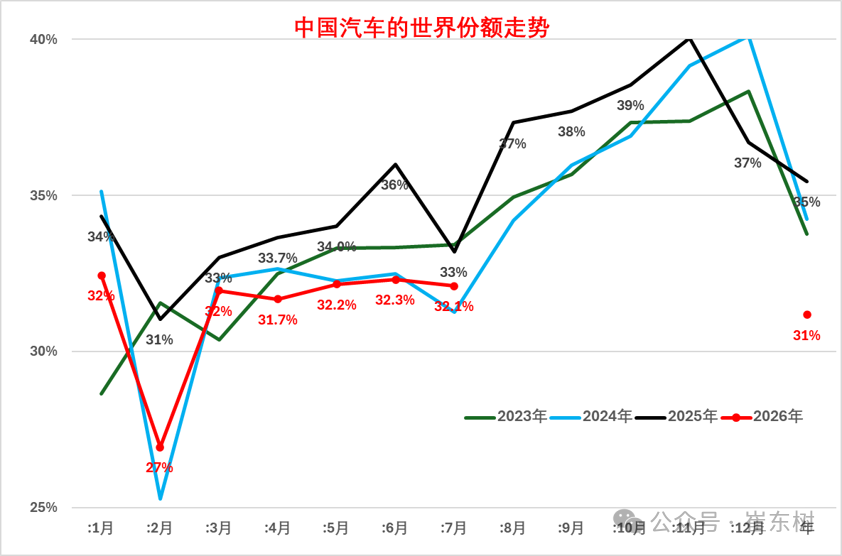
Christmas sales in Europe and the US had a big impact at the end of the year, while the beginning of the year was relatively strong. The Chinese auto market was weak at the beginning of the year due to the impact of the Spring Festival holiday, and the annual sprint brought strength at the end of the year.
At the beginning of 2026, as the gradual launch of the two new subsidy policies moderated, China's automobile sales declined significantly in January-February. The share rebounded in March, and the share rose to 32.7% in July. The cumulative share in 2026 was 31%.
7. Characteristics of monthly automobile sales trends in various countries
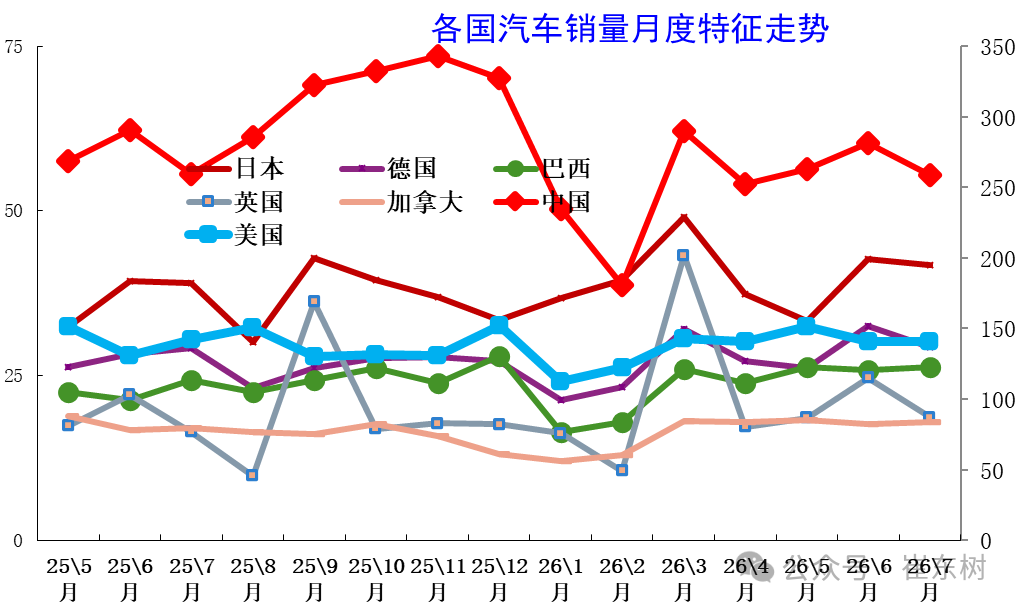
Judging from the monthly sales growth trend in countries around the world, the trend between months is basically balanced. However, due to many influences such as seasonal factors and yearly factors, there is still a big contrast between the trends of various countries.
Since the Chinese car market is still popular for private cars, the trend is relatively strong at the beginning and end of the year, and the trend is relatively weak in the middle of the year, while the Indian car market is relatively strong at the beginning of the year and relatively stable in the middle of the year.
8. World share performance of international groups
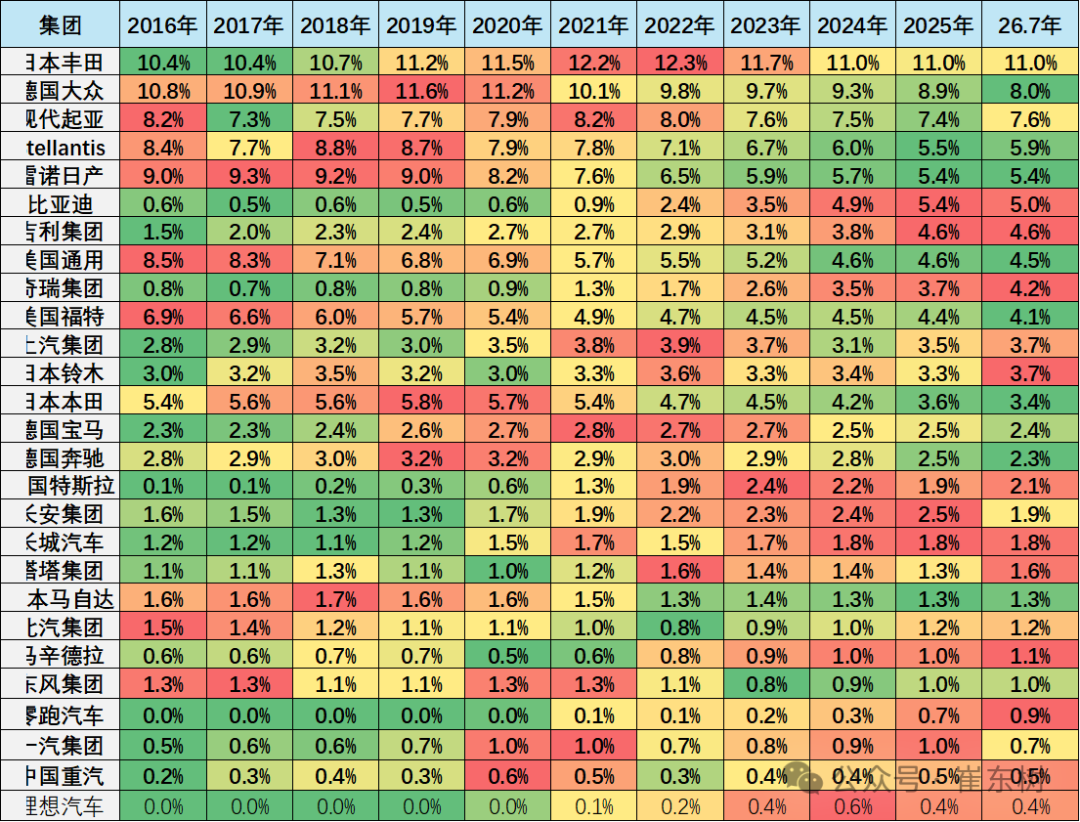
This chart shows the global sales share trends of major automobile groups. Judging from the Group's overall performance at present, the share of leading international car companies has declined markedly, and Chinese car companies have generally performed well. As India, Brazil, and Russia's position in the international car market has improved, and Asian car companies such as Geely, Chery, and Suzuki have performed well in the market, the production and sales trend of East Asian car companies is relatively good. European car companies generally performed poorly.
Of the top 10 car companies in the world from January to July this year, 3 Chinese car companies had a strong share, and BYD climbed back to 6th place in the world. Geely ranked 7th and Chery ranked 9th.
9. Regional share performance of international groups
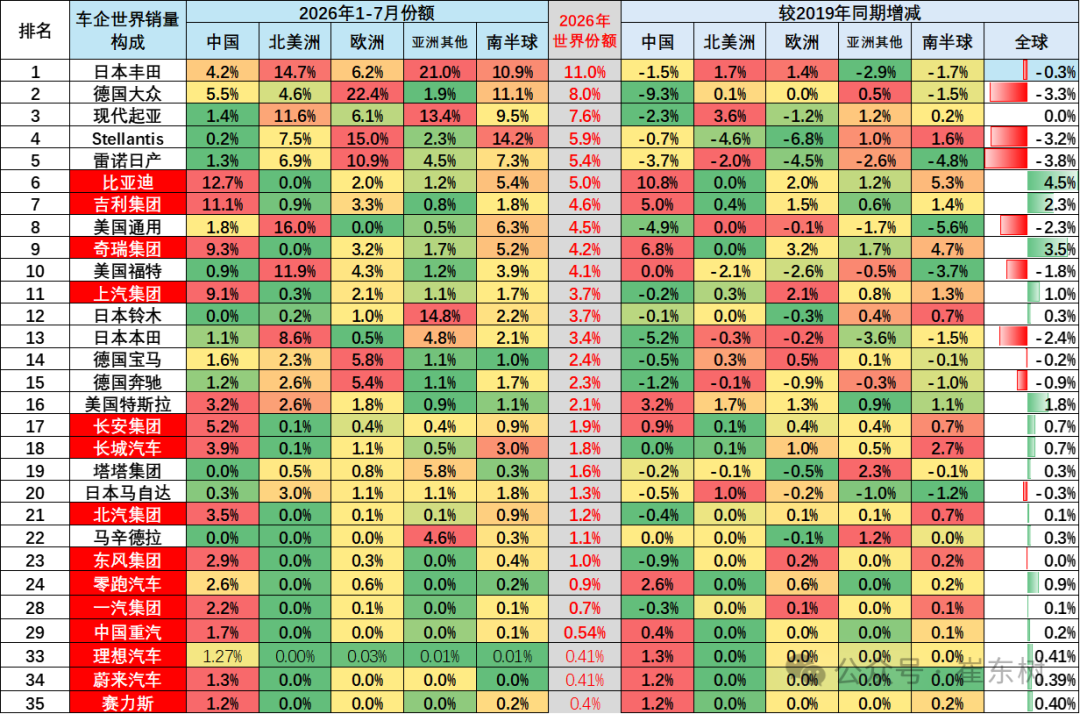
This year, compared to 2019, China's own brands have increased their overall share of the world. Geely, BYD, Chery, SAIC, Changan, and Great Wall performed well independently.
With the exception of Toyota, Hyundai Kia, Suzuki, and Tata, the share of other international brands declined sharply in 2026.
Asian car companies are strong. The Toyota Group's performance in 2026 was relatively strong, down 0.3% from 2019, and the world share remained around 11% in 2026. This is also due to Toyota's overall strong performance in the European and North American markets. The trend of Hyundai Motors in Korea is relatively stable, reaching 7.6% in 2026, the same as in 2019. Korea Hyundai Group has performed well in North America and other Asian markets, but the trend continues to be weak in China due to poor product strength. Suzuki's market performance is strong, mainly in markets such as India and Japan. The Honda Group also had poor performance this year, down 2.4% from 2019, and the performance of the Chinese market was weak.
European car companies were generally weak in 2026. In particular, the performance of Renault Nissan, Stellantis, and Volkswagen was relatively weak. Their share dropped by about 3 points compared to 2019, which is a loss of nearly 3 million units. These European companies are under a lot of pressure on the Chinese market. The Chinese market cannot retreat; they need to start a second time. Successful electrification transformation has led to overall growth for second-tier Chinese car companies.