


The Zhitong Finance App learned that on August 31, the Group of Twenty (G20) finance ministers and central bank governors meeting officially opened in Asheville, North Carolina, USA. As host, US Treasury Secretary Scott Bessent was supposed to be in the spotlight to drive the global economic growth agenda. However, when he stepped into the venue, he was greeted by questions from peers around the world, the aftermath of market backlash, and a crisis of trust about America's fiscal credibility.
This summer, Bezent tried to reshape the trajectory of global financial markets with the “intervention trilogy” — jointly interfering with the yen, expanding treasury bond repurchases, and threatening sanctions against Iraq. However, not only did these operations not achieve the expected results; instead, they were turning into a question that stabbed America's fiscal credibility at the Asheville conference table.
The “triple rift” of the G20 agenda: from economic coordination to pressure from sanctions
The Asheville Conference was supposed to be a key point in coordinating global economic policies. In February of this year, the US Treasury announced G20 priorities including modernizing financial supervision, improving debt transparency, and improving cross-border payments. However, pre-conference signals suggest that the focus of the agenda is fundamentally shifting.
First rift: Iran sanctions vs. energy security
Before the meeting, Bezent vowed to “refocus the G20 talks on promoting economic growth,” but several media reported that he would actually put pressure on G20 members to cooperate with US sanctions against Iran and sever commercial ties with Tehran. More symbolically, before the meeting, the US imposed restrictions on Bank of Egypt's branches in the UAE on the grounds that it “has ties with Iran” — although Egypt is not a member of the G20, this move is widely regarded as a warning of “second-level sanctions” against all participants.
This strategy faces an unavoidable structural contradiction: the Strait of Hormuz is responsible for about one-fifth of the world's seaborne oil trade, and its closure has caused high energy and commodity prices, dragging down almost all G20 economies. For some G20 members, energy security is an overwhelming domestic political issue. German Deputy Chancellor and Finance Minister Lars Klinbeier publicly called for an end to the war between the US and Iran and the reopening of the Strait of Hormuz before the meeting.
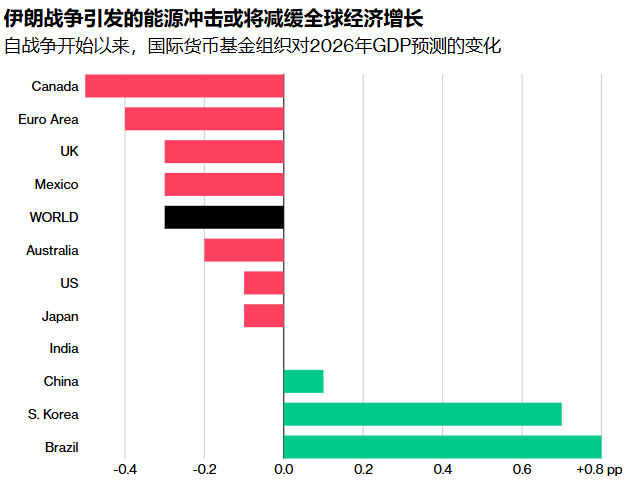
Josh Lipsky, president of the Atlantic Council for International Economics, said in a nutshell: “Bezent wants to put the Iran issue first and discuss tighter sanctions against Iran, while many members of the G20 want to discuss anything else — such as tariffs.”
Second rift: tariff war vs. allied trust
In February of this year, the US Supreme Court ruled that global tariffs imposed by the Trump administration under the International Emergency Economic Powers Act lacked legal authorization. But since then, the Trump administration has tried to re-implement these tariffs using other legal grounds. In July, 60 economies, including all G20 members, were subject to 10% or 12.5% tariffs; 16 major trading partners (more than half are G20 members) faced additional tariff threats. When Washington asks countries to cooperate with its sanctions against Iraq, these countries are under trade pressure from the US itself. This double standard of “requiring cooperation in terms of security and imposing financial punishment” is seriously eroding the foundation of mutual trust among G20 members.
Third rift: $40 trillion in debt vs. interfering with credit
On August 19, the US public debt surpassed 40 trillion US dollars, about double the 2017 level. Meanwhile, the 30-year US Treasury yield hit a 19-year high. In response to this situation, Bezent announced that it would double the size of long-term treasury bond repurchases to 4 billion US dollars each, which briefly relieved the pressure on yield, but also sparked widespread controversy in the market over its “variable quantitative easing.” Former Bank of England interest rate setter Suhil Wadwani warned: “I'm afraid it would be unwise to try to fight the market with a water gun. Finance ministers need to maintain market credibility in times of economic downturn.”
Another concern: the impact of the “Bessentism” of foreign exchange intervention on global currencies
Bezent's most notable intervention this summer — the US and Japan jointly supported the yen on August 1 — is being severely tested. Although the US and Japan joined forces to push the yen from about 164 to 155, the yen fell back below the 160 mark against the US dollar on Monday (August 31).
The US intervention by selling the euro to buy yen — without prior notice to European officials — has aroused strong discontent on the European side. A European official said the intervention was largely viewed as “a political gift to Japan rather than an effective economic strategy.”
Faced with the yen falling below 160 again, Basent said in an interview on Sunday that the recent trend of the yen “has been controlled to a considerable extent” and is not a “disorderly market” that previously triggered the intervention. He also said he expects the Bank of Japan to “do the right thing” in monetary policy. Nobuhide Kiuchi, chief economist at the Nomura Research Institute, pointed out that the yen fell below 160 and the 10-year Japanese Treasury yield was close to 3%, which may prompt Bezent to urge Japan to adopt a “prudent fiscal policy” and raise interest rates at the G20 meeting.
The problem facing other G20 members is that America's policies will inevitably have a ripple effect on the global economy, affecting everyone. Earlier this year, the war in Iran and soaring energy prices led to a stronger dollar. Meanwhile, Bezent's recent intervention has weakened the dollar.
Bezent openly talks about using the dollar's reserve currency status as an economic weapon to force both allies and enemies to surrender to Washington's will. America's deep and vibrant market and superior currency have brought huge benefits to partners, but he said in June, “these benefits are no longer unconditional.” “Our partnership now contains expectations and, in some cases, non-negotiable obligations.”
Since Bezent's intervention at the end of July, the yen's rise has narrowed. The exchange rate against the US dollar fell to 160 for the first time on Friday, a new low since the intervention. However, the US Treasury Secretary is still an important ally for G20 member countries that have benefited from Bezent's measures, such as Japan and Argentina.
“He is very important to Japan,” said Takahide Kiuchi, an executive economist at the Nomura Research Institute and a former director of the Bank of Japan. The US helped support the yen to strengthen ties between Washington and Tokyo.
A European official said that the intervention was largely viewed as a political gift to Japan rather than an effective economic strategy. The official also said that as far as the US Treasury bond market is concerned, recent fluctuations are mainly driven by domestic factors, such as debt levels and concerns about the rate of increase in artificial intelligence productivity.
Influencing the world through the Federal Reserve: Bezent and Walsh — a “brother versus brother” power game
Bessent's recent series of aggressive moves have raised a deeper question: As Federal Reserve Chairman Walsh gradually gained a foothold after his early mistakes, who is Washington's most influential economic policymaker?
Nathan Hitz, Citigroup's chief global economist and a veteran of the Federal Reserve and the Treasury, gave an imaginary analogy: “Right now, I think Bessent is like an older brother, and Walsh is like a younger brother.”
However, these “brothers” seem to have fundamental differences in priorities. Basent is shouldering the heavy responsibility of paying off $40 trillion in debt and is working to reduce borrowing costs; while Walsh expressed his focus on controlling high inflation, a position he reiterated at the Jackson Hole conference on Friday. Jacqueline Rong, chief Chinese economist at BNP Paribas, warned that the differences between Bezent and Walsh “weaken the credibility of US institutions” and may “strengthen the determination of the Chinese government to diversify the allocation of overseas assets and accelerate the internationalization of the RMB.”
Conclusion: The engine of global growth or the world's greatest uncertainty?
The International Monetary Fund expects the global economy to grow by 3% in 2026, but warns that the risk is biased downward. IMF Managing Director Georgieva used the flagship that eventually sank in “The Odyssey” as a metaphor for the world economy — “in the face of strong headwinds.”

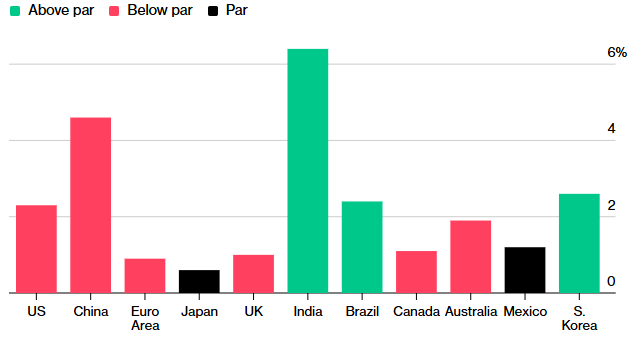
Before the meeting, Bezent said he plans to focus on promoting economic growth at the G20 summit. “The world is tired of hearing us talk about what we don't want,” he said in an interview with the Associated Press on Sunday. “They want to hear what we want.” However, when Washington's tariff stick hits allies and rivals at the same time, when the Treasury's bond market intervention triggers market fears of “financial depression,” and when the dollar is used as a reserve currency as an economic weapon — the “American-style growth agenda” promoted by Bezent is facing a deep trust deficit.
As a senior European official said, the impact of any growth initiative will be limited when America's actions destabilize the world. The G20 meeting in Asheville was not only a test of Bezent's diplomatic skills, but also a key test of whether “Bezentism” can win global recognition.