


The Zhitong Finance App learned that new energy storage capacity in the US reached a record high in the second quarter and is expected to reach the highest level in history this year. According to a market outlook report jointly released by the American Solar Energy Industry Association (SEIA) and Benchmark Mineral Intelligence, the US added 20.2 gigawatt-hours of energy storage capacity in the three months up to June, and is expected to add 71 gigawatt-hours in 2026. One gigawatt can power approximately 750,000 American homes.
According to the report, by the end of the first half of this year, California and Texas were leading the US in terms of total utility-scale battery energy storage capacity, with installed capacity reaching 62 gigawatt-hours and 33.1 gigawatt-hours, respectively. The American Solar Energy Industry Association said in a statement that both states were powered by batteries during the heatwave and protected customers from soaring electricity prices.
The American Solar Energy Industry Association said that more than 74% of the energy storage capacity installed in the second quarter was built in the state where US President Donald Trump won the 2024 general election, mainly due to growth in Arizona, Texas and Utah. Arizona led the US with 6.2 gigawatt-hours of new energy storage installed capacity, setting a record for the highest single season in any state.
Battery energy storage accounted for a relatively small share of the US electricity system in 2020, and is now one of the fastest growing sources of electricity. The American Solar Energy Industry Association said that in the first 18 months of the Trump administration, utility scale energy storage almost doubled from 88 gigawatt-hours to 165 gigawatt-hours.
US battery energy storage demand continues to set new records
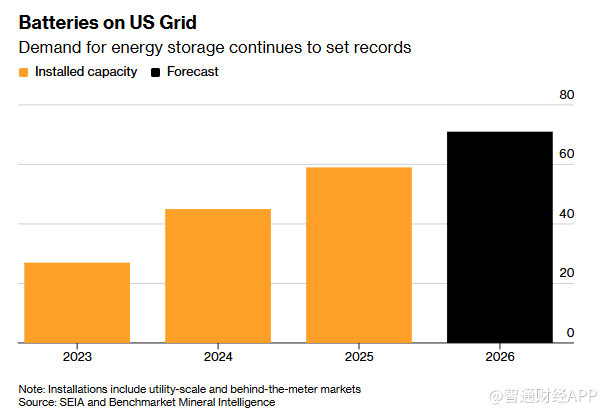
This boom is partly due to the rapid development of solar power generation and the growing demand for electricity from artificial intelligence (AI). More and more data centers are using batteries to help respond to rapid changes in power demand and provide short-term backup power.
The report points out that the US domestic battery industry is facing resistance from tariffs and new preferential tax policies, which limit the amount of equipment purchased from China. However, the US is increasing battery production capacity, and several states such as Ohio, Tennessee, and Texas have built new factories.