


The Zhitong Finance App learned that on September 2, the Ali (09988) smart device programming platform Qoder launched the glasses version. The first batch will be connected to Qianwen AI glasses and RokID AI glasses. In the future, users will not need to turn on the phone or touch the screen, and will be able to let agents perform tasks anytime, anywhere through voice interaction. Currently, the Qoder Rocky AI Glasses Edition is open for trial. The Qoder Qianwen AI Glasses Edition has started targeted testing, and the full functionality will be officially released at the 2026 Yunqi Conference.
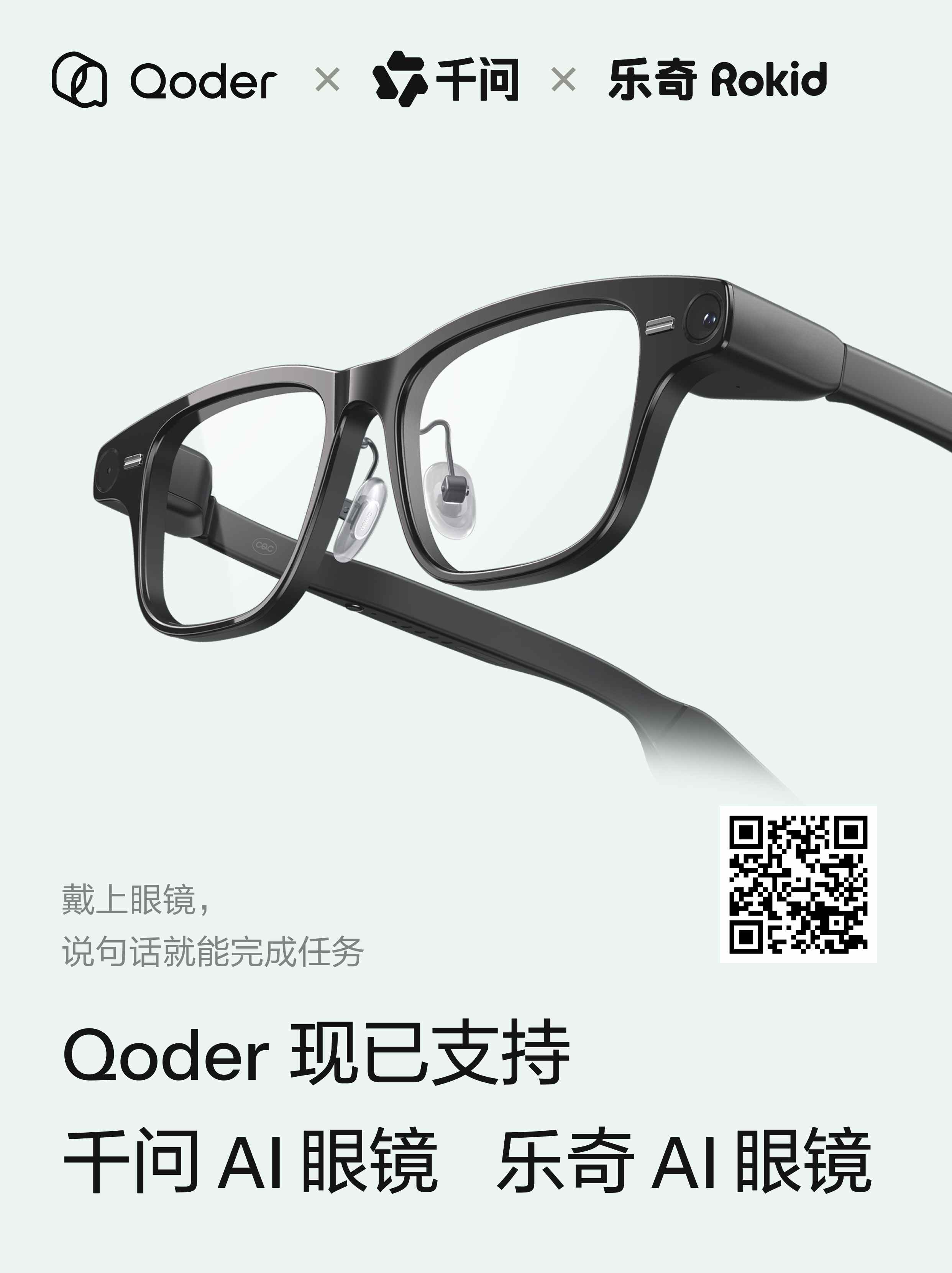
The Qoder Glasses Edition is not a new piece of hardware, but rather a natural extension of Qoder to the real world. Users can invoke Qoder at any time through real-time voice and talk; approvals and key developments are presented directly in front of the eye, and important decisions can be processed by looking up; screens, whiteboards, and actual work sites can also enter tasks from a first-person perspective, making what they see and hear the context for Qoder to understand and execute.
Unlike the single-wheel question and answer mode of traditional voice assistants, Qoder integrates a full-duplex voice solution. Users can explain tasks, ask about progress, and add requests as if they were communicating with colleagues. Users can handle urgent tasks at any time while cycling, hiking, or even holding coffee. Based on the real-time decision-making ability of AI glasses, when users encounter high-risk operations, items to be confirmed, and key task points, they will be pushed to the corner of the field of view in the form of a card. Users can complete approval through voice confirmation or touch the lens. Task completion, abnormal alarms, and progress updates are broadcast in real time, and decisions will not interrupt current tasks.
Ali said that in the future, the Qoder glasses version will continue to collaborate with the desktop and Qoder mobile: the desktop side will undertake in-depth execution and be responsible for understanding the project, completing complex tasks and settling the context; Qoder Mobile provides a portable global perspective, which can be controlled remotely; and the glasses version will occupy the user's first perspective, so that agents can sense the real world.