


Erie Indemnity stock has delivered solid gains over the past five years, yet the current Excess Returns intrinsic value estimate and the market multiple view together suggest the shares are closer to fairly valued and may even lean expensive on some checks.
- Over the past 5 years Erie Indemnity has returned about 57%, which rewards long term holders but raises the question of how much upside is already reflected in the price.
- The company’s fee based model and role within the Erie Insurance Group can support ongoing cash generation, but any pressure on underwriting profitability or expense control may weigh on what investors are willing to pay for that cash flow.
- The broader valuation checks point to Erie Indemnity not being a clear bargain, with only 1 of 6 tests screening it as attractive on value. This signals a stock that leans expensive rather than clearly cheap.
For investors, the debate is whether Erie Indemnity’s current price fairly reflects its long term fee stream or whether expectations have moved ahead of what the fundamentals reasonably support.
Compare Erie Indemnity’s rich valuation and mixed recent returns with a curated list of other companies that screen as 47 high quality undervalued stocks.
Where Does Erie Indemnity Sit on Excess Returns?
The Excess Returns model starts with what Erie Indemnity can earn on its equity compared with the return investors require. Erie Indemnity has an average return on equity of 28.15% applied to a stable book value of $38.00 per share, which feeds into a stable EPS figure of $10.70 per share based on the past five years.
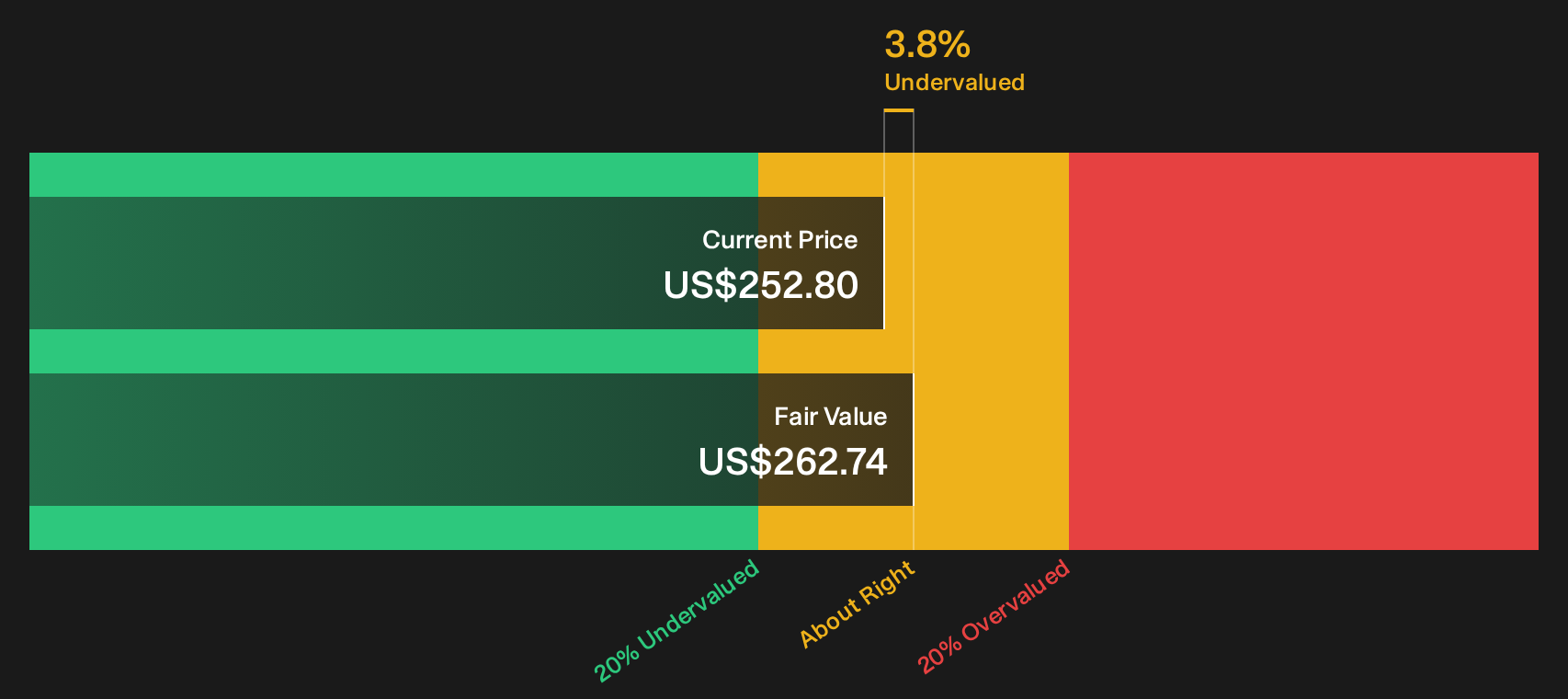
With a book value of $47.18 per share and a cost of equity of $2.75 per share, the model estimates excess return of $7.95 per share and converts that into an intrinsic value of about $262.74 per share. Against the current share price, this implies the stock is 3.8% undervalued on this framework. As a result, the market price and the Excess Returns estimate are close rather than far apart.
On this Excess Returns view, Erie Indemnity appears roughly fairly valued with a slight lean toward undervalued.
Erie Indemnity is fairly valued according to our Excess Returns, but this can change at a moment's notice. Track the value in your watchlist or portfolio and be alerted on when to act.
Is Erie Indemnity Getting Expensive on Earnings?
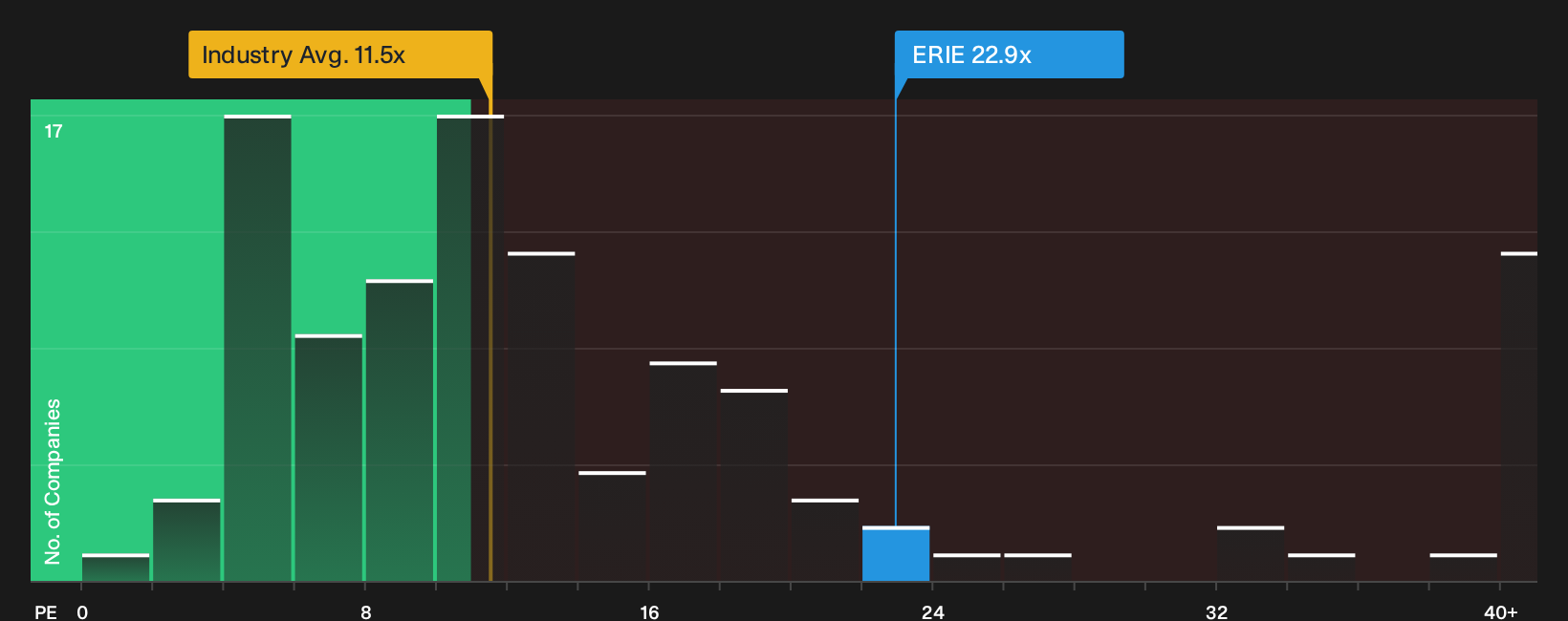
P/E is a useful yardstick for Erie Indemnity because earnings are central to how investors think about its fee based model. On this measure, the stock trades on a P/E of 22.9x, which is well above the Insurance industry average of 11.5x and also above the peer group average of 13.1x. That indicates investors are paying a clear premium for each dollar of current earnings at Erie Indemnity.
The high gap to both industry and peer benchmarks suggests the market is already assigning Erie Indemnity a richer valuation than many other insurance stocks with similar business profiles. When considered alongside other checks, such as the Excess Returns model, which points to a more balanced picture, this earnings based premium appears less like a clear bargain and more like a full price.
On the P/E multiple, Erie Indemnity stock currently screens as overvalued compared with the broader insurance group and peers.
See what the numbers say about this price — find out in our valuation breakdown.
The Erie Indemnity Narrative: What Would Justify Today's Price?
Simply Wall St Narratives pick up where this valuation puzzle for Erie Indemnity leaves off. They spell out which assumptions about Erie Indemnity's future growth, margins and earnings would need to hold for the stock to be worth meaningfully more or less than today. Each narrative ties a fair value estimate to a specific storyline about potential catalysts and risks, so you can track over time which version of events comes closer to reality on the Community page.
You can add your voice to the Erie Indemnity story by sharing a Narrative that sets out your number based view on where its growth, margins and execution go from here. Put your thesis on Erie Indemnity into the Simply Wall St community and see how it holds up as new information arrives.
Do you think there's more to the story for Erie Indemnity? Head over to our Community to see what others are saying!
The Bottom Line
For Erie Indemnity, the Excess Returns intrinsic value estimate points to a share price that is close to intrinsic value, while the P/E comparison signals the stock is overvalued against industry and peer averages. That split reflects a business where cash generation can support the current intrinsic value, but where sentiment and growth expectations already command a premium multiple. With broader valuation checks scoring weakly, the key question is whether Erie Indemnity can sustain the earnings profile that justifies paying that premium rather than seeing the multiple drift closer to sector norms.
This article by Simply Wall St is general in nature. We provide commentary based on historical data and analyst forecasts only using an unbiased methodology and our articles are not intended to be financial advice. It does not constitute a recommendation to buy or sell any stock, and does not take account of your objectives, or your financial situation. We aim to bring you long-term focused analysis driven by fundamental data. Note that our analysis may not factor in the latest price-sensitive company announcements or qualitative material. Simply Wall St has no position in any stocks mentioned.
Have feedback on this article? Concerned about the content? Get in touch with us directly. Alternatively, email editorial-team@simplywallst.com