


With the explosive growth of generative artificial intelligence and big model technology, the construction of global computing power infrastructure has set off an unprecedented investment boom.
As an indispensable “lifeblood” in the computing power cluster, the optical communications industry is undergoing rapid transformation, upgrading and reshaping. Recently, Najun Technology, a supplier of optical communication and optical connectivity products, passed a hearing on the Hong Kong Stock Exchange and plans to be listed on the Hong Kong Stock Main Board.
According to Frost & Sullivan, in terms of global optical module revenue in 2025, Nazen Technology ranked fifth among global professional optical module manufacturers with a 4.0% market share; in the Chinese market, it ranked third with a 10.1% share. In addition, the company is also one of the few vertically integrated enterprises in the world that also has independent R&D and production capabilities for optical modules and optical chips.
Facing the rapid release of AI computing power dividends and rapid changes in downstream technology, can Najun Technology lead the way in fierce global competition and successfully leapfrog and upgrade valuation through the capital market?
Betting on AI high-speed interconnection ushered in an inflection point in performance
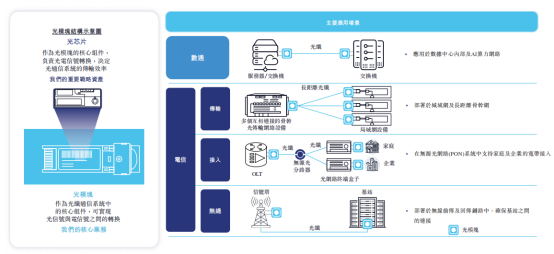
The Zhitong Finance App learned that Najun Technology's business layout covers digital optical modules, telecom optical modules, optical chips, and optical network terminals. Looking back at its financial performance during the record period, the company's revenue increased 20.0% from RMB 4.239 billion in 2023 to RMB 5,087 billion in 2024, and accelerated to RMB 8.355 billion in 2025. In the first half of 2026, the company achieved revenue of RMB 5.393 billion, which continued to grow rapidly over the previous year.
On the profit side, the company's net profit increased from 89.5 million yuan in 2024 to 873 million yuan in 2025, and the net interest rate increased from 1.8% to 10.4%. The steep rise in profitability was due, on the one hand, to an increase in the share of high-margin products, and on the other hand, to the confirmation of a revenue of 353 million yuan from the sale of joint ventures in 2025.
However, the fundamental driving force behind the company's performance leapfrog is that its product structure has achieved a strategic inclination towards the digital communication field. In the past, the investment cycle of domestic telecom operators and the pace of 5G construction played a decisive role in the demand for telecom optical modules and FTTx terminals.
Around 2024, demand in the domestic telecom market showed a phased recovery, and the company's telecom optical module revenue slowed down. However, global AI clusters and cloud computing demand for 200G and above high-speed digital optical modules surged exponentially, quickly filling up and boosting the company's overall performance. In the first half of 2026, the company's gross margin increased to 24.2%. Among them, the increase in overseas markets and shipments of high-end digital communication products was the absolute main factor boosting gross profit.
It is worth mentioning that the vertically integrated layout of technology is one of the core moats of Najun Technology. The Zhitong Finance App learned that optical chips, as the most expensive underlying component with the strictest technical barriers in optical modules, have long relied heavily on external supply or overseas imports.
Meanwhile, Najun Technology has made the whole process autonomous and controllable, from epitaxial growth, grating process, optical waveguide etching to automated sealing and measurement. The CW-DFB laser chip developed by the company was commercialized in the second quarter of 2025, gradually shifting from internal use to large-scale external sales, and large-scale production in the first quarter of 2026, which not only opened up a second growth curve, but also significantly improved the cost structure of upstream core components.
There are still pitfalls under the halo, how can we get through the industry cycle?
Although Najun Technology has gained a lot from the AI wave, after studying the details of the prospectus, the company's competitive landscape and hidden operational risks still objectively exist.
Among them, the optical communication industry as a whole is characterized by high dispersion and intense competition. Although Najun Technology ranks fifth among professional manufacturers in the world, its share in the global optical module market is only 4.0%, which is still a large volume gap compared to leading giants.
Currently, the top five global professional manufacturers occupy a total of 61.1% of the market share. The market concentration is high, and there are a large number of professional players and new entrants in vertical fields within the industry. In the field of optical network terminal boxes, the total share of the top ten in the world is only 34.8%, and the degree of dispersion is even higher, making pricing power under continuous pressure.
Second, the high concentration of major customers is a prominent characteristic of the company's management level. In 2023, 2024, 2025 and the first half of 2026, the company's top five customers contributed 55.8%, 66.9%, 70.2% and 71.8% respectively, showing an upward trend year by year. Among them, the revenue share of the single largest customer has remained above 20% for a long time.
According to the Zhitong Finance App, the company's downstream buyers in the digital communication and telecommunications sectors are all large cloud service giants, network equipment vendors, and telecom operators. This customer base structure means that once core customers adjust capital expenditure plans, change procurement suppliers, or extend product certification cycles, it will have a severe impact on the company's order stability and cash flow.
Furthermore, technology route iteration and capital expenditure pressure are common tests in the industry. Today, optical communication technology is rapidly changing. Digital optical modules are experiencing a leap from 400G/800G to 1.6T and higher speeds, and optical chips are also evolving to single-wave 400G and higher power technology.
If the company's R&D bureau fails to accurately hit the technology node, or if the commercialization of the new technology falls short of expectations, the large amount of R&D investment that was sunk in the early stages will face the risk of being irretrievable. Among them, from 2023 to 2025, the company's R&D expenses reached 553 million yuan, 623 million yuan and 664 million yuan respectively, maintaining a very high level.
In the future, the company plans to continue to invest most of the capital raised from the listing in R&D and talent introduction, and plans to recruit more than 450 R&D personnel over the next five years. Under high-intensity R&D investment, how to continue to maintain product iteration advantages and maintain stable profitability is a topic that requires long-term balance after the company goes public.
In summary, with the collaborative research and development capabilities of optical chips and optical modules, Najun Technology has successfully adapted to the computing power expansion dividends of the AI era and achieved qualitative changes in financial data. However, in the face of real challenges such as overseas expansion, high customer base concentration, and fierce industry price competition, the company still needs to rely on continuous technological innovation and upgrading of the global manufacturing supply chain to consolidate its own barriers. Its future valuation anchor will depend on the expansion of the scale of high-end optical chip export sales and the progress of penetration among overseas hyperscale data center customers.