


Catalyzed by a new round of strong rise in Nvidia (NVDA.US) stock prices, it is simultaneously receiving strong support from profit growth, breakthroughs in model capabilities, next-generation training clusters, control of the developer ecosystem, and long-term computing power orders. According to previously announced results, Nvidia's revenue for the second quarter of fiscal year 2027 reached 96.2 billion US dollars, up 106% year on year; data center revenue reached 89 billion US dollars, up 117% year on year; adjusted earnings per share were 2.22 US dollars, up 120% year on year. The third-quarter revenue guidance was US$108 billion, fluctuating 2% up and down. The median value of this guideline means a further increase of about 12.3% from the strong base for the second quarter, and management also clearly defined the revenue growth forecast of about 70% for the 2028 fiscal year as a “supply-bound outlook.”
The Astra model just launched by OpenAI continues to actively expand the professional tasks that AI can undertake. On Sunday, Nvidia CEO Huang Renxun made a big statement on social media that the launch of GPT-6 Astra means “AGI has arrived,” and Nvidia's confirmed strong revenue range and subsequent strong shipping guidelines, combined with the strong AI model development is entering a new stage of “recursive self-improvement (RSI)”, which opens up another stage of the AI computing power demand surge curve — that is, Astra is expected to expand AI computing power demand for commercial applications. Beginning the R&D trajectory of “building AI” may increase investment in cutting-edge operator experiments, evaluations, and long-term continuous training, and jointly extend the computing power investment cycle; all of these indicate that this almost endless demand for AI computing power is being transformed into huge hardware purchase orders surrounding Nvidia's AI GPU computing power clusters.
The scale for companies to evaluate the economics of AI is also expanding from the price per million terms to the total cost of successfully completing each task. Although Gemini 3.8 Flash maintains the price of 0.75 US dollars per million input tokens and 3.75 dollars of output tokens, the cost of each benchmark task has increased by about 40% compared to the previous generation due to an increase in the number of tokens exported by about 30% and the number of agent calls.
Google's parent company Alphabet also made it clear that the new model will improve the quality of task completion through more inference steps and repeated calls to tools, so it may consume more words. It is deduced from this that a reduction in unit price, an extension in task execution time, and an increase in the number of applications can occur simultaneously, driving up the overall demand for AI inference and the total value of inference. This is also known as the “Jevens paradox.” According to the forecast report of TrendForce, a well-known market research agency, in 2027, shipments of NVL72 racks increased by more than 50% year on year. The total output value of GB200/GB300 and next-generation NVL rack systems around Nvidia AI GPUs based on the Vera Rubin architecture is expected to exceed US$710 billion, an increase of 214% year over year, including the impact of product upgrades and price increases.
Wall Street strategists recently raised Nvidia's target price drastically. The 12-month target price based on fundamentals has been raised sharply from 265 US dollars to more than 300 US dollars, an increase of about 13.2%. The core is to raise the normalized earnings per share assumption from the previous 9.80 US dollars to 12 US dollars or higher, while reducing the price-earnings ratio from 27 times to 25 times, reflecting the increase in profit forecasts driving up the target price, and adding the Hugging Face acquisition as a long-term catalyst to strengthen the Nvidia developer ecosystem.
Wall Street financial giants such as Citibank, Goldman Sachs, and Morgan Stanley are all optimistic about Nvidia's overall demand for Vera Rubin's next-generation computing power architecture, the growth visibility of GPU clusters in 2027 and beyond, and the expansion of AI infrastructure. Their unanimous bullish judgment is that AI computing power demand continues to be strong, and Vera Rubin's capacity and Nvidia's comprehensive software and hardware platform advantages are still being strengthened. Citi raised its target price from $300 to $315; Morgan Stanley raised its “holdings” from $288 to $300; Goldman Sachs raised it from $285 to $300; and Bank of America maintained its “buy”, global preferred stock position, and a target price of $350.
A new upward catalyst has surfaced! Profit expectations have risen again, opening up new space for the developer ecosystem
Nvidia's stock price currently corresponds to a price-earnings ratio of less than 15 times the forward profit forecast. Halfway through the 2027 fiscal year, CEO Wong In-hoon and his team raised their expectations for the 2028 fiscal year after announcing the second-quarter results at the end of last month. The company is now expected to achieve a growth rate of up to 70% in response to a period where the market feared a possible slowdown in growth. Despite increasing political noise, AI infrastructure construction seems to be progressing at full speed.
Judging from the return rankings over the past five years, Nvidia also excelled in global stocks. Since US Labor Day 2021, the stock's cumulative return has reached 908%, surpassing the total return of the S&P 500 index of 82%, and far ahead of the 135% increase in the second-best performing member of the “Big Seven Tech” (MAG 7), Google's parent company Alphabet (GOOGL.US).
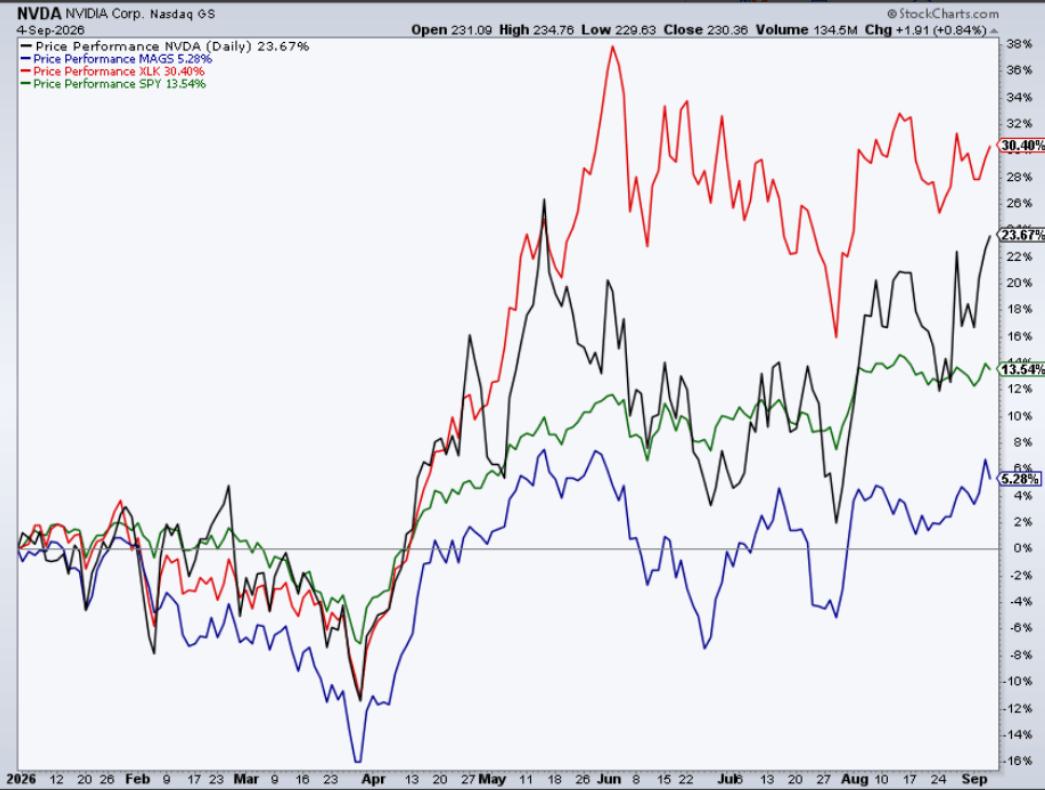
On the trading day after the announcement of the earnings report, the stock price rose 8.7%, the strongest post-earnings reaction since May 2024. Before the results conference call began, the stock price actually fell slightly; however, when the company announced longer-term performance guidelines, Nvidia's stock price rose rapidly. In contrast, the relevant stock price fluctuation on the day of the disclosure of financial reports previously included in the options market was 5.6%. After the release of the previous eight financial reports, none of Nvidia's actual stock price fluctuations exceeded the range implied by intermodal options. The last four of these were sharp falls in stock prices after the disclosure of financial reports.
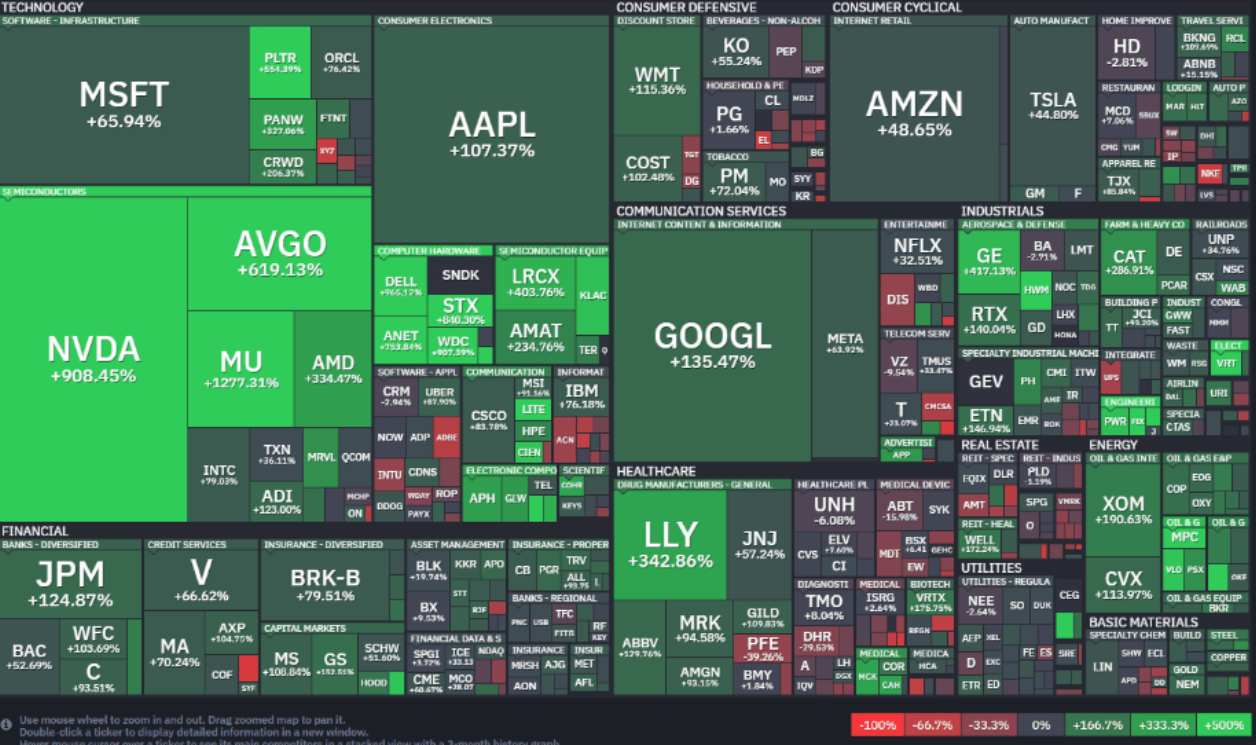
In August, Nvidia announced strong quarterly results. Data center revenue has soared, and the outlook for the 2028 fiscal year is very optimistic. Recent mergers and acquisitions that swallowed Hugging Face have also attracted new attention. Winning Hugging Face certainly added to the long-term catalyst for the developer ecosystem: Nvidia announced on September 3 that it had reached an acquisition agreement worth approximately $13 billion to expand the coverage of model development, distribution, and deployment platforms, and promised to continue to support different cloud platforms and computing hardware. The investment value is to enable more companies, research institutes, and developers to deploy AI and expand the potential Nvidia AI GPU computing power market.
Wall Street analysts focused on Nvidia's gross margin metrics, and the 75.0% final result did not raise market concerns. Additionally, supported by $21.3 billion in free cash flow, Nvidia returned a record $26 billion to shareholders in the second quarter through share repurchases and dividends, while raising US GAAP operating expenses to $8.4 billion to support strategic growth and R&D.
Once the deal is finalized, it may become a key “Trojan horse” strategic move, as Hugging Face hosts more than 3 million open source or completely open source AI models, acting as a model distribution layer, which can drive a wider range of computing infrastructure requirements outside of large hyperscale cloud service providers.
Similar to Microsoft (MSFT.US)'s acquisition of GitHub in 2018, Nvidia's acquisition of Hugging Face is expected to effectively integrate the company's architecture into developer workflows and the broader open source ecosystem. Of course, we have to look out for potential regulatory hurdles, but so far, the acquisition seems to be progressing smoothly. Another risk is that Hugging Face will remain open and interoperable, and developers can freely choose models, frameworks, cloud services, inference service providers, and computing platforms.
In terms of earnings prospects, Wall Street analysts agree that Nvidia's earnings per share will nearly double in the 2027 fiscal year, and the growth rate will only slow moderately in the following year. Analysts expect that by the 2029 fiscal year, the company's earnings per share in terms of operating profit may reach $20 to 21 dollars, or even higher. Not surprisingly, over the past 90 days, Wall Street sell-side analysts have intensively raised their earnings per share forecast: 40 times, down only 1 time. Earnings were truly outstanding, as evidenced by free cash flow of $4.70 per share over the past 12 months.
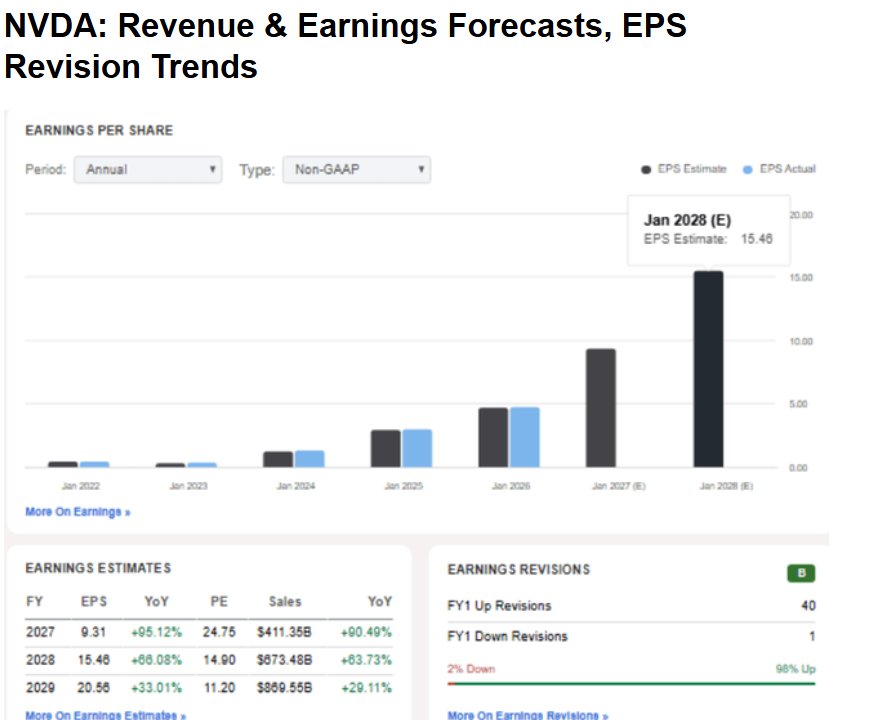
In terms of valuations, Wall Street analysts have updated their assessments for the second quarter of 2026. If we assume that normal operating earnings per share for the next 12 months are 12 US dollars and given a price-earnings ratio of 25 times, the stock price should be around 300 US dollars. This is a significant increase from the previous $265, and it was also recently determined when the price-earnings ratio was lowered by two times. Wall Street's most optimistic target price is an astonishing 515 US dollars, which means that Nvidia's market value is expected to exceed 13 trillion US dollars.
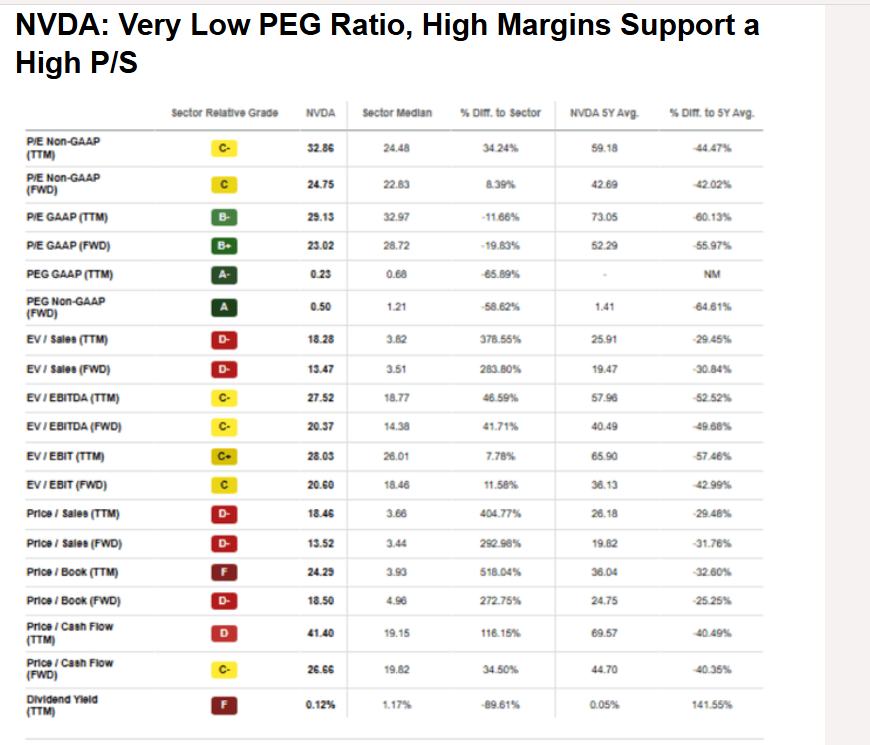
Looking at the longer term, Nvidia's current price-earnings ratio corresponding to FY2029 earnings per share is only 11.2 times, and the valuation is very low. Currently, its price-earnings growth ratio is an attractive 0.5 times, and its price-sales ratio is 32% lower than the stock's long-term average.
Nvidia's main risks include the company's already huge size, and its stock market value is now closer to $6 trillion than $5 trillion. Any twists and turns in AI data center construction may lead to a decline in the price-earnings ratio; considering that the midterm elections are approaching and public voices against AI and local data center construction are growing, this is not impossible to happen. From a broader perspective, AI infrastructure construction is ultimately a capital expenditure cycle. Any slowdown in hyperscale cloud service providers, emerging cloud service providers, enterprises, or sovereign investment may simultaneously suppress revenue growth and valuation multiples investors are willing to pay.
The more immediate risk may be increasing competition in chip development, Broadcom (AVGO.US). Top chip companies such as MRVL.US (MRVL.US) are making progress in the customized semiconductor (i.e. AI ASIC/TPU/XPU) market segment. China is still an uncertain factor; however, some Wall Street analysts predict that even Nvidia's own aforementioned guidelines do not have much optimism about demand from the world's second-largest economy.
From within the company, Nvidia has a significant customer concentration: according to quarterly reporting documents, one direct customer contributed 16% of second-quarter revenue; the three direct customers contributed 16%, 15%, and 13% of first-half revenue, respectively. In addition, the company's newer AI cloud business arrangement added another level of execution risk. As of July 26, the amount of related commitments that had not been fulfilled was 36 billion US dollars.
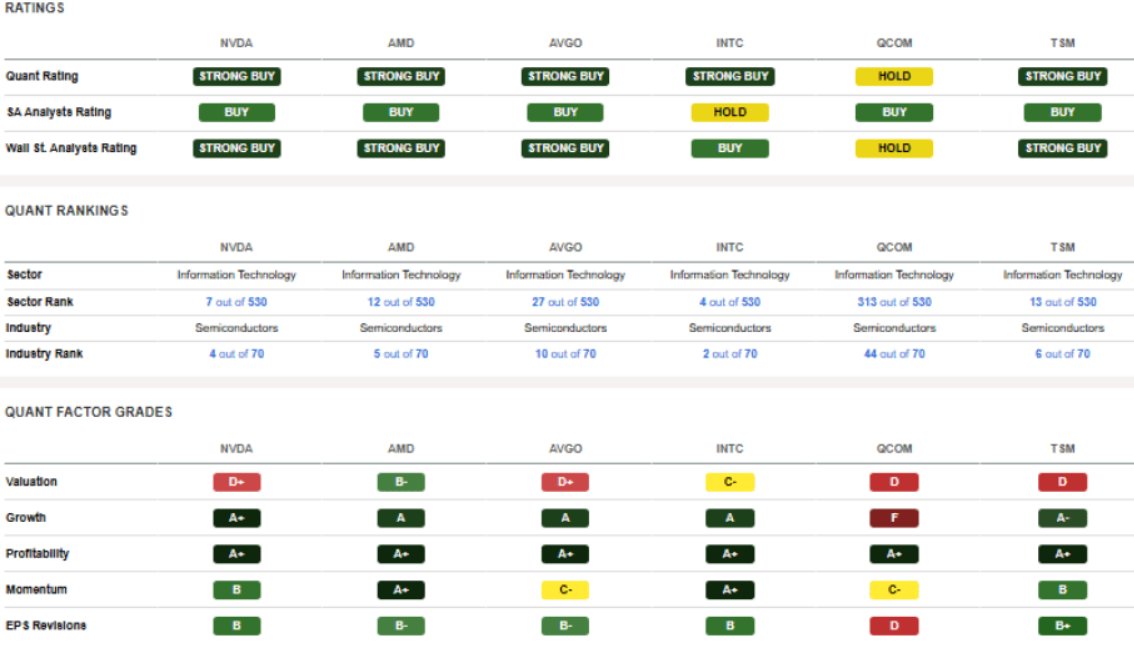
Looking ahead, according to corporate event data provided by Wall Street Horizon, Nvidia has confirmed that it will announce results for the third quarter of the 2027 fiscal year after closing on Tuesday, November 17.
Prior to that, Wong In-hoon and his team planned to attend a series of industry and AI conferences, starting with one of the largest corporate conferences of the year to be held this week — the 2026 Goldman Sachs Communacopia Technology Conference. Wall Street analysts will also be watching the Nvidia Singapore AI Day event to be held later this month, on September 22nd.
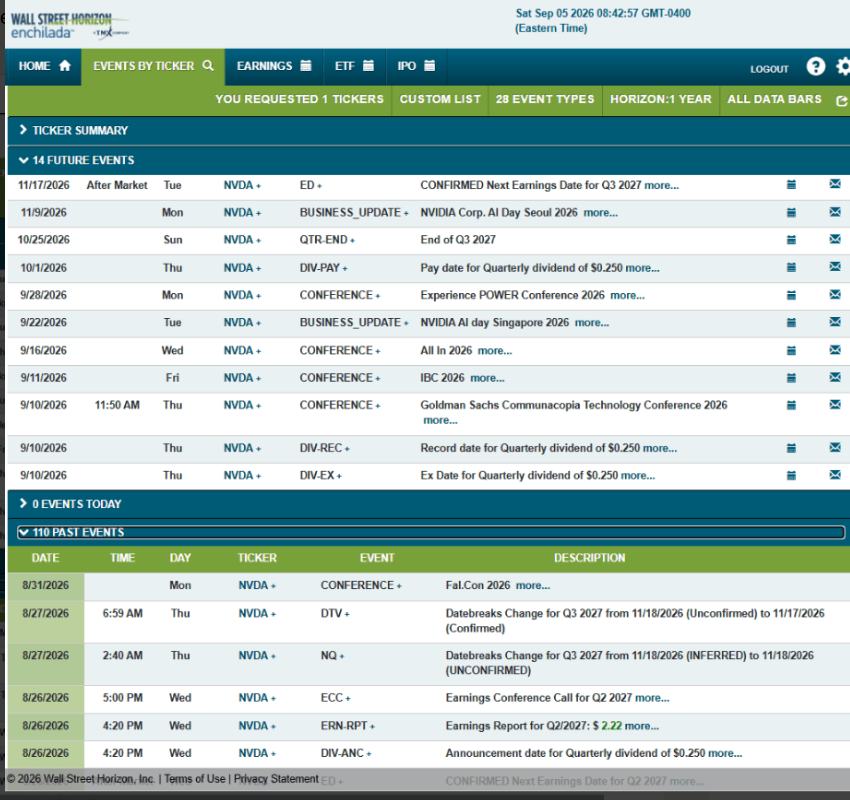
In terms of technical genre analysis, the stock's long-term 200-day moving average is rising, indicating that bulls are in control of the main trend. Furthermore, before the long weekend break arrived, Nvidia quietly set the highest weekly closing price in history, which usually reflects its inherent technical strength. After experiencing a period of sluggish performance in the summer, bearish power may have been removed, so that Wall Street's agreed technical target of $265 last spring is expected to be actively achieved before the end of the year.
The market focuses on Nvidia's Relative Strength Index Momentum Index — the indicator operates in a relatively neutral range between 35 and 65. Investors hope to see an improvement in the relative strength index, while the daily closing price of the stock price broke through the historical intraday price of $236.54 set in May, which will completely revive the technical bullish sentiment. Finally, given that there is a large amount of historical trading volume below the current price level, there should still be quite enough dips to buy when the stock price pulls back.
Astra's major attack, AI participated in the development of AI big models: cutting-edge big models and RSI paths strongly extend the computing power investment cycle
The GPT-6 Astra model just launched by OpenAI and the RSI technology path focused on by AI leaders are expected to become the two core driving forces driving the exponential expansion of AI computing power demand, namely the AI big model with better performance, the use of a wider range of AI application tools, and a next-generation AI training path with stronger computing power requirements, which are an important basis for the continued growth in AI computing power infrastructure demand.
According to a research report published by Rich Privorodsky, the head of the Wall Street financial giant Goldman Sachs Delta One trading desk, what the Goldman Sachs trading desk values most is that Astra may shift the overall demand curve — that is, when the AI model is smarter, companies can try work that could not be reliably done before, and competitors also need to continue to invest in R&D and training, which provides new support for the AI spending cycle; the SoftBank ADR as described in its research report has risen sharply by more than 10%, and Oracle's 5.5% increase, reflecting the market's potential for Astra-led computational power expansion Repricing. Implemented to Nvidia, Astra and RSI strengthened cutting-edge computing power requirements, Hugging Face expanded developer coverage, Blackwell and Vera Rubin undertook product delivery, and profit growth supported valuation.
A decrease in the cost per token stimulates a surge in call volume, inference depth, and agent circulation, while RSI opens a second computational power demand curve for continuous training. Recursive self-improvement (RSI) is not equivalent to a model suddenly gaining self-awareness; its current verifiable form allows AI to gradually participate in training strategy planning, algorithm generation, code writing, experimental design, result evaluation, bug fixing, and even the next few rounds of AI training.
The RSI trend brings an important direct inference: AI computing power advantages directly become research advantages, and research advantages directly become model advantages; AI laboratories with sufficient GPUs can complete all verification in a day, and cutting-edge AI laboratories without GPUs can only complete 5 or less task verification in a day, and the speed gap is immediately widened.
RSI may create a “second demand curve” for computing power independent of end user needs: training is no longer a “training-release-end”, but a continuous closed loop of models proposing algorithms, running hundreds to thousands of experiments in parallel, evaluating results, and initiating the next round of training; agents will also increase test time computing power (Test-time Compute) through longer inference chains, repeated call tools, and multi-model collaboration. If the world's top laboratories such as OpenAI and Anthropic reallocate computing power from high-revenue inference services to training, short-term revenue may plummet, but total computing power consumption will not drop; on the contrary, it may rise due to competition for model leadership.
With the launch of Astra, and AI model development led by OpenAI, AnthroPic, and SSI entering a new “recursive self-improvement (RSI)” AI development stage, including recent Nvidia's strong performance and outlook, plus a series of hundreds of megawatt or even gigawatt computing power capacity contracts, the continued active expansion of computing power resource requirements unleashed by the boom and expansion of the AI computing power industry chain led by a series of hundreds of megawatts or even gigawatt-level computing power capacity contracts, the existing basic data of the AI computing power industry does not yet support the pessimistic assumption that “the entire industry already has systematic excess computing power resources”. The lower the price, the more it exploded.
The core change brought about by Astra is that improvements in model capabilities have begun to expand the scope of work that can be handed over to AI. **Hwang In-hoon said on September 6 that Astra trains using more than 100,000 Nvidia GPUs using the Grace Blackwell NVLink72 platform, and predicts that the next batch of 400,000 GPUs will be launched. The former describes training resources, while the latter is the latest statement on future AI computing power resource deployment. The Astra results announced by OpenAI include FrontierMath Level 4 98% and ARC-AGI-3 reaching 99.9%, indicating a jump in its ability in specific difficult tests. As far as the capital market is concerned, this is expected to exponentially expand the commercial space for scenarios such as professional software operation, scientific research, code development, and network security.
Derived from systems engineering, delivering “recursive self-improvement (RSI)” will more closely link reasoning and training. AI agents propose candidate algorithms, write experimental code, call training tasks, analyze results, and then return effective improvements to the next round of research; each cycle simultaneously consumes inference computing power, experimental training computing power, and data storage resources. Lower inference prices have enabled more experimental solutions to reach affordable costs, and increased capacity has also expanded the set of problems that can be studied. Together, the two support the growth in demand for computing power.
AI server memory chip components are still the clearest supply bottleneck at the AI computing power industry chain level. TrendForce expects traditional DRAM and NAND Flash contract prices to rise 13% — 18% and 10% — 15%, respectively, above the high base in the third quarter of 2026; HBM and server RDIMM are expected to account for 51% of the global DRAM bit supply in 2026, and HBM contract prices may still rise 70% to 140% in 2027.
TrendForce forecast data also shows that AI data center server-side DRAM contract prices will cumulatively increase by about 270% in 2026, and enterprise-grade SSD prices will increase by about 235%; HBM contract prices may still rise 70% to 140% in 2027. The agency predicts that capital expenditure of major cloud service providers will increase 98% year-on-year in 2026 and 50% in 2027. The share of DRAM and NAND expenses will rise from 47% in 2026 to 68% in 2027, which is expected to increase by a full 21 percentage points within a year.
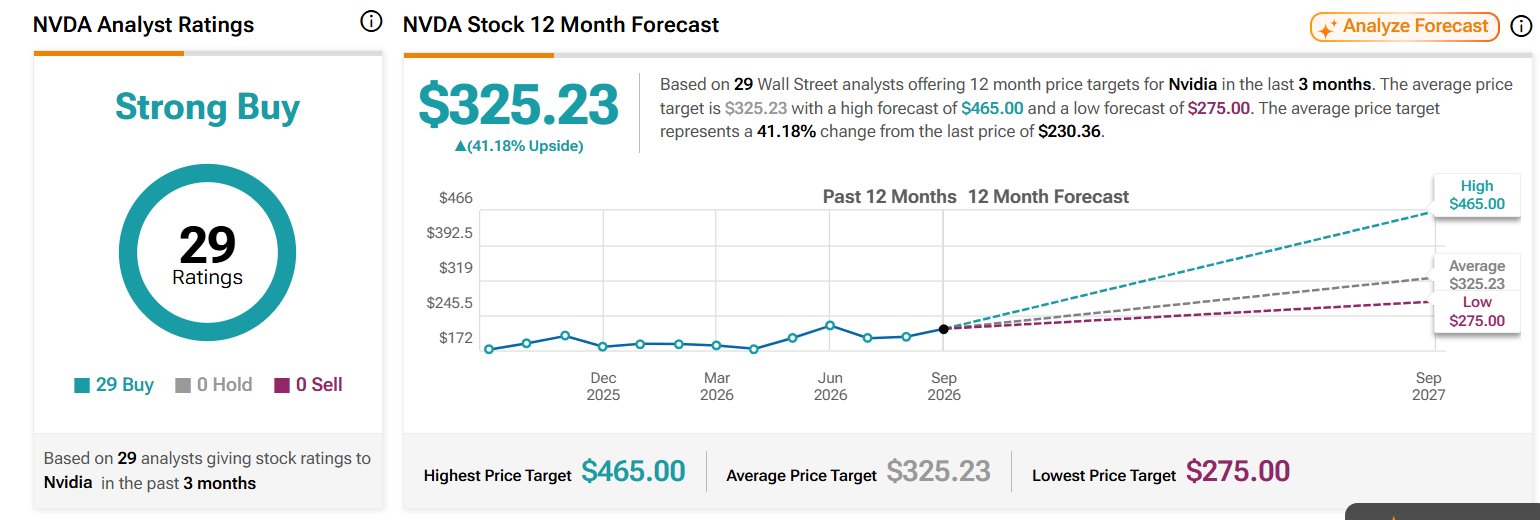
On Wall Street, the most optimistic price target of $515 comes from Simon Leopold (Simon Leopold), a senior analyst at Raymond James. The analyst raised the target price from $352 to $515 on August 27, maintaining a “strong buy” rating; this adjustment was announced earlier than September by Astra. The analyst's core bullish logic is that supply constraints mask Nvidia's potential revenue scale: storage, packaging, and manufacturing capacity limits shipments, and production expansion is expected to release unmet demand; Vera Rubin's volume, as well as the expansion of AI laboratories, enterprises, and professional cloud customers, will further expand revenue sources. He estimates that by January 2029, Nvidia's annual revenue is expected to be close to 1 trillion US dollars, which is about one-third higher than the market consensus of less than 750 billion US dollars at the time. Its $515 valuation uses expected earnings per share for the 2028 natural year of approximately $23.41, a price-earnings ratio of 22 times the price-earnings ratio. The core bet is that earnings will continue to grow.