


The autonomous-vehicle race has reached an important inflection point. Robotaxis are moving from technology demonstrations toward commercial services, but scale, regulation, and safety remain just as important as the software driving them.
Waymo — Alphabet’s (GOOGL) autonomous driving (AD) unit — now provides 500,000 paid robotaxi rides every week across more than 10 U.S. cities, using a fleet of roughly 3,000 to 4,000 vehicles. Against that backdrop, Tesla's (TSLA) latest step looks less like a breakthrough than an early test of whether its autonomy ambitions can translate into a functioning business.
Tesla’s Cybercab Debut Looks Tiny
Tesla finally launched its purpose-built Cybercab in Austin, Texas on Sept. 3, opening limited rides to the public the next day. The two-seat vehicle has no steering wheel, pedals, or mirrors, and is intended to operate entirely without a human driver.
But the scale of the launch is the number investors focused on. Texas records show just 45 Cybercabs were registered in the state as of the morning of Sept. 4, compared with 420 Tesla autonomous vehicles overall. That is a long way from the kind of fleet expansion needed to turn robotaxis into a meaningful revenue stream.
The comparison to Waymo's fleet makes Tesla's 45 Cybercabs look more problematic. Waymo has already demonstrated that autonomous transportation can operate at commercial scale.
NHTSA Just Added Another Speed Bump
Then the feds came knocking. The National Highway Traffic Safety Administration (NHTSA) opened an audit into approximately 1,000 Cybercabs, examining how Tesla determined the vehicles complied with federal safety standards. NHTSA specifically cited the absence of conventional controls, including the steering wheel, brake pedal, accelerator pedal, and mirrors.
Tesla says it self-certified the Cybercab as compliant with applicable Federal Motor Vehicle Safety Standards. While most automakers self-certify that they are in compliance with federal regulations, the problem is the current regulations were largely written around vehicles operated by humans.
Ironically, Washington is trying to change that. On June 25, NHTSA began rule-making to eliminate the manual brake-pedal requirement for vehicles designed exclusively for automated driving. The U.S. Department of Transportation is clearly moving toward rules that accommodate driverless vehicles. But proposed changes are not the same thing as existing law.
To be clear, Tesla is betting on a regulatory future that has not arrived yet.
Tesla Stock Was Pricing in Much More Than 45 Cars
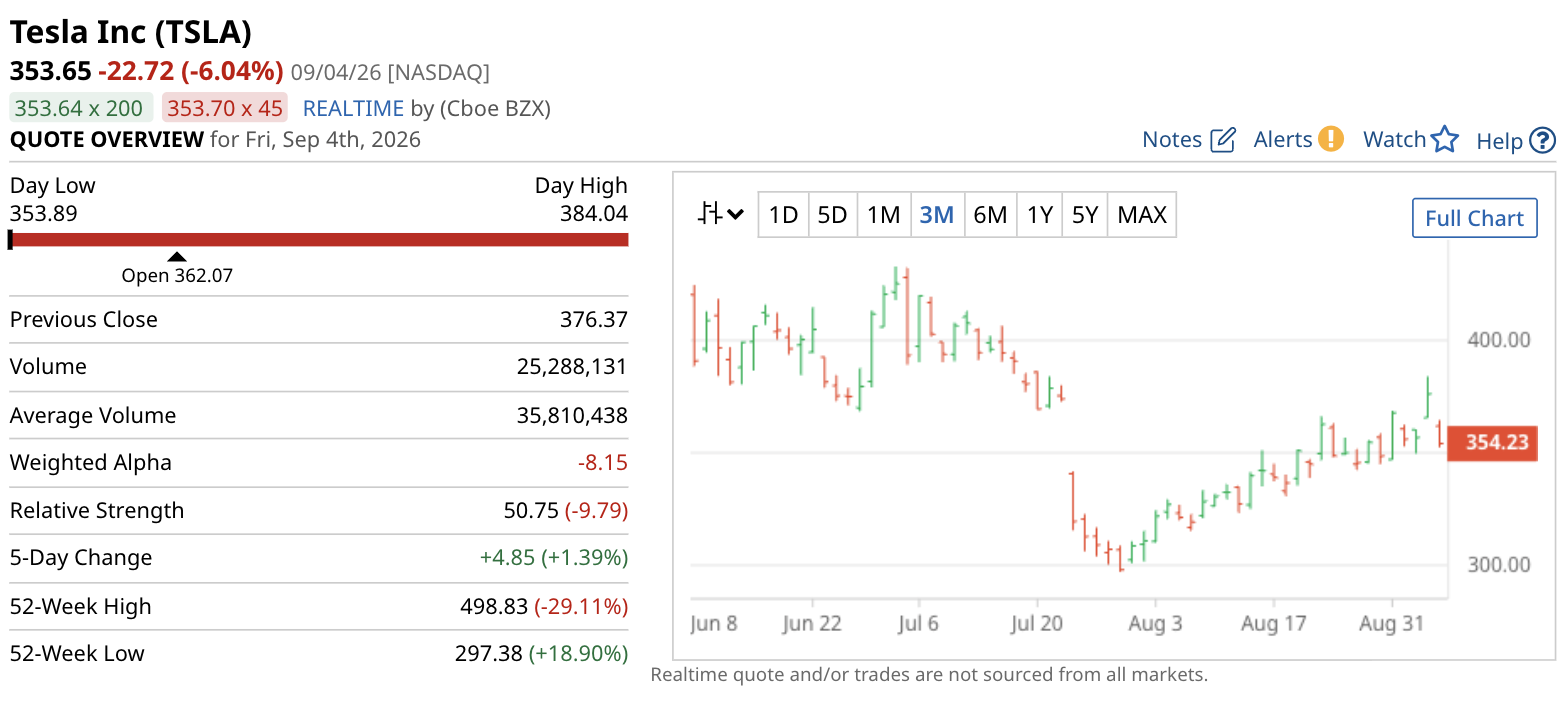
Investors reacted accordingly. Tesla shares fell roughly 6% on Sept. 4 after rising more than 5% in the previous session ahead of the launch. That reaction makes sense because Tesla's valuation depends heavily on future businesses, not just today's automotive sales.
CEO Elon Musk has a goal of producing 2 million Cybercabs annually, which would equate to about 38,000 vehicles a week. The Cybercab could eventually become a major asset if Tesla can manufacture thousands of vehicles, obtain regulatory clearance, and demonstrate reliable driverless operation. But 45 registered Cybercabs do not establish that business yet.
In Musk's defense, during Tesla's second-quarter earnings conference call, he did tell analysts the company needed "to accumulate driving data that is specific to the Cybercab before we can put a lot of them on the road." Still, Musk could have managed investor expectations better ahead of the launch.
Key Takeaway
In short, investors should treat the Austin launch as a proof-of-concept milestone, not proof that Tesla has won the robotaxi race. Waymo's 500,000 weekly rides show what commercial scale looks like, while Tesla's 45 Cybercabs show how far the company still has to go. The NHTSA investigation adds another hurdle.
For Tesla shareholders, the smarter approach is to demand evidence of fleet growth, regulatory clearance, and recurring robotaxi revenue before assigning the Cybercab the enormous valuation its story currently implies.
On the date of publication, Rich Duprey did not have (either directly or indirectly) positions in any of the securities mentioned in this article. All information and data in this article is solely for informational purposes. For more information please view the Barchart Disclosure Policy here.