


US consumer stocks are suddenly tied to big political promises, with talk of a US$5,000 cash payment to every adult, shifting oil price rhetoric and higher global interest rates all hitting at once. That mix could change how you think about discretionary shares, because fresh money in household accounts can quickly seep into travel, retail, dining and e commerce. This article walks through 3 stocks from the screener that appear positively exposed to this potential stimulus story.
The three stocks covered below are only a first pass on the idea. The full screen actually throws up 31 more U.S. consumer discretionary companies with similarly interesting stories around potential fiscal stimulus exposure.
To size up that broader group, head straight into the U.S. Consumer Discretionary Stocks Leveraged to Fiscal Stimulus screener to identify, compare and analyze your own highest conviction candidates.
Neighborhood Intelligence (NXH)
Overview: Neighborhood Intelligence runs a primarily online retail platform for home goods and accessories, where discretionary purchases can quickly respond to extra cash in shoppers' pockets.
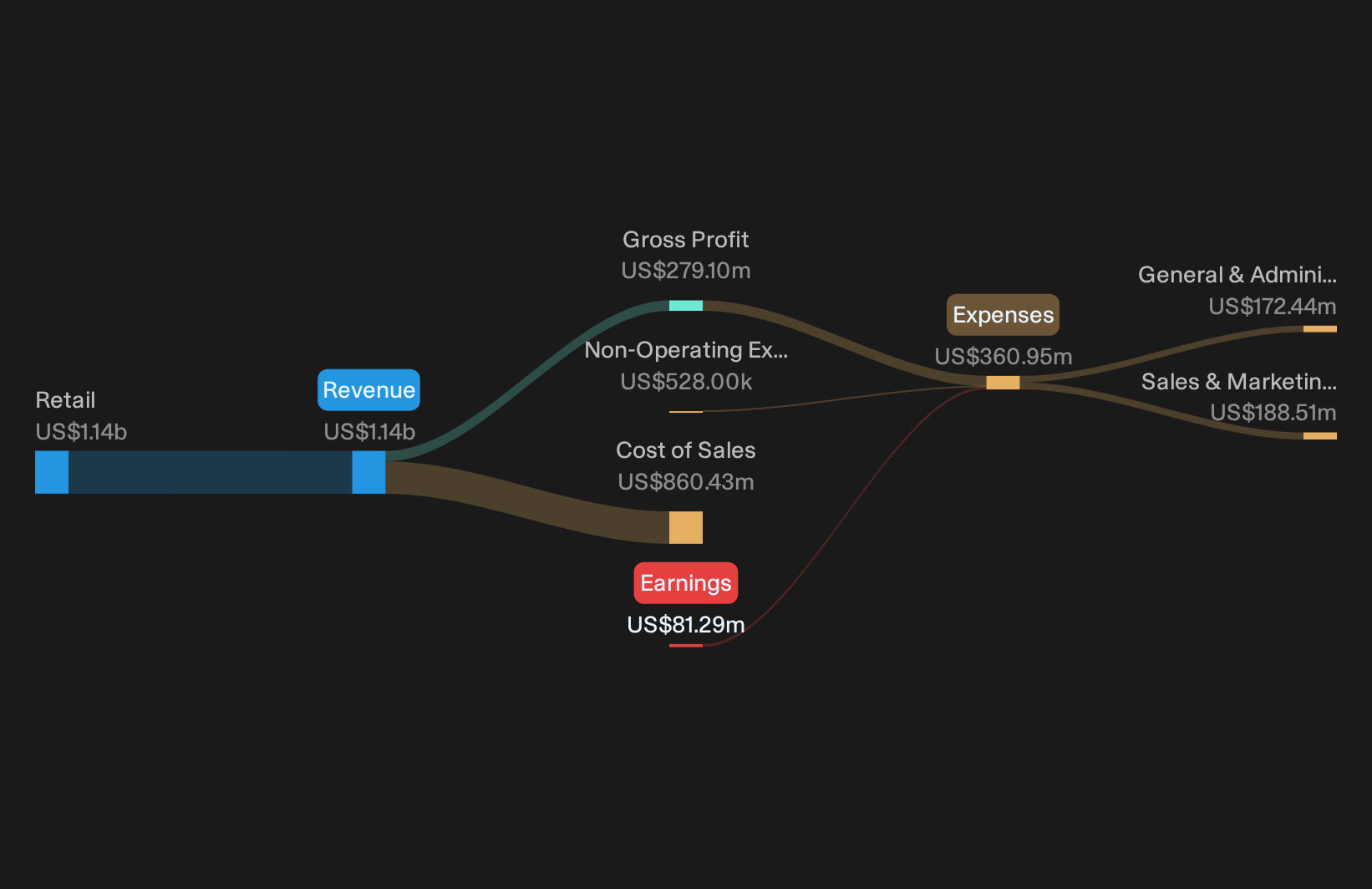
Operations: Neighborhood Intelligence reports US$1.1 billion in Retail revenue, with all of it generated from customers in the United States.
Market Cap: US$367 million
For a screener built around potential fiscal stimulus, Neighborhood Intelligence fits neatly, since its e-commerce focus ties directly into how quickly households might redirect fresh cash into home upgrades, gifting, and everyday comfort buys.
"The acceleration of omni-channel strategies, including integration of in-store and online experiences, and the development of partnerships and asset-light licensing models (such as the Canadian IP deal and neighborhood store formats) leverages the trend toward e-commerce penetration while mitigating risks from declining physical retail, offering upside to both revenue growth and asset utilization returns."
What happens to Neighborhood Intelligence’s margin profile if a single pressure point on how those online customers are financed shifts direction?
If that funding pressure matters to you, read the full narrative for Neighborhood Intelligence to see how Neighborhood Intelligence’s omni channel push could accelerate or stall under different financing conditions.
Citi Trends (CTRN)
Overview: Citi Trends is a value-focused retailer offering affordable apparel, footwear, accessories and home goods to low and middle income U.S. households.
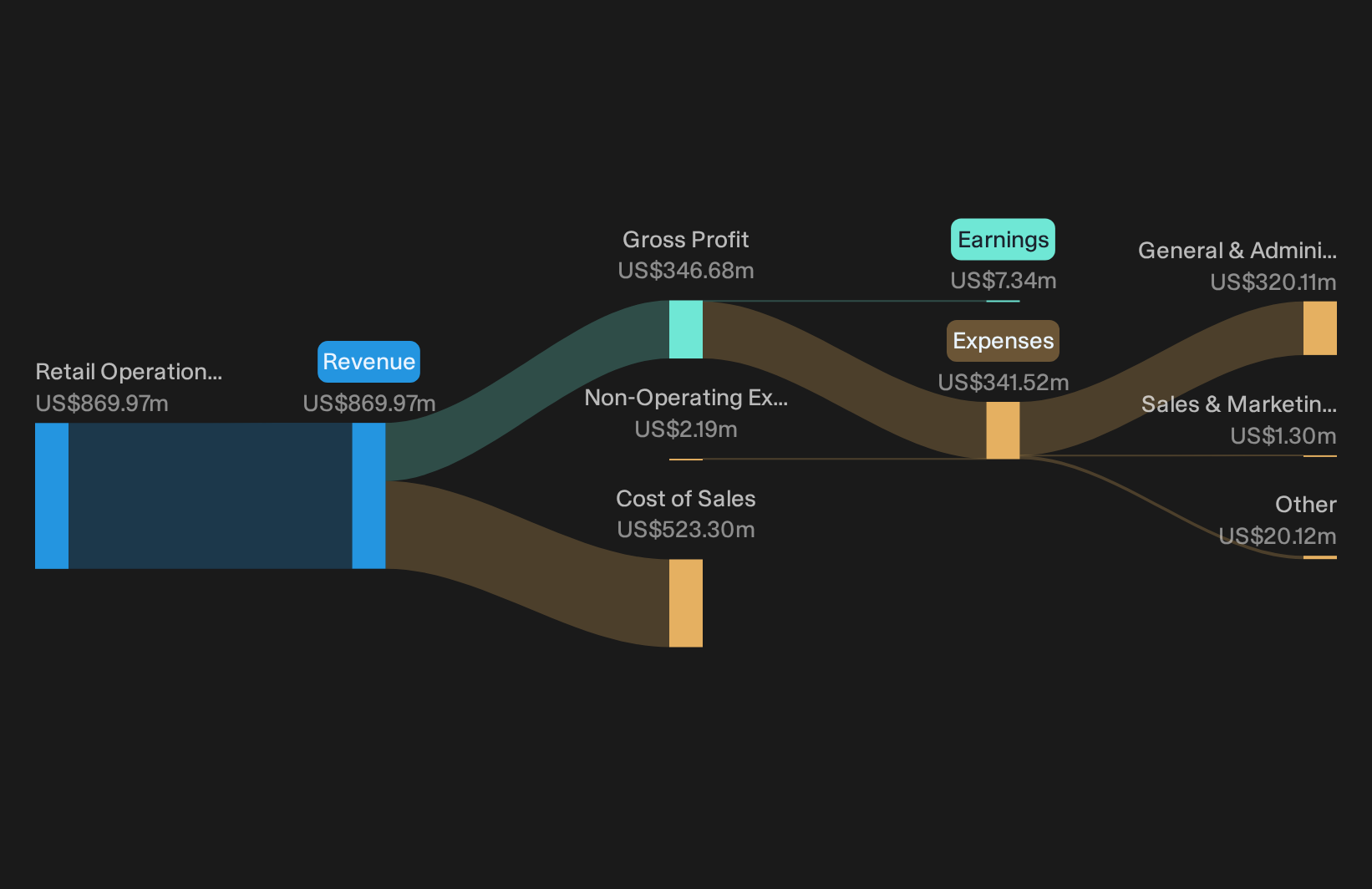
Operations: Citi Trends generates US$870 million in Retail Operations revenue, all from shoppers across the United States.
Market Cap: US$536 million
Citi Trends sits right in the crosshairs of this fiscal stimulus theme, because its neighborhood stores cater directly to budget conscious shoppers whose clothing and home purchases can jump when lump sum cash hits their bank accounts.
"Expansion of neighborhood based stores in proven demographic markets, with plans to reach roughly 650 locations by 2027, is expected to build on recent double digit traffic and support revenue growth and higher EBITDA."
What happens to Citi Trends’ earnings power if one pressure point on low income shopper budgets suddenly eases at the same time?
If that inflection point matters to you, the full narrative for Citi Trends outlines how Citi Trends’ stimulus exposure, traffic trends, and margin risks could be mispriced by the market.
Carvana (CVNA)
Overview: Carvana runs a U.S. online marketplace where shoppers can search, finance and purchase used cars, a big-ticket discretionary outlay that is highly exposed to any one-time cash injections.
Operations: Carvana reports US$25.1b in Retail revenue from gasoline and auto dealers, with 100% of that turnover coming from U.S. customers.
Market Cap: US$83.3b
Carvana sits at the sharp end of this stimulus theme because a single lump sum in a household bank account can quickly turn a postponed used car purchase into a completed online order with bundled financing.
"The company has a long history of operating with negative cash flow followed with rapid debit expansion, and unusually aggressive revenue recognition practices that raise questions about the sustainability of its margins."
What happens to Carvana’s improving profitability profile if one crucial assumption about how those vehicle purchases are funded suddenly shifts direction?
That funding shift is the real hinge for Carvana, and the full narrative for Carvana describes how balance sheet strain, customer financing and potential upside could be decoupling faster than headlines suggest.

Seeking Alternatives Before Momentum Flies
Fresh ideas often move first. By the time every investor notices a breakout, the most attractive entry point may have slipped away. Scan these under the radar lists while it matters and consider your options now.
- Target resilient compounders by tracking 10 resilient stocks with low risk scores that aim to participate in market upside while attempting to limit portfolio drawdowns when sentiment suddenly drops.
- Explore the AI build out by scanning 89 AI infrastructure stocks powering data centers, chips and networking before momentum traders become more active in the move.
- Consider the metals story by reviewing 29 top copper producer stocks tied to grid upgrades and electrification themes that many portfolios may still overlook today.
This article by Simply Wall St is general in nature. We provide commentary based on historical data and analyst forecasts only using an unbiased methodology and our articles are not intended to be financial advice. It does not constitute a recommendation to buy or sell any stock, and does not take account of your objectives, or your financial situation. We aim to bring you long-term focused analysis driven by fundamental data. Note that our analysis may not factor in the latest price-sensitive company announcements or qualitative material. Simply Wall St has no position in any stocks mentioned.
Have feedback on this article? Concerned about the content? Get in touch with us directly. Alternatively, email editorial-team@simplywallst.com