


Range Resources has posted a strong 115.5% total return over the past five years, yet several valuation checks still flag the stock as cheap relative to its estimated intrinsic value. The Discounted Cash Flow (DCF) estimate points to a 33.4% discount to intrinsic value and market multiples also lean supportive, so the current share price raises the question of how much of the recent progress is already baked in.
- Over the past 5 years, Range Resources has returned 115.5%, which puts long term holders in a strong position and raises the bar for any new upside case.
- Efficient drilling, strong free cash flow and better realized pricing for liquids can support the valuation, while any setback in execution or weaker commodity prices may pressure cash generation that underpins the current equity story.
- The broader checks lean cheap, with a high value score of 5 out of 6 and both intrinsic value and earnings multiples pointing to undervaluation.
The issue now is whether Range Resources is priced with enough of a cushion for investors who are considering adding exposure after such a strong multi year run.
Scan beyond Range Resources and spot other high quality undervalued setups using 31 high quality undervalued stocks that combine supportive P/E signals with a discount to intrinsic value.
Is Range Resources a Bargain on Cash Flow?
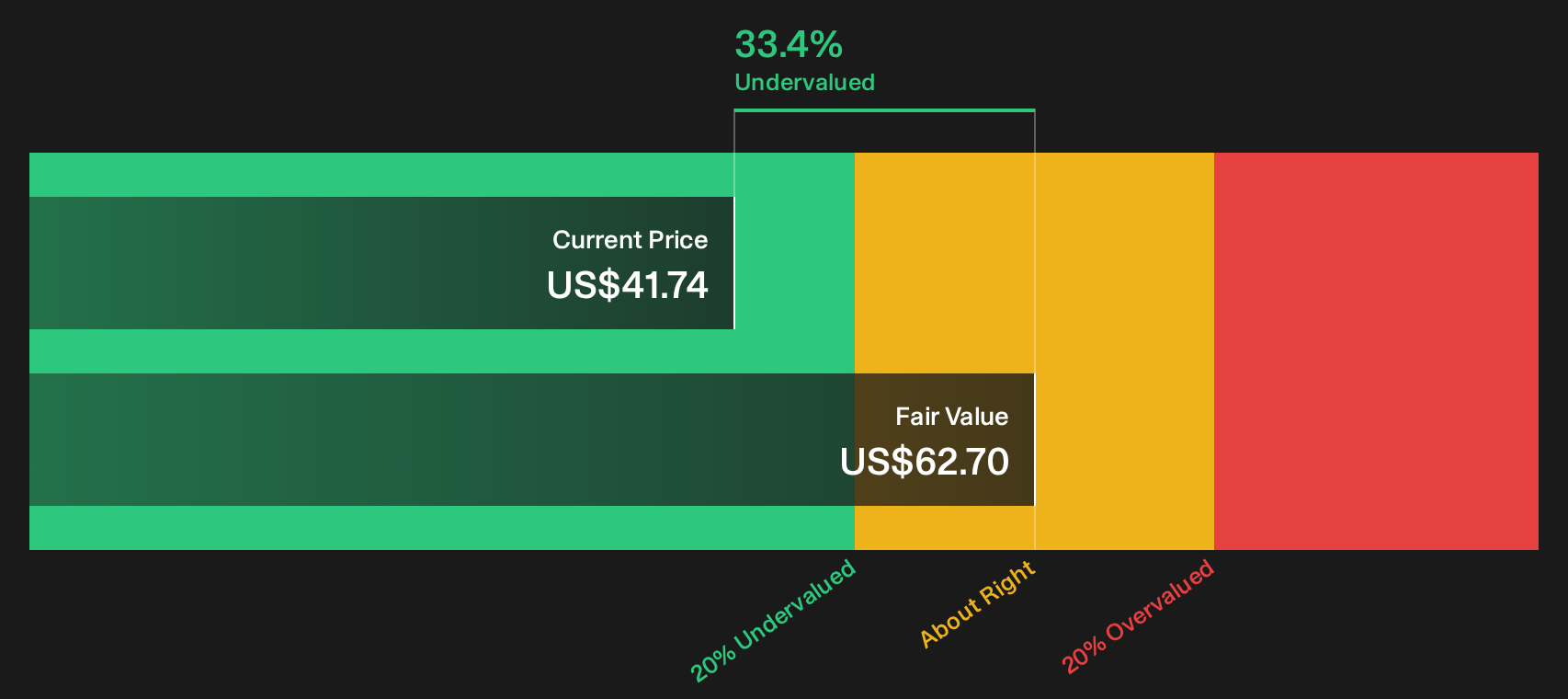
The Discounted Cash Flow (DCF) model here values Range Resources on the cash it is expected to generate for shareholders. Latest twelve month free cash flow sits at about $605 million, and the projections assume this stream grows from current levels rather than increasing sharply or declining. On those inputs, the 2 Stage Free Cash Flow to Equity model lands on an estimated intrinsic value of about $63 per share.
Compared with the current market price, that implies the stock trades at roughly a 33.4% discount, so the cash generation profile points to Range Resources looking undervalued on this framework. The recent Q2 report, which paired free cash flow with record drilling efficiencies and richer NGL pricing, helps explain why the DCF supports a higher value than where the equity currently changes hands.
On this cash flow view, Range Resources appears undervalued relative to what its projected free cash generation would justify.
Our Discounted Cash Flow (DCF) analysis suggests Range Resources is undervalued by 33.4%. Track this in your watchlist or portfolio, or discover 31 more high quality undervalued stocks.
Is Range Resources a Bargain on Earnings?
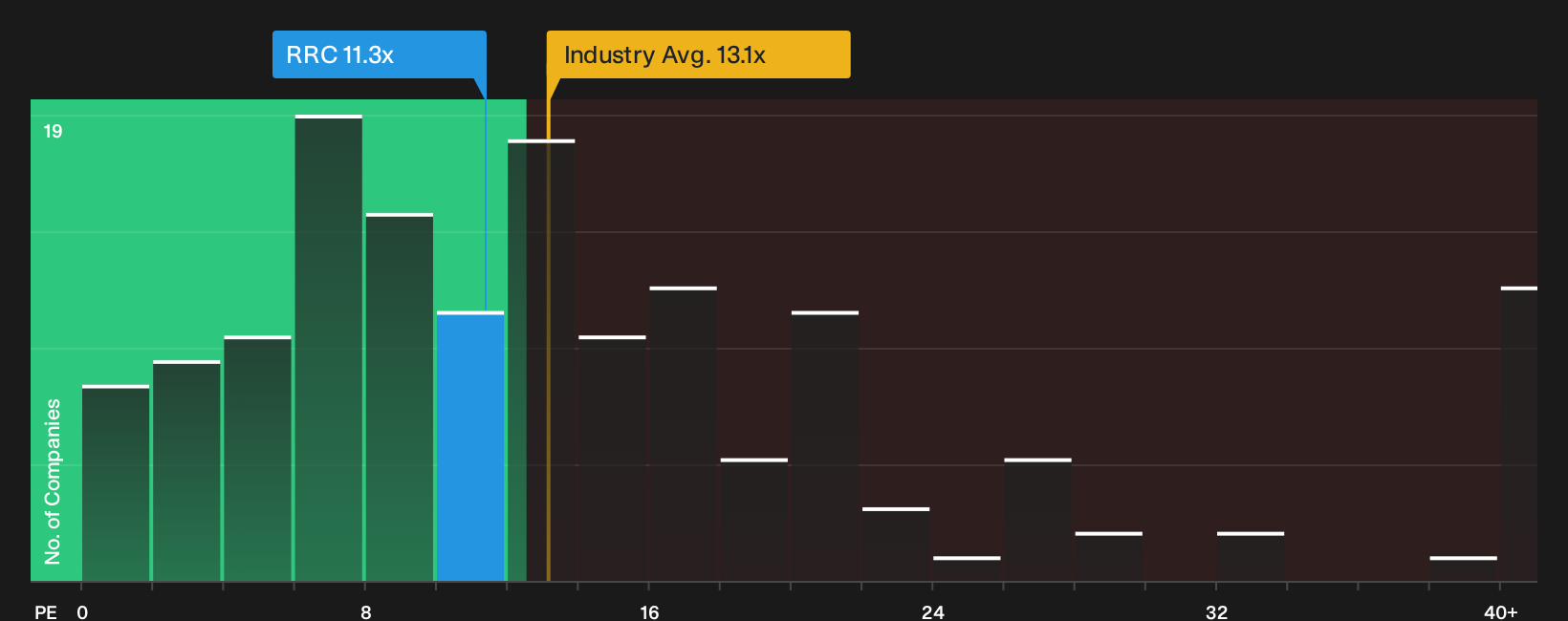
The P/E ratio suits Range Resources because earnings remain a key anchor for how investors judge upstream producers. On this score, the stock trades on about 11.3x earnings, which is roughly in line with the 11.5x peer average and below the wider Oil and Gas industry at about 13.1x. That keeps the current pricing from looking stretched relative to either close competitors or the broader sector.
The fair P/E multiple for Range Resources, based on its profile, is estimated at 15.9x. Compared with the 11.3x the market currently applies, that is a meaningful gap and points to the shares pricing in a discount against what this framework suggests. In other words, earnings are not being valued as highly as the model would expect for a business with these characteristics.
On the P/E yardstick, Range Resources looks undervalued, with its earnings carrying a lower multiple than this framework implies they should.
See what the numbers say about this price — find out in our valuation breakdown.
The Range Resources Narrative: What Would Justify Today's Price?
Simply Wall St Narratives pick up where the Range Resources valuation puzzle leaves off. They spell out which combinations of future growth, margins and earnings would need to play out for the stock to be worth materially more or less than today's price on the Community page. Rather than relying on a single multiple or model output, each narrative lays out the assumptions behind its fair value so you can compare those expectations with the financial results as they are reported.
Community views on Range Resources split sharply, with one camp leaning into new demand drivers and another focused on long term gas risks.
Bull case: 8% undervalued
"Rapidly expanding demand for natural gas from large-scale AI data centers and power infrastructure projects in Pennsylvania is expected to provide a durable new source of regional consumption for Range, which leverages its long-life Marcellus inventory and operational reliability, supporting sustained revenue growth and protecting net margins as regional pricing improves..."
Read the full Bull Case to see why Range Resources could be undervalued
Bear case: 13% overvalued
"Persistent overcapacity in U.S. shale gas production, combined with the risk of supply gluts from productivity gains, may keep domestic prices suppressed, squeezing Range Resources' profitability and resulting in structurally weaker free cash flow even as operating efficiencies improve..."
Read the full Bear Case to see why Range Resources could be overvalued
Do you think there's more to the story for Range Resources? Head over to our Community to see what others are saying!
The Bottom Line
Range Resources screens as undervalued on both the Discounted Cash Flow (DCF) intrinsic value estimate and its earnings multiple, so the debate now is less about whether it is cheap and more about why. The gap only closes if free cash generation and drilling efficiency remain resilient enough to justify that intrinsic value while the market is willing to lift the P/E closer to the fair ratio. The crux for investors is whether future gas demand and liquids pricing stay supportive enough to prevent the current discount from hardening into a value trap.
This article by Simply Wall St is general in nature. We provide commentary based on historical data and analyst forecasts only using an unbiased methodology and our articles are not intended to be financial advice. It does not constitute a recommendation to buy or sell any stock, and does not take account of your objectives, or your financial situation. We aim to bring you long-term focused analysis driven by fundamental data. Note that our analysis may not factor in the latest price-sensitive company announcements or qualitative material. Simply Wall St has no position in any stocks mentioned.
Have feedback on this article? Concerned about the content? Get in touch with us directly. Alternatively, email editorial-team@simplywallst.com