


UiPath stock is coming off a difficult run, with the share price far below its level five years ago, yet the valuation checks point to a company that screens cheap on both intrinsic value models and market multiples. The market is wrestling with whether recent business updates around AI orchestration justify that discount, or whether the past share price decline better reflects the risk.
- Over the past 5 years, UiPath has fallen about 74%, which puts a sharp spotlight on whether today’s price already bakes in a lot of pessimism.
- New automation and AI orchestration offerings, including platforms aimed at more complex workflows, can support the long term cash flow story, while slowing net new subscription momentum and tougher competition from larger software vendors may cap how much investors are willing to pay.
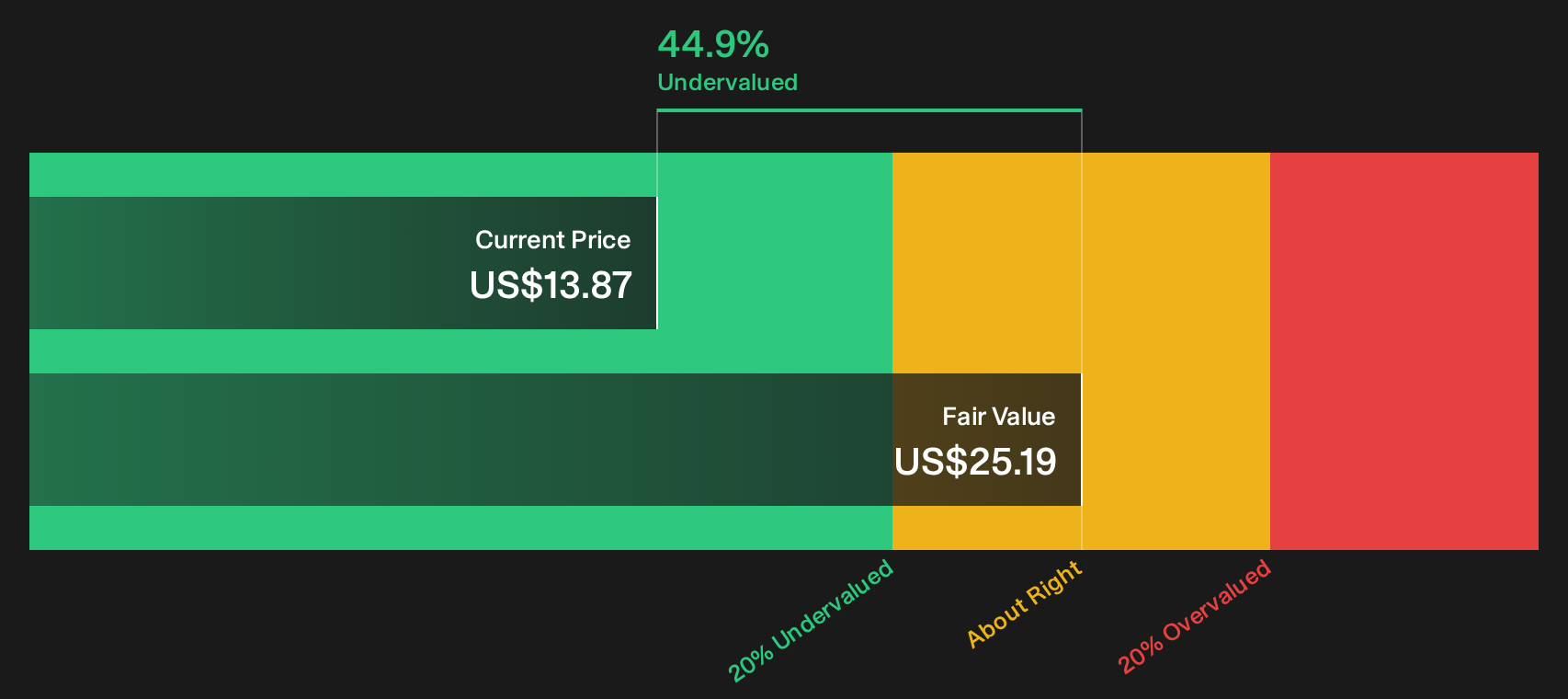
- On the combined checks, including a Discounted Cash Flow (DCF) intrinsic value estimate that sits about 45% above the market price and market multiples that also screen as cheap, UiPath looks broadly undervalued, with a high value score of 5 out of 6.
The issue now is whether UiPath’s current share price already reflects the growth and competitive risks, or if the gap to the intrinsic value estimate is wide enough to suggest mispricing.
Scan beyond UiPath and pressure test your thesis against 37 robotics and automation stocks that are also trying to turn AI orchestration and automation into long term cash flows.
Is UiPath Still Cheap on Cash Flow?
The Discounted Cash Flow (DCF) model here takes UiPath’s projected future free cash flows and discounts them back to today. UiPath has generated latest twelve month free cash flow of about $357.3 million, and the model assumes that these cash flows grow over time rather than shrink, which aligns with the long runway implied by its automation and AI orchestration focus.
On those inputs, the DCF points to an intrinsic value of about $25 per share, which sits above the prevailing market price and implies the stock is 44.9% undervalued. The recent launch of Maestro Case and the survey highlighting demand for AI orchestration help explain why the cash flow outlook in the model remains constructive even as the share price reacted to slowing net new ARR.
Overall, the DCF work indicates that UiPath stock currently appears undervalued relative to the cash flows analysts expect it to generate.
Our Discounted Cash Flow (DCF) analysis suggests UiPath is undervalued by 44.9%. Track this in your watchlist or portfolio, or discover 31 more high quality undervalued stocks.
Is UiPath a Bargain on Earnings?
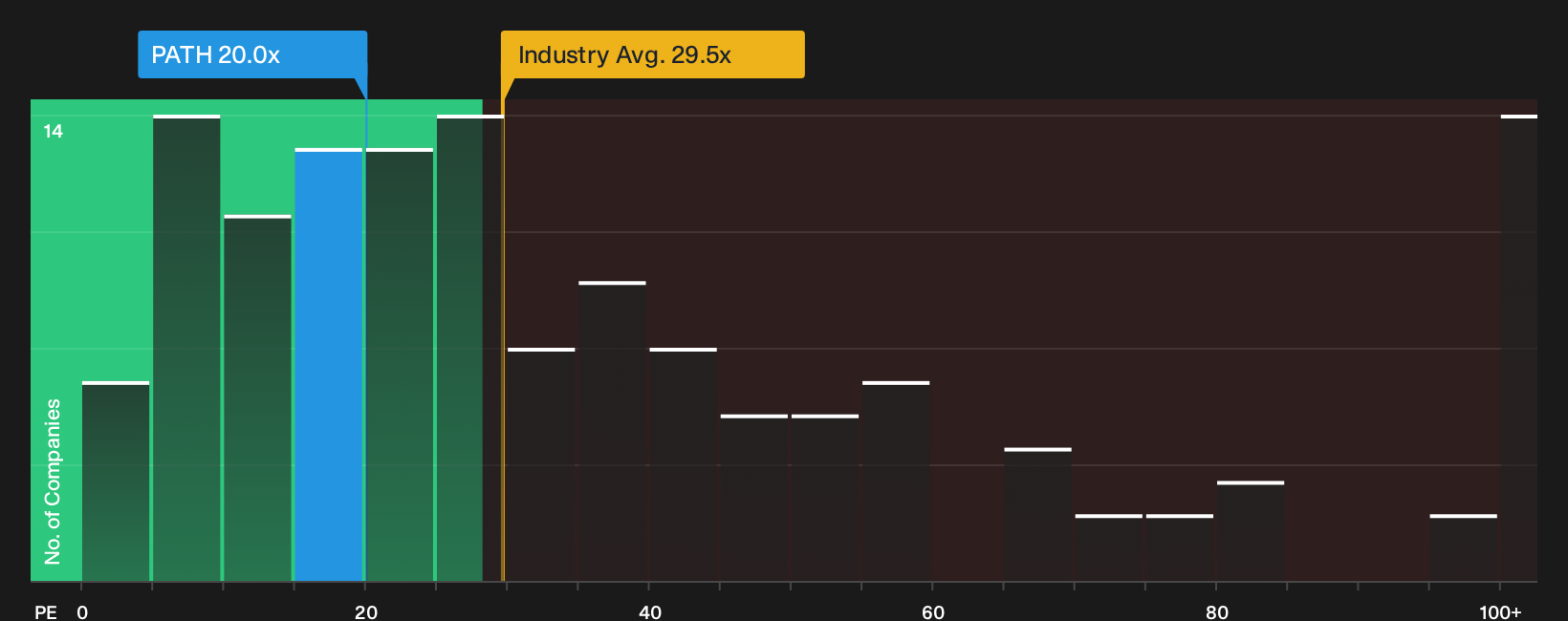
P/E fits UiPath because investors are ultimately paying for earnings power as the automation and AI orchestration story matures. On that yardstick, UiPath trades at about 20.0x earnings, which is below both the software industry average of roughly 29.5x and a peer group closer to 34.2x.
The fair P/E ratio implied by the model is about 30.5x, which is higher than where UiPath stock currently changes hands. That gap suggests the market is pricing in more risk around slowing net new ARR and competition than the earnings profile alone would indicate.
On the earnings multiple check, UiPath appears undervalued, with its current P/E ratio sitting well below both peers and the fair level implied by its fundamentals.
See what the numbers say about this price — find out in our valuation breakdown.
The UiPath Narrative: What Would Justify Today's Price?
UiPath’s valuation puzzle naturally leads to the Simply Wall St Narratives, which spell out what would need to happen to growth, margins and earnings for the stock to be worth significantly more or less than today’s quote, and they sit on the Community page. Each narrative treats fair value as a specific, testable view on UiPath’s business that you can watch over time, rather than a one off snapshot of the current numbers.
The UiPath community is split between those who still see a long runway in AI automation and those who think expectations already look full.
Bull case: 36% undervalued
"UiPath already serves more than half of the Fortune 500, has strong recurring revenue and is expanding its partnerships with major cloud providers..."
Read the full Bull Case to see why UiPath could be undervalued
Bear case: roughly fairly valued
"The ongoing geopolitical climate and government transitions have caused delays in deal closures, impacting UiPath's ARR expectations and potentially affecting short-term revenue growth..."
Read the full Bear Case to see why UiPath could be overvalued
Do you think there's more to the story for UiPath? Head over to our Community to see what others are saying!
The Bottom Line
UiPath screens as undervalued on both Discounted Cash Flow (DCF) work and earnings multiples, which points to a disconnect between the current share price and what the models imply. That gap only really closes if slowing net new ARR and competitive pressure prove more persistent than today’s assumptions around cash generation and profitability. For investors, the key question is whether UiPath can convert its AI orchestration push into durable demand without sacrificing discipline on costs. The crux of the debate is whether the current discount compensates for those execution and competition risks or whether it simply reflects them.
This article by Simply Wall St is general in nature. We provide commentary based on historical data and analyst forecasts only using an unbiased methodology and our articles are not intended to be financial advice. It does not constitute a recommendation to buy or sell any stock, and does not take account of your objectives, or your financial situation. We aim to bring you long-term focused analysis driven by fundamental data. Note that our analysis may not factor in the latest price-sensitive company announcements or qualitative material. Simply Wall St has no position in any stocks mentioned.
Have feedback on this article? Concerned about the content? Get in touch with us directly. Alternatively, email editorial-team@simplywallst.com