


High dividend stocks are back under the spotlight as 10-year Treasury yields hover near 4.85% and bond investors push up the hurdle rate for every future cash flow you might own. Cash-generative value stocks suddenly feel a lot more interesting when bond markets are questioning long term debt sustainability. This article unpacks 3 high dividend, defensive stocks from our screener that appear especially exposed to this rate driven story, potentially in a way that could be favorable for investors.
The three dividend stocks covered below are only a sample from this idea, and the full screen surfaced 22 more large caps with income profiles and risk characteristics that may be just as interesting for a long term portfolio.
If you want to quickly identify and analyze which of these yield heavy value opportunities best fit your own risk and return goals, head straight to the High Dividend, Cash-Generative Value Stocks in Defensive Sectors screener.
Ingredion (INGR)
Ingredion sits neatly in this high dividend, cash-generative screen because it runs a mature ingredients operation that leans on steady orders from food and industrial customers, which can matter a lot when higher bond yields push investors toward resilient cash flow stories.
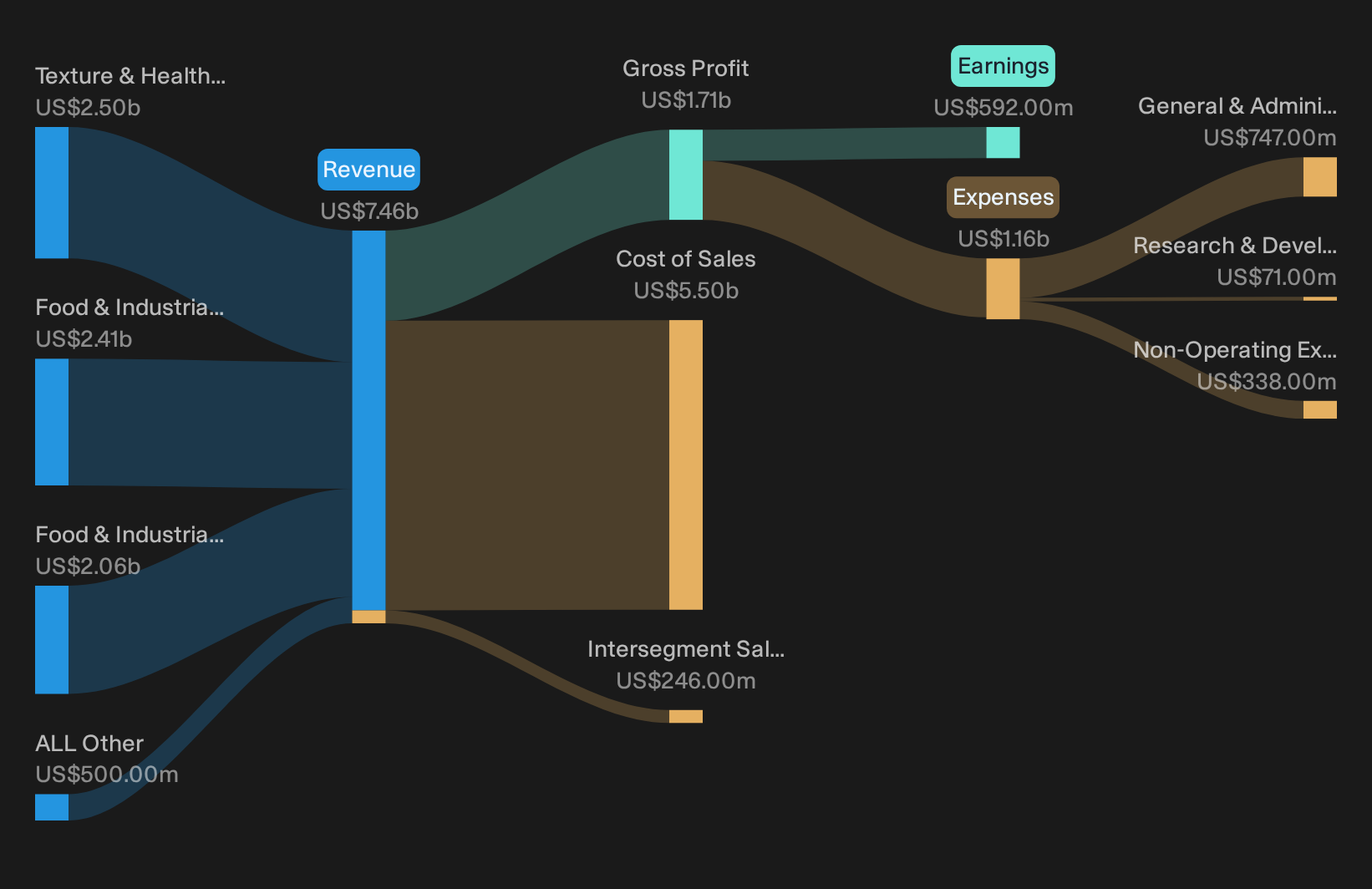
Ingredion manufactures sweeteners, starches, nutrition ingredients and biomaterials for food and industrial clients, with around US$2.5b from Texture & Healthful Solutions, US$2.4b from Food & Industrial Ingredients LATAM, US$2.1b from U.S./Canada and a further US$500 million from other activities. The stock is valued at about US$6.4b.
"The acquisition of Tate & Lyle has the potential to transform Ingredion from a predominantly commodity-oriented starch and sweetener processor into a more global specialty ingredients platform."
What happens to Ingredion’s returns if one key ingredient in that higher value mix does not shift the way income investors are quietly assuming?
If that assumption is wrong or delayed, read the full narrative for Ingredion to see how Ingredion’s mix shift, capital choices and dividend policy could still accelerate the story.
Comcast (CMCSA)
Comcast fits this high dividend, cash-generative screen as a large telecom and media group built around recurring connectivity and content fees, which matters when higher yields push investors toward durable cash flows and disciplined capital return policies.
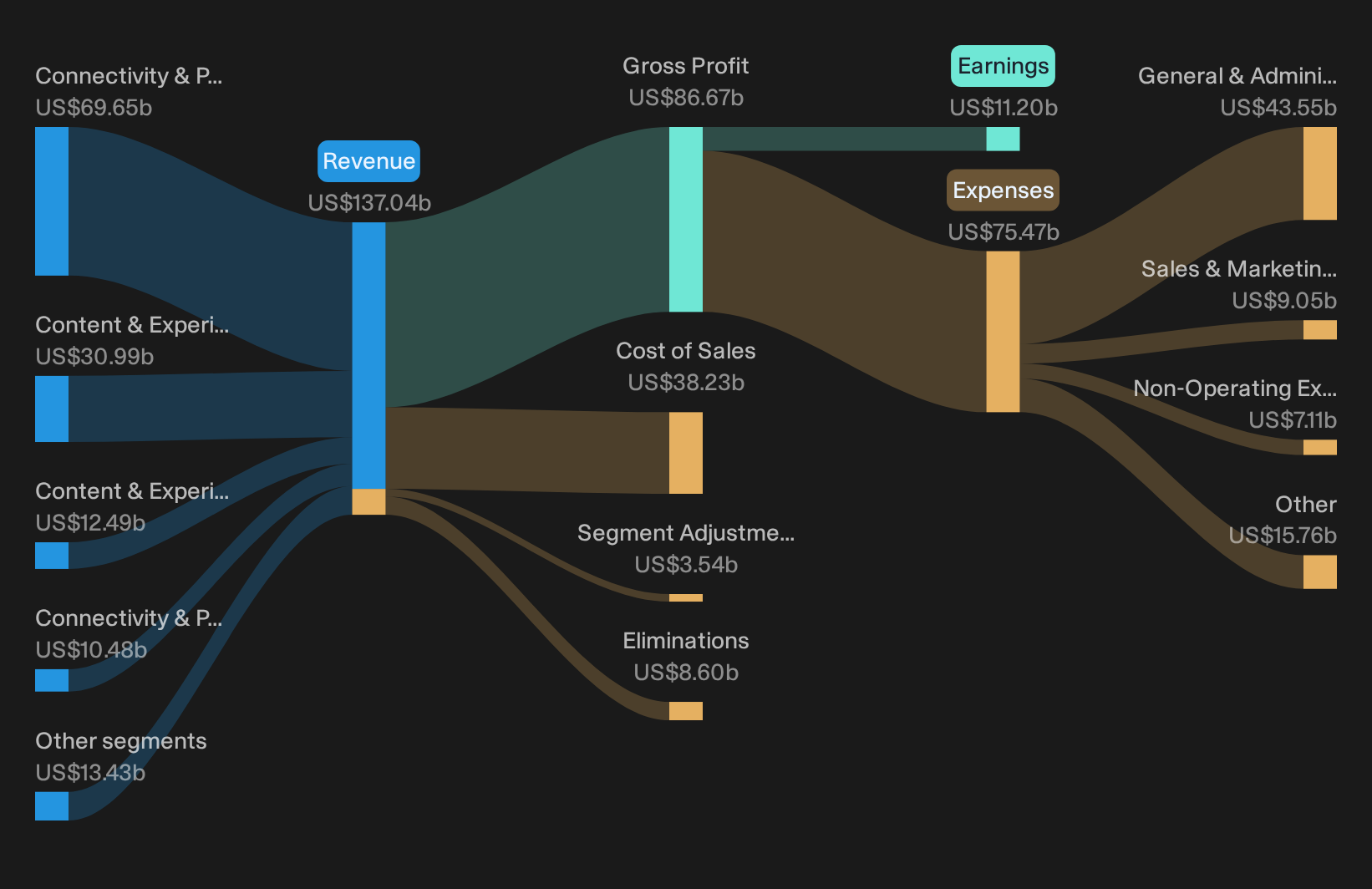
Comcast is a US$87.3b media and technology group whose core connectivity and content activities drive sizeable revenue, including about US$69.6b from Residential Connectivity & Platforms, US$31.0b from Media, US$12.5b from Studios, US$10.5b from Business Services Connectivity and US$10.4b from Theme Parks.
"Comcast's ongoing investments in network innovation, including rapid deployment of DOCSIS 4.0, expansion of gig+ broadband speeds across its footprint, and strategic focus on delivering intelligent WiFi and seamless mobile integration, are aligning with persistent increases in high-speed internet demand driven by hybrid work, connected homes, and cloud applications. This is likely to sustain subscriber growth and support ARPU expansion, directly benefitting revenue and margin durability."
What really tests that income story is how a single pressure on the balance sheet ultimately shapes Comcast’s room to keep rewarding shareholders.
That balance sheet pressure is exactly what the full narrative for Comcast unpacks, revealing how Comcast’s capital allocation could be quietly decoupling cash returns from headline leverage risk.
Archer-Daniels-Midland (ADM)
Archer-Daniels-Midland gives this high dividend, cash-generative screen exposure to the global food supply chain, with a business built on processing crops into ingredients and feed that underpin everyday consumption rather than rate-sensitive discretionary spending.
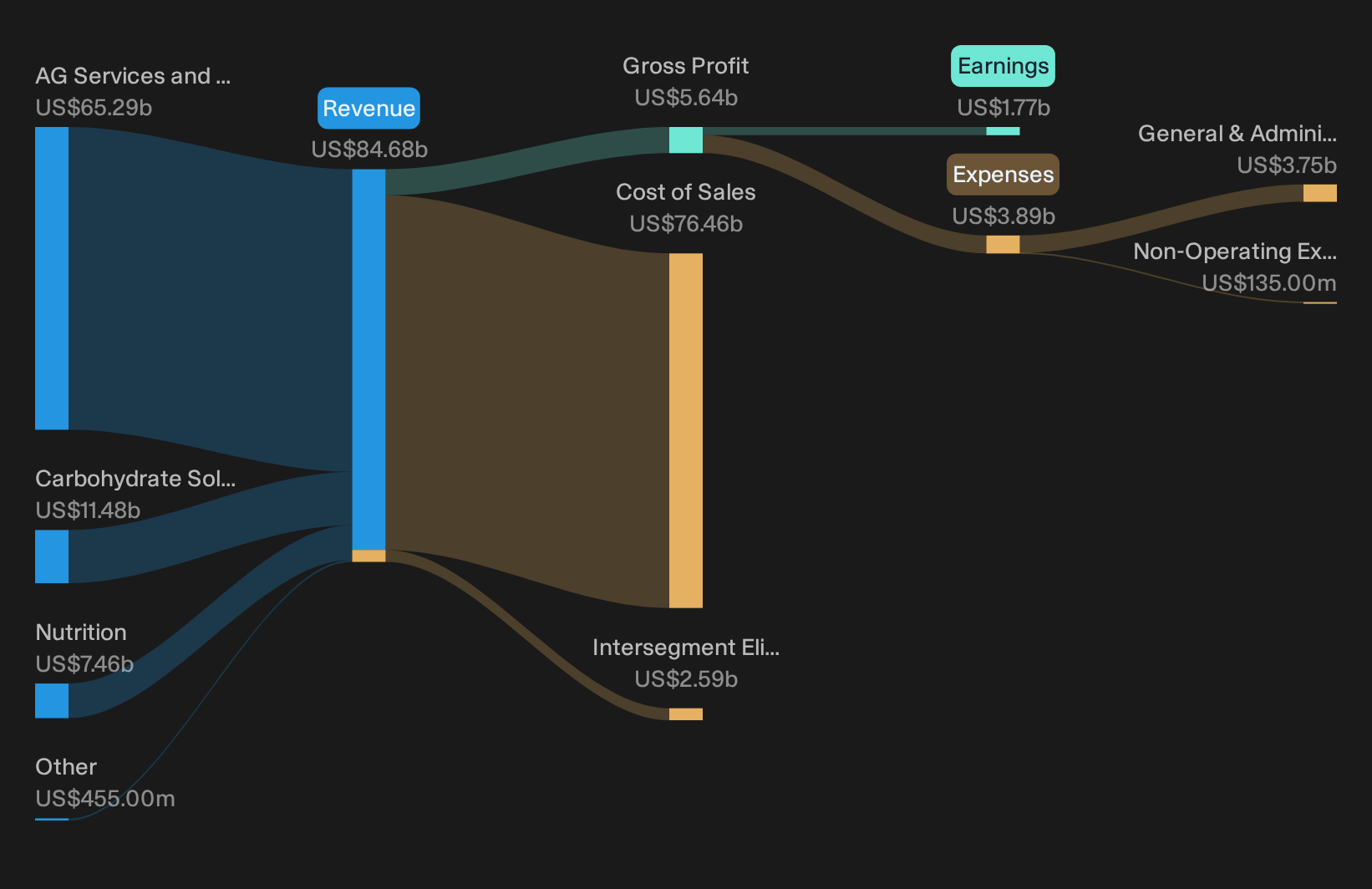
ADM runs a global agribusiness across Ag Services and Oilseeds, Carbohydrate Solutions and Nutrition, generating about US$65.3b from Ag Services and Oilseeds, US$11.5b from Carbohydrate Solutions, US$7.5b from Nutrition and US$455 million from other activities, with intersegment eliminations of US$2.6b, and the stock valued at roughly US$41.7b.
"Policy clarity and ongoing government support for biofuels, including the extension of the 45Z tax credit, favorable RVOs, and domestic feedstock incentives, are expected to drive increased soybean oil demand and improved crush margins, directly supporting ADM's revenue and net margins from late 2025 into 2026."
What really shapes how ADM’s dividend and buyback capacity evolves is how one less visible cost pressure filters through those future margin gains.
That quieter pressure is exactly what the full narrative for Archer-Daniels-Midland unpacks, showing how Archer-Daniels-Midland's cash engine could accelerate even if those margin gains arrive unevenly.
Seeking Alternatives Before The Crowd?
Fresh ideas move first. While others react to headlines, you can scan under the radar lists where momentum is building, prices are dropping and breakouts start forming. Act now.
- Hunt for mispriced strength by tracking 33 high quality undervalued stocks that pair sturdy cash flows with balance sheets built to handle surprises before the wider market catches on.
- Ride structural demand shifts through 39 power grid technology and infrastructure stocks tied to grid upgrades, electrification and critical infrastructure while these stories are still flying below broad investor attention.
- Target durable cash payouts using the 6 dividend fortresses that combine elevated yields with businesses built to keep funding distributions even when sentiment drops away.
This article by Simply Wall St is general in nature. We provide commentary based on historical data and analyst forecasts only using an unbiased methodology and our articles are not intended to be financial advice. It does not constitute a recommendation to buy or sell any stock, and does not take account of your objectives, or your financial situation. We aim to bring you long-term focused analysis driven by fundamental data. Note that our analysis may not factor in the latest price-sensitive company announcements or qualitative material. Simply Wall St has no position in any stocks mentioned.
Have feedback on this article? Concerned about the content? Get in touch with us directly. Alternatively, email editorial-team@simplywallst.com