


Alphabet stock is coming off a strong three year run, yet current valuation checks suggest the market price may still lag its intrinsic value based on a Discounted Cash Flow (DCF) estimate. With both intrinsic value work and earnings multiple comparisons pointing in the same direction, the key issue for investors is how much of Alphabet’s AI and infrastructure story is already reflected in today’s share price.
- Alphabet has returned 143.1% over the past three years, which puts recent share weakness into context as a pullback within a longer period of strong gains.
- Ongoing AI infrastructure spending, such as Google’s multi year data center and clean energy commitments, can support long term cash generation, while regulatory actions and legal settlements may weigh on profitability and investor sentiment.
- A high value score of 5 means the broader set of valuation checks currently leans cheap for Alphabet rather than expensive.
The stock’s next move may depend on whether Alphabet’s current price already reflects the intrinsic value indicated by the Discounted Cash Flow (DCF) estimate or still leaves a meaningful margin between market value and that assessment.
Spot potential next moves in AI infrastructure by comparing Alphabet’s setup with 89 AI infrastructure stocks.Is Alphabet Still Cheap on Cash Flow?
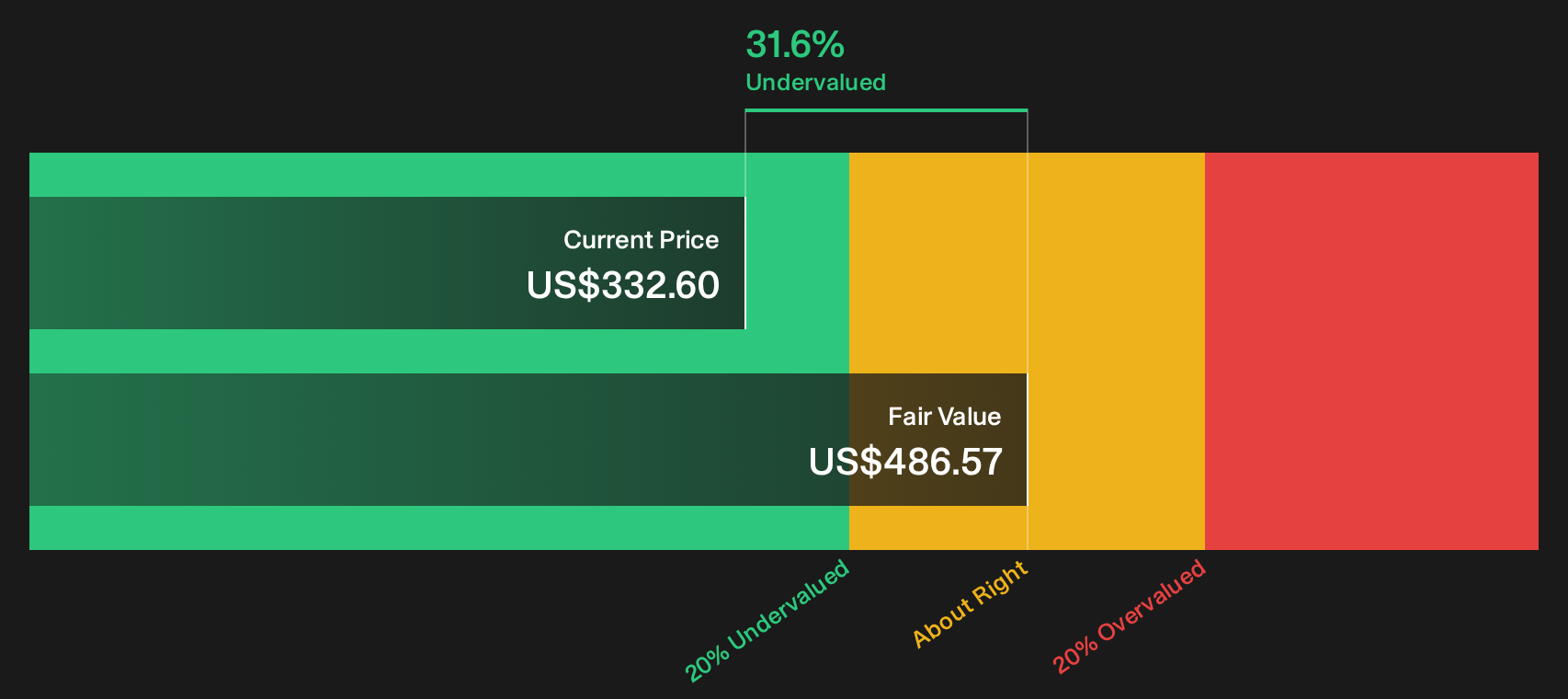
The Discounted Cash Flow (DCF) model here projects the value of Alphabet based on its future free cash generation. Alphabet is currently producing about $90.8b of free cash flow over the latest twelve months, and the model assumes those cash flows keep growing rather than shrinking. On that basis, the DCF estimate lands at an intrinsic value of about $486.57 per share.
Compared with the current share price, that estimate implies the stock trades at roughly a 31.6% discount to the DCF value, so Alphabet appears undervalued on this basis. Berkshire Hathaway’s decision to lift its Alphabet stake because of AI leadership helps explain why some long-term investors are comfortable focusing on the cash flow profile even as AI and regulatory spending requirements remain elevated.
On this DCF view, Alphabet appears undervalued, with the market price sitting well below the model’s estimate of intrinsic worth.
Our Discounted Cash Flow (DCF) analysis suggests Alphabet is undervalued by 31.6%. Track this in your watchlist or portfolio, or discover 33 more high quality undervalued stocks.
Is Alphabet a Bargain on Earnings?
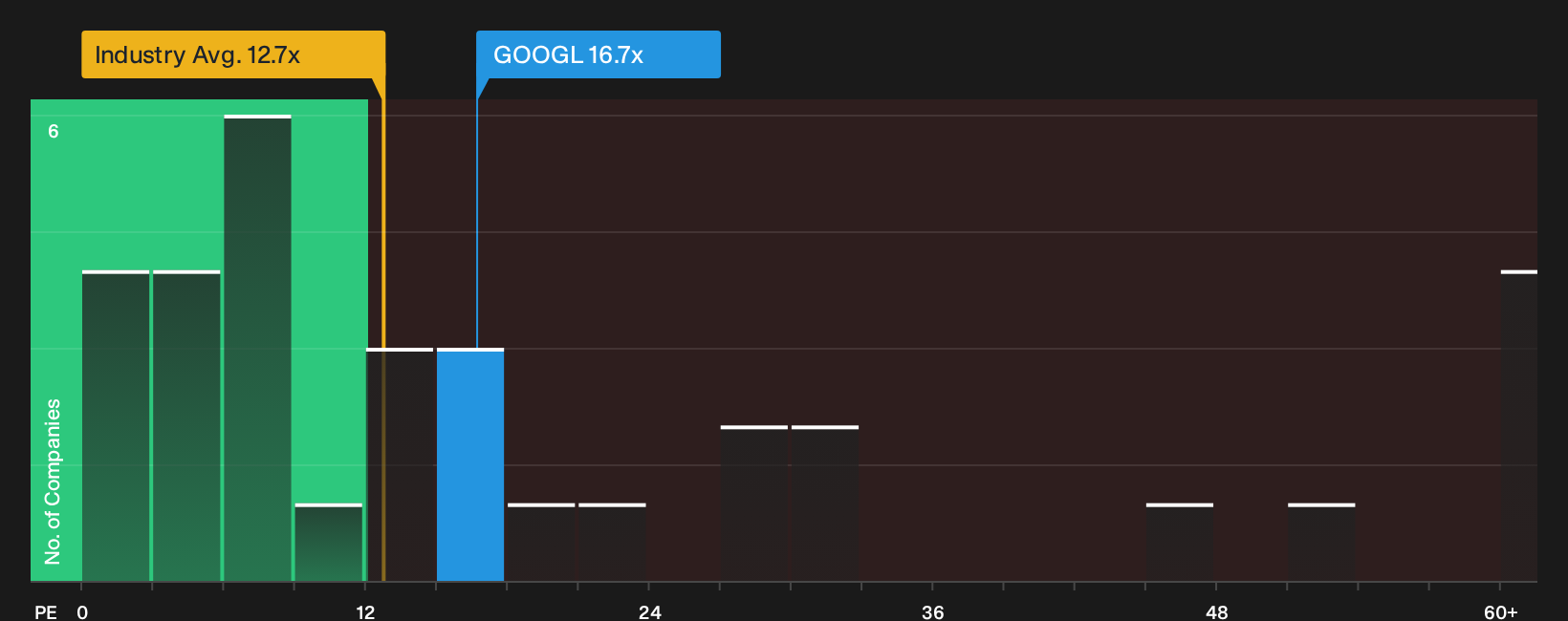
The P/E ratio works well for Alphabet because investors consistently focus on its earnings power from search, YouTube, and cloud. On that metric, the stock currently trades at about 16.7x earnings, which is below both the broader peer group at roughly 28.7x and the Interactive Media and Services sector at about 12.7x. The sector comparison shows Alphabet priced richer than the average listed rival, yet the peer group view indicates the market is not charging a premium for the ticker relative to other large tech platforms.
A fair P/E multiple that blends Alphabet’s size, profitability profile, sector, and risk comes out at about 28.3x. Compared with the current 16.7x, that is a wide gap and indicates investors are paying a lower price per dollar of earnings than this framework would usually infer for a business like Alphabet. For readers weighing the DCF work against simpler earnings metrics, both approaches are pointing in the same direction.
On this P/E yardstick, Alphabet currently appears undervalued compared with where its earnings multiple might typically sit.
See what the numbers say about this price — find out in our valuation breakdown.
The Alphabet Narrative: What Would Justify Today's Price?
Alphabet’s Simply Wall St Narratives pick up where the valuation work leaves off and describe which future paths for growth, margins, and earnings would justify a higher, lower, or similar price to today’s level. They use the same building blocks that sit behind the DCF and P/E checks. Rather than giving a single number, these scenarios clarify which future Alphabet story each valuation figure assumes, so you can monitor how the real business aligns with it over time on the Community page.
Alphabet investors are reading the same financials and AI headlines, yet the community narratives land on very different conclusions about value.
Bull case: 23% undervalued
"Alphabet is a compounding machine hiding under an ad empire, with AI monetization finally catching fire and Cloud turning profitable..."
Read the full Bull Case to see why Alphabet could be undervalued
Bear case: 64% overvalued
"Spending is nearly doubling while the cash engine shrinks, and that gap is the whole bear case in one picture..."
Read the full Bear Case to see why Alphabet could be overvalued
Do you think there's more to the story for Alphabet? Head over to our Community to see what others are saying!
The Bottom Line
Alphabet screens as undervalued on both the Discounted Cash Flow (DCF) intrinsic value estimate and the current P/E multiple, which points in the same direction rather than sending mixed messages. The crux is whether today’s discount compensates you for ongoing AI infrastructure spend, regulatory overhangs, and any pressure those might place on free cash generation. If you think Alphabet can keep converting its AI and cloud investments into durable cash flows without a lasting hit to profitability, the present valuation looks like a mispricing. If that thesis breaks, the apparent discount simply reflects the risk that current earnings quality and cash returns prove harder to sustain.
This article by Simply Wall St is general in nature. We provide commentary based on historical data and analyst forecasts only using an unbiased methodology and our articles are not intended to be financial advice. It does not constitute a recommendation to buy or sell any stock, and does not take account of your objectives, or your financial situation. We aim to bring you long-term focused analysis driven by fundamental data. Note that our analysis may not factor in the latest price-sensitive company announcements or qualitative material. Simply Wall St has no position in any stocks mentioned.
Have feedback on this article? Concerned about the content? Get in touch with us directly. Alternatively, email editorial-team@simplywallst.com