


Yamaha’s new drum hardware launch and why it matters for the stock
Yamaha (TSE:7951) has rolled out a next generation drum hardware lineup, adding three new products and refreshing multiple stands and cymbal accessories. Investors watching the musical instruments segment now have a fresh product catalyst to assess.
Despite the drum hardware launch grabbing attention, Yamaha’s share price has been under pressure in the short term, with a 7-day share price return of down 7.28% and a 30-day share price return of down 12.06%. At the same time, the 90-day share price return of 11.43% and 1-year total shareholder return of 23.97% indicate that recent momentum has cooled rather than collapsed.
Compare Yamaha’s latest drum hardware catalyst with other potential breakouts by scanning our curated list of 73 high quality undiscovered gems across global consumer and audio equipment makers.
Yamaha trades at a slight discount to analyst targets, yet at a much steeper gap to some fair value estimates. After the recent pullback, is that caution an overreaction or a reasonable margin of safety?
Most Popular Narrative: 2.2% Undervalued
Yamaha closed at ¥1,228.5 against a widely followed fair value view of about ¥1,256, which frames the drum hardware launch inside a slightly discounted story.
Recent investments in digital transformation, including new product launches (digital pianos, electronic drums, and music tech from the Silicon Valley base), are set to capitalize on global growth in digital music creation and music education supporting higher-margin revenue streams and future earnings growth.
Want to see the full playbook behind that valuation gap? The narrative leans on steady top line expansion, firmer margins, and a future earnings multiple that implies a cooler market mood than the growth profile suggests.
Result: Fair Value of ¥1,255.71 (UNDERVALUED)
Have a read of the narrative in full and understand what's behind the forecasts.
Still, Yamaha’s story can look fragile if currency swings continue to squeeze overseas earnings, or if high margin audio and piano demand in key regions stays weak.
Find out about the key risks to this Yamaha narrative.
Another View on Yamaha’s valuation
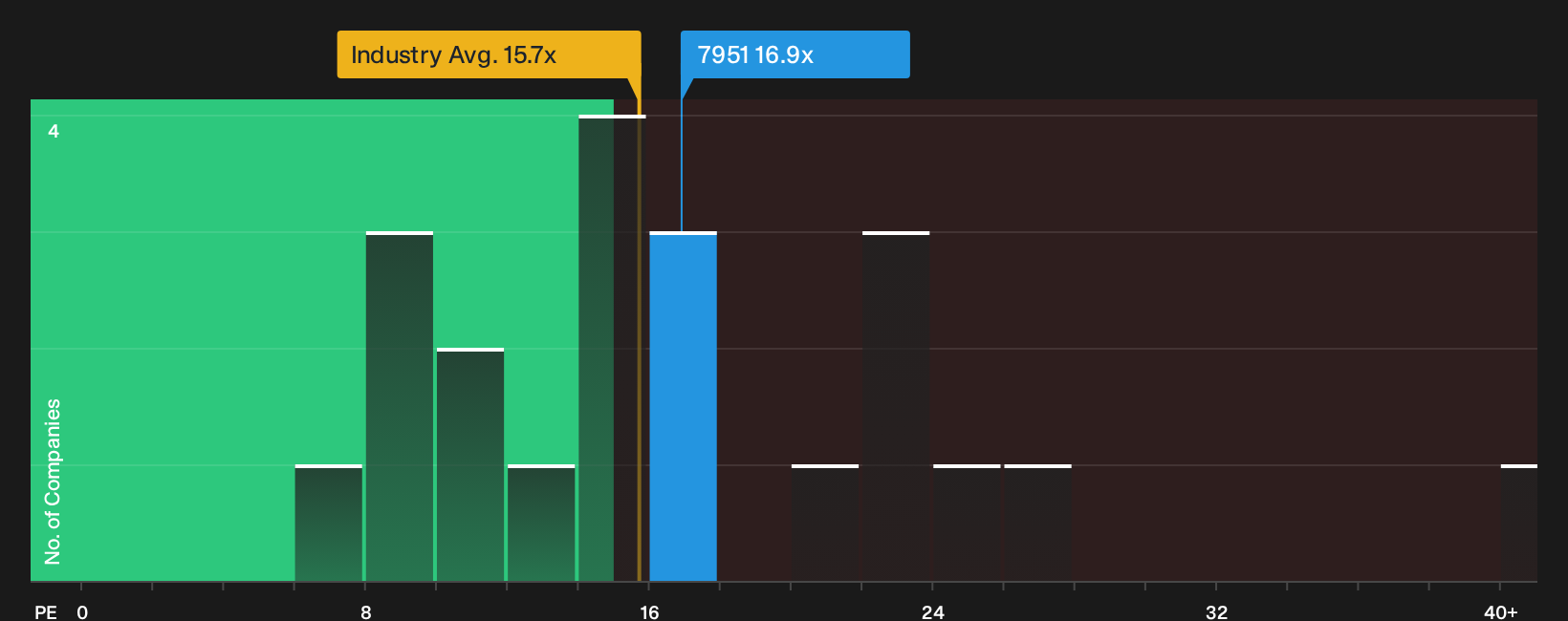
On simple earnings multiples, Yamaha looks less generous. The stock trades on a P/E of 16.9x, compared with 15.7x for the JP Leisure group and a fair ratio estimate of 16.4x, which points to a slimmer margin of safety than the headline undervaluation story suggests. Which signal do you trust more?
For a closer look at how those earnings multiples could adjust if sentiment or fundamentals shift, See what the numbers say about this price — find out in our valuation breakdown..
Next Steps
If the Yamaha story so far feels mixed to you, take that as a prompt to move quickly, review the details directly, and consider both the risks and potential rewards. You can start by reviewing the 4 key rewards.
Looking for more Yamaha investment ideas?
Once you have formed a view on Yamaha, broaden your watchlist with a few focused stock ideas that match different risk and income preferences.
- Target potential mispricings by scanning a hand picked pool of 16 high quality undervalued stocks that pair solid fundamentals with market caution.
- Strengthen your income stream by reviewing 19 dividend fortresses that combine higher yields with more robust track records.
- Prioritise resilience by filtering for 10 resilient stocks with low risk scores so you are not left chasing stability after the market has already moved.
This article by Simply Wall St is general in nature. We provide commentary based on historical data and analyst forecasts only using an unbiased methodology and our articles are not intended to be financial advice. It does not constitute a recommendation to buy or sell any stock, and does not take account of your objectives, or your financial situation. We aim to bring you long-term focused analysis driven by fundamental data. Note that our analysis may not factor in the latest price-sensitive company announcements or qualitative material. Simply Wall St has no position in any stocks mentioned.
Have feedback on this article? Concerned about the content? Get in touch with us directly. Alternatively, email editorial-team@simplywallst.com