


- Capital Southwest (NasdaqGS:CSWC) completed a fixed-income offering of $346 million in senior unsecured notes due 2031.
- The business reported fresh debt financing activities tied to the new notes, adding to its long-term funding tools.
- Shareholders at the recent annual meeting approved an increase in authorized share capital for future equity issuance flexibility.
- The 2031 senior unsecured notes and higher authorized share count sit alongside broader trends our research has identified for Capital Southwest. Check out 3 warning signs (3 major) that Capital Southwest investors should know about.
This fixed-income move is far from isolated, as other companies with similar capital plans also feature in 6 dividend fortresses.
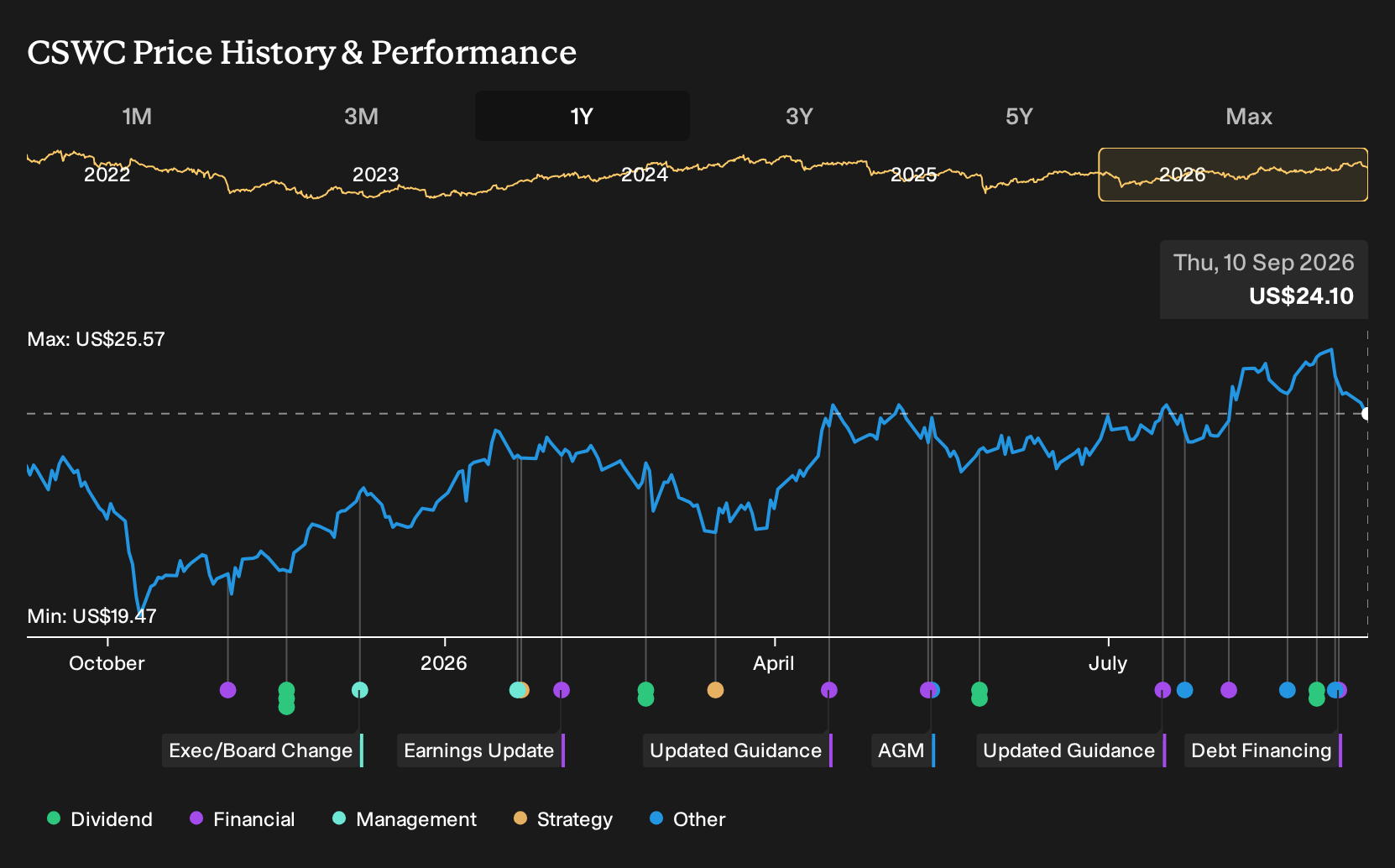
Capital Southwest operates as a US business development company in the Capital Markets industry. This means it provides financing to smaller and mid sized businesses that often rely on non bank lenders. For a lender of its roughly $1.5b size, fresh fixed income and equity tools directly shape how it can structure future funding to portfolio companies.
See how Capital Southwest's balance sheet measures up.
What exactly has Capital Southwest added to its funding toolkit?
Capital Southwest has issued US$346.4 million of 6.750% senior unsecured notes due September 15, 2031, with a US$350 million face amount priced at 98.985% and callable features. Alongside that, it amended its senior secured credit facility, lifting lender commitments to US$595 million, extending the revolving period and maturity to 2030 and 2031, and trimming margins and unused fees to lower borrowing costs.
How might this affect leverage, debt costs and financial flexibility?
The fixed coupon notes lock in long term funding, while the cheaper, upsized credit facility offers a revolving pool of bank capital that can flex with loan demand. Taken together, these moves widen Capital Southwest’s liquidity options, but they also raise the importance of covering interest, especially since interest payments are currently flagged as not well covered by earnings and the dividend is not well covered by cash flows.
Does this financing shift change the Capital Southwest Narrative?
The refreshed funding stack aligns with the Narrative’s focus on expanded credit access and a second SBIC license as key catalysts. It also sits against risks around equity issuance and dividend coverage. The higher authorized share count gives management room to raise equity, which can support growth but also keep per share outcomes sensitive to issuance pace and pricing.
See how these catalysts shape Capital Southwest's path to a $24.90 fair value.
What should investors watch next to judge if this balance sheet move is working?
The clearest test will be interest coverage and dividend sustainability over the next few reporting periods as the 6.750% notes and larger credit facility flow through results. Investors can monitor reported net investment income versus interest expense, the coverage of both regular and supplemental dividends, and any actual use of the newly authorized shares.
One more thing Capital Southwest investors should check
Headline profit can look clean while the underlying earnings engine tells a different story. Internal checks have flagged an issue in how Capital Southwest’s reported results are built, and it is worth understanding before you rely on the figures. See what our checks flag about the quality of Capital Southwest's earnings.
This article by Simply Wall St is general in nature. We provide commentary based on historical data and analyst forecasts only using an unbiased methodology and our articles are not intended to be financial advice. It does not constitute a recommendation to buy or sell any stock, and does not take account of your objectives, or your financial situation. We aim to bring you long-term focused analysis driven by fundamental data. Note that our analysis may not factor in the latest price-sensitive company announcements or qualitative material. Simply Wall St has no position in any stocks mentioned.
Have feedback on this article? Concerned about the content? Get in touch with us directly. Alternatively, email editorial-team@simplywallst.com