


Record US diesel at more than $6 a gallon is hitting trucks, planes, and farms at the same time, and that kind of fuel shock can quickly reshape how goods move across North America. Investors watching railroads and intermodal freight operators sense both risk and potential opportunity as shippers rethink routes and costs. This article walks through three US rail and intermodal stocks exposed to this news and what that could mean for your portfolio.
The rail and intermodal stocks covered below are only a starting sample, and the full screen surfaced 20 more US and Canadian freight companies with equally compelling narratives not covered here. To go wider than this short list, analyze the full US rail and intermodal universe using the US Railroads and Intermodal Freight Operators screener.
CSX (CSX)
CSX sits at the center of the rail and intermodal theme investors are focusing on, with a network that allows freight to shift off long haul trucks and onto trains when diesel prices rise. The business spans containers, bulk goods, and coal exports.
CSX operates a large eastern US rail freight network, with rail operations generating about US$13.7b of revenue and trucking contributing roughly US$847 million. These operations are supported by intermodal terminals, drayage, and rail to truck transfer services, and the group carries a market value of around US$90.8b.
"Heavy reliance on cost programs and more than 100 separate efficiency initiatives means any slowdown in execution or reversal of recent PS&O and labor savings could cap future margin gains and limit earnings progression once early wins are exhausted."
What happens to CSX’s earnings power if a single key assumption about future freight conversion and pricing strength starts to fray?
That pressure point is exactly where CSX’s story gets interesting, and the full narrative for CSX explains how efficiency moves and freight mix could reshape its earnings profile.

Norfolk Southern (NSC)
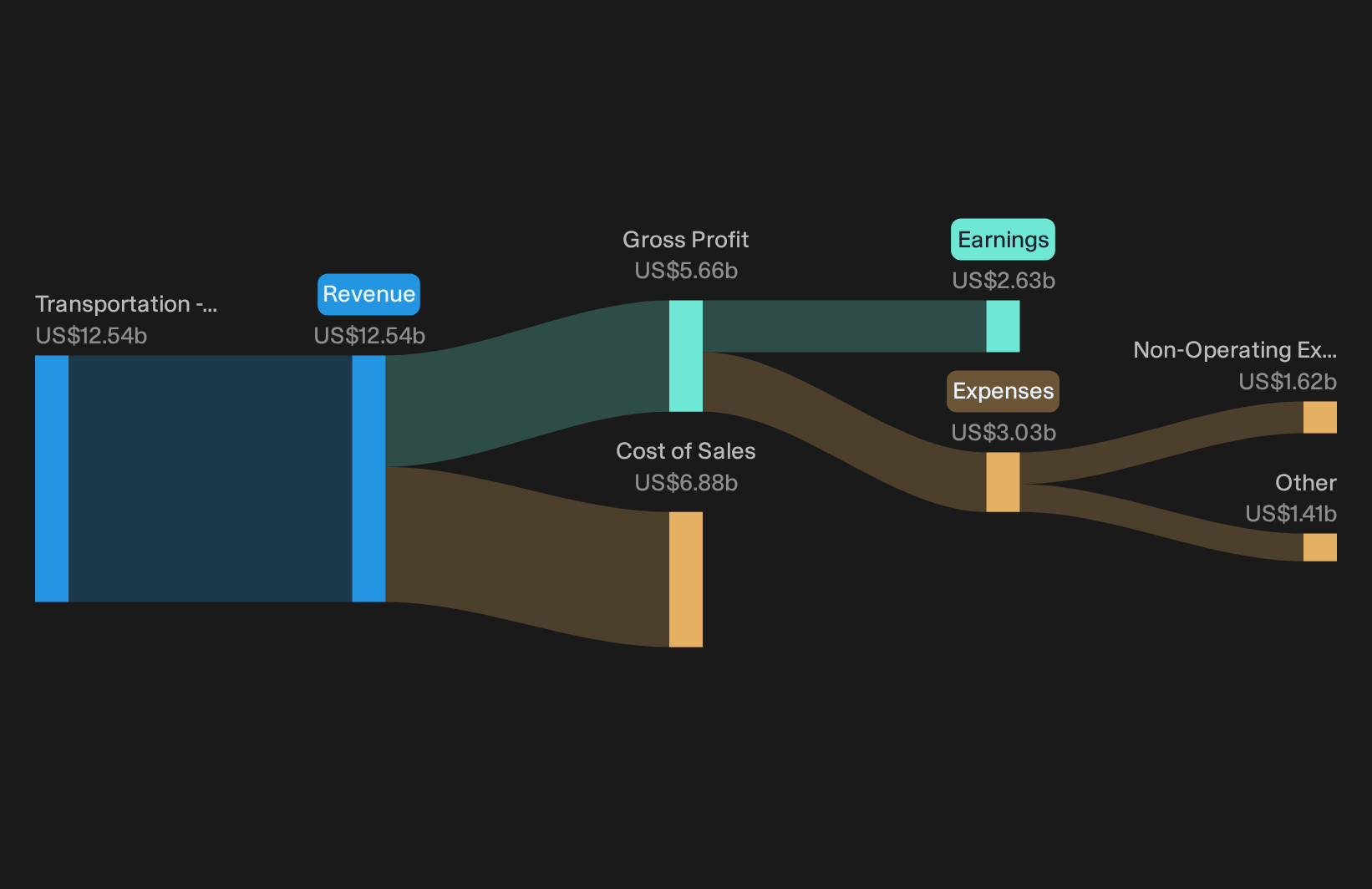
Norfolk Southern ties directly into the rail and intermodal theme, giving shippers a fuel efficient alternative to long haul trucking while moving everything from farm goods to chemicals across the US. It generated about US$12.5b in railroad transportation revenue and carries a market value near US$72.6b.
Higher diesel costs put fresh attention on Norfolk Southern’s ability to move more freight off highways and onto trains, where fuel efficiency and a dense intermodal network can change the cost equation for shippers looking to protect margins.
"Norfolk Southern's implementation of its PSR 2.0 transformation is unlocking network value, streamlining operations, and driving efficiencies that are expected to improve the company's operating ratio and reduce expenses, positively impacting net margins and earnings."
What really matters now is how one unresolved pressure on future pricing and volumes shapes the payoff from those efficiency gains.
That hinges on whether Norfolk Southern’s efficiency story can outrun any pressure on pricing and volumes, and the full narrative for Norfolk Southern unpacks how that balance could be shifting.
Union Pacific (UNP)
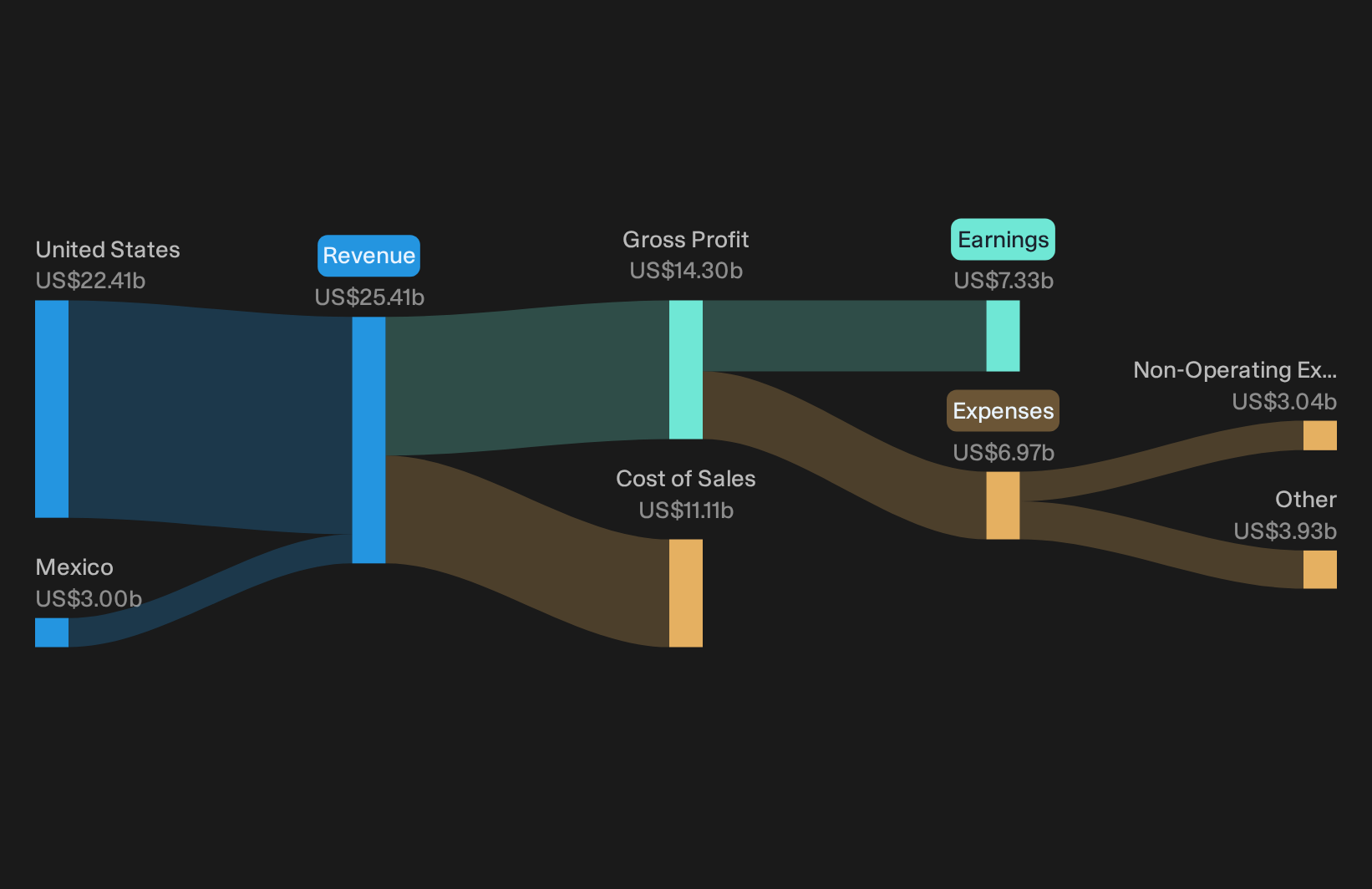
Union Pacific gives this rail and intermodal screen a large western US backbone, moving everything from grain to autos, and its scale means fuel driven shifts away from long haul trucking can matter. Railroad operations generated about US$25.4b of revenue, and the group carries a market value near US$169.8b.
Union Pacific sits squarely in the fuel sensitive freight story, and investors watching trucking to rail shifts are paying close attention to how its network efficiency work feeds through to profitability.
"Union Pacific is implementing multiple efficiency enhancements, such as energy management systems for locomotives and optimization tools, which are expected to improve operational efficiency and net margins."
What really matters now is how one less visible pressure on pricing and volumes shapes that margin story from here.
That quieter pricing pressure is exactly where Union Pacific’s story gets interesting, and the full narrative for Union Pacific shows how efficiency gains could be masking an accelerating earnings reshuffle.
Curious About Alternatives You Might Be Missing?
Fresh setups can move from quiet to breakout before most investors react, and the best ideas do not stay under the radar for long, so it can help to get in early.
- Spot turnaround momentum before it goes flying by using the curated 16 high quality undiscovered gems that many investors have not caught up with yet.
- Capture resilient cash flows while prices are still dropping into attractive ranges through a focused list of solid balance sheet and fundamentals (23 results) built for staying power.
- Ride structural themes building real earnings momentum by combing through a carefully filtered 91 nuclear energy infrastructure stocks while it still sits under the radar for now.
This article by Simply Wall St is general in nature. We provide commentary based on historical data and analyst forecasts only using an unbiased methodology and our articles are not intended to be financial advice. It does not constitute a recommendation to buy or sell any stock, and does not take account of your objectives, or your financial situation. We aim to bring you long-term focused analysis driven by fundamental data. Note that our analysis may not factor in the latest price-sensitive company announcements or qualitative material. Simply Wall St has no position in any stocks mentioned.
Have feedback on this article? Concerned about the content? Get in touch with us directly. Alternatively, email editorial-team@simplywallst.com