


When the 10-year U.S. Treasury yield pushes above 5% for the first time since 2007, the ground under equity prices feels very different. Higher yields pull income seekers back toward bonds, yet they also shine a spotlight on large-cap value and high-dividend stocks that might still offer attractive cash returns. This article walks through three U.S. large-cap stocks exposed to this rate shock and explains where the current setup could help or hurt investors looking for resilient income.
The three stocks below are only a starting sample, since the full idea screen surfaced 49 more U.S. large-cap value and high-dividend companies with income stories that are not covered here.
If you want to identify and analyze those additional candidates with the same filters used for this article, head straight into the U.S. Large-Cap Value & High-Dividend Stocks screener
Ameren (AEE)
Overview: Ameren is a regulated utility group supplying electricity and natural gas to homes, businesses, and industry across Missouri and Illinois, aligning with income-focused value investors seeking large-cap U.S. dividend payers.
Operations: Ameren generates about US$4.6b from Ameren Missouri, US$2.5b from Ameren Illinois Electric Distribution, US$1.0b from Ameren Illinois Natural Gas, and US$0.9b from Ameren Transmission, all within the US$8.4b U.S. market.
Market Cap: US$29.0b
Ameren fits this high-dividend, lower-volatility utility screen because its regulated footprint and long-term projects can appeal when bond yields surge.
"Rapid growth in data center demand, driven by digitalization trends and influx of hyperscalers seeking affordable, reliable electricity, has resulted in 2.3 GW of signed construction agreements and a robust pipeline extending well beyond 2032, positioning Ameren for substantial sales and revenue growth from large-load customers over the next decade."
What really matters for Ameren investors is how one unresolved funding pressure ultimately shapes future returns and dividend flexibility.
That unresolved funding question is exactly what the full narrative for Ameren unpacks, separating near term rate pressure from longer term dividend and capital plan scenarios.

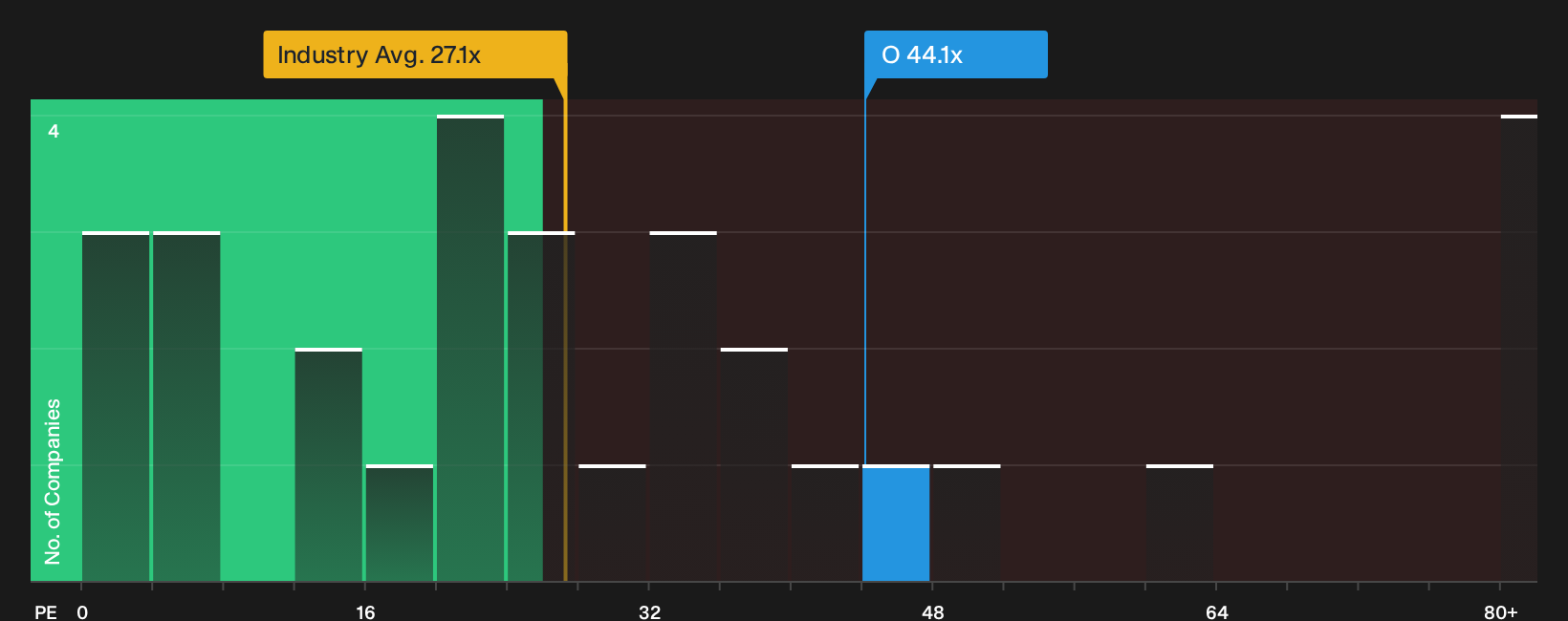
Realty Income (O)
Overview: Realty Income is a large net-lease REIT that owns thousands of commercial properties and pays investors monthly dividend income.
Operations: Realty Income generates about US$6.1b from leasing property to clients, with roughly US$4.6b from the United States and US$759m from the U.K.
Market Cap: US$56.3b
Realty Income fits a value and high-dividend screen because it combines a long record of monthly payouts with rent streams tied to long leases. This can feel particularly relevant when bond yields surge and investors focus harder on the trade-off between income reliability and interest rate risk.
"Given the maturity of the business, its historical data and the fact that I project a higher interest rate environment over the next couple of years, I believe the company will grow its dividends at around ~2.5% so below the economy growth rate of ~4.95% (10-Year U.S. bond rate)."
What really shapes the income story for Realty Income now is how one unseen pressure on its cost of capital resolves over time.
That funding pressure is exactly what the full narrative for Realty Income unpacks, showing how Realty Income’s dividend story could evolve as rates, rents and acquisition opportunities keep shifting.
Public Storage (PSA)
Overview: Public Storage is a large S&P 500 REIT that owns and operates thousands of self-storage facilities for households and businesses.
Operations: Public Storage generates about US$4.5b from self-storage facilities, US$355 million from ancillary operations, and US$20 million from unconsolidated real estate entities.
Market Cap: US$57.6b
Public Storage slots neatly into this value and income screen because its self-storage platform converts everyday space constraints into relatively steady rent checks for shareholders.
"Urban densification and the continued shrinkage of residential living space in major metro markets are driving demand for self-storage, benefiting Public Storage's occupancy rates and supporting revenue, as evidenced by leasing activity and stabilization trends in high-density regions such as the West Coast."
What happens to those cash flows if one less-visible cost line keeps edging higher faster than rents will be crucial for income-focused holders.
That creeping expense line is exactly what the full narrative for Public Storage breaks down, revealing where Public Storage’s pricing power, demand trends, and risk factors might be quietly decoupling.

Seeking Alternatives Before The Window Closes?
Fresh ideas move first. By the time every investor notices a quiet breakout, the better entry point is already dropping away. Scan these under-the-radar lists now and get in early.
- Target resilient income by reviewing hand-picked companies in the 6 dividend fortresses that aim to keep yields flying while prices stay on many investors' ignore list for now.
- Ride structural demand shifts as infrastructure and electrification trends reshape utilities and grids by scanning the curated 38 power grid technology and infrastructure stocks before the crowd catches on.
- Focus on stronger balance sheets by tracking the list of solid balance sheet and fundamentals (23 results) so you stay close to businesses that might hold up better when weaker peers get caught dropping.
This article by Simply Wall St is general in nature. We provide commentary based on historical data and analyst forecasts only using an unbiased methodology and our articles are not intended to be financial advice. It does not constitute a recommendation to buy or sell any stock, and does not take account of your objectives, or your financial situation. We aim to bring you long-term focused analysis driven by fundamental data. Note that our analysis may not factor in the latest price-sensitive company announcements or qualitative material. Simply Wall St has no position in any stocks mentioned.
Have feedback on this article? Concerned about the content? Get in touch with us directly. Alternatively, email editorial-team@simplywallst.com