


GameStop (GME) is a Grapevine, Texas-based specialty retailer operating stores and e-commerce platforms under the GameStop, EB Games, and Micromania banners across the U.S., Canada, Australia, and Europe. Once known primarily as a video game and electronics retailer, GameStop has diversified aggressively under Executive Chairman Ryan Cohen, expanding into collectibles, trading cards, pop culture merchandise, and even cryptocurrency and equity investments. The company has become a prominent “meme stock,” attracting substantial retail investor attention while pursuing an unconventional capital allocation strategy that includes bitcoin holdings and a sizable equity stake in eBay (EBAY), positioning GameStop as much an investment vehicle as a traditional retailer.
GameStop Stock Performance
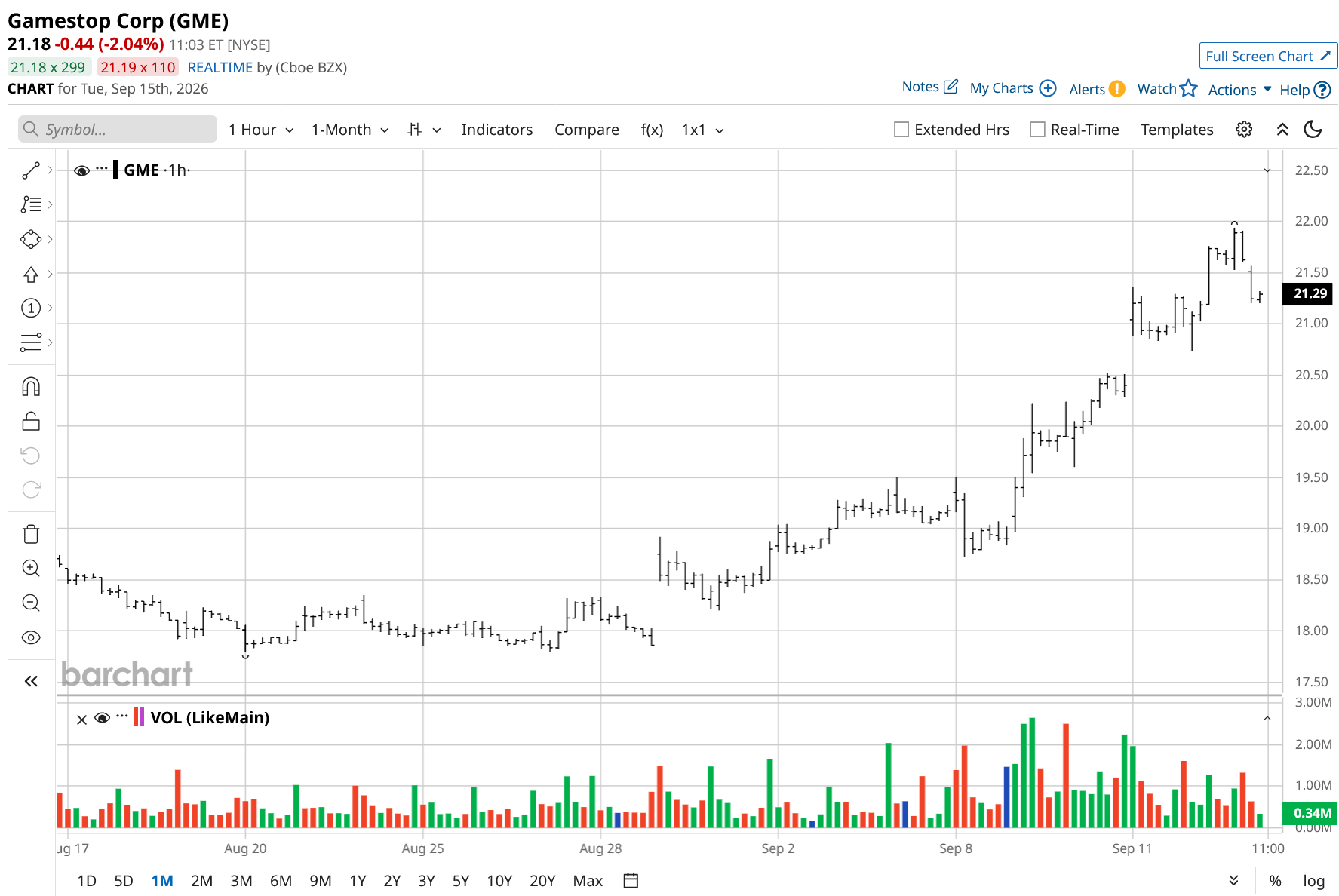
GameStop stock recently traded around $21.15, near the bottom of its 52-week range of $17.79 to $28.10 and below its 200-day moving average. Shares have pulled back significantly from their 2025 meme-stock highs, weighed down by declining video game sales, ongoing store closures, and investor skepticism toward the company's diversification into digital assets and equity investments. The stock did see brief bursts of retail-trader enthusiasm this year, including renewed meme-stock speculation tied to its proposed eBay acquisition, though shares have remained volatile and range-bound as GameStop's core retail business continues shrinking alongside its growing collectibles and investment segments.
By comparison, the S&P MidCap 400 Index ($SDEW) has climbed roughly 10% year-to-date (YTD) in 2026, reflecting solid broad-based mid-cap market strength. GME stock has meaningfully underperformed this benchmark, underscoring investor caution toward its shrinking legacy retail operations despite strong gains in its higher-margin collectibles business.
GameStop Posts Soft Q2 Results
GameStop's second-quarter fiscal 2026 results showed net sales of $790.2 million, down 18.7% year-over-year (YoY) and below one analyst estimate near $1.07 billion, though ahead of another consensus figure of $756.8 million. Adjusted earnings per share came in at $0.27, matching estimates exactly. GAAP net income surged to $298.7 million, or $0.51 per share, up sharply from $168.6 million a year earlier, largely boosted by substantial gains tied to GameStop's eBay equity stake.
Operating income reached $160.2 million, the highest second-quarter figure in company history, up from $66.4 million a year earlier, as gross margin expanded to 43.7% from 29.1% on a favorable shift toward higher-margin categories. Collectibles net sales surged 57% to $356.3 million, now representing 45.1% of total revenue, while Video Games revenue fell sharply to $263.2 million. GameStop ended the quarter with $5.4 billion in total cash, marketable securities, and digital assets, including a $4.9 billion stake in eBay.
Management raised its fiscal 2026 adjusted EBITDA guidance to more than $650 million, up from a prior target of more than $600 million set in June, citing strong collectibles execution and disciplined cost management. The company also reduced its convertible debt load by exchanging approximately $1.4 billion in notes, strengthening its balance sheet. Executives continue evaluating strategic options around GameStop's eBay stake and broader digital-asset holdings as key drivers of the company's ongoing transformation strategy.
Ryan Cohen Loads Up on GME Stock
GameStop CEO Ryan Cohen made a significant show of confidence in the company, purchasing 1 million shares of Class A common stock on the open market for approximately $20.38 million, according to a regulatory filing. The purchases were executed across multiple transactions at prices ranging from $20.02 to $20.47 per share, with a weighted average price of $20.38, boosting Cohen's direct ownership stake to 39.3 million shares.
The insider buy follows GameStop's second-quarter earnings report, which showed record second-quarter operating income and raised full-year adjusted EBITDA guidance, despite a YoY decline in net sales. News of Cohen's stock purchase sent GME stock up 3.5% in premarket trading, as investors interpreted the move as a bullish signal from the company's top executive regarding GameStop's ongoing transformation strategy, which spans collectibles growth, digital assets, and its substantial eBay equity investment.
Should You Buy GME Stock Too?
Ryan Cohen's $20.3 million open-market stock purchase signals strong insider confidence, but Wall Street's institutional view tells a starkly different story. GME currently lacks any significant up-to-date analyst coverage. The last formal analyst rating is a “Hold” with a $13.50 price target from three months ago.
This disconnect between insider buying and bearish price targets highlights the ongoing debate around GameStop's valuation, as its shrinking legacy retail business and speculative digital-asset strategy continue to divide investor sentiment heading into the holiday shopping season.
On the date of publication, Ruchi Gupta did not have (either directly or indirectly) positions in any of the securities mentioned in this article. All information and data in this article is solely for informational purposes. For more information please view the Barchart Disclosure Policy here.