


The Zhitong Finance App learned that the cryptocurrency Zcash (ZEC) hit a record high on Thursday, with the highest increase among the top ten cryptocurrencies by market capitalization, outperforming Bitcoin. ZEC has risen more than 13% in the past 24 hours to around $1,368 at press time, before breaking through an all-time high of nearly $1,400. The overall size of the crypto market rebounded above $2.7 trillion over the same period — a mark that had been broken before the Federal Reserve's interest rate resolution. ZEC has accumulated a cumulative increase of over 160% this year, while Bitcoin fell nearly 13% over the same period.
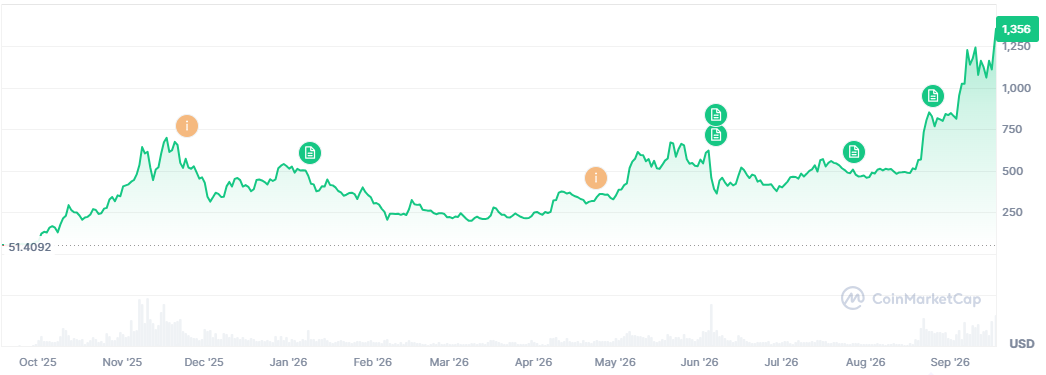
There are three pivots in this round of Zcash market: security fixes, governance voting, and hardware wallet agreements
The first one is at the network layer. Zcash activated the Ironwood upgrade (NU6.3) at block height 3,428,143 on July 28, permanently closing its largest shielded pool (Orchard), which at the time accounted for about 22% of circulation. The move was in response to a serious reliability (soundness) vulnerability privately disclosed by Shielded Labs security researcher Taylor Hornby on May 29. The problem was a zero-knowledge proof system for validating Orchard transactions, which could theoretically allow attackers to fake ZEC within this pool.
Since Orchard's transaction data itself is blocked, it is impossible for outsiders to prove on their own that no falsification occurred before the repair. Ironwood's solution is to block the old pool, so that funds can only flow out through a “turnstile” (turnstile) equal to the amount of legal entry, so that anyone operating a node can independently verify the upper limit of supply; the new pool also introduces “quantum recoverable” notes, leaving a recovery path for future quantum computation to crack existing cryptography. According to official instructions quoted by CoinMarketCap, the new pool underwent formal verification and independent security audits before deployment.
The second one is at the governance level. Approximately 2.4 million ZEC participated in the voting, and 99.9% supported shortening the block generation time from 75 seconds to 25 seconds, while 98.9% supported retaining the Bitcoin-style halving arrangement, that is, cutting new issues at set intervals.
The third is a marginal increase in this round: the privacy token continued to rise after Zcash Labs announced a $80,000 funding agreement with Ledger. The agreement will support the integration of Zcash's new Ironwood shielded pool into Ledger devices, enabling ZEC holders to self-host funds in the Ironwood pool using Ledger hardware wallets.
This line isn't just a story. According to reports, Grayscale (Grayscale)'s Zcash Spot ETF (ZCSH) has accumulated nearly $700 million in assets in less than two weeks since it was listed on NYSE Arca on August 25, with 2.50% management fees, and a net inflow of over $179 million.
Market context: interest rate hikes, liquidation, and an unsuccessful crypto bill
The first is monetary policy. The Federal Reserve raised the federal funds rate target range by 25 basis points to 3.75%-4.00% on Wednesday local time, the first rate hike since July 2023. The quarterly bitmap shows that the median policy interest rate for 2026 and the end of 2027 was 4.1%, that is, there is only one 25 basis point rate hike left in the implied window; Federal Reserve Chairman Kevin Walsh said at a press conference that inflation was “too high... too long.”
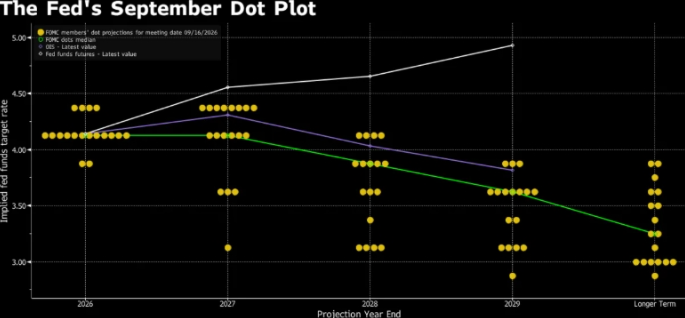
The immediate reaction of the market was positive: the US dollar index fell 0.17%, the NASDAQ 100 futures rose 1.04%, the S&P 500 futures rose 0.81%, and the 2-year US Treasury yield fell 2 basis points to 4.71% (the highest since 2024 on the previous trading day).
According to traditional logic, interest rate hikes will reduce the appeal of interest-free assets, but this resolution has previously been priced by the market with a probability of about 90%, and the bitmap also framed the current level as “close to the peak” rather than the starting point of a new round of austerity. Bitcoin is currently about 40% below its all-time high of $126,000 in October, which is close to where it was when the Federal Reserve began its austerity cycle in March 2022 — during which Bitcoin rose 18% before the subsequent long-term decline, then experienced the collapse of FTX. On the financial side, spot Bitcoin ETFs had a combined net outflow of US$746 million on Tuesday and Wednesday; the futures market is priced to raise interest rates by 75 basis points over the next six months, and Goldman Sachs has brought forward the forecast for the next rate hike to October.
Next is regulation. According to reports, on September 15, the US Senate held a procedural vote to advance the “Clarity Act, H.R. 3633” (CLARITY Act, H.R. 3633). The results were 50 votes in favor and 49 against, falling short of the 60 votes required to end the debate. The bill essentially came to a standstill; the differences focused on conflicts of interest between the president and government officials involved in crypto assets, stablecoin reward mechanisms, and state enforcement powers. After the voting results were announced, Bitcoin fell by more than 3% in the short term, shares of the crypto exchange Coinbase fell by more than 10%, and stablecoin issuer Circle fell nearly 11%.
Finally, there are clear signs of deleveraging — the crypto market was liquidated around $344 million in 24 hours, of which more than $200 million came from the shorts that were cleared; according to the same source quoted by PrimeXBT, a total of 86,816 traders were liquidated in this round, with Ethereum leading with nearly $89 million, Bitcoin at $85 million, and Zcash at $56 million.
Zcash's own position data is closer to a textbook bearish squeeze: according to Zipp's data, ZEC futures open positions increased by 37.84% to $2.2 billion, and funding rates turned negative. The biggest ZEC short address on Hyperliquid bucked the upward trend and increased its positions, losing close to $20 million at one point.
Sector position: Solana continues to rise, and overall privacy coins are stronger
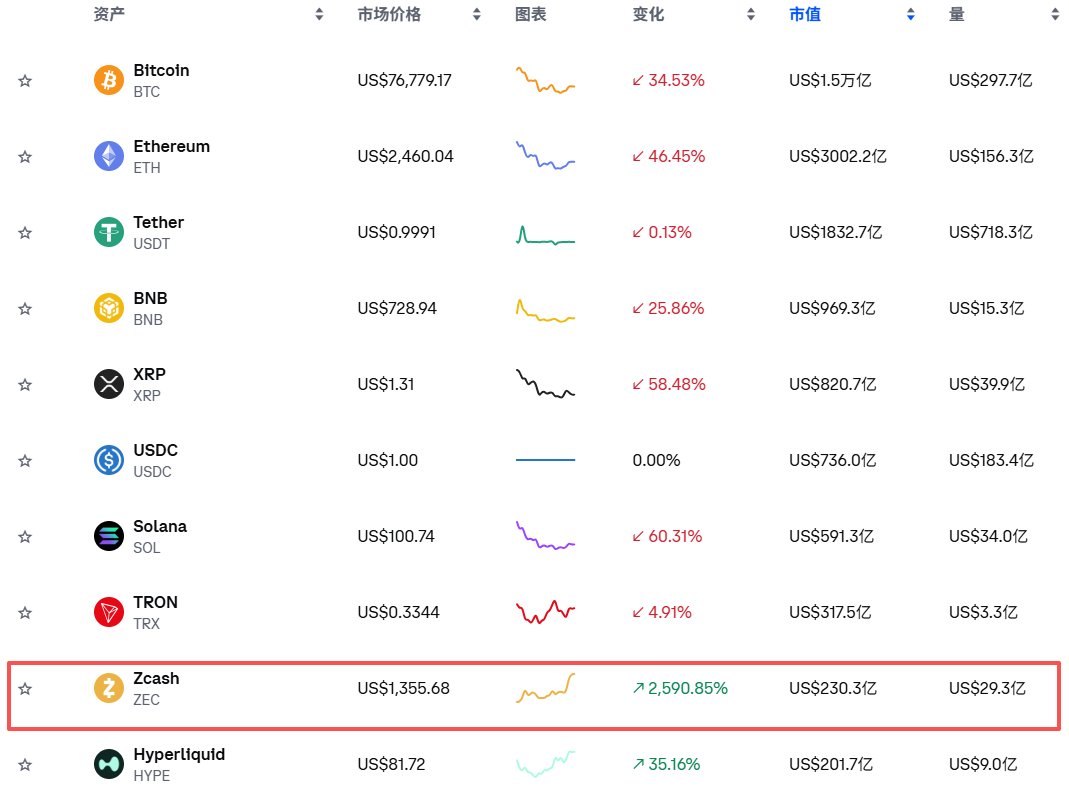
Zcash's rise is no exception. Solana (SOL) rose 3.2% over the past 24 hours to break above $100; Ethereum (ETH) rose 1.5% but still hasn't recovered $2,500. Privacy coins are more prominent overall. The total market value of the privacy coin sector rose more than 7% to $52 billion, while the overall crypto market rose only 1.3% over the same period. Zcash reached a market capitalization of $23.21 billion, extending its lead over Monero to over $100 billion. Notably, ZEC has increased by more than 2590% over the past year, far ahead of other major cryptocurrencies.
Longing and questioning are heating up at the same time
One of the triggers for this round of offensive came from public statements from the traditional venture capital community. According to reports, Paradigm co-founder Matt Huang revealed on X on Wednesday that Paradigm is both an investor in the Zcash Open Development Lab and the holder of ZEC; he called Zcash a “privacy supplement to Bitcoin” and defended its inflation-funded development fund, believing that in a context where AI-driven cyber attack capabilities and quantum computing continue to advance, long-term financial support is essential, while supporting coin voting and other forms of governance Combined, to reduce the uncertainty of it as a monetary asset.
According to public information quoted by PrimeXBT, Paradigm's participation in the Zcash ecosystem did not begin this week—in March of this year, Zcash Open Development Lab completed more than $25 million in seed funding, with investors including Paradigm, a16z crypto, Coinbase Ventures, and Winklevoss Capital.
Among overseas crypto leaders, Balaji, Bitwise Chief Investment Officer Matt Hougan, Multicoin partner Tushar Jain, and crypto KOL Ansem all publicly expressed their optimism for ZEC, with Balaji calling out a target price of $100,000.
The question was also named. Wang Chun, co-founder of F2Pool, tweeted on September 8 that Zcash's recent rise is more narrative driven than fundamentals: he believes that ZEC's market capitalization in the top ten crypto market does not mean that it has real application value comparable to Solana and Hyperliquid; he pointed out that in the early days of Zcash's launch, 20% of each block reward went to founders, employees, advisors and early investors, totaling about 2.1 million ZEC (accounting for 21 million copies) 10% of supply), and a similar ratio was restored in the form of development funds after the split ended; at the same time, he emphasized that private addresses are not Zcash's default option, large assets remain in public addresses, and there have been disputes at the governance level for a long time — as exemplified by the departure of the Electric Company Coin team as a whole in January 2026. In his opinion, the Ironwood upgrade in July was more like a security fix than a reason to support ZEC's entry into the top ten.
The technocratic voice is self-reserved. Analyst Crypto Patel gave a weekly cup pattern with a target price of about $2,200, but at the same time suggested that the pattern was formed after a two-year increase of about 7,828%, at a high level rather than at the bottom, or after long-term fund-raising, reliability would be discounted, and listed three possibilities: a false breakthrough, profit settlement, and a sharp pullback.
Retail sentiment has reversed, and analysts are still eyeing the threshold
The emotional side has changed. Zcash is the most popular cryptocurrency on the Stocktwits platform. Over the past day, retail sentiment has changed from “bearish” to “bullish,” and discussions have risen from “low” to “normal.” On the same platform, SOL sentiment is in the “extremely bearish” range, ETH remains “bearish”, and Bitcoin is also “bearish” — the sentiment of leaders and waiters is divided, which is more prominent than the price itself.
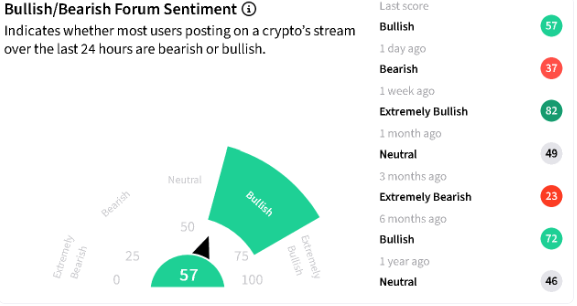
In the Stocktwits discussions, some retail investors believed that the market had simultaneously digested both the collapse of the Clarity Act and the Fed's interest rate hike, which marked a potential bottom and a buying opportunity; others likened ZEC's rise to Bitcoin's early trajectory — starting at around $20 a few years ago — suggesting that it still has similar upside.
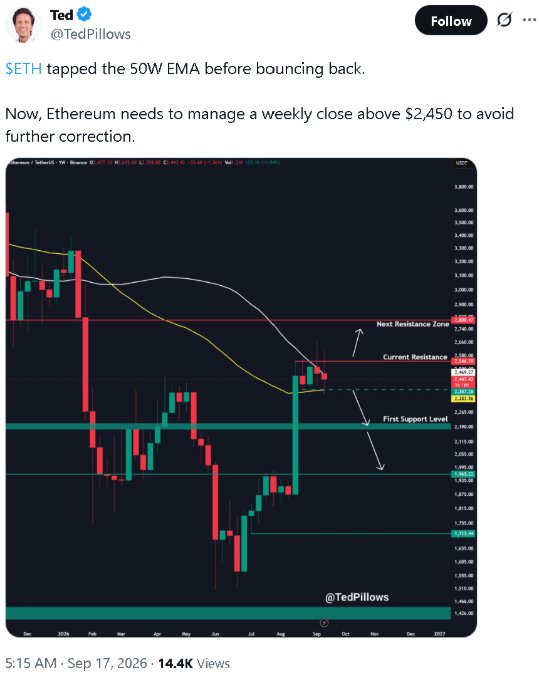
Analysts remain cautious about the market. Michael van de Poppe, founder of MN Fund, believes that Bitcoin is facing resistance at the current level and needs to break through to reach a new high; analyst Ted Pillows pointed out that Ethereum needs to close above $2,450 this week to avoid further correction.
The two aspects of regulation are on the table at the same time: the EU's anti-money laundering rules will ban privacy coins from July 2027, constituting long-term policy suppression; on the Internet side, according to Grayscale's August study of this year, the blocked supply of Zcash was close to 4.2 million units, accounting for about a quarter of the circulation at the time, and the increase in blocking usage was viewed as a demand signal — but the ratio of close to 30% often quoted in subsequent market reviews came from on-chain dashboards, which is a measurement that continues to change, not the same as the size of a single issuer's document. source.