


Japan just lifted interest rates to a 31 year high, and that rewrites the script for companies that rely on shoppers, commuters and bill payers at home rather than exports abroad. Domestic demand stocks suddenly sit closer to the action as a firmer yen, pricier energy and higher funding costs ripple through the market. This article walks through three Japanese Domestic Demand Stocks from the screener that appear positively exposed to this new rate backdrop and explains what that could mean for your watchlist.
The three Japanese Domestic Demand Stocks covered below are only a small sample, and the full screen surfaced 24 more large, locally focused companies with equally compelling narratives that are not discussed here. To identify and analyze the highest conviction ideas for your own watchlist, head straight into the Japanese Domestic Demand Stocks screener.
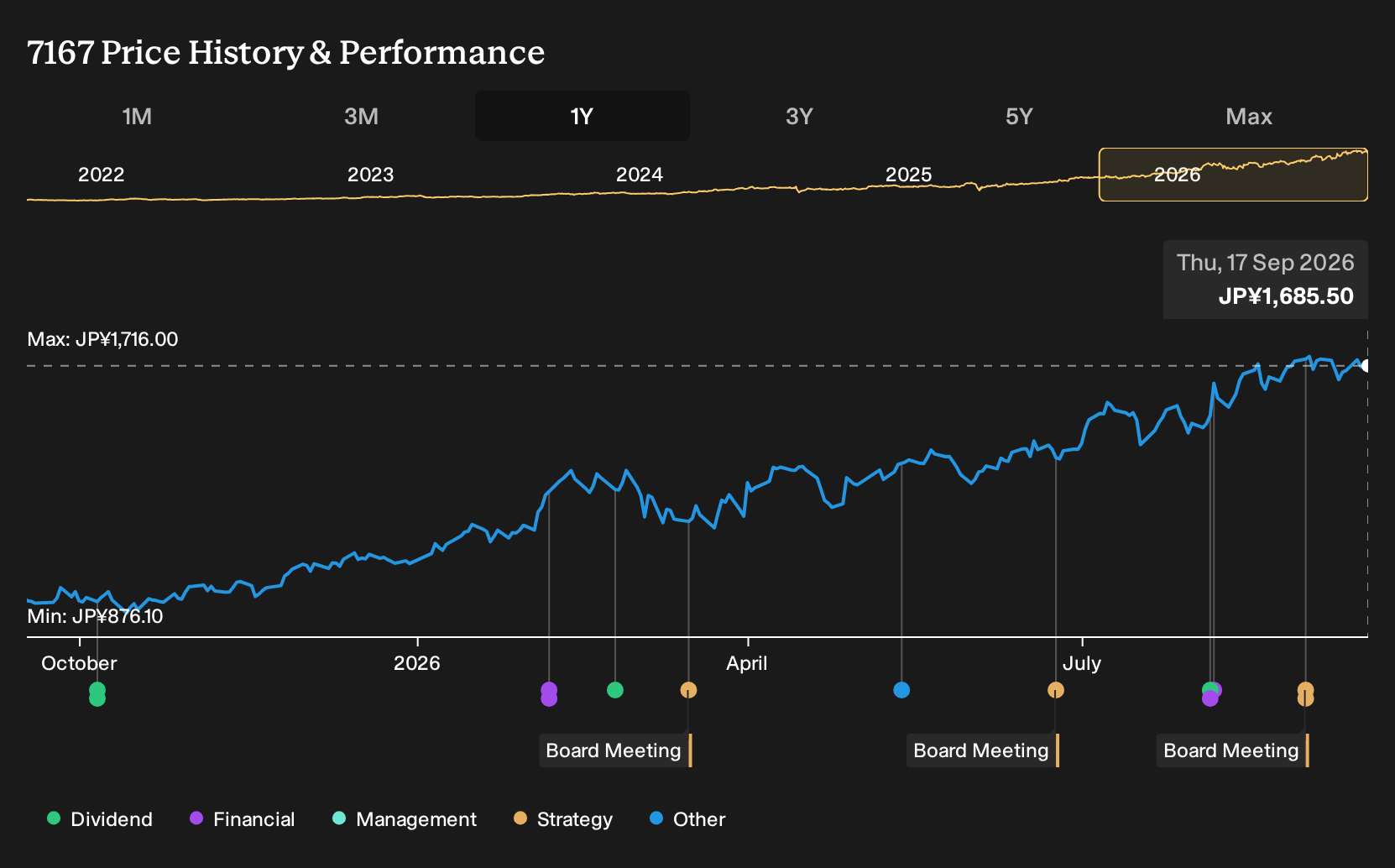
Mebuki Financial GroupInc (TSE:7167)
Mebuki Financial GroupInc is a regional banking group firmly tied to Japan’s domestic economy, with its entire ¥377,568 million banking business generated at home and a market cap of about ¥1.58t. This provides investors with large cap exposure to local credit demand and interest rate trends.
For a screener built around domestic demand, Mebuki Financial GroupInc is almost textbook. It is a large cap regional lender whose earnings and dividend profile are closely tied to Japanese households and businesses rather than exports. Higher local rates and steadier credit demand can help, although what happens when credit quality is tested will matter a lot for shareholders.
When you want to see how that trade off between yield and credit risk really stacks up for Mebuki Financial GroupInc, pull up the 4 key rewards and 1 important warning sign for the full picture on what could accelerate or stall returns.
Nishi-Nippon Financial Holdings (TSE:7189)
Nishi-Nippon Financial Holdings runs a domestically focused banking group in Fukuoka, offering deposits, lending, foreign exchange and investment products. Its core banking arm generates about ¥199.8 billion of the ¥223.4 billion business total, with other services at ¥46.6 billion, and the stock carries a market value around ¥694.0 billion.
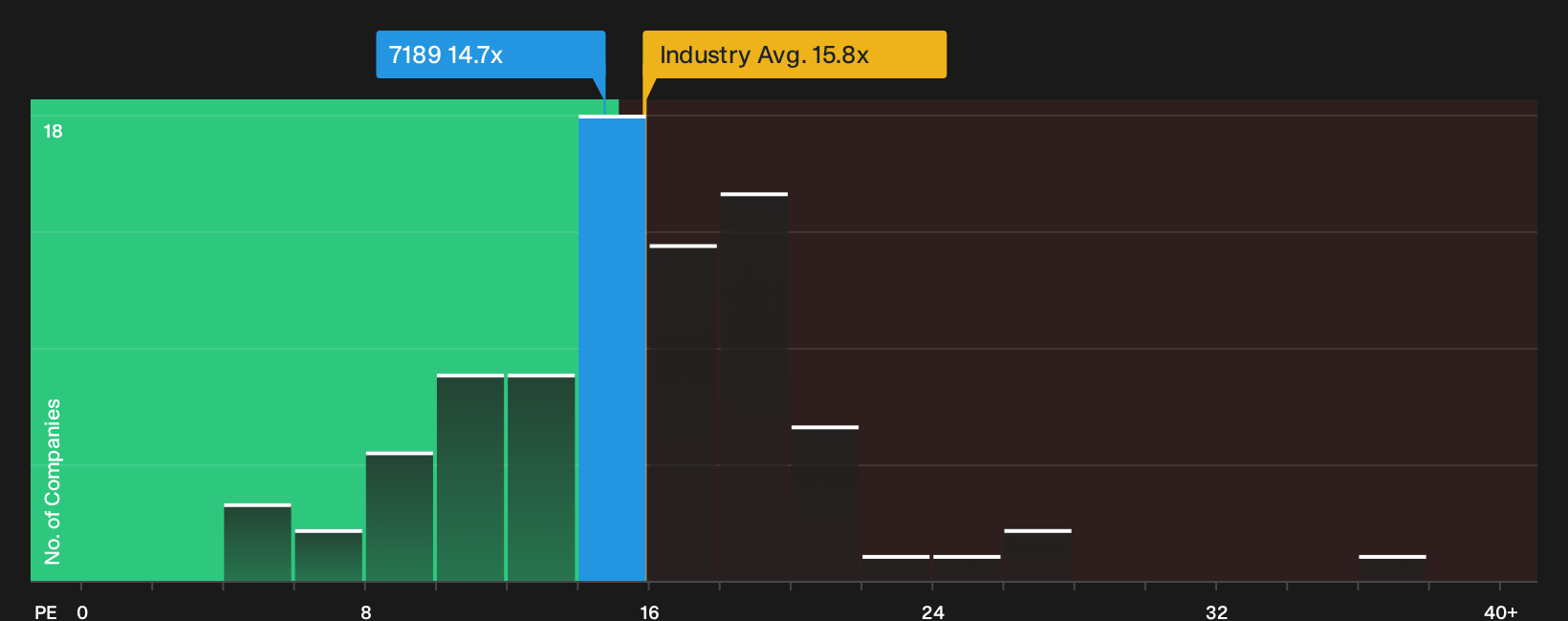
Nishi-Nippon Financial Holdings provides exposure to Japanese domestic demand through a local lender that relies on yen deposits, home market loans and fee income. The stock trades on a P/E of 14.7x versus a higher sector average, supported by a 22.2% profit margin. The interest rate backdrop may influence the balance between loan spreads and credit costs if underlying pressures change.
That balance between spreads and credit costs is exactly what the 4 key rewards and 2 important warning signs unpacks so you can see where Nishi-Nippon Financial Holdings might be mispriced on risk.
Kyushu Financial Group (TSE:7180)
Kyushu Financial Group is a Kumamoto based bank holding company that leans heavily into the Japanese Domestic Demand theme, with all ¥220,390 million of revenue earned in Japan through lending, leasing and fee services, and a market value around ¥687.3b.
Kyushu Financial Group gives you pure domestic banking exposure, with all income tied to Japanese borrowers and fees and direct sensitivity to the Bank of Japan’s higher rate setting. Investors watching local demand, dividends and profit resilience will care what happens when one unseen pressure on its loan book shifts.
That unseen pressure on Kyushu Financial Group’s loan book is exactly what the 3 key rewards and 1 important warning sign breaks down, helping you identify where risk and opportunity might be decoupling.

Seeking Fresh Alternatives Beyond Your Watchlist?
Market momentum does not wait. Fresh ideas get picked over fast while they are still under the radar for now. Scan these curated shortlists before the next breakout and consider them promptly.
- Spot early movers with robust cash flows and resilient balance sheets by scanning a curated 17 high quality undervalued stocks before broader attention increases.
- Track next wave infrastructure plays related to AI as capital rotates into a hand picked group of 89 AI infrastructure stocks supporting data centers and high performance computing.
- Review structural demand for critical materials by considering a focused basket of 16 top copper producer stocks geared to electrification trends while pricing dislocations may still be underappreciated.
This article by Simply Wall St is general in nature. We provide commentary based on historical data and analyst forecasts only using an unbiased methodology and our articles are not intended to be financial advice. It does not constitute a recommendation to buy or sell any stock, and does not take account of your objectives, or your financial situation. We aim to bring you long-term focused analysis driven by fundamental data. Note that our analysis may not factor in the latest price-sensitive company announcements or qualitative material. Simply Wall St has no position in any stocks mentioned.
Have feedback on this article? Concerned about the content? Get in touch with us directly. Alternatively, email editorial-team@simplywallst.com