


The Zhitong Finance App learned that liquidity pressure may not yet be apparent on the surface of the market, but as the market breadth of the stock and bond markets continues to deteriorate, these pressures continue to accumulate within the market. The US Treasury's plan to issue another net additional treasury note of 317 billion US dollars by December, and the Federal Reserve's tightening of monetary policy may further worsen the liquidity situation.
Market breadth is deteriorating
There are many ways to measure liquidity and its impact on the market, but one of the easiest ways is to look at the breadth of the market. Whether it's NYSE stocks or high-yield bonds, the message is the same—that the breadth of the market is deteriorating.
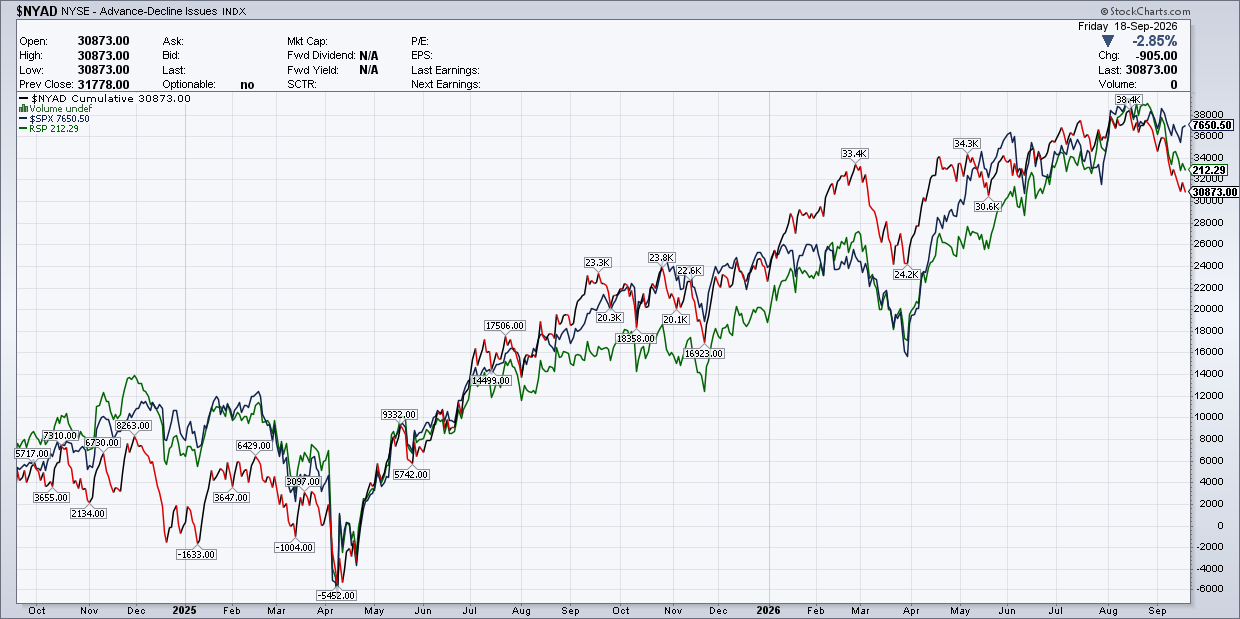
The New York Stock Exchange Advance-Decline Line (ADVANCE DECLINE) has fallen nearly 4% since peaking on August 14. In the same period, weighted ETFs such as the S&P 500 fell by nearly 5%, while the S&P 500 spot index fell by only about 2%. This reminds investors that the strong performance of the benchmark index does not mean that the entire market is strong.
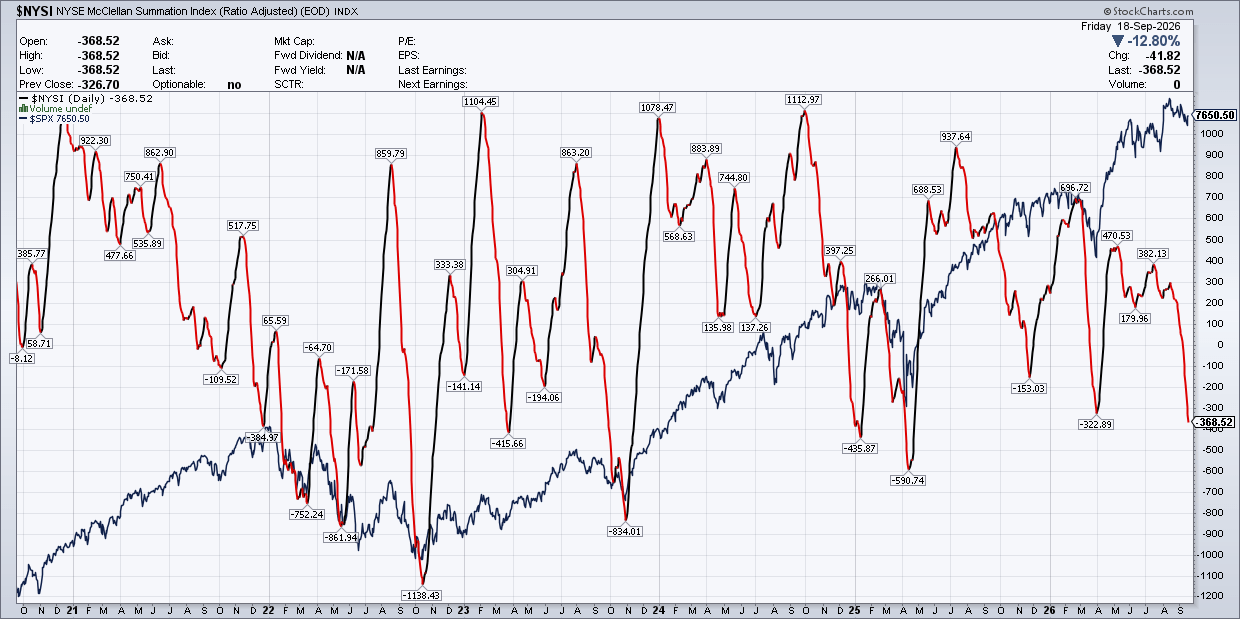
Furthermore, the New York Stock Exchange's McClellan Summation Index (McClellan Summation Index) — another measure of market breadth — recently fell to its lowest level since spring 2025, and even fell below its March 2026 low. At the time, the S&P 500 index was around 6,350 points, and the benchmark stock index is now around 7,600 points.
Over the past six months, the NYSE McClellan Accumulation Index tried twice to break through 500 points, but both failed, then fell back below zero. This indicates that the market lacks the breadth and liquidity needed to support the continued rise of the S&P 500.
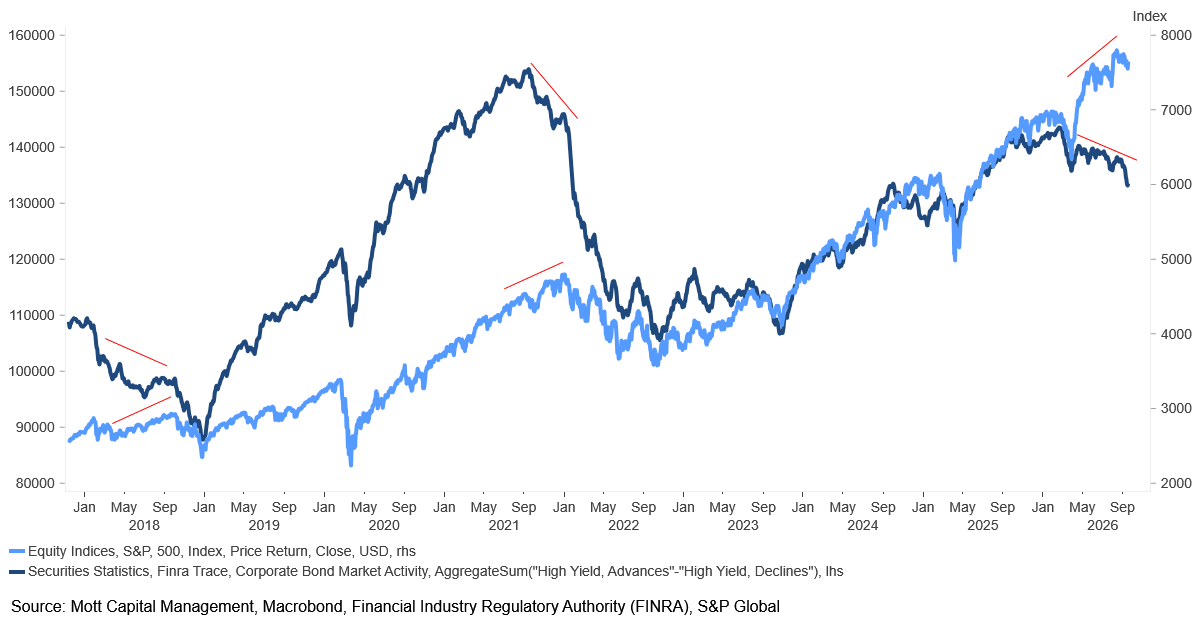
The high-yield bond market has also shown similar signs of deteriorating market breadth, and its rise and fall line has turned downward in recent weeks. Similar disruptive trends previously occurred in late 2018 and before the stock market declined in 2022. In a similar situation in 2018 and 2022, the S&P 500 index both fell by about 20% or more.
The Fed's interest rate hike and the Treasury's debt issuance may increase pressure
This one might be an exception, but the current context is very similar to 2018 and 2022. In 2018, during the Fed's interest rate hike cycle, the breadth of the high-yield bond market deteriorated; in 2021, the breadth of the high-yield bond market also deteriorated on the eve of the start of the Fed's interest rate hike cycle. The Federal Reserve has now begun a new cycle of interest rate hikes, although it is still unknown how much it will raise interest rates further from current levels.
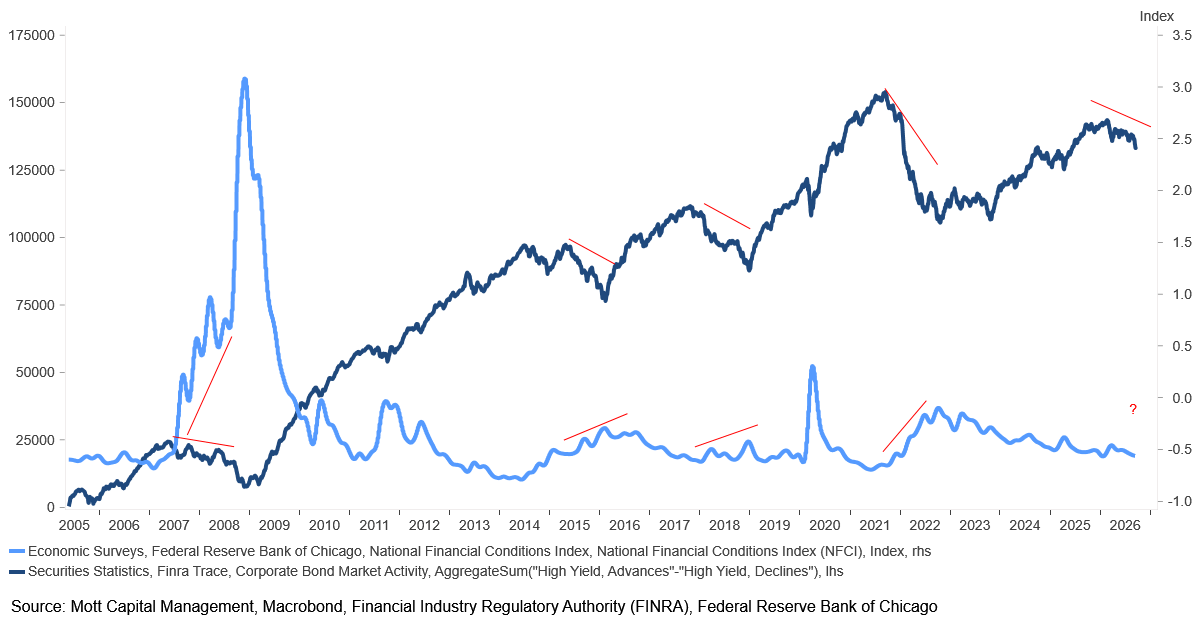
This is important because tighter monetary policies should eventually tighten financial conditions, which may reduce liquidity. In times of tightening financial conditions, the breadth of the high-yield bond market has always deteriorated, so this is an important indicator worth watching at a time when the Federal Reserve is trying to channel monetary policy through financial markets and the wider economic system.
The only good news is that the US Treasury plans to reduce the Treasury's general account balance by $100 billion by December 31, from $950 billion on September 30 to $850 billion. This means that in the first fiscal quarter, treasury note issuance is expected to drop from 409 billion US dollars in the fourth fiscal quarter to 317 billion US dollars. However, this still means that there will be more than $700 billion in net additional treasury notes within six months, and their cumulative impact still needs to be absorbed somewhere.
One place to look for this sign of pressure is the volume of transactions behind the Guaranteed Overnight Financing Rate (SOFR). That transaction volume has dropped from around $3.5 trillion at the beginning of the year to around $3 trillion. As the Federal Reserve's overnight reverse repurchase instrument has basically run out of funds, there is no idle cash on the market to absorb the amount of foreign treasury bonds issued. As a result, funds for the purchase of these treasury notes are increasingly needed from the buyback market. As the US Treasury continues to issue more treasury notes than mature, a further decline in financing transactions may mean that market liquidity is under increasing pressure.
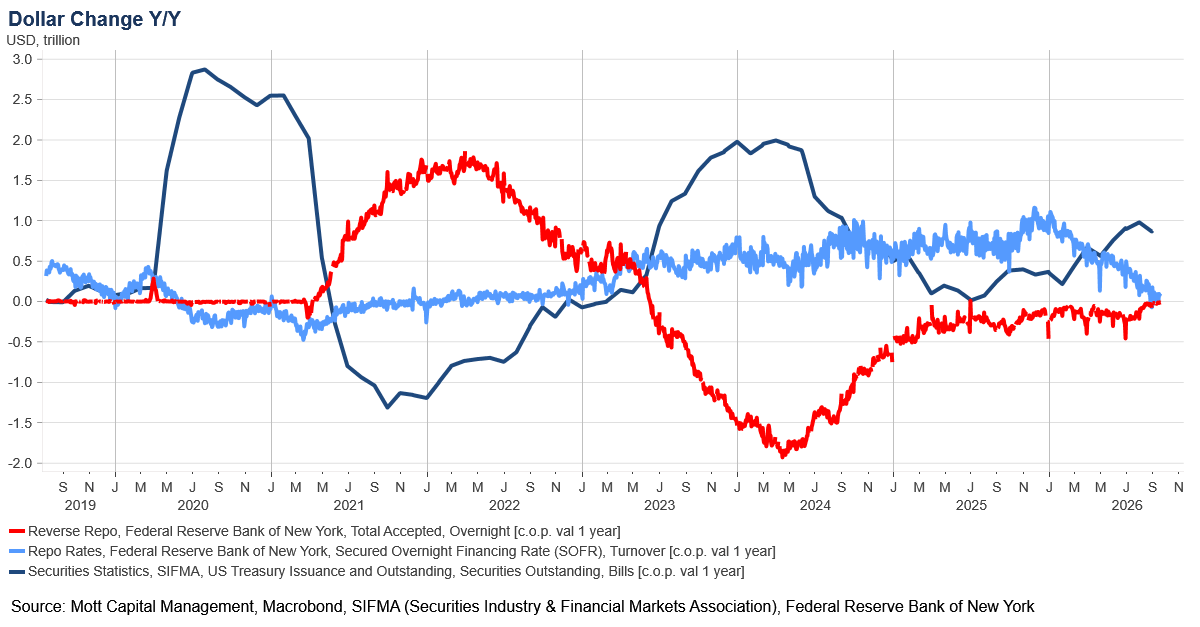
Continued large-scale issuance of treasury notes combined with the Federal Reserve's interest rate hike cycle may put more pressure on liquidity after the market enters October and November. Given that the breadth of the stock and high-yield bond markets has deteriorated, and the volume of secured overnight financing transactions is declining, the market is likely to be more vulnerable than indicated by major indices. If these trends continue, the risk of a much larger correction in the S&P 500 will rise further.