


- Stanley Black & Decker recently presented at Morgan Stanley’s 14th Annual Laguna Conference, where CEO Christopher John Nelson outlined progress on brand focus, operations, and innovation.
- The discussion highlighted a push toward a 35% gross margin target through product platforming, lean manufacturing, automation, and a shift toward share repurchases instead of tools acquisitions.
- This article examines how Stanley Black & Decker’s investment narrative aligns with its efforts to pursue higher margins through automation and increased North American production.
Stanley Black & Decker Investment Narrative Recap
To own Stanley Black & Decker, you need to be comfortable with a story that leans on execution rather than fast revenue expansion. Management is pushing toward a 35% gross margin target through product platforming, lean production, and automation, while demand in DIY and Outdoor channels looks mixed. The near term catalyst is whether these cost and supply chain moves keep lifting margins without hurting service levels.
The key risk is that volume softness, tariff costs, and heavy reliance on big retailers offset efficiency gains and squeeze profitability. The Laguna remarks do not radically change that risk reward balance. They mostly reinforce that the turnaround is still an operational grind that needs consistent follow through.
The clearest recent marker linked to this conference is the renewed emphasis on reshoring production to North America and using automation to offset tariff and labor pressures. For you as a shareholder, the practical question is whether those projects move the needle fast enough to support the margin path management has laid out.
That same focus ties directly into catalysts already on the table. A supply chain transformation that reduces tariff exposure, supports the 35% gross margin ambition, and stabilizes earnings would support the case for Stanley Black & Decker as a tools platform with improving profitability. If execution slips, the business remains exposed to slow end markets, high debt, and pricing sensitivity in crowded retail channels.
What The Stanley Black & Decker Forecasts Are Actually Asking You To Believe
Stanley Black & Decker's narrative projects US$16.4b revenue and US$1.1b earnings by 2029. This implies 2.5% yearly revenue growth and an earnings increase of about US$480m from earnings today of US$620.5m.
Those numbers are not heroic on the top line. A 2.5% annual lift in sales is closer to a crawl than a sprint. That fits a story that leans on efficiency, reshoring, and product platforming rather than chasing aggressive new volume. The bigger swing sits in profitability. Analysts are effectively assuming that margin improvement and cost work do the heavy lifting, with profit expected to move from US$620.5m today to US$1.1b around 2029 while revenue grows modestly.
Look at the margin bridge that is being implied. Profit margins are modeled to move from 4.1% to 6.7% over roughly three years. That is a step up, not a tweak. For an investor, the question is not just whether Stanley Black & Decker can cut costs and automate, but whether it can do that while tariffs, wage inflation, and retailer pushback remain part of day to day reality.
The valuation overlay adds another constraint. To line up with analyst targets, the stock would need to trade on a P/E of 16.4x those 2029 earnings, compared with 23.9x today and against an industry multiple quoted at 26.9x. In plain terms, the story asks you to accept a lower valuation multiple at the same time as earnings expand. That mix tries to balance some optimism on execution with a more muted view on how richly the market might price a tools manufacturer a few years from now.
There is also a capital allocation angle embedded in the forecasts. Analysts expect the share count to decline by 2.5% per year for the next three years, which points to an active buyback program rather than big tools acquisitions. For you, that means part of the future earnings growth per share depends on shrinking the denominator through repurchases, not just lifting operating profit through reshoring and automation.
Put the pieces together and the reshoring theme comes into sharper focus. The models assume Stanley Black & Decker can pull tariff exposure down, raise North American production, and leverage automation without eroding service levels to key retailers. If the company delivers on those ingredients, the move from US$620.5m to US$1.1b in earnings and a 6.7% margin becomes more plausible. If any of those elements stall, the same modest 2.5% revenue track could leave the earnings bridge feeling stretched.
Uncover why Stanley Black & Decker's fair value indicates a 12% potential upside to its current price that may not last much longer.
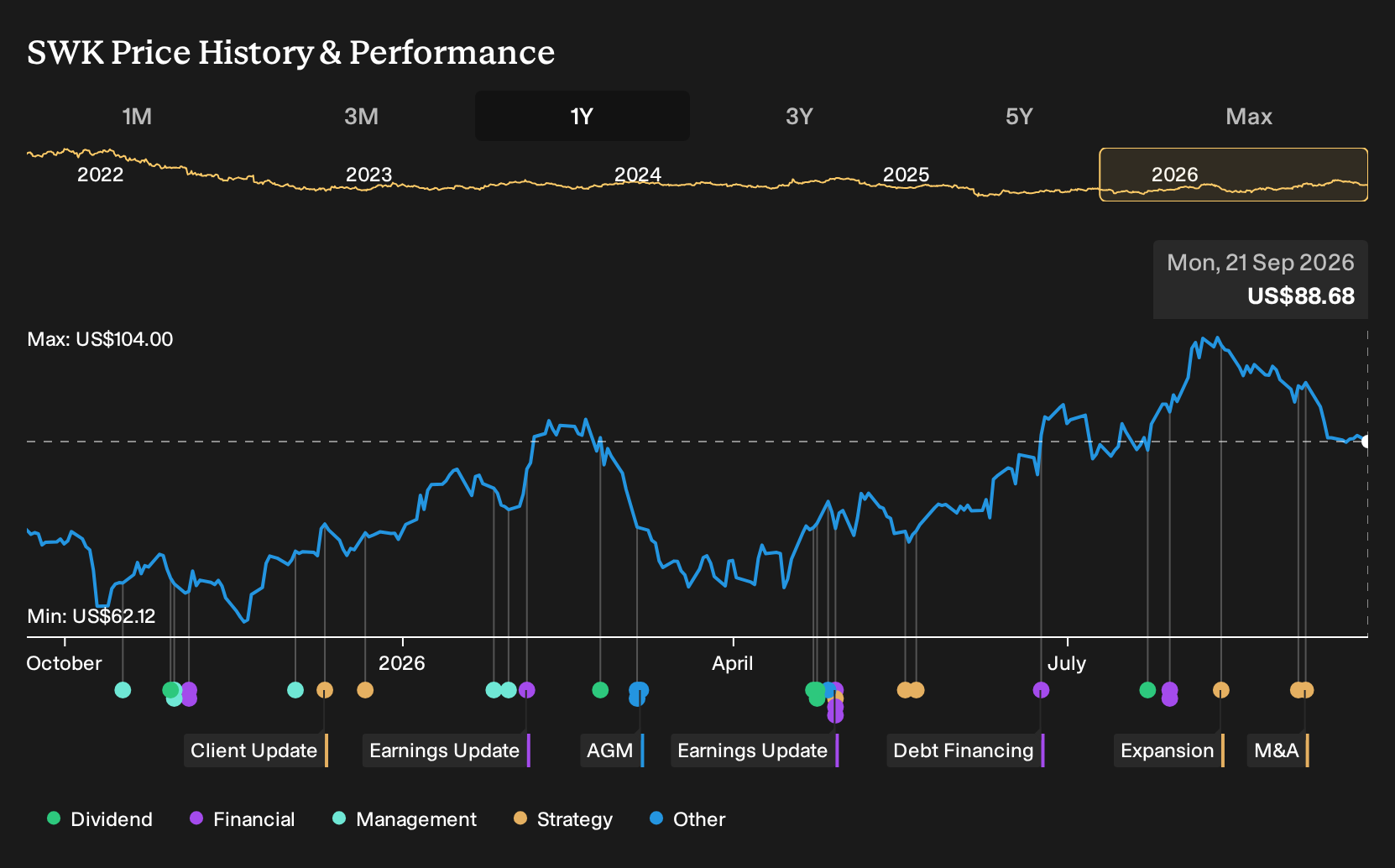
Exploring Other Perspectives
One alternate angle puts far more weight on the supply chain overhaul. The most optimistic analysts assume Stanley Black & Decker can get to US$17.0b of revenue and US$1.3b of earnings by 2029, compared with the baseline US$16.4b and US$1.1b. Those forecasts all predate the Laguna conference, so you may see opinions shift as you reassess both stories.
Explore 3 other Stanley Black & Decker fair value estimates, including one that suggests as much as 14% upside from the current price.
The Verdict Is Yours
Don't just follow the ticker; dig into the data and build a conviction that's truly your own.
- A great starting point for your Stanley Black & Decker research is our analysis highlighting 5 key rewards and 1 important warning sign that could impact your investment decision.
- See our latest analysis for Stanley Black & Decker. The report includes a comprehensive fundamental analysis summarized in a single visual, the Snowflake, making it easy to evaluate Stanley Black & Decker's overall financial health at a glance.
Looking For More Investment Ideas Beyond Stanley Black & Decker?
Once you have a view on Stanley Black & Decker, it can help to cross check that thesis against other companies with different balance sheets, payout profiles, and risk levels. The Simply Wall St Screener lets you filter for those angles directly instead of sifting through tickers one by one.
- If you want income first and price appreciation second, consider reviewing 7 dividend fortresses that may suit a yield focused watchlist.
- For investors who care most about resilience and downside protection, scan through 30 resilient stocks with low risk scores that score well on stability and risk metrics.
- If you prefer backing under followed businesses with solid fundamentals, cast a wider net across 17 high quality undiscovered gems that might not yet be widely tracked.
This article by Simply Wall St is general in nature. We provide commentary based on historical data and analyst forecasts only using an unbiased methodology and our articles are not intended to be financial advice. It does not constitute a recommendation to buy or sell any stock, and does not take account of your objectives, or your financial situation. We aim to bring you long-term focused analysis driven by fundamental data. Note that our analysis may not factor in the latest price-sensitive company announcements or qualitative material. Simply Wall St has no position in any stocks mentioned.
Have feedback on this article? Concerned about the content? Get in touch with us directly. Alternatively, email editorial-team@simplywallst.com